Rubik's Cube: complete guide | History, types and methods
Rubik's Cube guide: history (Ernő Rubik, 1974), permutations (43 quintillion), types (3x3, 4x4, megaminx...), brands (GAN, MoYu, QiYi), solving methods (LBL, CFOP) and current records.
The Rubik's Cube is a three-dimensional mechanical puzzle invented by Hungarian architect and professor Ernő Rubik in 1974. In the standard 3×3×3 format it has 26 pieces (8 corners, 12 edges and 6 centres) that rotate on an internal axis, giving more than 43 quintillion possible combinations.
Since its international launch in 1980, over 500 million units have been sold, making it the best-selling puzzle in history. Today it is also the basis of a competitive discipline (speedcubing) with its own international federation (World Cube Association) and a current official record of 2.76 seconds in the 3×3×3 format.
In this guide
Origin and history
Ernő Rubik designed the first prototype in spring 1974, in Budapest, while looking for an object to help him explain three-dimensional geometry to his students. He built it from wooden blocks joined by rubber bands, glue and clips, and it took him about a month to solve it for the first time. He called it Bűvös Kocka (magic cube).
He patented it in Hungary in 1975 and it was sold locally as Magic Cube from 1977. In 1979 the US company Ideal Toy Corp acquired the rights to distribute it internationally, renamed it Rubik's Cube and launched it worldwide in 1980. Between 1980 and 1983 alone, around 200 million units were sold, fuelling a first wave of mass popularity.
After a sales decline in the 1990s, the cube regained relevance with the rise of the internet, video tutorials, official championships (the WCA was founded in 2004) and, more recently, high-end magnetic cubes.
Anatomy and permutations
A 3×3 cube is made of 26 visible pieces over an internal central axis:
- 6 centres: one piece per face. They have a single sticker and rotate on their axis, but do not move. They mark the final colour of each face.
- 12 edges: the pieces with two stickers, sitting between two centres.
- 8 corners: the pieces with three stickers, sitting at the vertices.
Combining all possible positions and orientations gives exactly 43,252,003,274,489,856,000 permutations (just over 43 quintillion). Of all of them, only one corresponds to the "solved" state.
It has been mathematically proven that any legal cube configuration can be solved in 20 moves or fewer (the so-called "God's number").
Types of Rubik's Cube
NxNxN cubes (classic cubic shape)
| Type | Features |
|---|---|
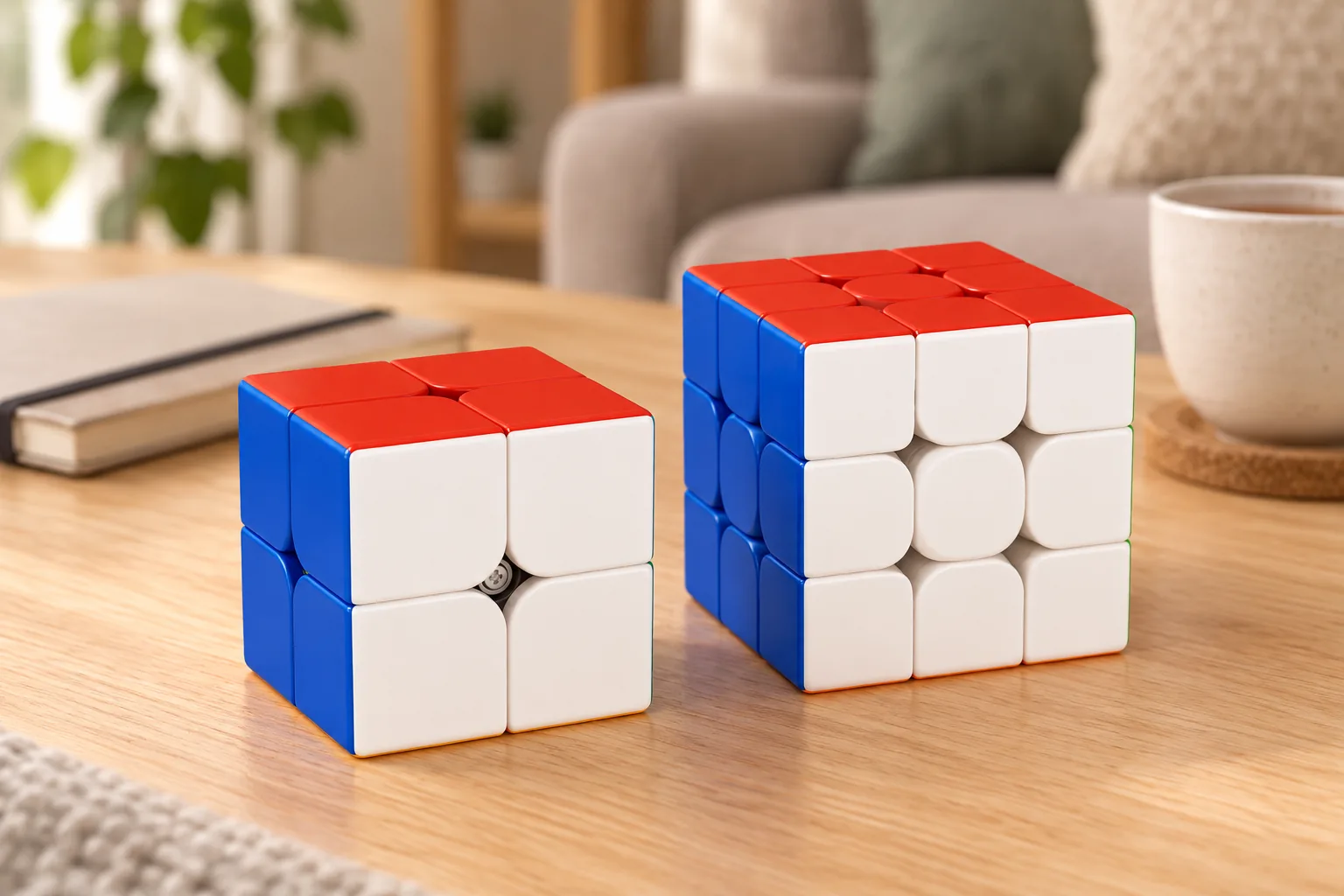
| 2×2 (Pocket Cube) | Only corners. Simpler, good starting point. |
| 3×3 (classic Rubik's Cube) | The standard format and the most used in competition. |
| 4×4 (Rubik's Revenge) | Movable centres, requires reducing the problem to a 3×3. |
| 5×5 (Professor) | Similar to the 4×4 but with fixed centres like the 3×3. |
| 6×6 and 7×7 | Large cubes aimed at an advanced audience. |
Non-cubic shapes
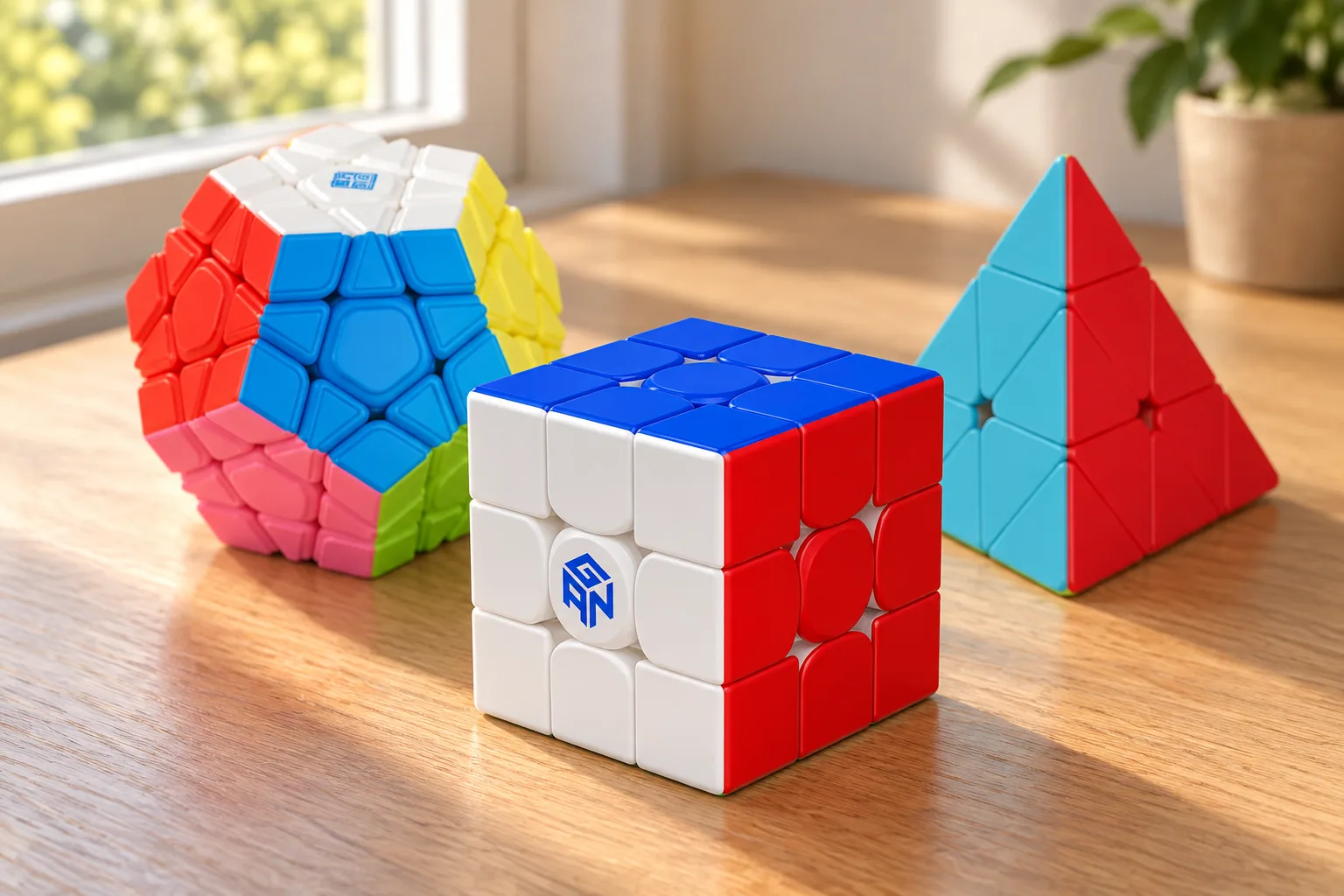
- Pyraminx: tetrahedral pyramid. Faster and more accessible than the 3×3.
- Megaminx: dodecahedron (12 faces). Resolution similar to the 3×3 but longer.
- Skewb: cube that turns from the vertices.
- Square-1: cube that changes shape during the resolution.
Modified cubes
- Mirror Cube: all pieces have different sizes, solved by shape instead of colour.
- Ghost Cube: pieces with irregular cuts, considered one of the hardest.
- Axis Cube, Fisher Cube: variants with axes displaced from the classic 3×3.
Smart cubes (connected cubes)
They carry internal sensors that detect the turns and connect via Bluetooth with a mobile app. They allow step-by-step tutorials, time statistics and online matches. Representative models: GAN356 i Carry, GoCube, Rubik's Connected.
Cubes for every level
From a first magnetic 3x3 to competition cubes and less common shapes such as the Megaminx or the Pyraminx. Take a look at our catalogue.
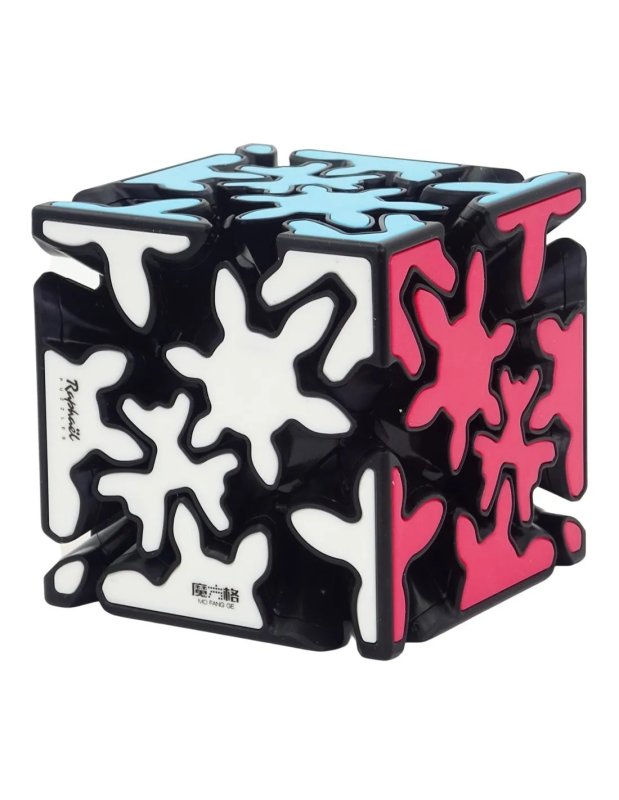
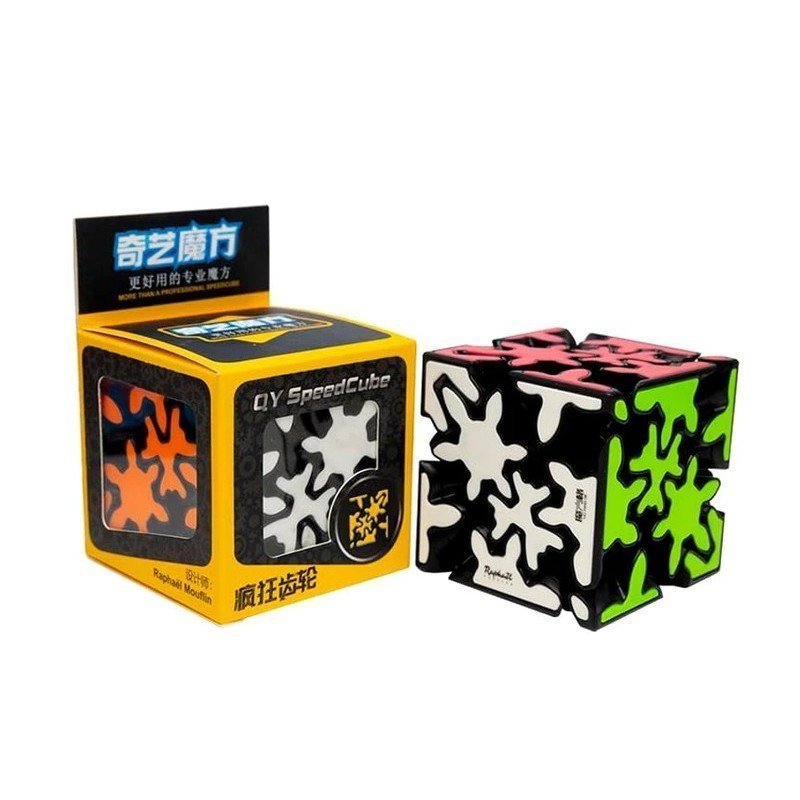 QiYi Crazy Gear Cube 3x3 - Puzzle con Engranajes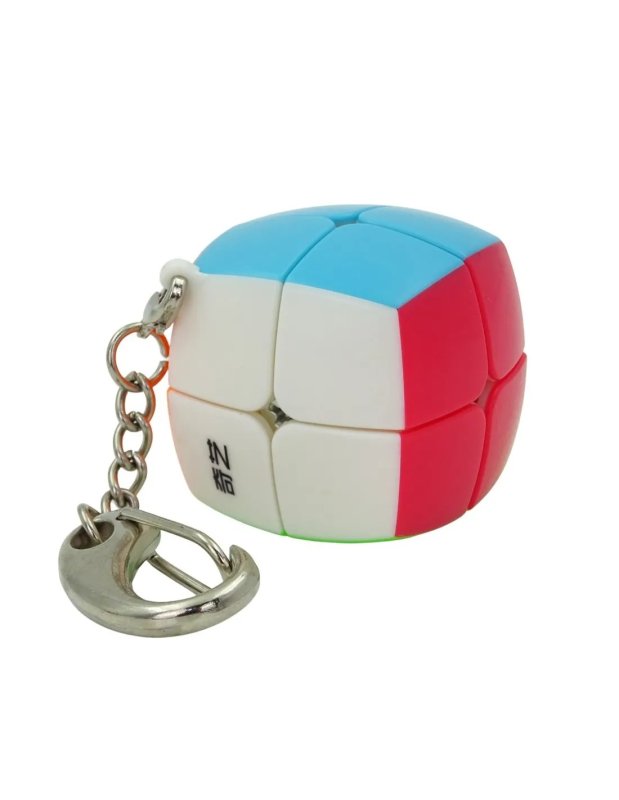
 QiYi 2x2 Mini Pillowed Llavero Stickerless Removible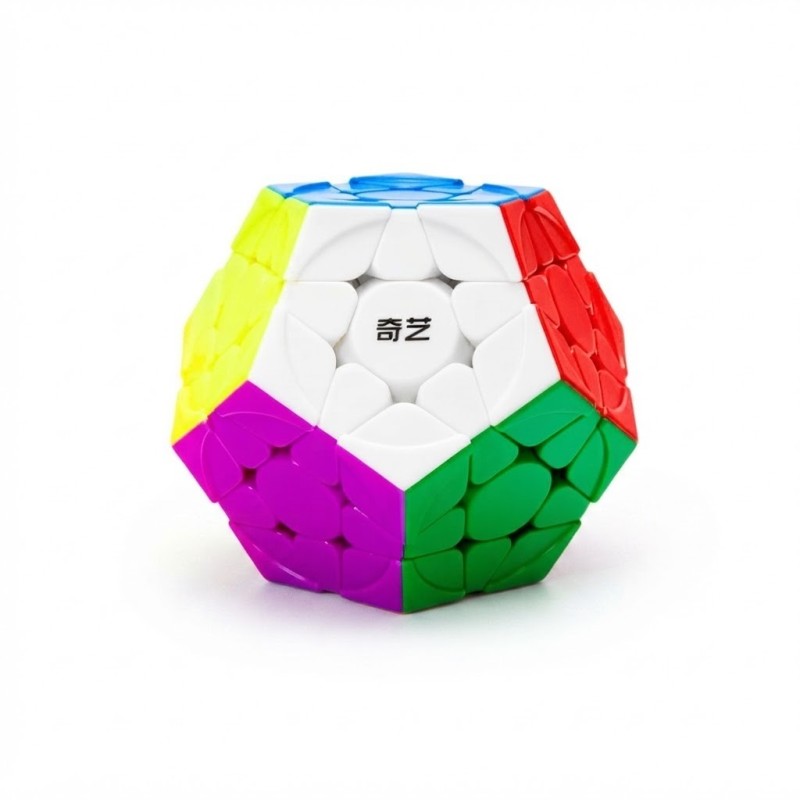
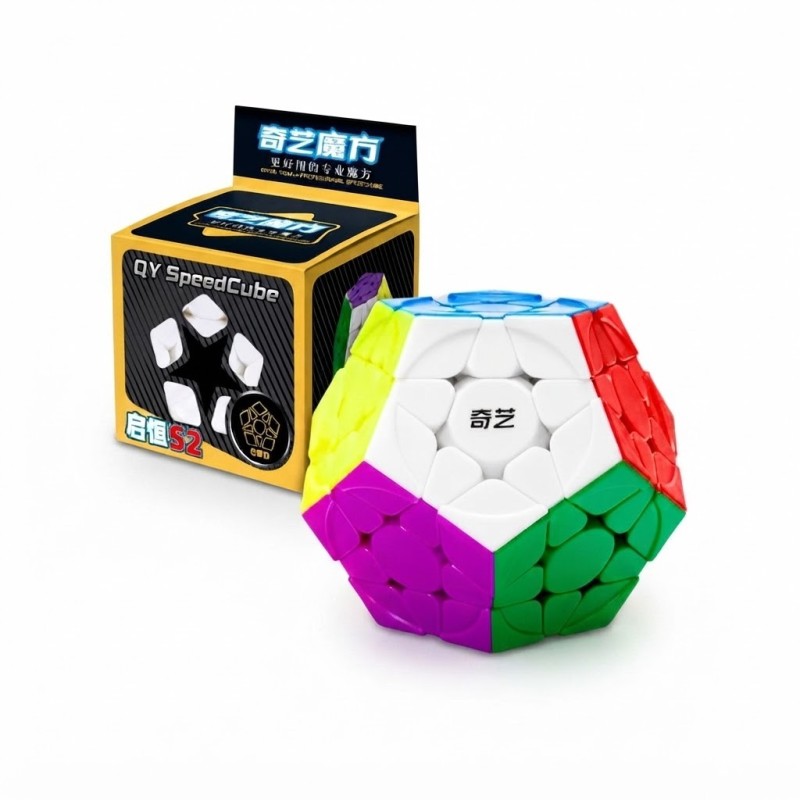 QiYi QiHeng S2 Megaminx Stickerless Dodecaedro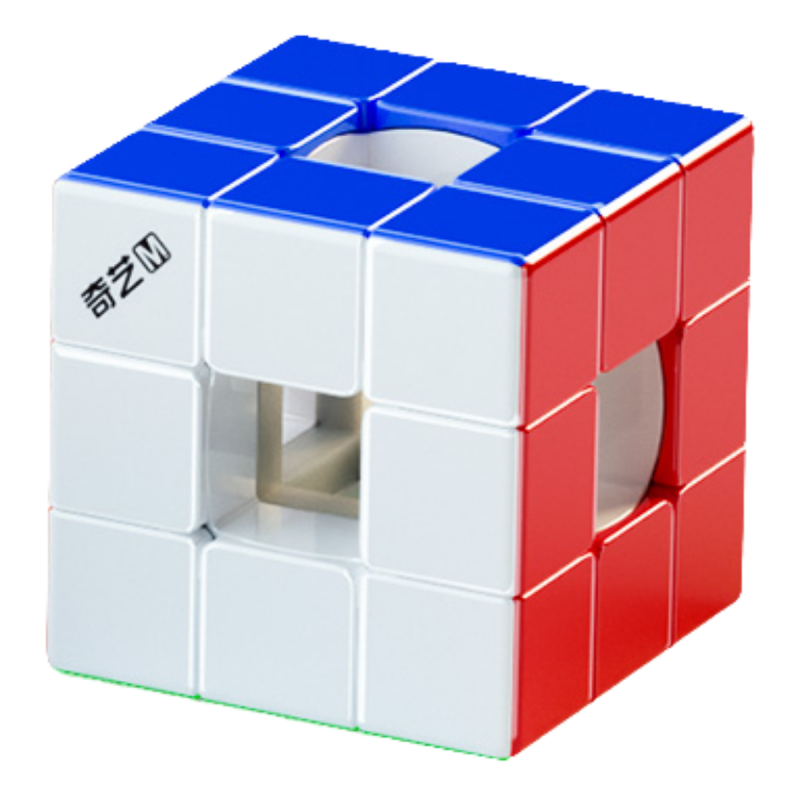
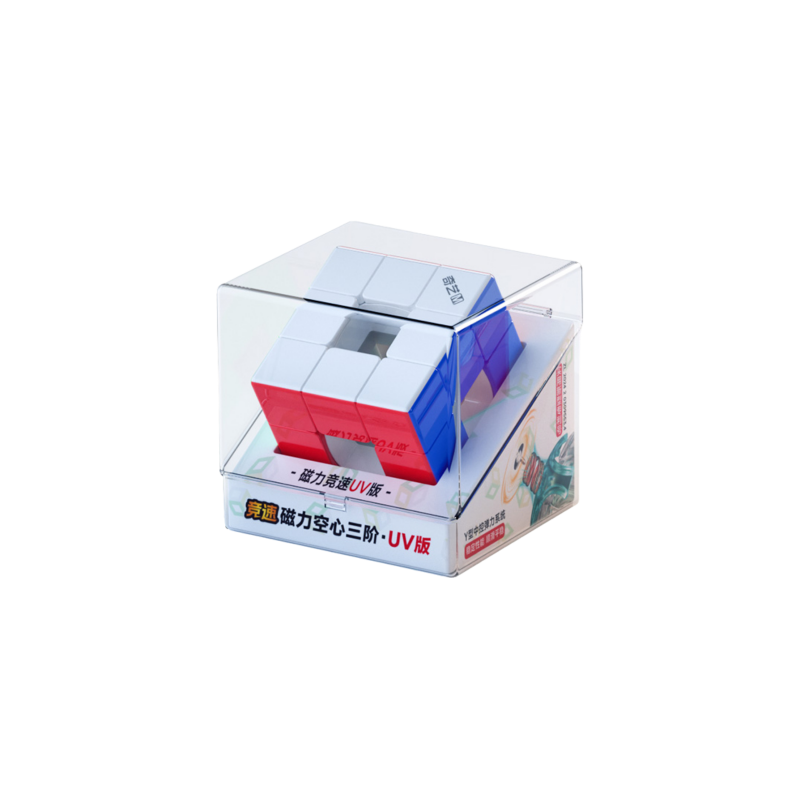 QiYi Void 3x3 Magnético UV Coated Stickerless
Solving methods
Beginner method (Layer-by-Layer)
Also called LBL. The method most people use to solve the cube for the first time. It consists of solving the cube layer by layer: first the bottom face and its ring, then the middle layer and finally the top face. It requires remembering between 5 and 8 simple algorithms and allows times of 1 to 3 minutes with practice.
CFOP (Fridrich method)
The most-used method in speedcubing and the one used by current world-record holders. Its four phases are:
- Cross: solve the cross of the first layer.
- F2L (First Two Layers): simultaneously solve corners and edges of the first two layers.
- OLL (Orientation of Last Layer): orient the pieces of the last layer with an algorithm.
- PLL (Permutation of Last Layer): permute the pieces to finish.
The complete method requires memorising 119 algorithms: 41 F2L, 57 OLL and 21 PLL. It allows sub-10-second times in advanced players.
Roux
Alternative method that skips the cross and is based on side blocks. Fewer algorithms than CFOP (~30-50) and many finger turns (M-slice). Popular among cubers who prefer a more intuitive approach.
ZZ
Starts with a phase called EOLine (edge orientation + bottom line) that then allows the rest to be solved without middle-layer turns (D, R, U). More demanding at first but very fluid.
Speedcubing and records
Speedcubing is the discipline of solving the Rubik's Cube in the shortest possible time. It is regulated by the World Cube Association (WCA), founded in 2004, which organises over a thousand official competitions per year and maintains the world record registry.
The best-known competitive formats are:
- 3×3×3 single: one single solve.
- 3×3×3 average of 5 (ao5): average of 5 attempts dropping the best and the worst.
- 3×3×3 blindfolded: memorisation + blind solve.
- One-handed: with a single hand.
- Multiple blindfolded: solving several cubes blindfolded in a row.
The 3×3 single records have dropped from 22.95 s (Minh Thai, 1982) to sub-3-second times. As of early 2026, the official record is 2.76 seconds, achieved by Teodor Zajder in February 2026. The previous mark (3.13 s, Yusheng Du, 2018) lasted almost eight years.
Recognised brands
GAN
Chinese brand founded in 2014. Considered the high-end reference in speedcubing: most recent records have been set with GAN cubes. Launches new models each year with fine adjustments of magnetisation and tension (the GAN15 Maglev series sits around €60).
MoYu
Founded in 2012, also Chinese. Its WeiLong range is popular both with hobbyists and in competition for its good value. Featured model: MoYu WeiLong WR M.
QiYi
Associated with the X-Man series. Known for offering cubes at mid-range prices with feel close to high-end. A good option to get into speedcubing without spending too much.
ShengShou and Dayan
Historic brands of the Chinese cube. Simpler, more mechanical models. Dayan was the reference brand before the magnetic era.
Rubik's (official)
The brand with the original licence. Its basic cubes are solid for casual use and for learning, but fall short of the Chinese brands' performance in speedcubing.
How to choose a cube by level
- Starting out (never having solved it): any simple 3×3 from a known brand around €10-15. A QiYi Warrior or a basic Rubik's works.
- Improving times (sub-30 seconds): a mid-range magnetic cube. MoYu WeiLong, QiYi MS, GAN 11 M Pro Lite. Usual range €20-35.
- For serious speedcubing: high-end GAN or MoYu with configurable magnetisation. €50-100.
- For learning with an app: smart cube (GAN356 i Carry, GoCube). A bit more expensive but the interactive tutorial speeds up learning.
- For a gift: combining a 3×3 with a Pyraminx or a Mirror Cube offers variety.
Care and maintenance
- Lubrication: magnetic cubes are lubricated with cube-specific silicone. A drop every few months improves the flow.
- Tension: modern cubes carry adjustable screws. If the layers "skip" too much, tighten slightly; if they feel stiff, loosen.
- Cleaning: if the stickers get dirty, a soft cloth with a little water. For cubes with plastic-printed colours (current GAN, MoYu or QiYi), do not use solvents.
- Storage: cloth bag or rigid case. The cube does not get damaged from use, but older cubes' stickers can peel with heat.
Keep exploring
- Rubik's Cube Notation
- CFOP Method
- How to Solve a 2x2 Rubik's Cube
- How to Solve a Pyraminx
- Rubik's Cube World Records
Rubik's Cubes and Speedcubing
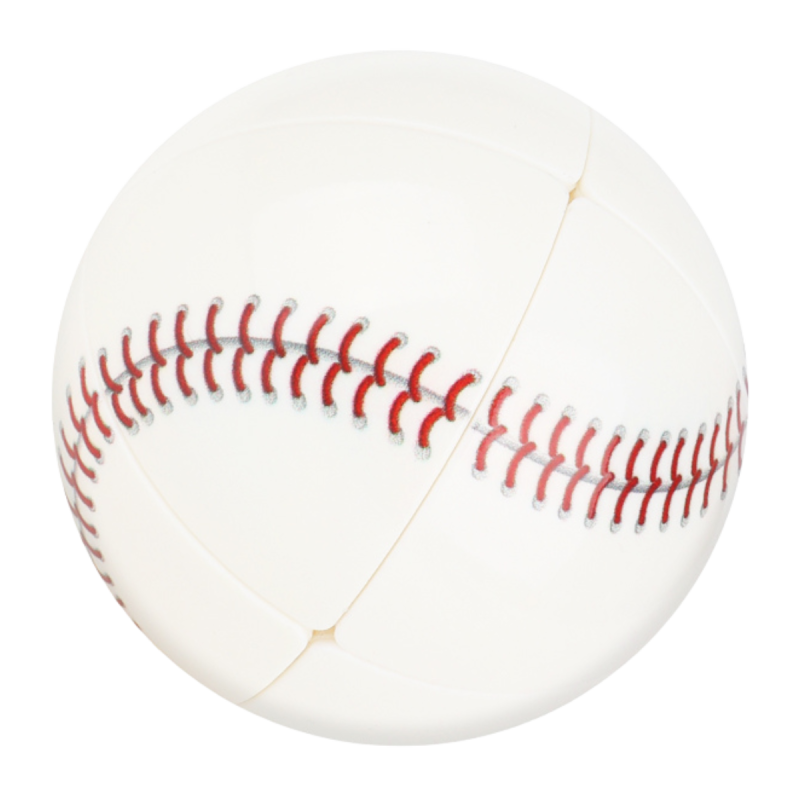
YuXin 2x2 Baseball Shape Mod

YuXin 2x2 Basketball Shape Mod
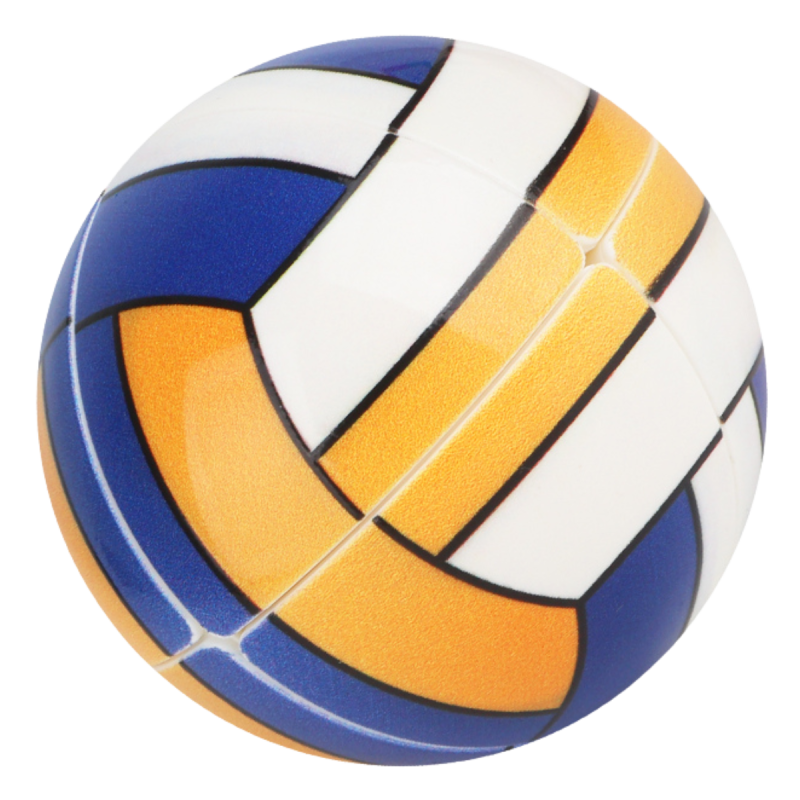
YuXin 2x2 Ball Shape Mod Purple

Skewb Mirror DianSheng (Pink)
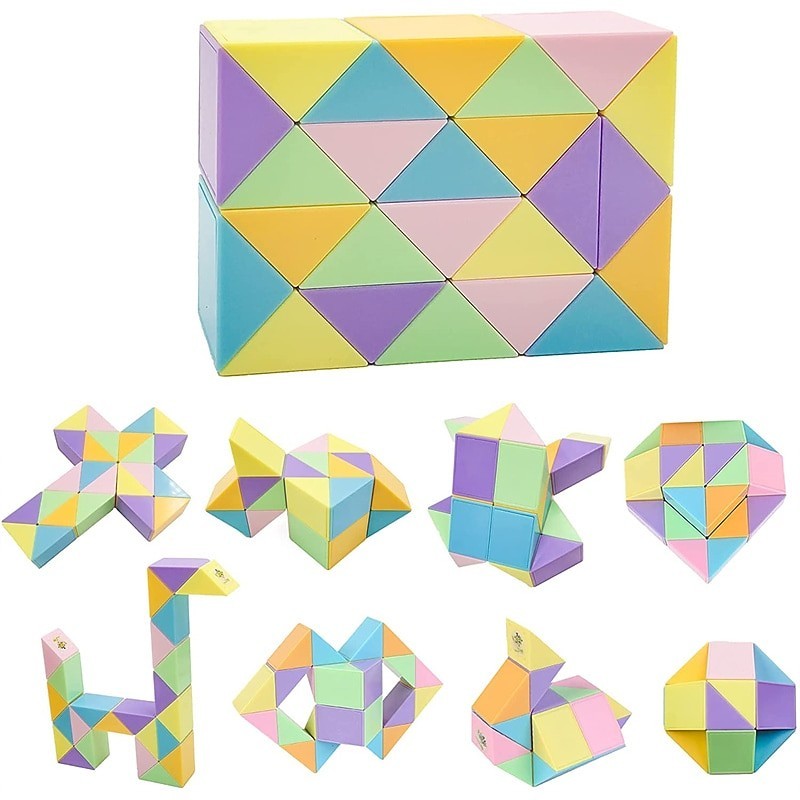
QiYi Magic Snake 60 Blocks Multicolour
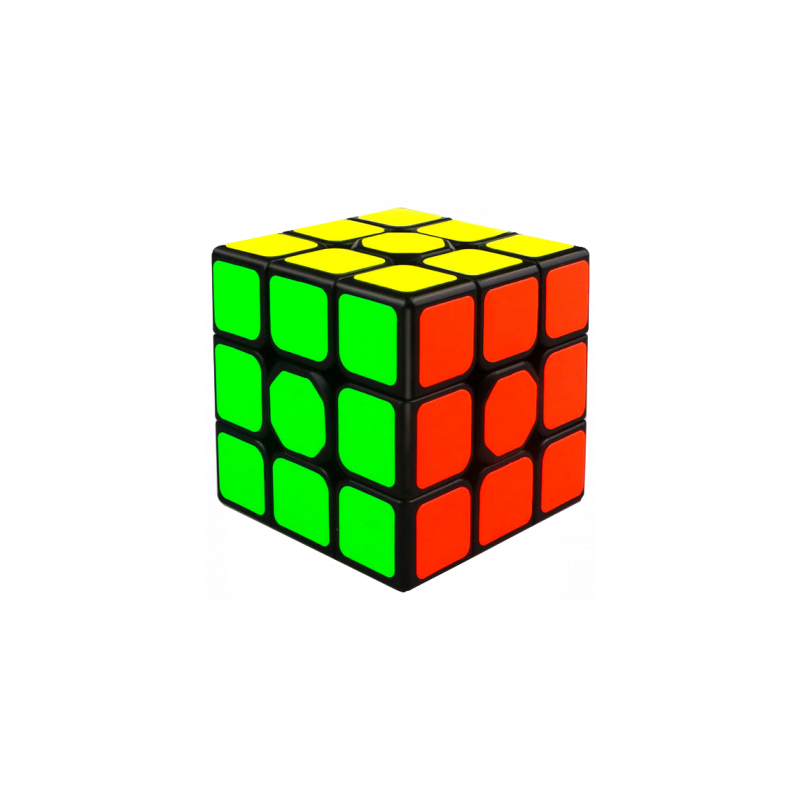
QiYi Sail W 3x3 reinforced mechanism 56 mm

QiYi Sail 6x6 black classic beginner 60.5 mm
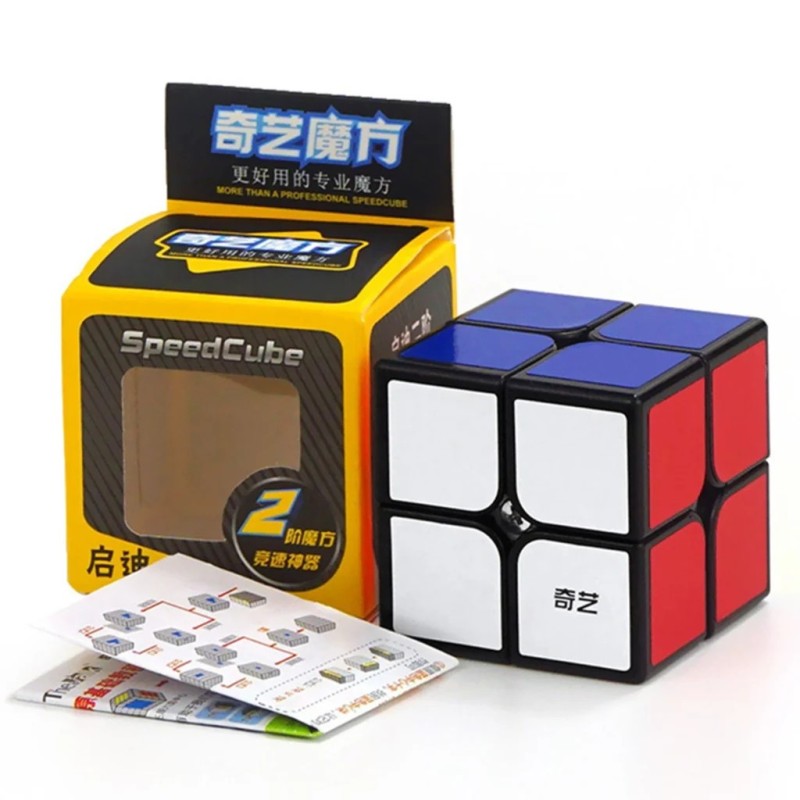
QiYi Sail 2x2 black compact for beginners
Contact our team for any clarification about this document. Contact us


