What is a kendama: anatomy, real history and tricks
What is a kendama: clear definition, anatomy (ken, tama, sarado), documented origin (bilboquet, 1918 patent), JKA grades, finishes and trick route.
What a kendama really is, not the leaflet version: anatomy piece by piece, documented history versus legend, timed JKA grades, tama finishes and a trick route that works.
Many people think the kendama is "a traditional Japanese toy". It is a half-truth worth dismantling from the first line, because understanding it changes how you look at it and how you learn. The object you have in your hand —beech wood, three cups, a sharp spike, a ball hanging from a string— is Japanese in its current form, yes, but its DNA comes from a European ball-and-cup game, and its explosion as a discipline with championships, federations and videos with millions of views is barely fifteen years old. I'm not going to sell you pamphlet zen mysticism here. I'm going to tell you what exactly this is, where it really comes from (separating the documented from the legend), how it is built and why, once you get the knack of the knees, you don't put it down.
What a kendama is, no detours
The kendama (けん玉) is a skill game made of two wooden pieces joined by a string: the ken —a handle with a crosspiece of cups and a spike— and the tama, a ball drilled with a hole. In its simplest version you toss the ball and catch it in a cup; in its signature move, you thread it through the hole, spiking it on the point. That dull "click" of wood against wood when the ball goes in cleanly is, literally, what hooks half the world.
It belongs to the universal family of ball-and-cup games —the French bilboquet, the Spanish-American balero, the ring and pin of various cultures are relatives—, but with a decisive difference: someone added a crosspiece with three cups of different sizes. That crosspiece multiplied the possibilities a hundredfold and turned a tavern pastime into a discipline with thousands of catalogued tricks, a martial-arts-style grade system and an annual world championship.
It's worth saying clearly: it isn't a toy and a sport as mutually exclusive things. It is both at once, depending on how you take it. You can keep it in a drawer and pull it out after a meal, or train it twenty minutes a day and sit grade exams. The piece is the same. What changes is your level of obsession. If you want to see models to start with or to compete, you have them in our kendamas section.
Anatomy: why each piece has its Japanese name (and why you should learn it)
It is not snobbery. When you watch tutorials, look for spares or read a list of competition tricks, everything is in Japanese nomenclature. Learning it now saves you confusion later.
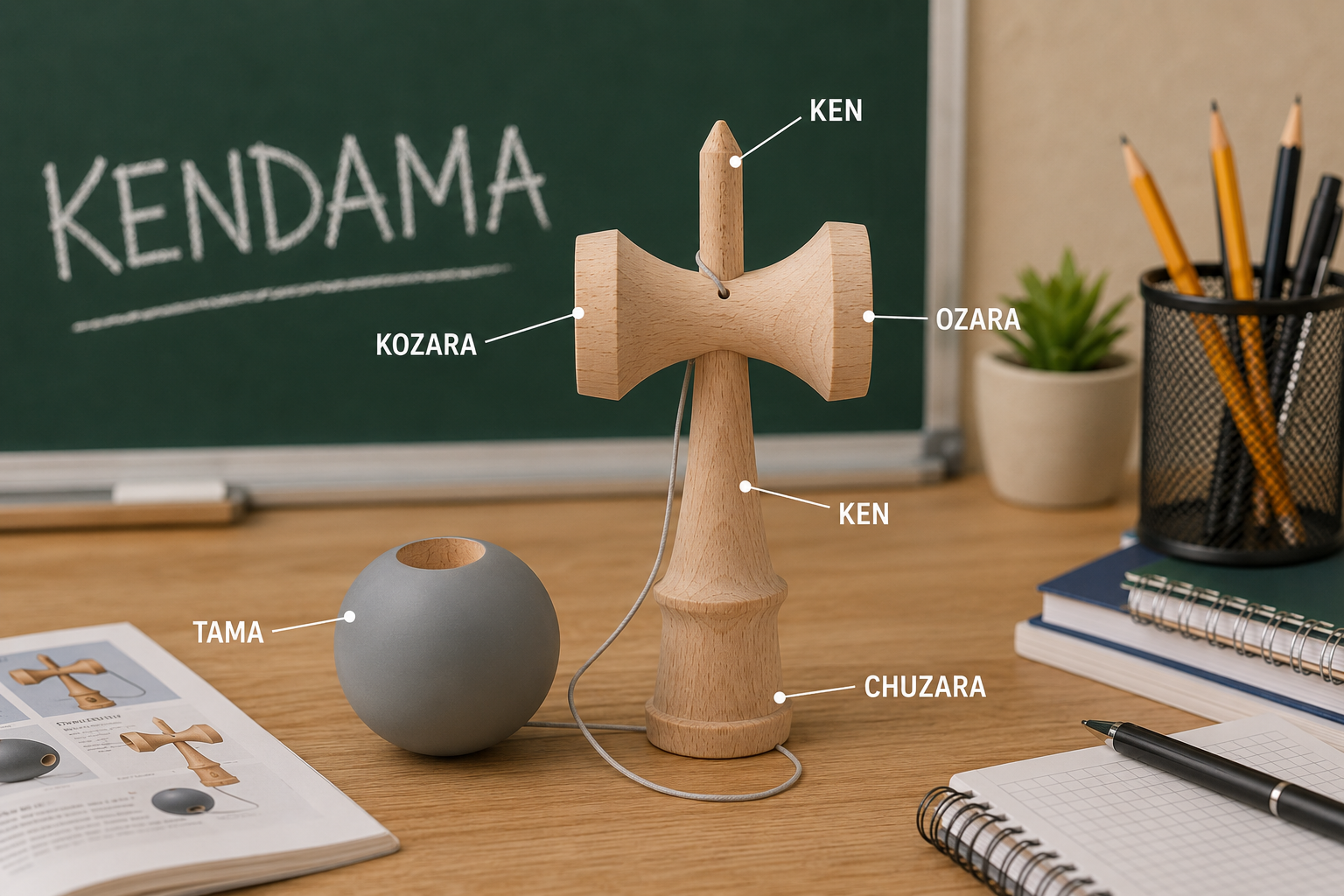
- Ken (剣): the whole handle. Grip, cup crosspiece and spike form a single piece.
- Tama (玉): the ball, with a single hole —the ana (穴)— through which it is threaded onto the spike.
- Kensaki (剣先): the point or spike. Where the ball is stuck in the spike.
- Sarado (皿胎): the transverse crosspiece that holds the cups, pierced by the handle. This is the piece that differentiates the kendama from just any bilboquet.
- Ozara (大皿): the big cup, at one end of the sarado.
- Kozara (小皿): the small cup, at the opposite end.
- Chuzara (中皿): the "base" or middle cup, on the lower part, facing the spike.
- Ito (糸): the string. On the official kendama it measures on the order of 38-40 cm; it is the piece that breaks most.
- Suberidome (すべり止め): the anti-slip zone of the grip.
And now what really matters, what doesn't come in the box: two physical concepts rule over everything else. The first is the balance —how the weight is distributed between tama and ken—. On an official certified kendama the whole thing weighs around 140 g, with the tama at about 70 g and around 60 mm in diameter; that distribution is not decorative, it is calculated so the ball "rises straight" and lets itself be spiked. The second is tracking: the tama's paint scheme (half/half, 70/30) makes the ball spin legibly, and you learn to "read" that spin to align the hole with the spike just before impact. A well-balanced kendama forgives mistakes. An unbalanced one punishes every throw and makes you believe you're the bad one.
History and origin: the documented, the probable and the legend
Here it's time to be honest, because the internet is full of categorical claims about the origin of the kendama that serious sources —starting with the Japan Kendama Association itself— do not support. I'll separate three layers: what is documented, what is reasonably probable and what is a pretty tale with no evidence.
European root: probable, not folkloric
The consensus among reputable sources is that the kendama descends from ball-and-cup games, in particular the French bilboquet, popularized in Europe in the 16th century. There is also the romantic theory of an arrival via the Silk Road from China; it is much less supported and should be treated as a hypothesis, not a fact. If anyone tells you it as a certainty, be suspicious.
Arrival in Japan: 1777-1778, and not for children
The first documented Japanese mention appears around 1777-1778 in the encyclopedia Kiyusyoran. It probably entered through Nagasaki, the only trading port open at the time. And here is the fact almost nobody tells: it was not a children's toy. It was a drinking game for adults in taverns —you missed the trick, you drank—. The transformation into a children's pastime comes later: in 1876 it appears in the educational guide Dojo-sen as "cup and ball", a sign that in that century it went from the bar to the schoolyard.
The modern kendama: Hiroshima, 1918-1919
The decisive leap —adding the sarado with its three cups— happens in Hiroshima with the "Sun and Moon ball" (Nichigetsu Ball): the ball round like the sun, the cups like a crescent moon. The patent application is filed in 1918 and registered as a utility model in 1919; the design is attributed to Hamaji Egusa (sources also transliterate it as Hamagatsu Ekusa), a native of the Kure area, Hiroshima. That sarado is the innovation that opened up "a world of new tricks", in the words of the JKA itself. Later came the standardized competition models that fixed measurements and weights.
The Western boom: 2006 onwards
The kendama never disappeared from Japan, but its global explosion is recent. In 2006 Kendama USA is born, the first American company in the sector. Video diffusion —street kendama, combos, slacks, slow motion— sparks an international community, and the phenomenon culminates with the Kendama World Cup, held in Hatsukaichi (Hiroshima) since 2014. Fifteen years. That is what's "modern" about the modern kendama: less than the career of many of the professionals who play it today.
Federations and grade system: the kendama as a regulated discipline
The Japan Kendama Association (JKA) is the reference institution and structures the game like a martial art. There are kyu grades (descending: from 10th kyu to 1st, beginner) and dan grades (ascending, advanced). The kyu are obtained relatively easily, often as a child; the 1st dan is the real frontier: it certifies you genuinely master the fundamentals.
Each level is examined with specific tricks. The kyu block revolves around a fixed repertoire —big cup, small cup, middle cup, candle (rosoku), spike (tomeken), airplane (hikoki), swing in (furiken), around Japan, around the world, lighthouse (todai)— plus the moshikame, that rhythmic back-and-forth between big cup and base cup. And the moshikame is not free: the JKA times it at 135 beats per minute. For 1st kyu you must chain at least 50 repetitions without failure at that rhythm; in the junshodan exam (the antechamber to dan), 100 repetitions, a single chance. It is not "tapping the cup": it is a metronome.
The exams require an official JKA kendama with a certified (nintei) or recommended (suisho) seal. For its part, GLOKEN (Global Kendamas Network), also based in Japan, organizes the Kendama World Cup and acts as a bridge between the traditional Japanese scene and the Western "street" one. Its motto, literally, is to build relationships between players and popularize the kendama around the world. The two paths coexist without war: one regulated and with grades, the other creative and freestyle.
Materials and paint: why two identical kendamas feel different
The body is usually beech wood: hard, consistent, predictable when spiking and —let's be honest— cheap, which makes it ideal to start with. There are premium models in ash and other species that add nuances of feel, sound and weight, but as a beginner don't obsess: a good beech amply covers years of play.
What really changes the sensations is not the wood, it is the finish of the tama. It matters so much I give it its own table:
| Finish | Feel | Grip | Where it shines |
|---|---|---|---|
| Tacky / sticky | Starts semi-glossy, "breaks" to sticky with use | Maximum | Balance tricks: lighthouse, lunar. Allows correction. |
| Silk / rubber | Matte, silky, surprisingly grippy | Medium-high | The sweet spot to progress without bad habits. |
| Gloss | Glossy, smooth, fast | Low | Spikes and classic precision play. Rare from the factory today. |
| Cushion clear | Almost rubbery, matte | Very high | "Blocking" balances; plays like an already broken-in dama. |
| Natural (natty) | Bare wood | Low | Classic sensation, purists, traditional play. |
A piece of context they don't tell you: gloss was the standard for years, until around late 2011 when grippier paints entered the community and displaced it. Today almost nobody makes gloss as standard. That a finish is "harder" doesn't make it better or worse; it makes it suitable for a specific stage. That is preference and timing, not quality.
How finishes get damaged (and what restores them)
No finish is eternal and it's worth knowing before you obsess choosing one. Tacky gets dirty with sweat and dust —it loses bite— or, conversely, "breaks" too much and turns into sticky toffee that slows the glide you also need. Gloss scratches with every failed spike against a hard surface. Natty stains and the wood absorbs finger grease. The good news is that almost everything recovers: a pinch of talc calms an over-broken tacky, a microscopic sanding returns uniformity, and the cushion clear service several brands offer revives a favorite tama you'd given up for dead. Moral: don't choose the "definitive" finish as if it were a marriage; it is more of a refurbishable consumable.
The kendama versus its cousins: why the crosspiece changed everything
To really understand what a kendama is, it helps to compare it with the family. The classic French bilboquet has a single cup (or a cup and point facing each other): a single objective, pure repetition. The Spanish-American balero and the Anglo cup-and-ball go that way. They all share the same basic physics —a tethered pendular projectile, a cushioned catch— but they stop at one or two trick variants.
The three-cup sarado breaks that ceiling. Suddenly you have four functional surfaces (ozara, kozara, chuzara, kensaki) plus the hole of the tama itself as a fifth point, plus the string as a manipulable element. The combinatorics explode: each trick can start on one surface, transit through another and end by spiking, and the whole admits ken spins (kenflips), tama spins (tamaflips) and string manipulations (slacks). That is why the kendama has thousands of catalogued tricks and the bilboquet, essentially, one. It is not that the Japanese invented a new game: they took a single-objective European toy and added the piece that turned it into an open system. That is, technically, the whole story in one sentence.
Why Hiroshima, and why it matters when playing it today
It is no poetic coincidence that the cradle of the modern kendama and the seat of the world championship are the same place. Hiroshima —specifically the Hatsukaichi and Kure area— concentrated manufacturing from the early 20th century, thanks to a local wood-turning industry and the Nichigetsu Ball patent registered there. That manufacturing continuity is the reason the "official" measurements are so settled: when an object is mass-produced in the same place for a century, its proportions become standardized in practice before any federation writes them down. When you buy a balanced kendama today, you are inheriting a century of industrial iteration on a single design. You don't notice it consciously, but you notice it in your hand: that's why a good dama "lets itself be spiked" and a badly copied bazaar one fights against you.
Hand, grip and posture: the fine detail
We talk about the knees —and they are the first thing—, but there are layers underneath that separate the one who spikes now and then from the one who spikes almost always:
- Ken grip: hold the handle like a thick pencil, not like a hammer. Relaxed fingers; tension in the hand travels to the ball and deflects it. If your forearm hurts after ten minutes, you're gripping too hard.
- Neutral wrist: the wrist accompanies, it doesn't snap. The drive comes up from the legs and trunk; the wrist only orients. A last-second "wrist snap" is the number-one cause of the ball spinning and the hole getting lost.
- Feet shoulder-width apart: a stable base. Many people try the spike with their feet together and the whole body sways; that adds noise to a move that needs to be surgical.
- Gaze on the ana: not on the spike, not on the hand. The eye anchors to the hole of the tama and the hand adjusts on its own to bring it to the spike. It's counterintuitive and it is the key to tracking.
- Breathing: on long balances (lighthouse, lunar) people hold their breath and tremble. Exhale slowly during the balance; the body quiets on its own.
How long it really takes for each milestone (honest expectations)
| Milestone | Realistic daily practice | What holds you back if you take longer |
|---|---|---|
| First consistent ozara | First session | You catch with the arm, not the knees |
| First spike (tomeken) | Days to 2 weeks | You throw sideways; you look at the spike, not the ana |
| Fluid moshikame | 1-3 weeks | Lacking rhythm; you go in jerks instead of a pendulum |
| Clean airplane | 2-6 weeks | You release the ken with spin; you don't drop it straight |
| Stable lighthouse | 1-3 months | Hard hands; you correct late; you hold your breath |
| First lunar | 3-9 months | Tama with little grip; airplane not yet solid |
These ranges are indicative and the spread between people is enormous —some spike on the first day and some take three weeks, and then they cross over at the lighthouse—. What is constant: those who bend their knees and film their sessions advance through the low end of the band; those who play with the arm and "let's see if it sounds" stay at the high end. It's not talent. It's method.
Myths about the kendama worth throwing in the bin
- "It's a millennia-old traditional Japanese toy": neither millennia-old nor originally Japanese. Current form patented in 1918-1919; European ball-and-cup root. The traditional Japanese part is real but more recent and more nuanced than is sold.
- "The more expensive, the easier it spikes": false above a decent minimum. Past the correct-balance threshold, price buys aesthetics, editions and wood, not precision. Precision is bought with repetitions.
- "Tacky is always better than gloss": no. It is better for beginner balances; gloss rewards pure precision and has its scene. It is preference and stage, not hierarchy.
- "You need the JKA seal": only for the JKA grade and regulated competition path. For 95% of people it is irrelevant.
- "It's about the wrist": the most expensive myth of all. It's about the knees. Full stop.
Benefits: why it genuinely hooks you (no hype)
- Hand-eye coordination: each repetition refines the sight-hand-body synchrony. It's measurable: you notice it in weeks.
- Almost meditative focus: spiking the point demands full attention. You can't think about your email while doing a lunar.
- "Flow": chaining combos produces that absorption from challenges calibrated to your level. Addictive in the good sense.
- Portable, no screen, no batteries: it fits in a pocket, works anywhere, doesn't expire.
- Infinite progression: there is always a trick "a bit harder" just within reach. That carrot never runs out.
Trick progression: the sensible route, really explained
Forget trying the lunar the first afternoon. This is the route everyone who really learns follows, with the sensation you should seek at each step:
If you want to follow the full order with video tutorial for each move, in our dictionary of 50 kendama tricks you have them sorted by level and category, with explanation of how to execute each and typical mistakes.
- Ozara (big cup): bend the knees, toss the ball a few centimeters, lower with the knees to "accompany it" into the cup. If it bounces, you're catching with a stiff arm. The first click.
- Kozara and chuzara: the same on the small cup and base. Alternate big-base with rhythm and you already have the moshikame, the JKA's metronome.
- Tomeken (spike from cup): from the cup, raise the ball vertically and spike it on the point. Here tracking appears: you learn to watch the hole spinning towards you.
- Airplane (hikoki): you hold the tama and drop the ken to thread the spike into the hole. It inverts the logic. Important: mastering the airplane with good form is, according to half the community, the best predictor that you'll learn the lunar, because the gesture of releasing the ken is almost identical.
- Furiken (swing in): you swing the ball hanging from the string and spike it onto the point on the way up. The first trick with a "pendulum".
- Clean spike: a straight, vertical throw, no swing, spiking without the ball spinning sideways. Harder than it looks precisely because it looks easy.
- Around the world / around Japan: sequences that chain several cups and a spike. Your first regulated "combo".
- Lighthouse (todai): you balance the ken vertically, spike up, on the ball. Pure stability and nerve.
- Lunar: you balance the ken resting on the very edge of the tama's hole. The emblem of the modern kendama and, yes, it requires a tama with grip.
| Trick | Type | Difficulty | Technical key |
|---|---|---|---|
| Ozara | Catch in cup | Very easy | Cushion with the knees |
| Tomeken | Spike from cup | Easy | Straight rise + tracking |
| Airplane | Inversion (ken to hole) | Medium | Release the ken cleanly |
| Furiken | Pendulum + spike | Medium-high | Timing of the swing |
| Lighthouse | Vertical balance | High | Soft hands, fixed gaze |
| Lunar | Balance on edge of the ana | Very high | Tama grip + fine control |
The secret nobody tells you the first day: it's the legs
I'll sum it up in one sentence and then explain it: the kendama is not played with the arm, it's played with the knees. The universal beginner mistake is treating it as a wrist game. It is not. The knee bend does two things: on the catch, it lowers the body at the same time as the ball falls, so the tama doesn't "hit" the cup and bounce, but lands cushioned, like an egg in a yielding hand. On the spike, a small vertical drive from the legs keeps the ball rising straight instead of shooting off sideways.
A practical rule the whole community repeats literally, from Japan to Reddit: bend your knees on every trick. That habit changes your progress more than any expensive kendama you buy. If I had to give you a single piece of advice from this article, it would be this.
Typical mistakes that hold you back for weeks
- Playing only with the arm: already said, but it's so frequent it deserves repeating. Without knees, everything bounces.
- Looking at the hand, not the ball: the gaze follows the tama. When it's about to spike, fix your eyes on the hole, not on the point.
- Yanking upward with a whip: the spike is a straight accompaniment, not a yank. If you pull sideways, the ball spins and the hole misaligns.
- Skipping the base: wanting a lunar without a solid ozara and spike is guaranteed frustration. The progression exists because of physics, not bureaucracy.
- Changing kendama every week: muscle memory needs a consistent weight and grip. Constantly changing dama sabotages it.
- Not filming yourself: video reveals stiff knees and a tense arm you don't notice live. It is the most underrated learning tool.
Quick glossary of what you'll hear
- Spike: stick the ball through the hole onto the point.
- Combo: chain tricks without the ball touching the ground or stopping.
- Slack: tricks that use the slack string as an element.
- Tracking: reading the spin of the ball to align the hole.
- Tama swap: switching the ball from one ken to another (typical when collecting finishes).
- Juggle: short juggling with ken or tama within a combo.
- Stall / balance: leaving one piece balanced on another (lighthouse, lunar).
A daily routine that genuinely works
Directed consistency beats scattered talent. A typical 15-20 minute session:
- Warm-up (2-3 min): gentle moshikame alternating cups. Loosen the wrist, get into rhythm.
- Consolidated trick (3-4 min): something you can already do, to reinforce muscle memory and start with confidence.
- Trick being learned (8-10 min): the current challenge. Quality of repetitions over quantity. Pause if you get frustrated: spiking it angry fixes nothing good.
- Free play (2-3 min): combos with no pressure. Here flow appears and what you've learned settles.
Ready to grab a kendama?
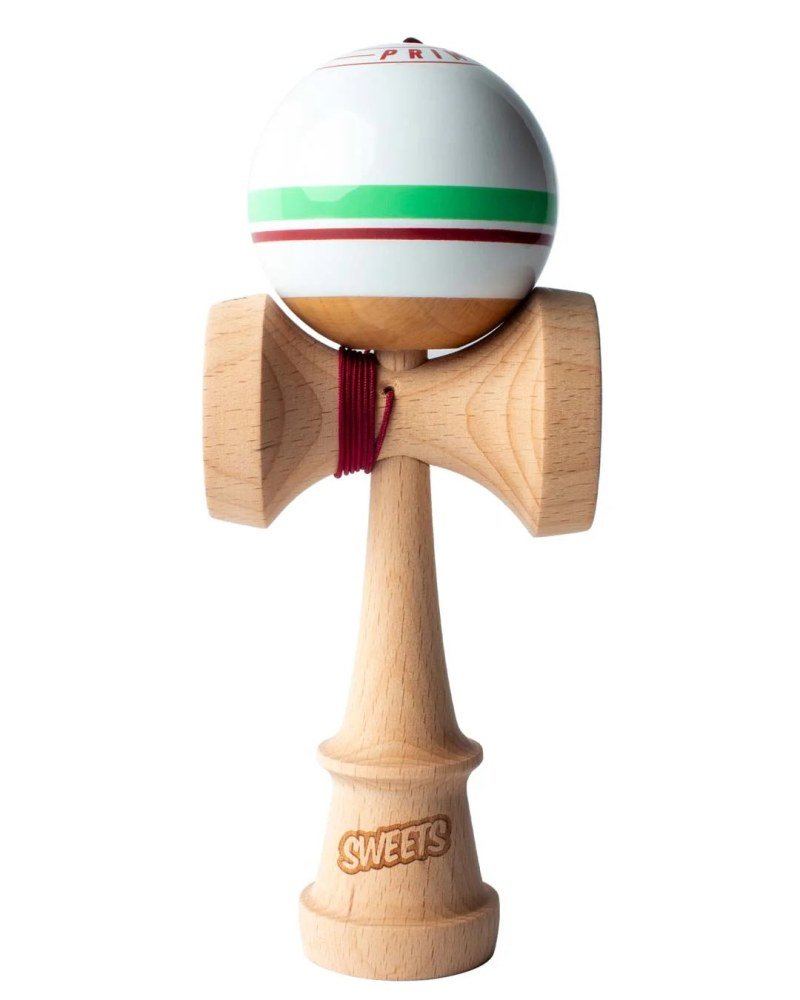
PRIME SPORT STRIPE - AVALANCHE
€23.10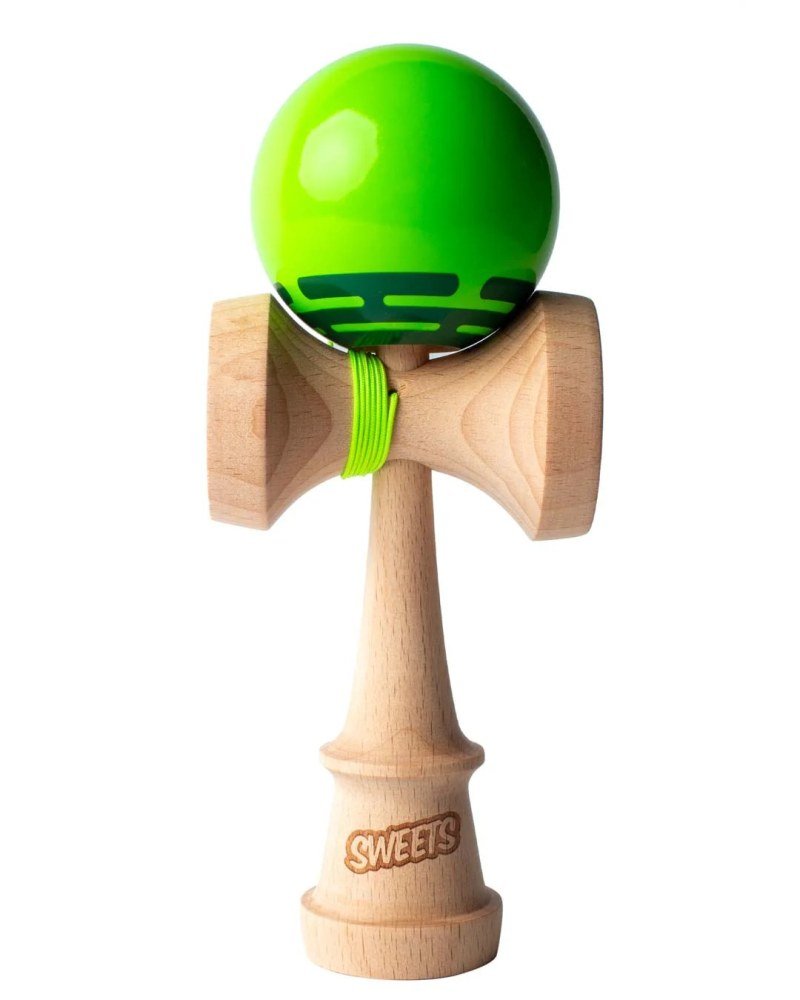
PRIME RADAR - GREEN
€23.10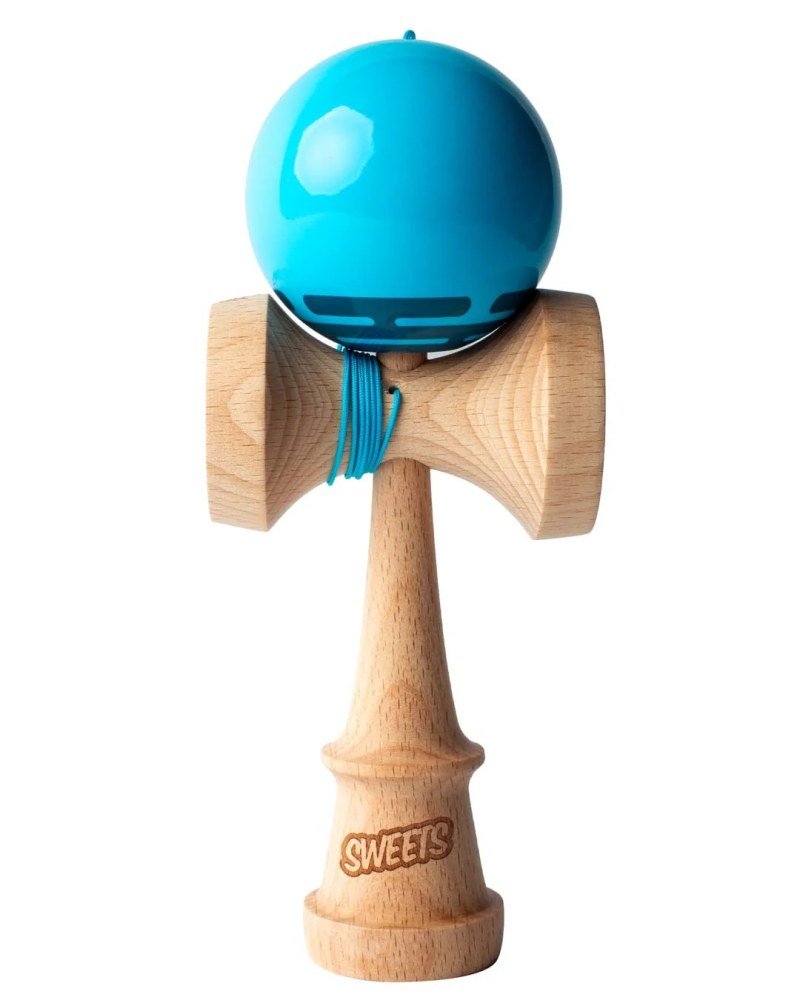
PRIME RADAR - BLUE
€23.10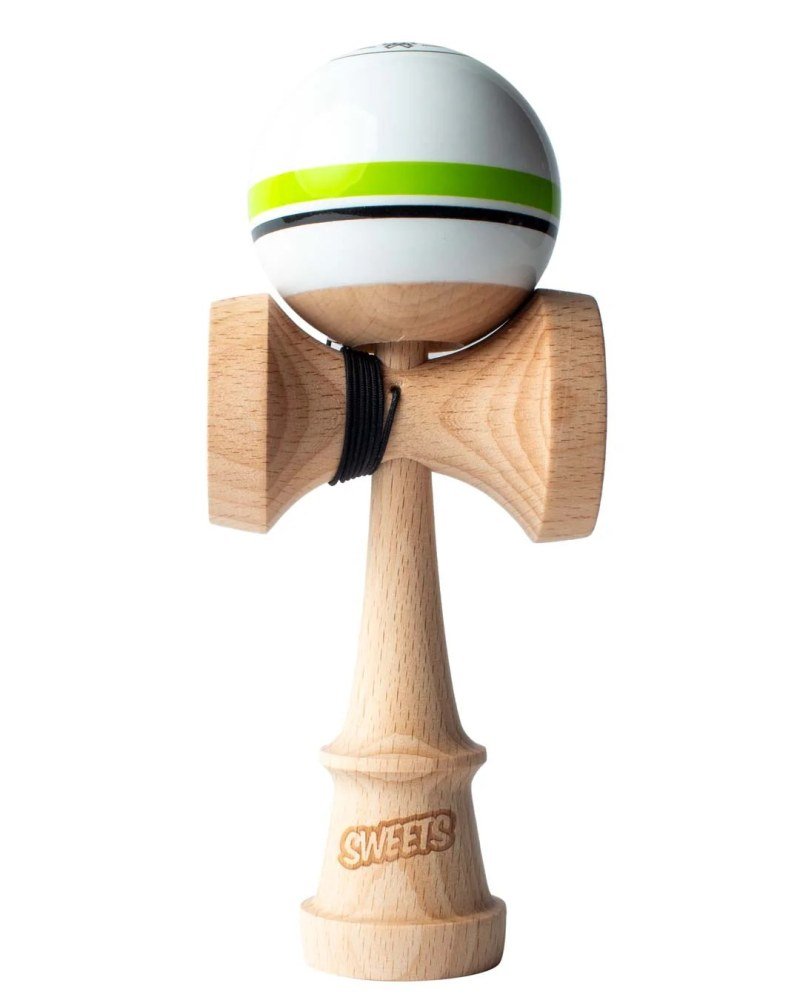
PRIME SPORT STRIPE - HOME TEAM
€23.10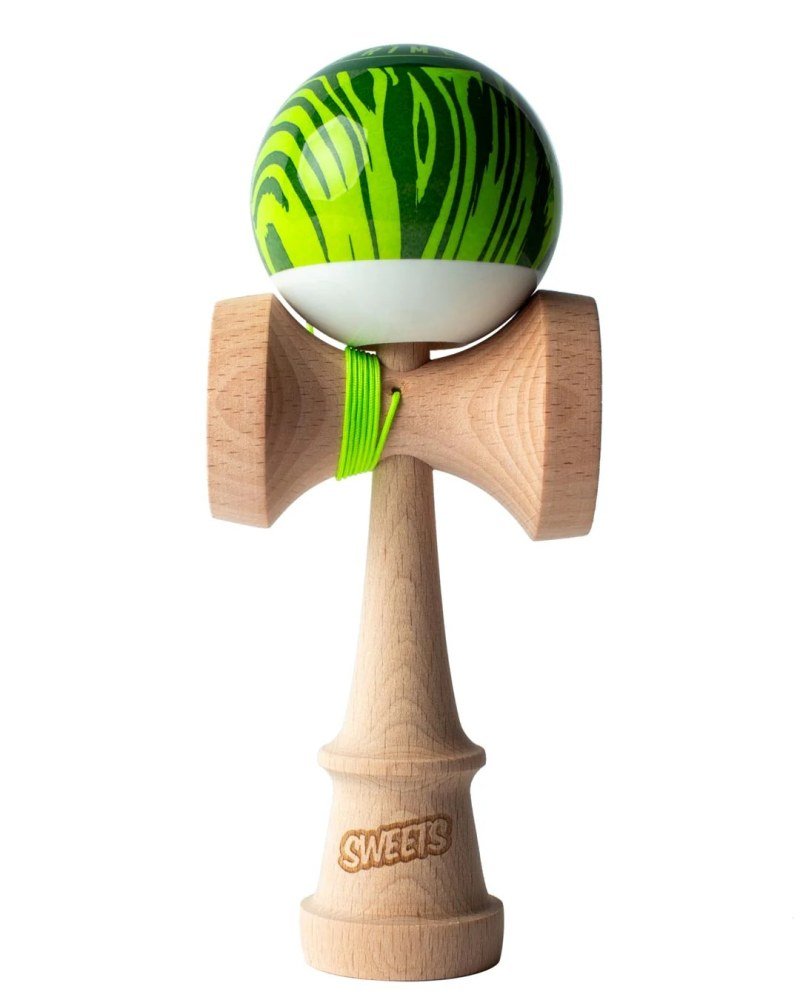
PRIME GRAIN SPLIT 2.0 - VEGGIE
€23.10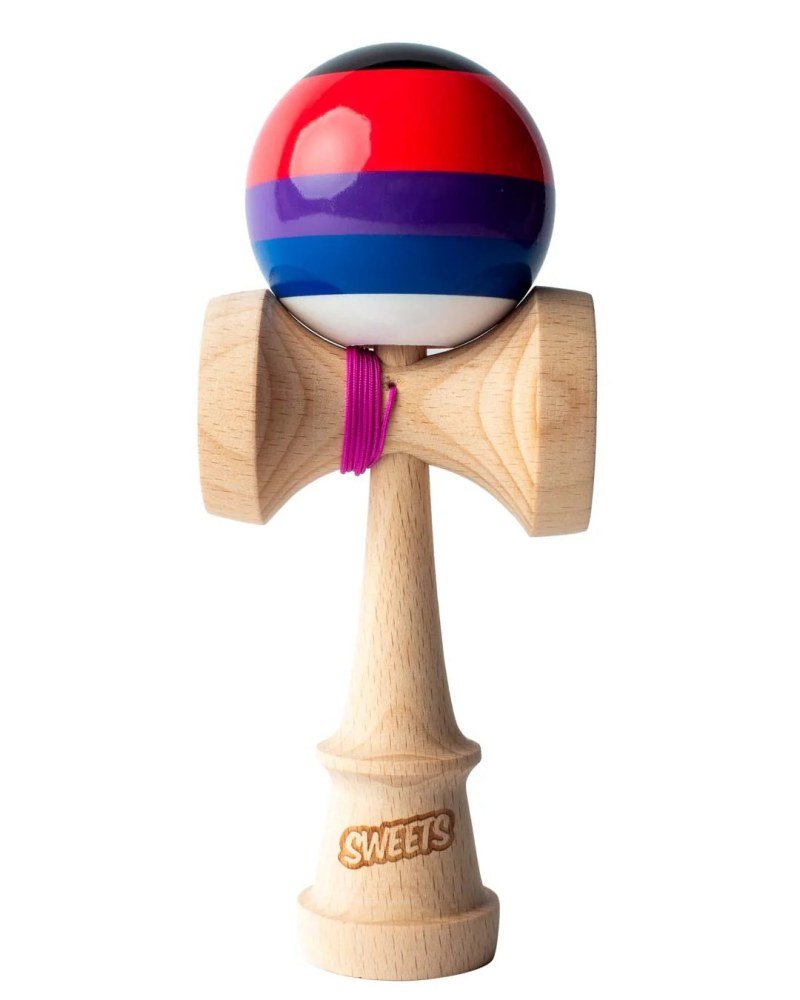
PRIME 5 STRIPE - SLUSHY
€23.10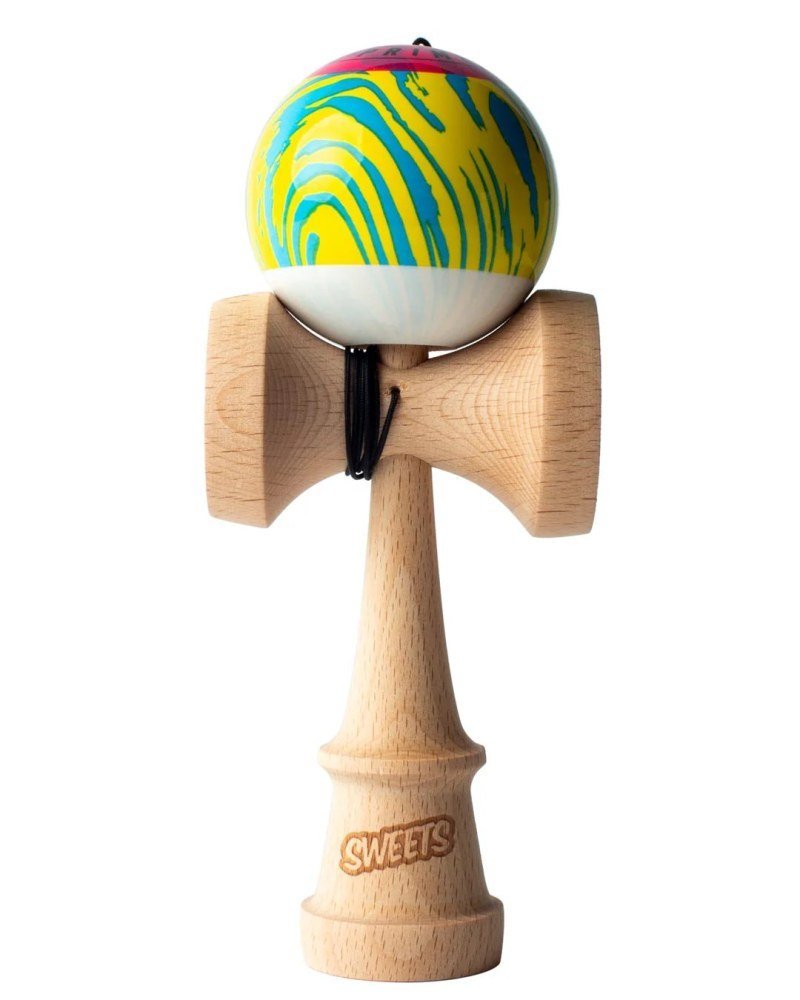
PRIME GRAIN SPLIT 2.0 - CMYK
€23.10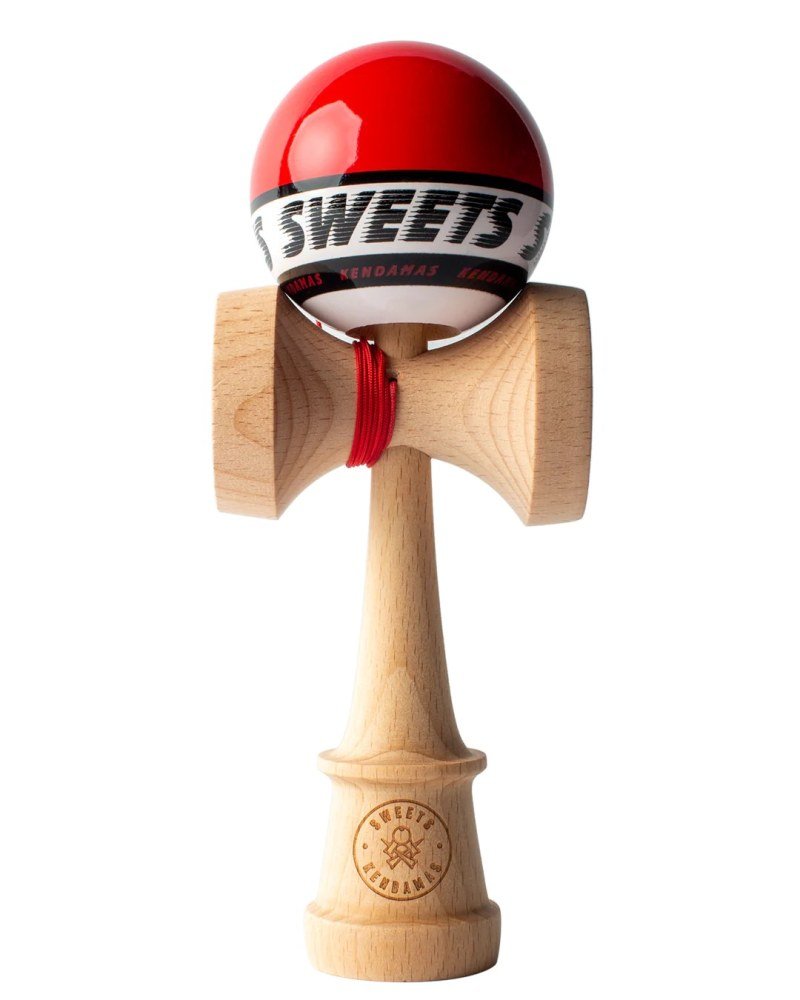
PRIME RADAR - RED
€23.10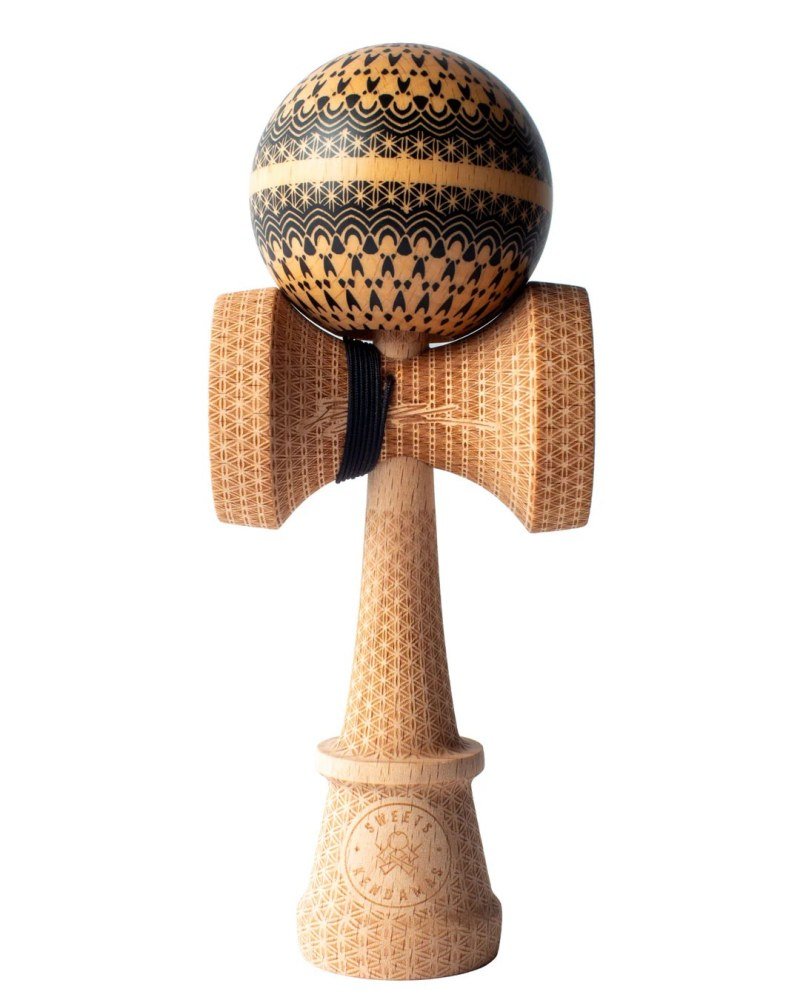
BOO JOHNSON - SACRED - LEGEND SHAPE - ANTISKID 2.0
€40.45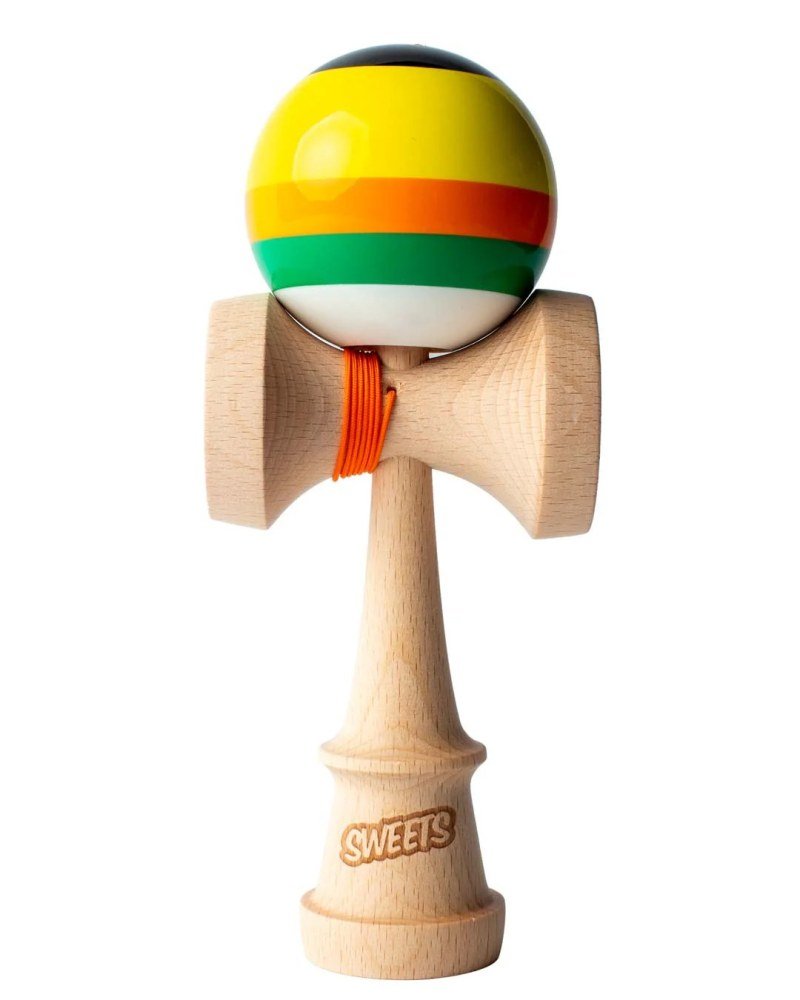
PRIME 5 STRIPE - PONCHO
€23.10Community and competition
The kendama has a living scene today: local jams, community-shops, international events. The Kendama World Cup is held every year in Hatsukaichi —the cradle of the kendama— and uses a trick list built by players of every style, with levels from 1 to 12 according to the points each trick is worth. Each competitor designs their own run to squeeze out their style. It's no minor detail: winning means over two thousand points in a single perfect round. In the 2025 edition first place went to Ryoga Kawamoto with 2,043 points.
You don't need to compete to belong to this. The curve accelerates enormously when you see other people live and pass tricks around. Just playing is enough.
Frequently asked questions
Is the kendama Japanese or European?
Both, in different layers. The remote origin is considered European (bilboquet, ball-and-cup games), and the Silk Road theory is poorly supported. But the modern kendama —with its three-cup crosspiece— is a Japanese development patented in 1918-1919 in Hiroshima. Distant origin debated; current form, clearly Japanese.
What age is it for?
From about 6-7 years old and with no upper limit: there are practitioners of all ages. For the youngest there are mini or lighter models, but to learn real technique, standard.
How long until I land the first spike?
Variable, but with daily practice focused on bending the knees, many people manage it in days or a few weeks. Consistency weighs more than talent; the shortcut is the knee bend, not an expensive kendama.
Do I need an expensive kendama to start?
No. You need a balanced one with some grip on the tama. We guide you in which kendama to buy.
What accessories are needed?
Little: spare strings (they break) and, if you choose tacky, some maintenance spray. Everything in strings and accessories.
Is it a sport or a toy?
Both at once, depending on how you take it. It has a federation (JKA), timed kyu/dan grades and a world championship, but it is also a casual pastime perfectly enjoyable without ever competing.
Now you know what a kendama is for real, not the leaflet version. The next step is to choose yours wisely: read which kendama to buy, look at our kendamas and, if you want to keep exploring the family, take a look at other skill games. But the honest summary is simpler: buy a decent one and give it a real week, bending your knees. The rest comes on its own.
Buy Kendama Online

Tensei Kiseki Akari GG — Kendama Europe

Tensei Kiseki Akatsuki GG — Kendama Europe
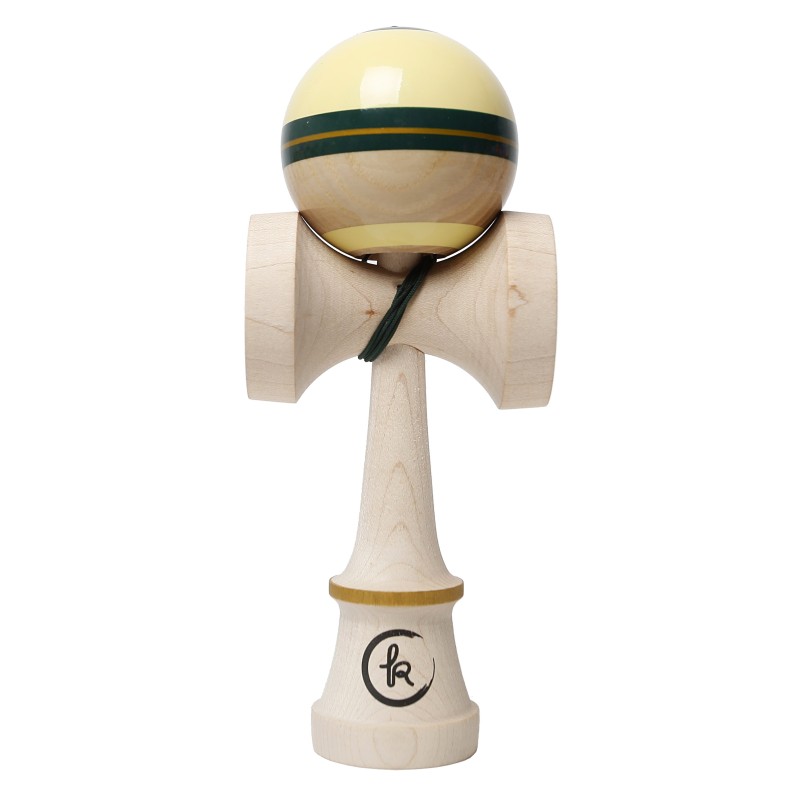
Tensei Kiseki Akatsuki MC — Kendama Europe
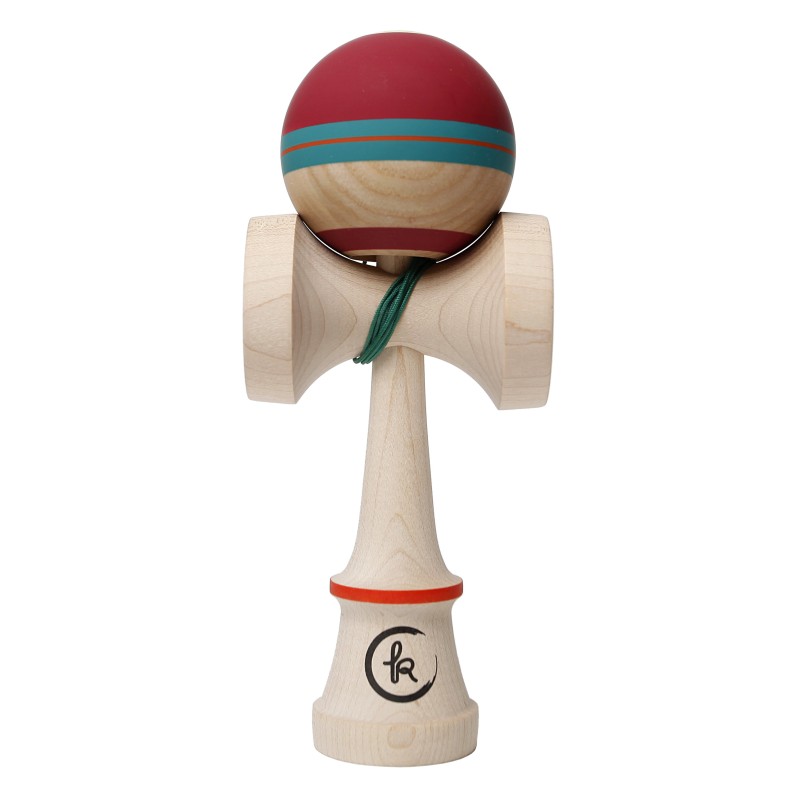
Tensei Kiseki Tsuchi GG — Kendama Europe
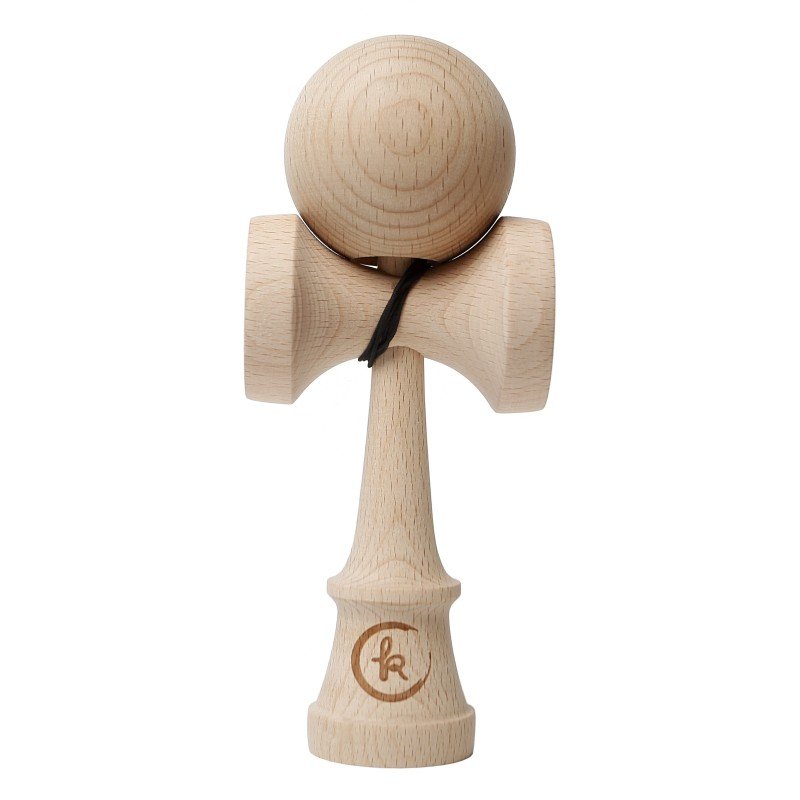
Tensei beech natural — Kendama Europe
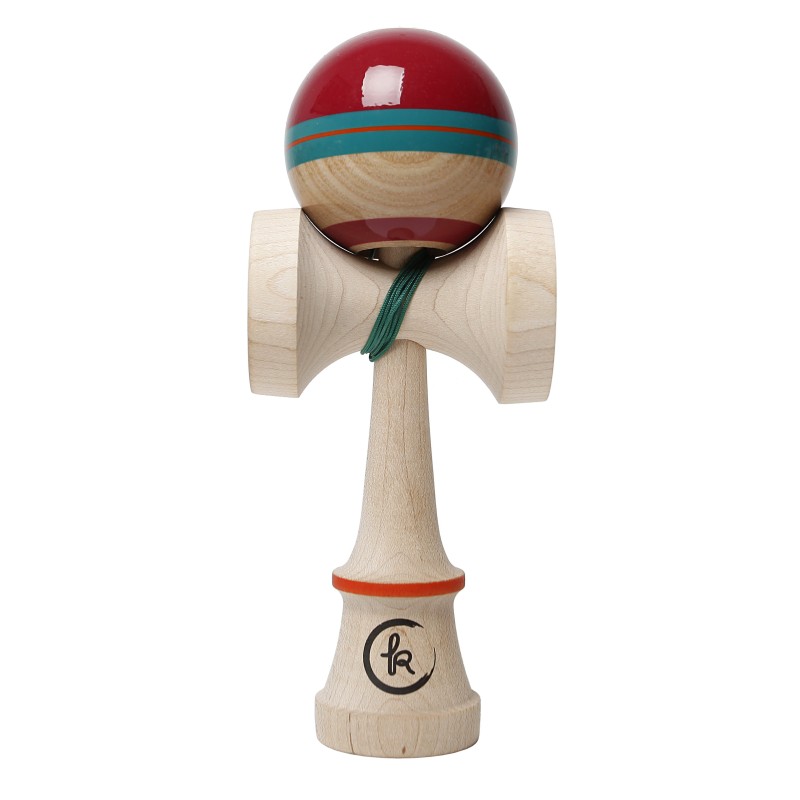
Tensei Kiseki Tsuchi MC — Kendama Europe
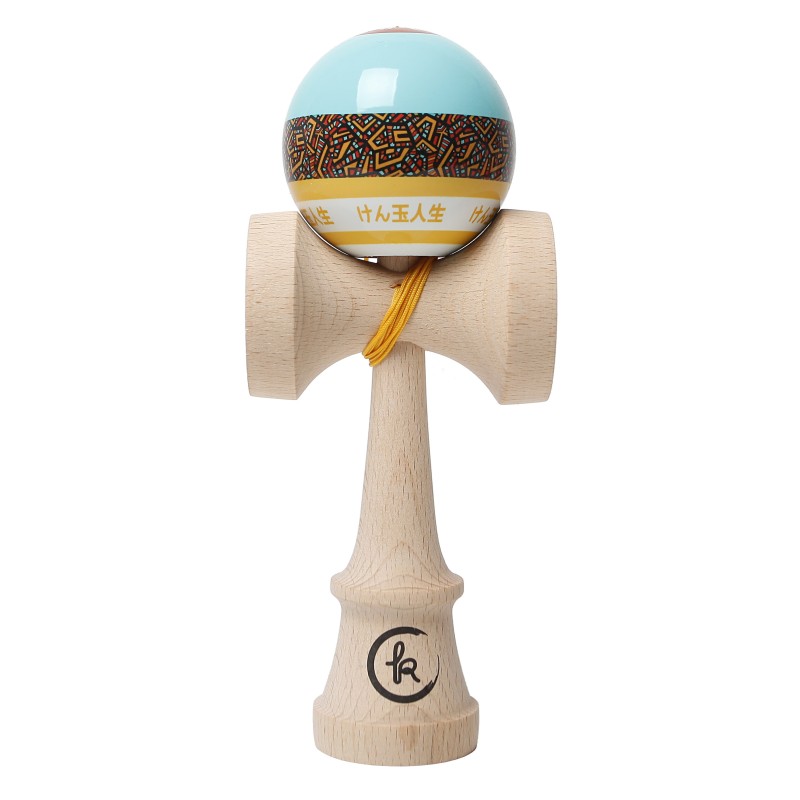
Tensei Sumaze Mazura MC — Kendama Europe
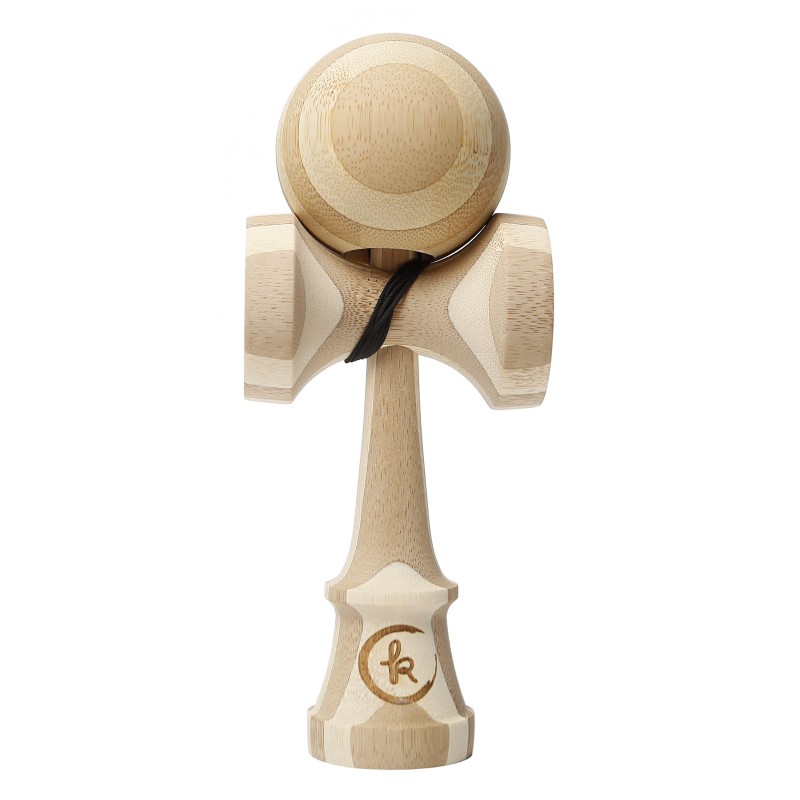
Tensei bamboo GG — Kendama Europe
Contact our team for any clarification about this document. Contact us


