

Best puzzle brands 2026: Ravensburger, Heye, Educa, Clementoni and more
Honest analysis of the most recognised puzzle brands: Ravensburger, Heye, Educa, Clementoni, Schmidt, Cobble Hill, Wentworth. What sets them apart in die-cut, quality and catalogue.
Not all puzzle brands are equal: die-cut, fit and print quality vary. An analysis of the most recognised brands and where each one shines.
Buying puzzles "by brand" is not snobbery: differences between manufacturers are real and noticeable at the table. Die-cut, cardboard stiffness, print sharpness and fit between pieces shape the assembly experience. This guide analyses the most recognised brands of the European market, what makes them stand out and when each one fits. Without affiliation: only what differentiates each manufacturer.
Brands analysed
Ravensburger (Germany, 1883)
The German classic. Founded in 1883 in the German city of Ravensburg, it has been making puzzles for over 140 years.
What sets it apart:
- Consistent die-cut: its pieces fit with a characteristic "click". Result of specific cutting machines refined over decades.
- Stiff cardboard, with matte anti-glare finish in many references.
- Huge variety: classic art, landscapes, fantasy, children's, special formats (panoramic, 3D).
- Giant runs: the Disney 40,320 pieces and Travel Around Art 54,000 are the best sellers in their segment.
Where it falls short: price. Among the most expensive per piece. And some mid-range references have less sharp printing than the high range.
What I recommend it for: if you want an assembly experience without surprises, Ravensburger is the safe choice. Especially in 1000+ pieces.
Heye (Germany, 1958)
German brand with very recognisable visual identity: their boxes are triangular, not rectangular. Famous for working with signature illustrators.
What sets it apart:
- Own illustrators: Mordillo (caricatures), Loup (urban landscapes), Gobi, Jean-Jacques Loup. If you like puzzles "with personality", Heye is reference.
- High print quality, saturated colours.
- Triangular box that saves shelf space.
- Consistent die-cut, firm fit.
Where it falls short: more limited catalogue than Ravensburger; you find less variety of themes if you're not after illustration.
What I recommend it for: if you're looking for an "author" puzzle, with distinctive illustration, especially as a gift. Aesthetics usually win many points.
Educa (Spain, 1894)
Spanish Catalan brand, more than 130 years of history. Strong presence in the Iberian market.
What sets it apart:
- Includes "Fix Puzzle" glue in many references: a substitute for separate glue, very useful if you're going to frame.
- Value for money: usually more affordable than Ravensburger with reasonable quality.
- "Missing piece" service: if you lose a piece, they send it home for free.
- Wide catalogue: children's, landscapes, photography, fantasy.
Where it falls short: the die-cut, though consistent, is not as firm as Ravensburger or Heye. Pieces sometimes have more "play" and the puzzle can move during assembly.
What I recommend it for: to enter the adult puzzle world without spending much, or to gift. The lost piece service is very useful.
Brain teasers for all ages
Metal, wood and plastic puzzles, from those solved in minutes to those that take weeks.
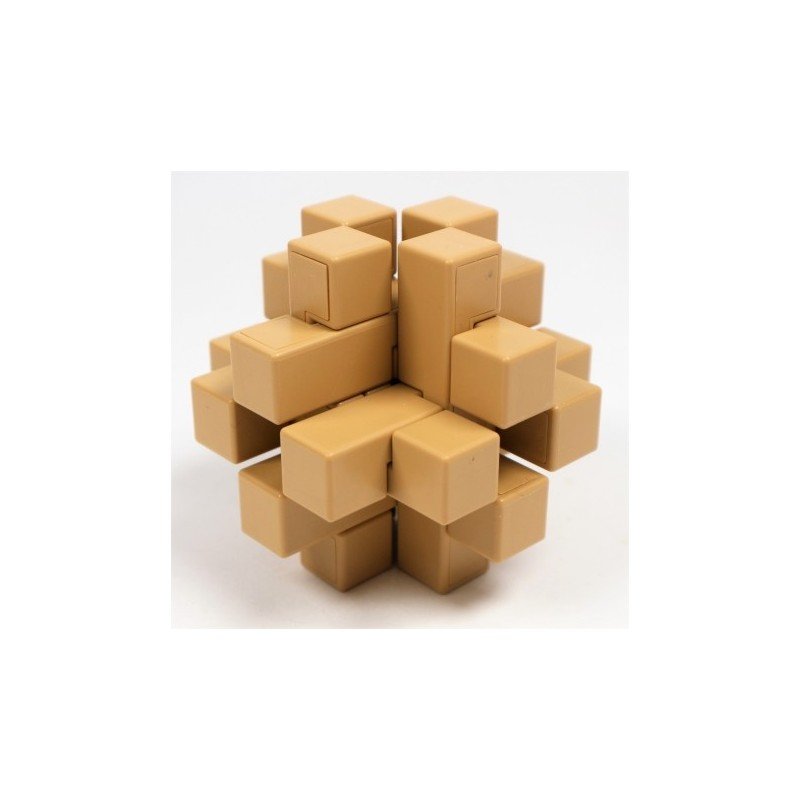 QiYi Kong Ming Lock Tic Tac Toe Rompecabezas
 Puzzle Hanayama Huzzle Cast: Amour
 Professor Puzzle: Metal and Wood - Franklin's
 Professor Puzzle: Set of 3 ( Halley,Galileo and Kepler)
Clementoni (Italy, 1963)
Italian, also with very broad catalogue. Known for their "High Quality Collection" of 1000-2000 pieces.
What sets it apart:
- HQC (High Quality Collection): the premium line with sharp print, firm cardboard and extensive catalogue (art, landscapes, cities, films).
- Competitive price in the high range.
- Licences: Disney, Marvel, Star Wars and others.
- Museum Collection line with art reproductions.
Where it falls short: economic series (non-HQC) have more variable quality; some pieces don't fit with the firmness you'd expect.
What I recommend it for: the HQC range is excellent value for money. Licences are useful if you want a puzzle of a specific franchise.
Schmidt (Germany, 1907)
Centenarian German brand, high range. Less known outside Central Europe but very respected.
What sets it apart:
- Quality illustrators and art: works with Thomas Kinkade, Steve Read, Davison among others.
- Firm cardboard and precise fit.
- Matte anti-glare finish even in mid ranges.
- Art and landscape designs dominate the catalogue.
Where it falls short: uneven distribution in Spain; some models only via import. Price similar to Ravensburger.
What I recommend it for: if you want a German alternative to Ravensburger, with different aesthetics. Especially for art reproductions.
Cobble Hill (Canada, 2005)
Canadian brand with a different proposal: "random cut".
What sets it apart:
- Random cut: pieces are not grid-shaped like in most brands; they're unique unpredictable shapes. Each piece is different, which changes the assembly experience.
- Matte anti-glare substrate of quality.
- Detailed images: landscapes, photography, animals.
- Firm thick cardboard.
Where it falls short: smaller catalogue than European brands. Less availability in Spain.
What I recommend it for: if you're tired of the classic grid die-cut and want a different experience. Random cut is divisive: you love it or hate it.
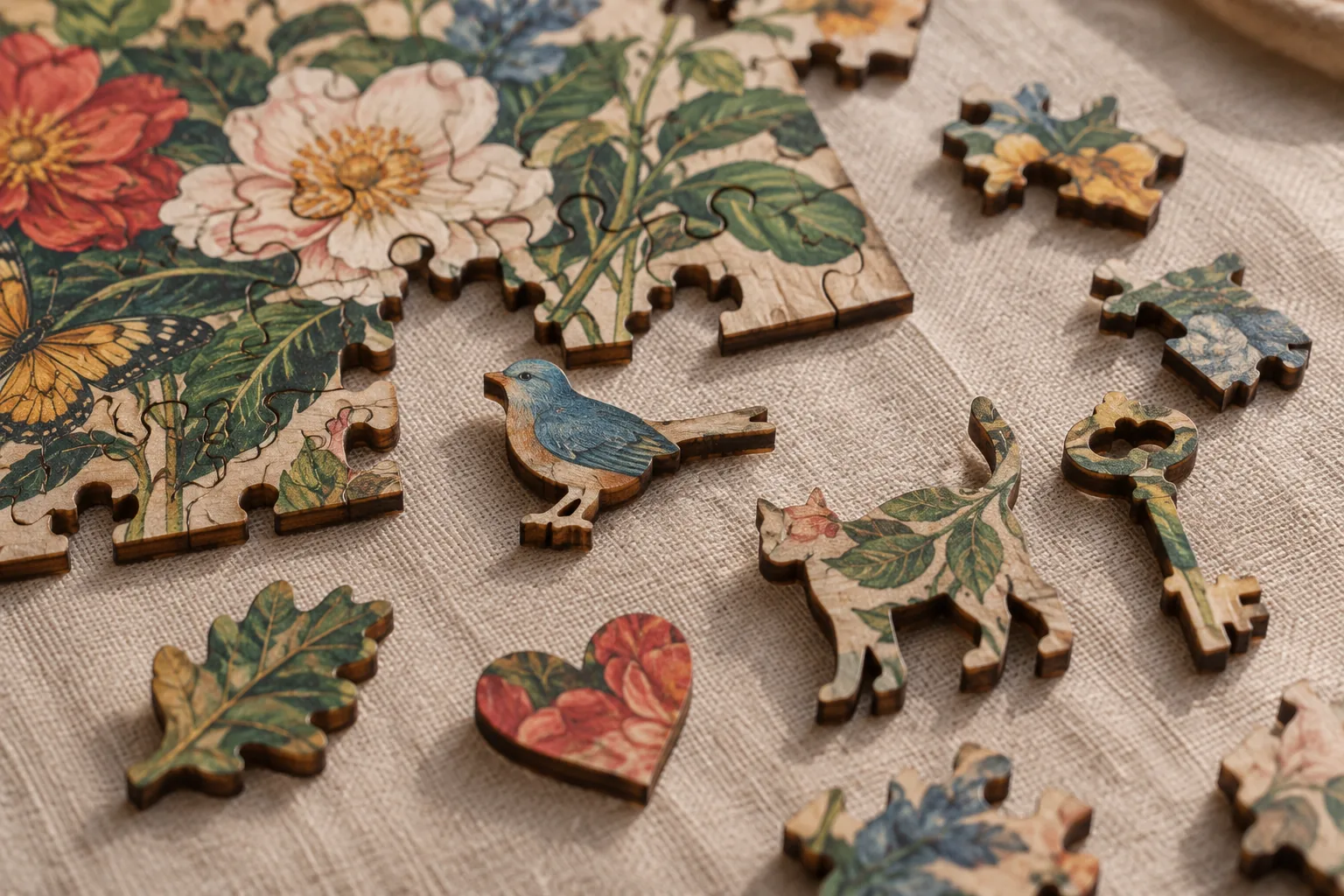
Wentworth and wooden puzzles
Separate category: wooden puzzles, premium and collectible.
Wentworth (UK): specialist in laser-cut wooden puzzles. Pieces with "whimsies" (figurative shapes: animals, objects) integrated. Small runs, high quality, high price (€60-150 per puzzle).
Other wood options:
- Ravensburger Wooden: Ravensburger's premium wooden line.
- Wooden City / Wood Trick: 3D mechanical wooden puzzles (clocks, vehicles).
- Liberty Puzzles: American brand, top of wooden range.
What I recommend them for: if the puzzle is a special gift, decoration or collecting. For assembling and dismantling a lot, they're too expensive: the wooden proposal is to keep.
Quick comparison
| Brand | Origin | Strength | Best for | Price range (1000 pc) |
|---|---|---|---|---|
| Ravensburger | DE | Consistent die-cut, big catalogue | Any use, quality standard | €15-25 |
| Heye | DE | Author illustrators | Gift, distinctive aesthetics | €15-22 |
| Educa | ES | Price, included glue, missing piece | Starting, gift, mid range | €10-18 |
| Clementoni HQC | IT | Value, licences | Licences, mid-high range | €12-20 |
| Schmidt | DE | Art reproductions | Art, landscapes, premium alternative | €15-25 |
| Cobble Hill | CA | Random cut | Different experience | €18-25 |
| Wentworth | UK | Wooden + whimsies | Special gift, collecting | €60-150 |
Brands to avoid
We won't name names, but as a criterion: supermarket puzzles below €8 in 1000 pieces usually have:
- Soft cardboard that softens with handling.
- Inconsistent die-cut (some pieces fit under pressure, others float).
- Print with blurs or misalignments.
- Missing or duplicate pieces more frequent.
The extra cost of going from €6 to €12 for a 1000-piece puzzle is immediately noticeable in the experience.
Frequently asked questions
What's the best puzzle brand?
Ravensburger is the standard, but "best" depends on use. For art, Schmidt and Heye. For starting or gift, Educa. For licences, Clementoni HQC. For collecting, Wentworth.
Why is Ravensburger more expensive?
For die-cut consistency and cardboard. Their cutting machines have very tight tolerances, which explains the characteristic "click". That precision costs money.
Is Educa a good brand?
Yes, mid range. Their lost piece service is excellent and the glue included in many references compensates the price. For 1000 pieces or less, very recommendable.
What is Cobble Hill's random cut?
Cut system where pieces are not grid-shaped: each piece has unique shape. Changes the assembly experience (more visual challenge, less systematic). Not for everyone.
Is a wooden puzzle worth it?
For special gift or collecting, yes. For habitual assembly and dismantling, too expensive (€60-150). The wooden proposal is to keep, not assemble and store.
Brain Teaser Puzzles
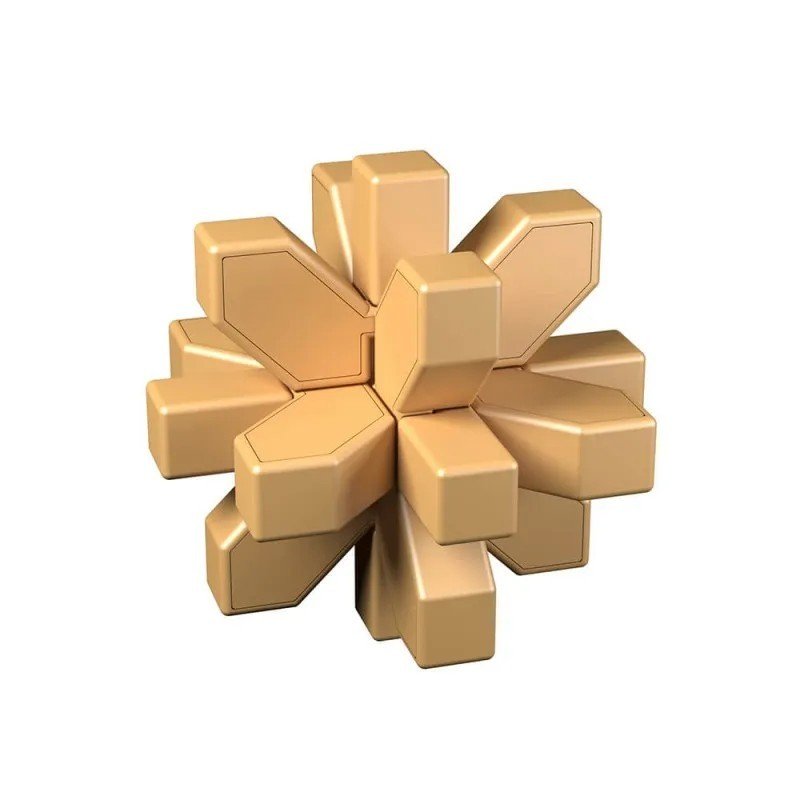
QiYi Blossom Lock Kong Ming Plastic Puzzle

QiYi Kong Ming Lock Ball

Ball in the Cage - Caged ball Kong Ming puzzle
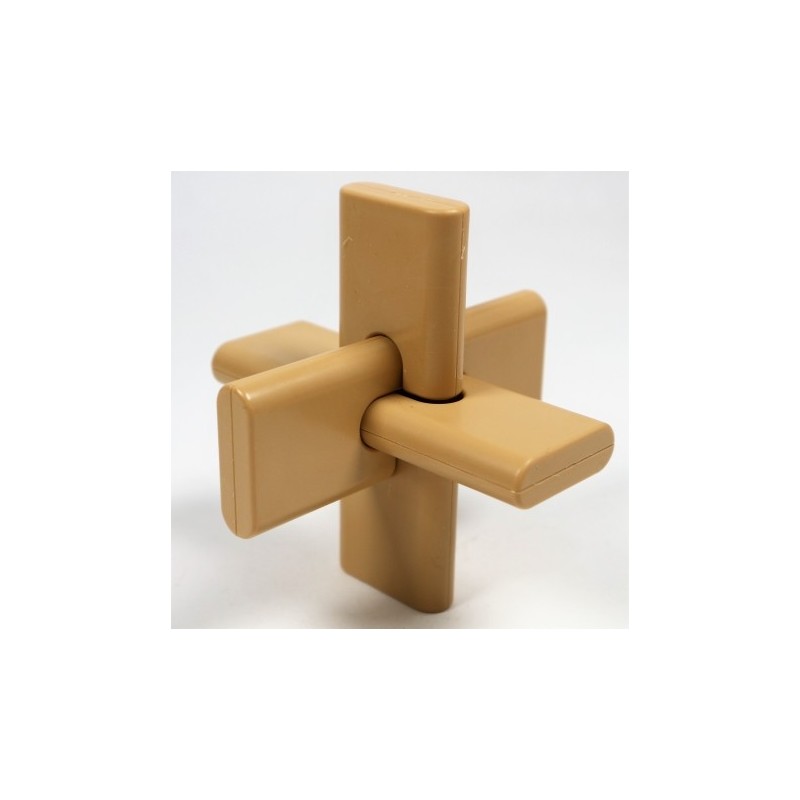
QiYi Kong Ming Lock Three Connection Big Triple

QiYi Luban Sphere Kong Ming Lock 65mm ABS

QiYi Kong Ming Lock Twenty-four Locks
QiYi Kong Ming The 18 Arhats 8003 71mm ABS
QiYi Kong Ming Lock Blockade
Contact our team for any clarification about this document. Contact us


