

Tally-Ho
Tally-Ho Autumn Circle Back – Playing Cards
€11.95


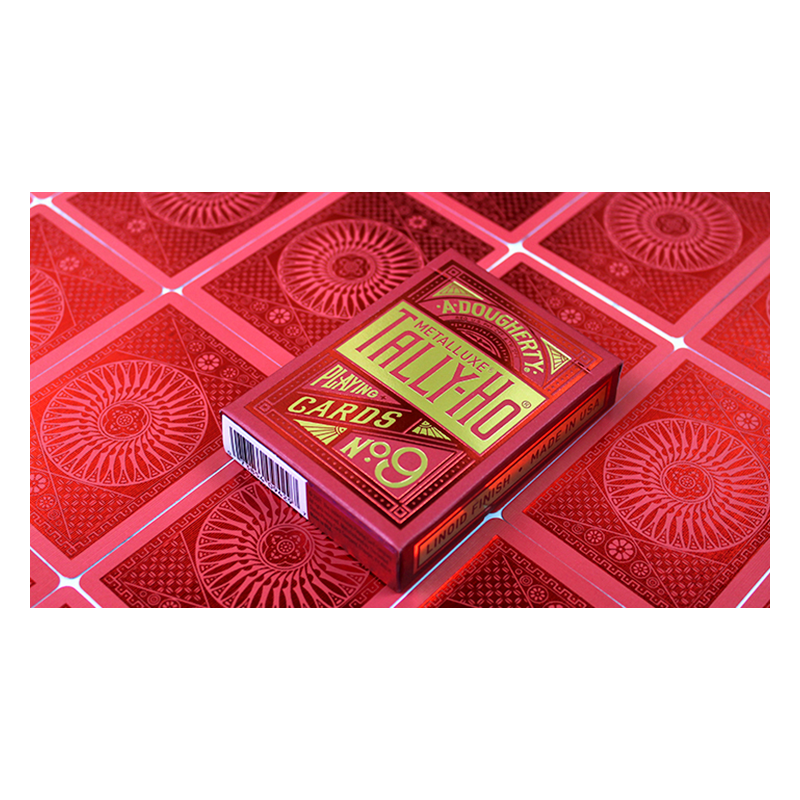


Tally-Ho is one of the most established American playing card brands on the market. Printed since 1885 and currently manufactured by United States Playing Card Company in Erlanger, Kentucky, it shares the plant with Bicycle but keeps its own character: the Q1 (Linoid) finish, a faster feel and two classic backs —Circle Back and Fan Back— that have been in catalogue for more than a century. In cardistry, close-up magic and home poker it is considered one of the most used options for those looking for fast handling without giving up the durability of American stock.
Tally-Ho was launched in 1885 within the catalogue of A. Dougherty Co., a Brooklyn-based New York printer. The name echoes the British hunters' call when spotting a fox, a recurring image in Victorian engravings of the period.
In 1907, United States Playing Card Company acquired A. Dougherty and integrated Tally-Ho into its catalogue. Production moved first to Cincinnati and now sits in Erlanger, Kentucky, where Bicycle, Bee, Aviator and Hoyle are also printed. Despite sharing the plant, Tally-Ho kept its original two backs and a finish distinct from Bicycle's Air-Cushion from the start.
The 1885 original back. A central circle with a geometric mandala framed by filigree. It is the version most tied to the brand's history and the common choice at home poker tables in the United States.
Cardistry · Poker · MagicFan-shaped back with radial symmetry. Visually more ornamental than the Circle Back, it is usually preferred in stage magic for the richness of the pattern when doing a spread or a wide fan.
Cardistry · MagicVersions with redesigned tucks, Magic Finish runs or themed reprints. They keep the Tally-Ho format but are aimed at collecting or occasional use, not as a daily deck.
CollectingBoth brands are printed at the same USPCC plant in Erlanger (Kentucky) and share stock. The difference is in the finish: Bicycle Standard uses Air-Cushion (mesh-like texture with many microcells), while Tally-Ho uses Q1 or Linoid Finish (smoother, less aggressive texture).
In practice, a Tally-Ho deck slides more between cards than a Bicycle, which means cleaner fans and faster spreads. The trade-off is a slightly shorter service life under heavy cardistry, where slip wears out sooner. For close-up magic and poker, the difference is noticeable but not decisive.
Recommended: Circle Back or Fan Back
The Q1 finish helps with fans, spreads and wide opens. Many cardists coming from Bicycle Standard prefer Tally-Ho for the lower friction between cards, which makes movements smoother.
Recommended: Fan Back
The Fan Back pattern has better visual presence from a distance. The smooth texture favours double lifts, slides and any manipulation where slip control matters.
Recommended: Circle Back
It is the most-used version at casual tables thanks to its reasonable durability and recognisable feel. It holds long sessions better than limited or collector editions.
Q1, also called Linoid Finish, is the signature finish on Tally-Ho cards. Compared to Bicycle Standard's Air-Cushion, it has a smoother texture and slightly less grip between adjacent cards.
In practice this means faster sliding during handling and cleaner fans. The trade-off is a slightly shorter service life under heavy cardistry, where slip fades sooner than on a deck with a more structured finish.
Yes. The technical gap with Bicycle Standard is not large and a beginner can use them with no problem. Some professionals suggest starting with Bicycle for durability while learning the basics, then moving to Tally-Ho when more slip is wanted.
All production comes out of the United States Playing Card Company (USPCC) plant in Erlanger, Kentucky. It is the same factory where Bicycle, Bee, Aviator and Hoyle are printed, which explains the shared stock but with finishes specific to each brand.
The stock is the same (USPCC). The difference is the finish: Bicycle Standard uses Air-Cushion (more structured, better durability) and Tally-Ho uses Q1 or Linoid Finish (smoother, faster fans). In visual cardistry Tally-Ho slides more; in home poker the difference is minimal.
In heavy cardistry a deck keeps proper snap and feel for 4 to 8 weeks. In casual use —weekly poker games or weekend magic— it can stay in good shape for over a year.


