History of the poker deck: the French playing card
America did not invent it. How the French suits cheapened printing, the joker was born in euchre and the English 52 cards were fixed.
The poker deck was not born in a Mississippi casino. Why the French suits cheapened printing, how England fixed the 52 cards, where the joker came from and why the ace of spades carries a tax stamp.
A first misconception is the casino one: many people imagine the poker deck was "born" on the Mississippi steamboats or in the wild West. No. The history of the poker deck is, in essence, the history of a practical industrial decision: simplifying the drawing to print more cheaply. That 52-card deck with hearts, diamonds, clubs and spades you use today for poker, bridge, magic or the /en/content/17-types-of-playing-card-decks did not arise all at once nor in America: it is the result of several centuries of European evolution from the same Mamluk playing cards from which the Spanish deck descends. I'll tell it with firm dates and separating, once again, the documented from the conjectural, because here too there is a lot of legend.
The starting point: a mosaic of suits
As I explain in the /en/content/32-history-of-the-spanish-deck, playing cards arrived in Europe from Mamluk Egypt around 1370, with authenticated references from the last quarter of the 14th century. But it's worth getting into the head of a 15th-century European: for him there was no "the" deck. There was a mosaic of suit systems that coexisted and competed. In the Peninsula and Mediterranean Italy the Latin suits ruled: cups, coins, swords, clubs. In the Germanic and Swiss world, something different: hearts, leaves, bells and acorns. Each system implied a different drawing and, above all (this is the key to the whole history), a different printing cost.
That 52-card deck shares its ultimate root with the Spanish one: both descend from the same Islamic-medieval trunk. The bifurcation was not of origin, but of style and economy. Being clear about this avoids the most common error of all: thinking that the poker deck is "more modern" or "more advanced" than the Spanish one. It isn't. It is a different branch of the same tree, which prospered for industrial reasons, not for conceptual superiority. One deck is not better than another; it is the solution to a different economic problem.
It's worth lingering on that mosaic, because it explains many things that today seem arbitrary to us. Why are clubs black and hearts red? Because they come from the Germanic acorns and hearts, reduced to two inks. Why does the spade look so little like a real sword? Because it doesn't come from a Latin sword, but from the German leaf (Laub), stylized until it became a pointed lance head with a foot. Why is the rhombus called "diamond" in English and "square" in French (carreau, a floor tile)? Because each language baptized as best it could an abstract geometric shape that no longer represented anything concrete. The whole poker deck is, in reality, a palimpsest: beneath each French symbol there is an erased German symbol, and beneath the whole structure there is a Mamluk skeleton. It's worth keeping in mind every time someone sells you an "ancestral meaning" of the spades or the hearts: the meaning, if there was any, was lost in the translation of one suit into another more than five hundred years ago.
And a note that surprises almost everyone: the Germanic system did not disappear. The German-suited decks (hearts, leaves, bells, acorns) and the Swiss ones are still alive today in Bavaria, Austria, Switzerland and a good part of Central Europe, where Skat, Jass or Schafkopf are played with them. That is, the poker deck did not "replace" the others in an inevitable triumphal march: it won the global commercial war, but the regional decks held out in their strongholds, just as the Spanish one held out in its own. The history of playing cards is not that of a system that crushes the others, but that of several systems that still coexist, each strong where it is.
The French solution: two colors and flat shapes
Around 1480, in France, a four-suit system derived from the German suits was fixed:
- Cœurs: hearts ♥ (from the German Herz)
- Carreaux: diamonds or rhombuses ♦
- Trèfles: clubs ♣ (from the acorns, Eichel)
- Piques: spades ♠ (from the leaves, Laub)
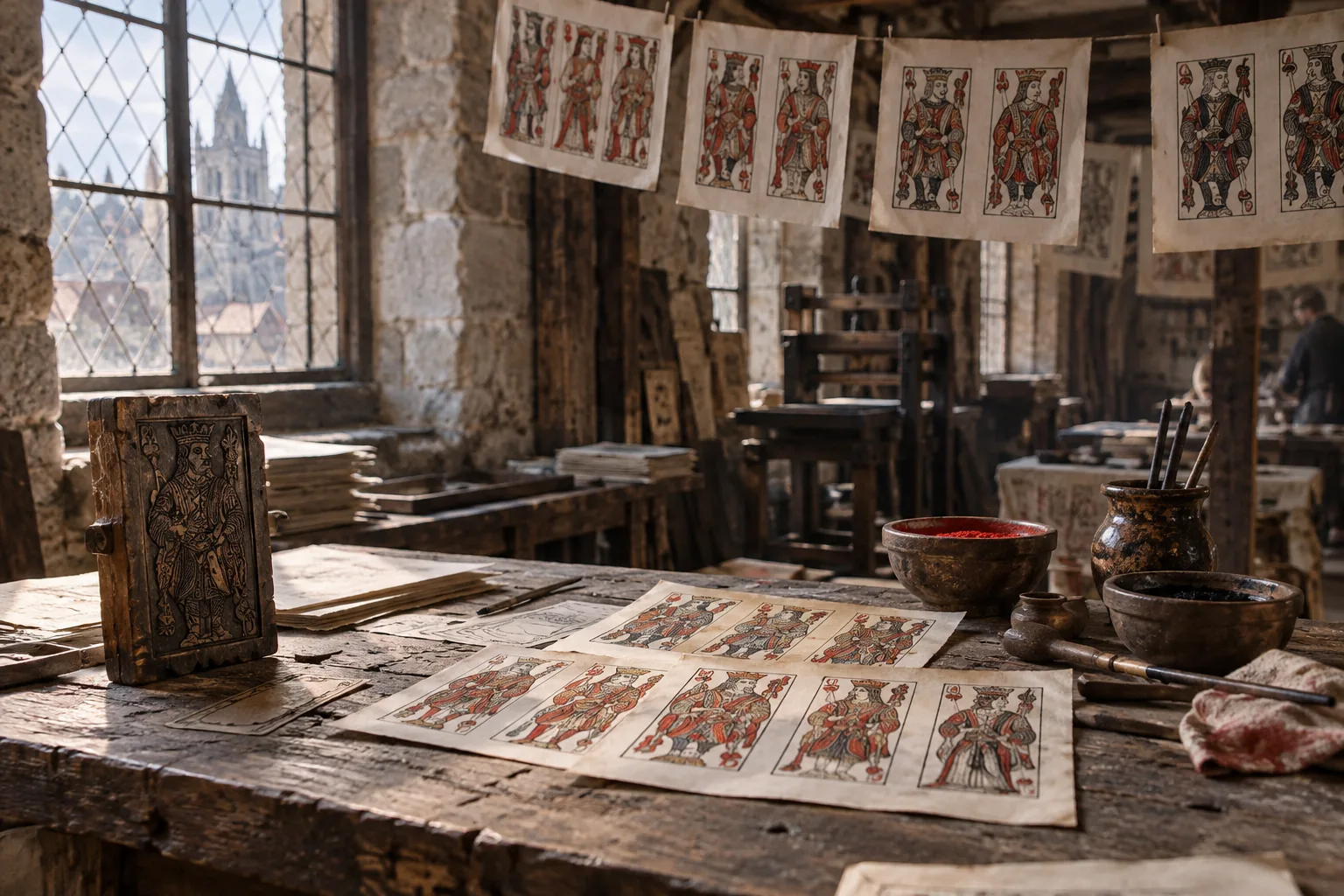
The key was not aesthetic, it was accounting. The Latin and Germanic suits required complex drawings (intertwined swords, embossed cups, acorns, clubs) that demanded detailed xylography or hand illumination. The French symbols, by contrast, are simple geometric shapes of a single color: they could be stenciled with cut templates and only two inks, red and black. Picture it for a moment: printing an intertwined Latin sword required a wood block carved in detail and, often, manual retouching card by card. A heart or a rhombus is a flat blot any template reproduces identically ten thousand times without anyone's pulse trembling. Reducing the problem to "two colors and flat shapes" turned the deck into one of the first truly serializable products of the European printing press.
That is the reason, and no other, why the French system ended up imposing itself in a large part of the world, as the International Playing-Card Society and the specialist literature agree. The French deck did not win because it was prettier (that is debatable, and I find the Castilian cudgels beautiful); it won because it was almost free to print by comparison. And this logic connects directly with what I tell in the /en/content/32-history-of-the-spanish-deck about Fournier's industrialization: in both cases the decisive factor is not symbolism, it is economies of scale. Whoever produces more cheaply and distributes farther fixes the standard. The poker deck is, to a large extent, a triumph of logistics.
There is here a lesson in economic history that transcends playing cards. The French deck is one of the first documented examples of how a process innovation, not a product one, can sweep a market. The product, in essence, was the same: four suits, numbers and figures to play with. What changed was how it was made. It is exactly the same principle that, centuries later, would explain the triumph of the assembly line or of transport containerization: sometimes the winner is not the one who does something better, but the one who does it much more cheaply at scale. That this lesson can be told with a deck in hand is one of the reasons the history of playing cards is so good for understanding history itself. A trivial object holds within it the whole logic of the first industrialization.
Valet, dame, roi: the knight that got lost along the way
The French deck standardized three court figures per suit: valet (jack), dame (queen) and roi (king). Versus the Spanish one, which keeps knave, knight and king, the French one replaced the knight with the queen. It's not that the rider didn't exist: in tarot decks a cavalier (knight) does appear between the queen and the jack, proof that the equestrian figure was there and was deliberately discarded in the everyday playing card. Each tradition chose its cast. I develop the detail of which suits and figures each family has in /en/content/34-poker-deck-suits.
The English standardization: the Anglo-American pattern
Another common misunderstanding: what we call the "poker deck" is not exactly the French deck, but the Anglo-American pattern, an English version of it. England imported French playing cards from Rouen and Antwerp as early as around 1480; the oldest cards of the English pattern date from around 1516. The modern pattern as you know it is the result of the redesign of the old Rouen pattern done by Charles Goodall and son throughout the 19th century. They are 52 cards (thirteen per suit: ace, 2 to 10, J, Q, K), with corner indices and a decorated back. This standardization was relatively late compared with the continental evolution, but it became universal thanks to the global pull of whist, bridge and poker. That is why this pattern is also called "international".
Several details of that pattern deserve explanation, because today we take them as obvious without knowing that each one solves a specific problem of a real game:
- The corner indices (the little letter and the small suit at the top) are a 19th-century improvement. They allow you to fan the hand and read it by squeezing the cards instead of spreading them out. It is the Anglo-Saxon solution to the same problem that "the pinta" solved in Spain.
- The rounded corners avoid the wear and the involuntary marking that gave away used cards to an attentive player.
- The decorated and symmetrical back prevents identifying cards by marks on the back, and is also what makes modern cardistry and card magic possible.
- The "double-headed" figures, symmetrical top and bottom, avoid having to turn the card and, incidentally, hide whether you hold court cards in your hand.
None is a designer's whim. The poker deck is, in reality, a profoundly "engineered" object: centuries of real games polishing every edge. When today you fan a hand without thinking, you are using several 19th-century solutions to problems the 18th-century players had.
Another deeply rooted idea is that of the "eternal pattern". Many people imagine that the figures of the English deck (that king of hearts who seems to be driving the sword into his own head, that one-eyed jack) come from the Middle Ages without a single change. It is not so, although there is some truth buried. The Anglo-American pattern descends from the old Rouen pattern, which the English imported from the late 15th century; over time, the English engravers kept copying copies of copies, and from so much recopying the drawing degraded and "froze" into shapes nobody quite understood anymore. The famous "suicide king" of hearts was not designed that way on purpose: it is probably the result of some point in that chain of copies, where an engraver lost the axe or the lance the king was holding and only the arm remained. That is, the poker deck preserves fossilized transmission errors, like a manuscript copied by hand over centuries. That makes it, if anything, more fascinating: it is not a rational design imposed from above, but an object that carries the scars of its own reproduction history.
Whist and bridge: the social engine that was missing
We usually sum up the triumph of the poker deck in one word, "poker", and it is unfair to history. Before poker there was another engine, more socially respectable and, for a long time, much more widespread: the trick-taking games of the whist family, which in the 18th century displaced the old Spanish ombre and became the parlor entertainment par excellence of the British bourgeoisie. Whist generated its own literature of treatises and rules (Edmond Hoyle published his famous treatise in the 18th century) and, well into the 20th century, evolved into bridge, which became a mass social phenomenon in the Anglo-Saxon world. It is important to understand this because it explains a physical detail: the very existence of the "bridge" size, narrower, arises from the need to comfortably hold thirteen cards in a fan in a trick-taking game. The deck was not globalized only by the chance and the bet of poker; it was also globalized hand in hand with a parlor game, domestic and respectable, that entered millions of homes. The French playing card conquered the world through two doors at once: that of the casino and that of the tea parlor.
There is a further nuance. Bridge did not only spread the deck: it standardized its use. A game with tournaments, federations, written rules and international championships needed a card to be identical in London, New York or Buenos Aires. That pressure toward uniformity (the same one that in sport fixes common rules) pushed the Anglo-American pattern to become a de facto standard. The universality of the poker deck is not only an effect of the printing price: it is also, in part, an effect of the institutionalization of the game. When something has world championships, it tends to have a single format.
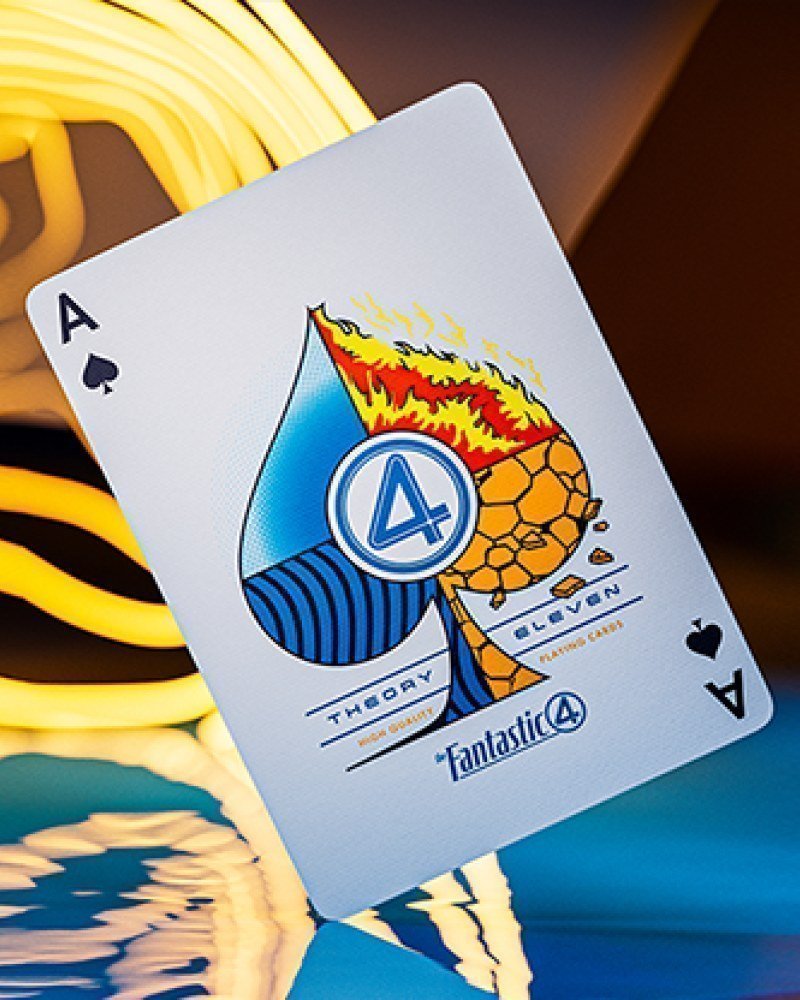
Did you know decks like these exist?
At heart, every deck has the same cards. What changes is everything else: the design, the finish, metallic inks or gilded edges. Take a look at our catalogue and bring your own style to the card table.
Browse our playing cards →





The joker: an American invention, not the tarot "fool"
This is one of the most frequently misunderstood points. The joker does not come from Europe, and does not derive from the "fool" (le mat / il matto) of the tarot. It is an American contribution of the 19th century, tied to a specific game: euchre. The documented data are these:
- According to the historian David Parlett, in the 1850s an extra card was added to a 32-card deck, specifically for euchre.
- That card functioned as the best bower, the highest trump, above the two jacks that already acted as trumps. "Bower" comes from the German Bauer ("peasant", but also "jack").
- Samuel Hart is credited with printing in 1863 the first illustrated Best Bower, his famous "Imperial Bower".
- Around 1868 the first references appear in written rules to a card called "Joker", and at the end of that decade the cards already labeled that way, with clowns and jesters, become popular.
- Charles Goodall made decks with a joker for the American market in 1871, and the first for the British market was sold in 1874.
The very name betrays the origin: most likely "Joker" comes from the German Juckerspiel (also Jucker), the original Germanic spelling of euchre. That is: the joker was born as a very concrete game tool (the supreme trump of euchre) and only afterwards did popular culture load it with symbolism: the jester, chaos, the wild card, the comic-book villain. The conceptual resemblance with the tarot fool is later and, to a large extent, romantic. In modern deck design the joker has also become the creative space par excellence: the card where makers and artists allow themselves graphic liberties, signatures and nods, precisely because it lacks a fixed function in most games.
It is also revealing how fast it traveled. Remember the dates: the card appears in the US around 1850, Samuel Hart prints his Imperial Bower in 1863, the name "Joker" is documented around 1868, and by 1871 Charles Goodall (the same British maker who standardized the Anglo-American pattern) is producing decks with a joker for the American market, and in 1874 for the British one. In barely a generation, a card invented for a specific game in North America crosses the Atlantic and is incorporated into the world standard. That is only possible because the playing-card industry was already, by that point, a global industry with well-oiled export chains. The joker is not just a nice curiosity: it is the proof that in the 19th century the deck already worked as an international product, capable of absorbing a local innovation and spreading it across the planet in years, not centuries.
There is an irony in all this. The card today most associated with mystery, with the unpredictable, with the pop-culture "agent of chaos", is in reality the one of the most prosaic and best-dated origin in the whole deck: we know almost with watchmaker precision when and what for it was invented. By contrast, the suits and the figures, which seem solid and ancient, are the ones that carry hazy and debated origins. The history of playing cards is full of these inversions: what seems ancestral is usually recent, and what seems anecdotal is usually better documented than the solemn.
The ace of spades: a British fiscal fossil
If you've ever wondered why the ace of spades usually carries a baroque design with the maker's name while the other aces are sober, the answer is not esoteric: it is the taxman. This is one of the best-documented stories in all of cartophily:
- In 1711, under Queen Anne, Great Britain extended the stamp duty to playing cards.
- From 1712 one card per deck was marked (typically the ace of spades) with a hand stamp that attested to payment.
- In 1765 the manual stamping ended: the Stamp Office began to print the official ace of spades itself, with the royal arms.
- In 1828 the famous "Old Frizzle" ace was printed, attesting a reduced rate of one shilling.
- In 1862 the stamp moved to the wrapper: from then on makers could freely design their ace of spades… and almost all kept, out of habit and prestige, the elaborate design.
- The tax did not disappear until 1960: almost 250 years of taxed playing cards.
So the "ornamental" ace of spades is, literally, a tax fossil. And it has curious cultural consequences: as it was the "official" card the State controlled, counterfeiting it amounted to defrauding the Crown, a serious crime. That administrative importance surrounded the card with a special aura that popular culture later turned into its associations with luck, death or fate. Once again, note the pattern: what seems ancestral symbolism is, looked at closely, a residue of economic and legal history. The same as we saw with the suits in /en/content/34-poker-deck-suits and with the estates in the Spanish deck: the esoteric explanation is usually much later than the material fact that originated it.
And the tax itself tells a social history worth underlining: that a State bothered to tax playing cards for almost two and a half centuries shows how far the deck was a mass and profitable consumer object. You don't tax rarities; you tax the things everyone buys. By 1711, the deck was exactly that.
The 20th century: the lingua franca of cards
The 52-card French deck became a planetary standard pushed by play: whist and bridge first, poker and casinos later, spread it throughout the world in the 19th and 20th centuries. Its simplicity and cheapness also made it ideal for close-up magic and for cardistry, where a symmetrical back and clean handling are essential. The rise of poker (and, in our days, its television and online boom) finished turning the Anglo-American pattern into the "lingua franca" of cards. Today a 52-card deck is recognized and used the same in Tokyo, Las Vegas or Madrid; something unthinkable in the 15th century, when each region had its own system. That universality is the culmination of the industrial logic we put on the table at the start: the format cheapest to produce and easiest to learn ended up imposing itself.
In parallel a new phenomenon arose: the deck as a design and collector object. Contemporary card magic and cardistry generated an industry of designer editions: metallic inks, die-cuts, backs designed so a flourish "reads" well on video. The card stopped being only a game tool to become also a piece of visual culture. At The Joker House we cover that ground both from the catalogue of playing card decks and the premium decks and from content such as /en/content/17-types-of-playing-card-decks.
Summary timeline of the poker deck
| Date | Milestone |
|---|---|
| c. 1370–1377 | Playing cards arrive in Europe from the Mamluk world; first firm references. |
| c. 1480 | France fixes the four suits (hearts, diamonds, clubs, spades), simplifying the Germanic ones. |
| c. 1516 | Oldest known cards of the English pattern (imported from Rouen). |
| 1711–1960 | British stamp duty on playing cards; the "stamped" ace of spades is born (Stamp Office, 1765; Old Frizzle, 1828; wrapper, 1862). |
| c. 1850–1868 | USA: the joker appears as the euchre "best bower" (Parlett); Samuel Hart's Imperial Bower, 1863. |
| 19th century | Goodall fixes the Anglo-American pattern: 52 cards, indices, rounded corners, double-headed figures. |
| 20th–21st centuries | Whist, bridge, poker and casino globalize the pattern; rise of the collector, magic and cardistry deck. |
Poker size and bridge size: which to use
There are two standard widths and it's worth not confusing them. The poker-size card is wider (around 63 mm) and is preferred for play, magic and cardistry because of its surface. The bridge-size one is narrower (around 56 mm), designed to hold large hands in trick-taking games like bridge itself, where you handle thirteen cards at once. The height is practically the same; what changes is the width. My practical recommendation: if you're going to do card magic or cardistry, or to play table poker, choose poker size (more control surface and a livelier "snap"); if you play a lot of bridge or other trick-taking games with a full hand, the bridge is more comfortable to hold. There is no "better" size: there is a size suitable for each use, just as the Spanish deck chose 40 or 48 cards according to the game.
And that coexistence of formats is, in reality, the best metaphor for this whole history. From the China of paper to today's premium editions, the playing card has never been a fixed object: it has been an object that adapts to whoever uses it, to the game being played and to the technology that makes it. The poker deck is the most traveled and most standardized version of an invention that has been reinventing itself for more than six centuries without losing its essence: four suits, some figures and the promise of a game. Tonight, when you shuffle, you'll know you hold in your hand six centuries of printing economics.
How much does a deck of cards cost?
From €5 to over €100. The 52 cards and the rules stay the same; this is what changes.
 To play€5.95 To play€5.95 |  Designer€12.95 Designer€12.95 |  Premium€17.99 Premium€17.99 |  Collectible€34.94 Collectible€34.94 | |
|---|---|---|---|---|
| Typical price | €5-9 | €9-15 | €15-30 | €30 or more |
| What sets it apart | Classic casino design | Artist illustration on back and faces | Special inks, embossing and foil on the box | Limited print runs and gilded edges |
| Who it is for | Games at home | Playing with something beautiful | Gifts or cardistry | Collecting and display |
| Example | Tally-Ho Fan Azul | theory11 Medallion | The Sandwich Series (Luncheon Meat) | Kings Wild LOTR Two Towers Gilded |
| See decks | See decks | See decks | See decks |
Frequently asked questions
Why did the French deck prevail over the Spanish one?
Through printing economics, not aesthetics. Its suits are flat shapes of two colors that were stenciled with templates, which hugely cheapened production compared with the complex drawings of the Latin and Germanic suits.
Where does the joker come from? Is it the tarot "fool"?
It is not the tarot fool. It is an American card, around 1850–1868, created as the top trump ("best bower") for euchre. The name probably comes from the German Juckerspiel. Its symbolism of jester and chaos is much later.
Why is the ace of spades so ornate?
Because of the British stamp duty on playing cards (1711–1960). The State printed the ace of spades as proof of payment (Stamp Office from 1765); when in 1862 the stamp moved to the wrapper, the makers inherited and kept the elaborate design out of prestige.
How many cards does the poker deck have?
52 cards (thirteen per suit: ace, 2–10, J, Q, K), plus one or two optional jokers. It is the Anglo-American pattern, fixed by Goodall in the 19th century and spread by whist, bridge and poker.
What is the difference between poker and bridge size?
The width: poker cards are wider (~63 mm) and are used for play, magic and cardistry; bridge ones are narrower (~56 mm) to hold large hands in trick-taking games. The height is almost identical.
Does the French deck also come from the Mamluk playing cards?
Yes. It arrived in Europe from Mamluk Egypt around 1370 (firm references from c. 1377) and the French suits were fixed around 1480 simplifying the Germanic suits. Its root is the same as that of the /en/content/32-history-of-the-spanish-deck.
Poker
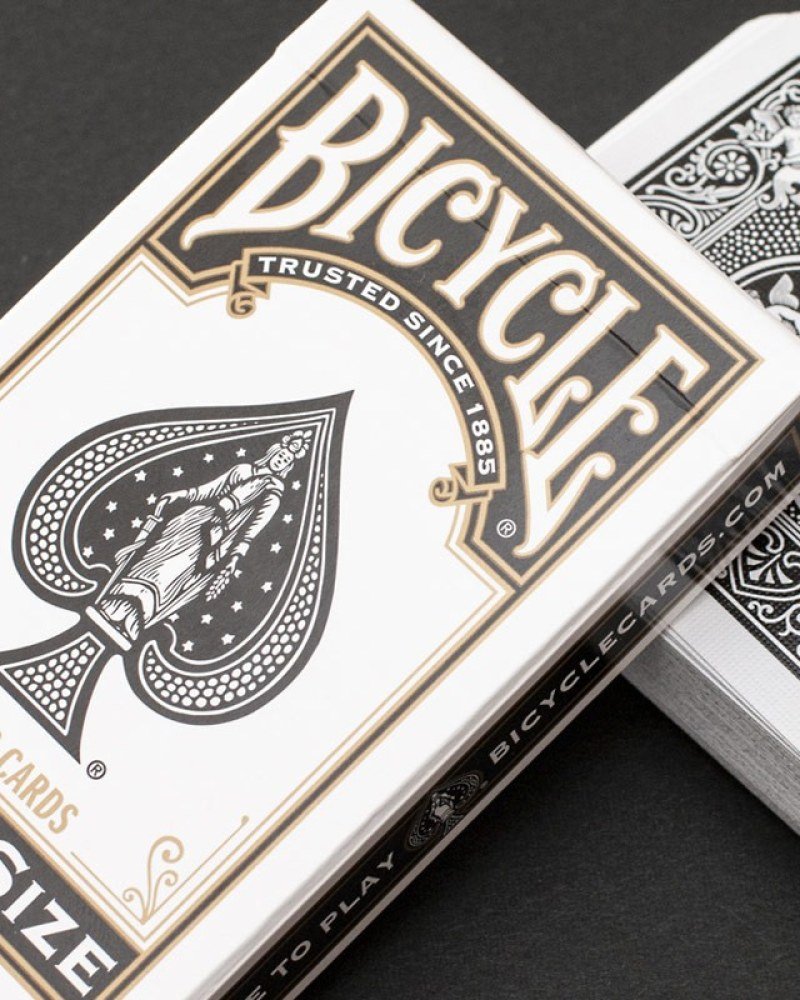
Bicycle Bridge Black – Playing Cards

Tally-Ho Circle Expert Touch Blue – Playing Cards

Tally-Ho Circle Expert Touch Red – Playing Cards
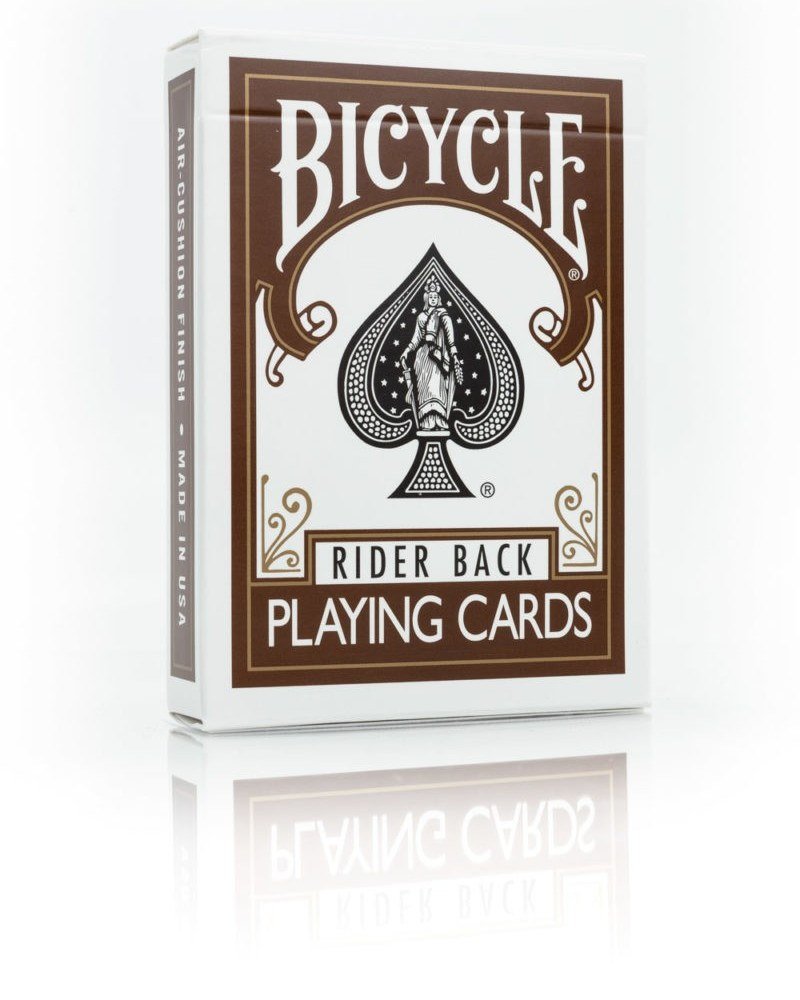
Bicycle Brown Back – Playing Cards
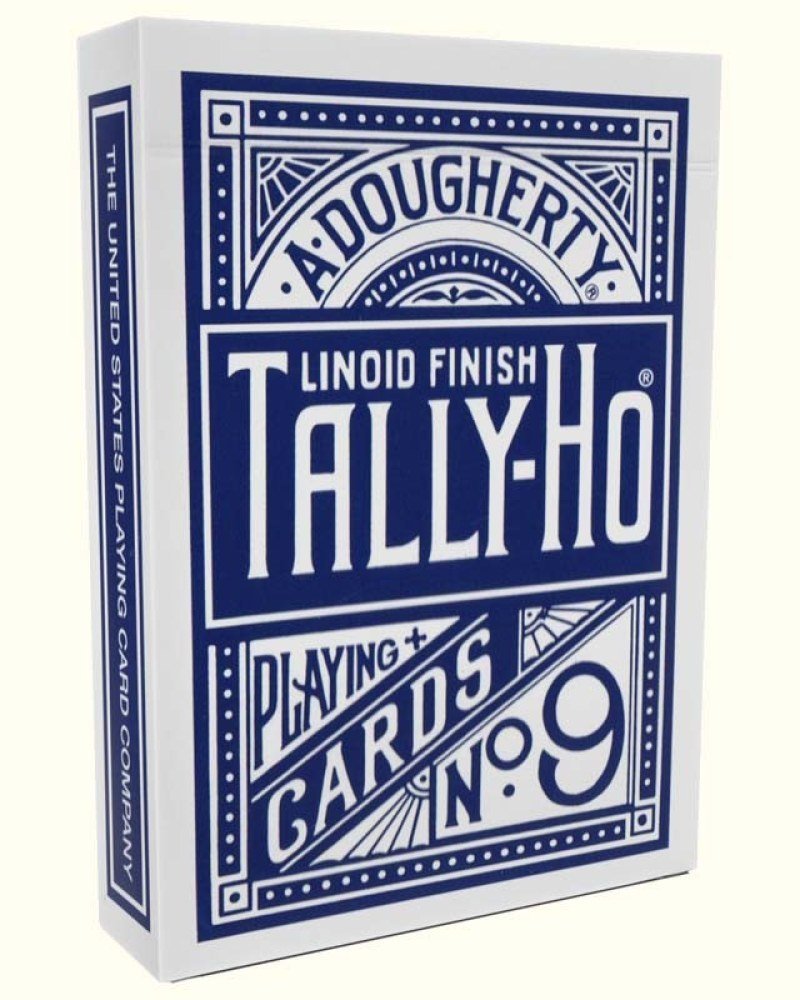
Tally-Ho Fan Blue – Playing Cards
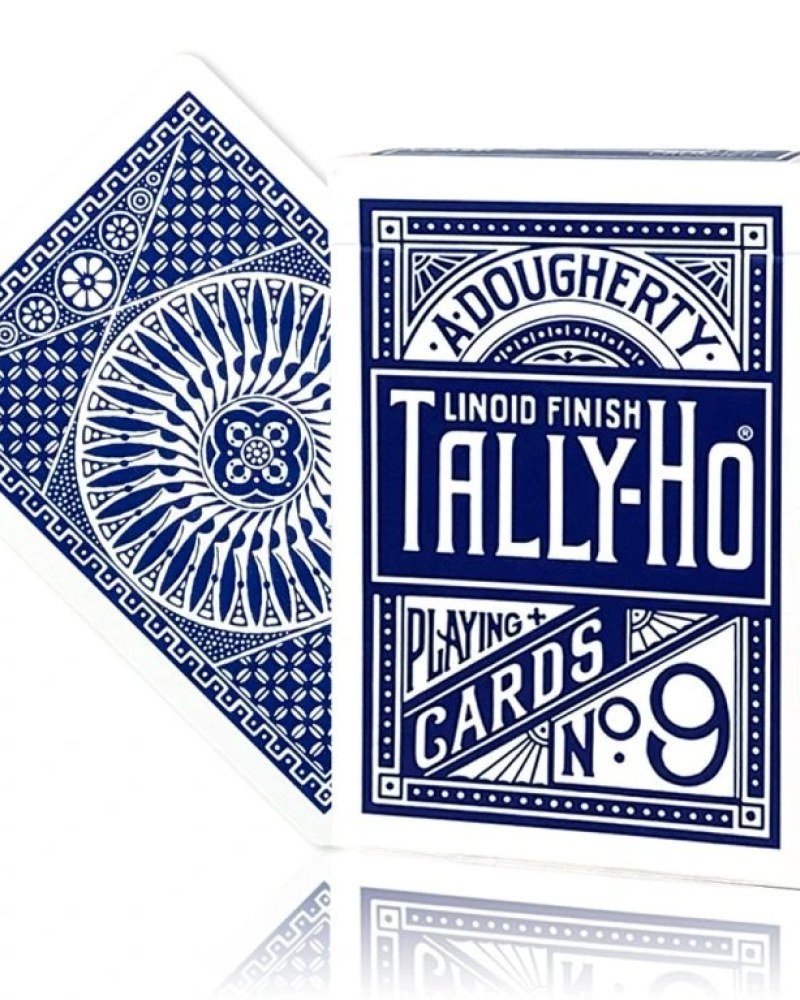
Tally-Ho Circle Blue – Playing Cards

Tally-Ho Circle Red – Playing Cards

Bee Jumbo Index Blue – Playing Cards
Contact our team for any clarification about this document. Contact us


