

Rubik's Cube World Records: WCA Table 2026
Current WCA records as of October 2026 for 3x3, 2x2, 4x4 to 7x7, blindfolded, Megaminx and more; 3x3 record history, US records and how they are ratified.
Quick answer
As of October 2026, the Rubik's Cube 3x3 world record is 2.51 seconds, set by Xuanyi Geng (China) at the Guangzhou Grand Open in October 2026. The world record for the average of five solves is 3.51 seconds, held by Yiheng Wang (China) since June 2026. Both are official records of the World Cube Association (WCA), the body that sanctions speedcubing competitions worldwide.
- The first recognized record dates from 1982: 22.95 seconds, by Minh Thai, in Budapest
- The 3-second barrier fell in February 2026 (2.76 s, Teodor Zajder, Poland)
- US 3x3 records: 3.13 s single (Max Park) and 4.72 s average (Matty Hiroto Inaba)
- The fastest robot solved it in 0.103 s, but that is a Guinness record, not a WCA one
Rubik's Cube world records change several times a year, and in 2025 and 2026 they have fallen at a pace not seen in a decade. That is why this page is dated: all the figures come from the official WCA results database as of October 2026. Here you will find the current records in all 17 official events, the history of the 3x3 world record since 1982, the US national records and what it takes for a time to count as a real record.
If you are just getting started, you may want to read our complete Rubik's Cube guide first, where we cover the history of the puzzle and the main solving methods.
Two records per event: single and average
In every event the WCA recognizes two separate records, and it helps to keep them apart before reading the tables:
- Single record (single): the best individual solve ever done in an official competition. It depends heavily on skill, but also on getting a favorable scramble.
- Average record (average): in most events competitors get five attempts, the best and worst are dropped and the middle three are averaged (average of 5). In 6x6, 7x7 and the events with fewer attempts, the plain mean of three is used (mean of 3). Many cubers see the average as the better measure of someone's real level, because it punishes mistakes and does not rely on one lucky scramble.
There are two exceptions to timed results: in fewest moves (FMC) the result is a number of moves rather than a time, and in multiblind the score is cubes solved minus cubes missed, with time used only as a tiebreaker.
WCA world records table (October 2026)
The tables show the records standing on October 22, 2026. The date given is that of the competition where each result was set. Countries are those listed on each competitor's WCA profile.
Cubes from 2x2 to 7x7
| Event | Single | Who and when | Average | Who and when |
|---|---|---|---|---|
| 3x3 | 2.51 s | Xuanyi Geng (China), Oct 2026 | 3.51 s | Yiheng Wang (China), Jun 2026 |
| 2x2 | 0.39 s | Ziyu Ye (China), Oct 2025 | 0.86 s | Sujan Feist (USA), Dec 2025 and Aug 2026 |
| 4x4 | 15.18 s | Tymon Kolasiński (Poland), Dec 2025 | 18.56 s | Tymon Kolasiński (Poland), Jan 2026 |
| 5x5 | 29.49 s | Tymon Kolasiński (Poland), May 2026 | 33.19 s | Timofei Tarasenko (Russia), Oct 2026 |
| 6x6 | 57.69 s | Max Park (USA), Apr 2025 | 1:01.76 mean of 3 | Timofei Tarasenko (Russia), Oct 2026 |
| 7x7 | 1:27.47 | Timofei Tarasenko (Russia), Oct 2026 | 1:35.93 mean of 3 | Timofei Tarasenko (Russia), Oct 2026 |
3x3 variants
| Event | Single | Who and when | Average | Who and when |
|---|---|---|---|---|
| 3x3 one-handed | 5.62 s | Patrick Ponce (USA), Aug 2026 | 6.99 s | Zhen Chen (China), Jul 2026 |
| 3x3 blindfolded | 11.56 s | Tommy Cherry (USA), Jun 2026 | 13.97 s | Tommy Cherry (USA), Aug 2026 |
| Multiblind | 63 of 65 cubes in 58:23 | Graham Siggins (USA), Oct 2025 | no average | |
| Fewest moves | 16 moves | Shared by four people (see below) | 19.00 moves mean of 3 | Brian Johnson (USA), May 2026 |
| 4x4 blindfolded | 51.96 s | Stanley Chapel (USA), Jan 2023 | 59.39 s mean of 3 | Stanley Chapel (USA), Jun 2025 |
| 5x5 blindfolded | 1:58.59 | Stanley Chapel (USA), Jan 2026 | 2:27.63 mean of 3 | Stanley Chapel (USA), Dec 2019 |
The fewest moves single record of 16 moves is shared by Sebastiano Tronto (Italy, 2019), Aedan Bryant and Levi Gibson (USA, both at the same competition in June 2024) and Jacob Sherwen Brown (United Kingdom, October 2024). The WCA recognizes any result equal to or better than the current record, so a tie counts too.
Other puzzles
| Event | Single | Who and when | Average | Who and when |
|---|---|---|---|---|
| Megaminx | 21.04 s | Ziyu Wu (China), May 2026 | 23.40 s | Timofei Tarasenko (Russia), Aug 2026 |
| Pyraminx | 0.73 s | Simon Kellum (USA), Dec 2023 | 1.14 s | Lingkun Jiang (China), Dec 2025 |
| Skewb | 0.73 s | Vojtěch Grohmann (Czechia), Mar 2026 | 1.37 s | Ignacy Samselski (Poland), Jun 2025 |
| Square-1 | 2.85 s | Brian Johnson (USA), May 2026 | 4.63 s | Sameer Aggarwal (USA), Feb 2025 |
| Clock | 1.53 s | Lachlan Gibson (New Zealand), Sep 2025 | 2.14 s | Lachlan Gibson (New Zealand), Jul 2026 |
Who dominates speedcubing in 2026
A look at the tables shows that a handful of names hold most of the records. That is no coincidence: each event needs its own specific training, and specialists tend to focus on a group of similar puzzles.
Timofei Tarasenko
5recordsThe big cube specialist of the moment. He holds the 5x5 and 6x6 averages, both 7x7 records and the Megaminx average.
- Russia
- 5x5, 6x6, 7x7
- Megaminx
More detail
Three of his records (6x6 mean, 7x7 single and 7x7 mean) came from a single competition, the Beijing Autumn Rivalry in October 2026. He set the 5x5 average a few days later in Guangzhou, at the same event as the 2.51 in 3x3.
Stanley Chapel
4recordsHolder of all four big cube blindfolded records: single and mean in 4x4 and 5x5 blindfolded.
- USA
- 4x4 blindfolded
- 5x5 blindfolded
More detail
His 5x5 blindfolded mean dates from December 2019 and is one of the oldest standing records among today's events. He has broken the 4x4 blindfolded single record seven times since 2019, each time improving on his own mark.
Tymon Kolasiński
3records4x4 single and average records, plus the 5x5 single. He already held the 3x3 average record in 2021 and 2022.
- Poland
- 4x4
- 5x5
More detail
His 15.18 in 4x4 was set in Spain, at the Spanish Championship 2025 held in Tarragona in December 2025.
Yiheng Wang and Xuanyi Geng
23x3 recordsThe two young Chinese cubers who have shared the 3x3 records since 2023: Wang holds the average and Geng the single.
- China
- 3x3
More detail
Wang set ten average records in a row between 2023 and 2025. Geng took it from him twice in 2026 (3.84 in January and 3.71 in April) before Wang won it back with 3.51 in June.
Other names with two records are Tommy Cherry (3x3 blindfolded), Lachlan Gibson (Clock) and Brian Johnson, who holds two very different records: the Square-1 single and the fewest moves mean.
What is measured in each event
If the figures for the special events look odd, that is because each one has its own rules. Here is a summary of the ones that raise the most questions. If you want to see what each puzzle looks like, check our article on the types of Rubik's cubes.
3x3 one-handed
The regular cube, solved with one hand only. This is the event where finger technique shows the most.
- Average of 5
- Record: 5.62 s
3x3 blindfolded
The competitor memorizes the cube, puts on a blindfold and solves it without seeing it. There is no separate inspection: the clock runs from the moment memorization starts.
- Best of 5
- Record: 11.56 s
More detail
The round is ranked by the best attempt, but the WCA also keeps the average of 5 as a separate record. Tommy Cherry's 11.56 seconds include both memorization and solving.
Multiblind
60minutes max.Several cubes memorized in one go and then solved blindfolded. The score is cubes solved minus cubes missed.
- 10 minutes per cube, 60 max.
- Record: 63/65
More detail
Graham Siggins attempted 65 cubes and solved 63 in 58 minutes and 23 seconds, which gives him 61 points. If two competitors have the same points, the faster one wins.
Fewest moves
60minutesThis one is not about speed: with paper, a pen and up to three cubes of their own, competitors have one hour to find the shortest solution to a scramble.
- Result in moves
- Record: 16
More detail
The solution cannot exceed 80 moves and cannot be derived directly from the scramble. Brian Johnson's 19.00 mean came from three solutions of 17, 18 and 22 moves.
Megaminx
A dodecahedron with 12 faces. It is solved with logic similar to the 3x3, but with many more pieces.
- Average of 5
- Record: 21.04 s
Pyraminx
A four-sided pyramid with tips that turn on their own. It is one of the fastest puzzles to solve.
- Average of 5
- Record: 0.73 s
Skewb
A cube that turns around its corners instead of its faces. Few pieces and very short solutions.
- Average of 5
- Record: 0.73 s
Square-1
A puzzle that changes shape when scrambled. First you have to bring it back to a cube shape, then sort out the colors.
- Average of 5
- Record: 2.85 s
Clock
A disc with nine clocks on each side that are set to twelve using wheels and pins. Its days as an official event are numbered.
- Average of 5
- Record: 1.53 s
- Removed in 2027
More detail
In June 2026 the WCA announced that Clock will no longer be official: it can be held until July 18, 2027, and its last competition will be the 2027 World Championship in Uppsala (Sweden). It is replaced by the FTO (face-turning octahedron), which becomes official on January 2, 2027. It is the first new event since Skewb was added in 2014.
Records are broken with competition cubes
Magnetic cubes from 2x2 to 7x7, Megaminx, Pyraminx, Skewb and Square-1 to practice at home or compete.
See speedcubing cubesCubes for every level
From a first magnetic 3x3 to competition cubes and less common shapes such as the Megaminx or the Pyraminx. Take a look at our catalogue.
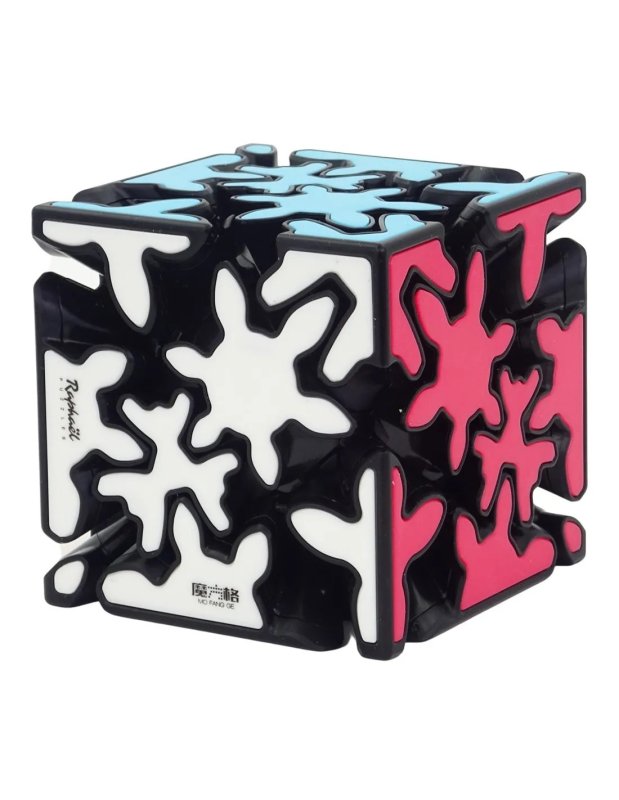
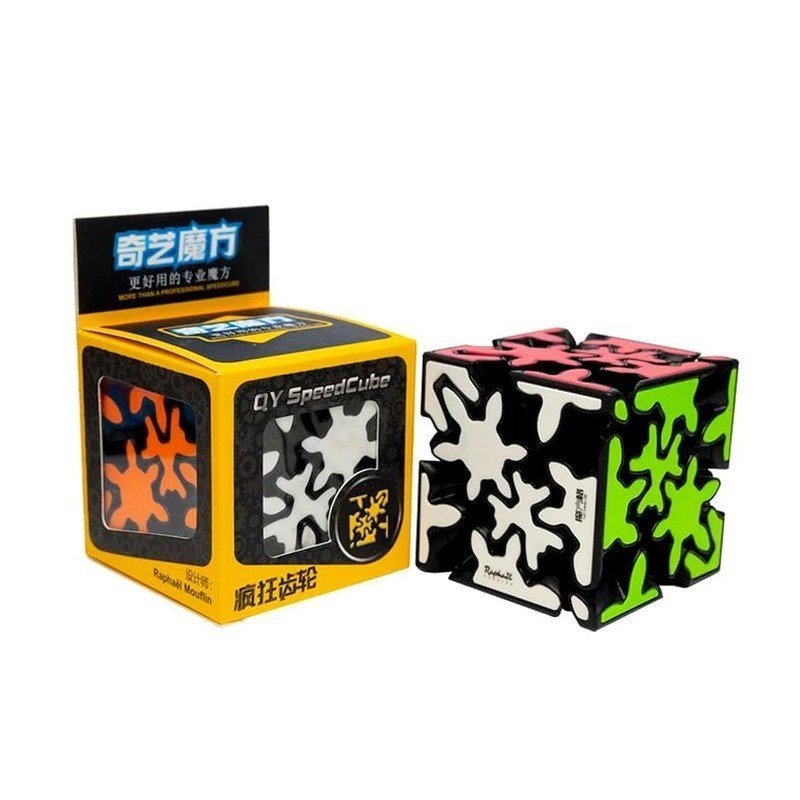 QiYi Crazy Gear Cube 3x3 - Puzzle con Engranajes
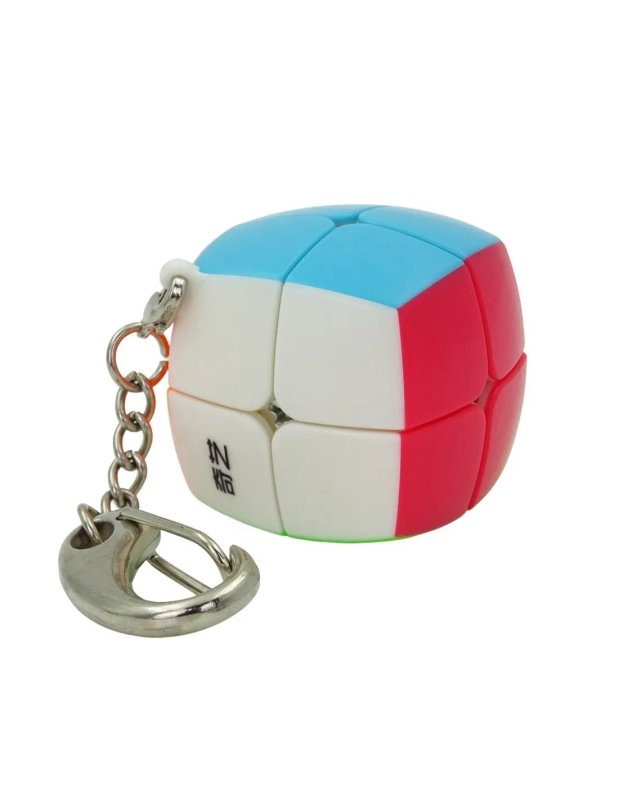
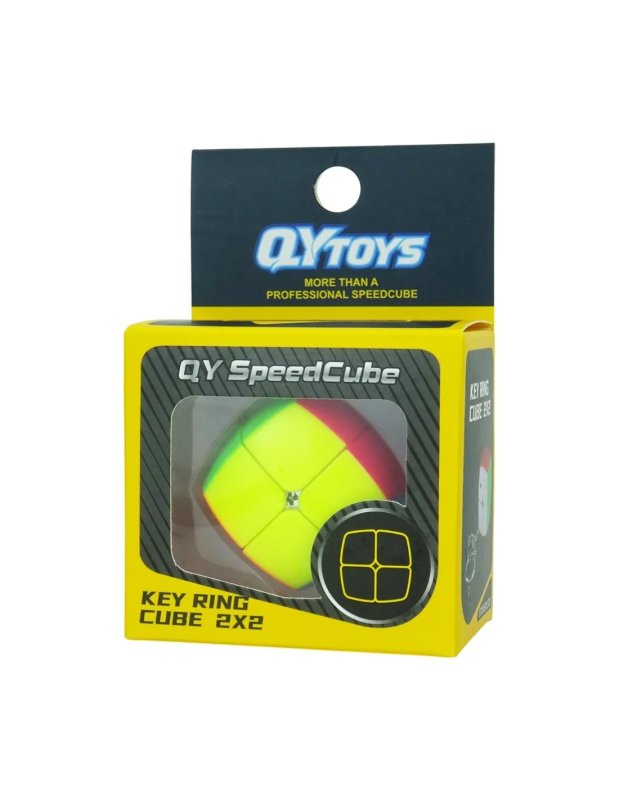 QiYi 2x2 Mini Pillowed Llavero Stickerless Removible
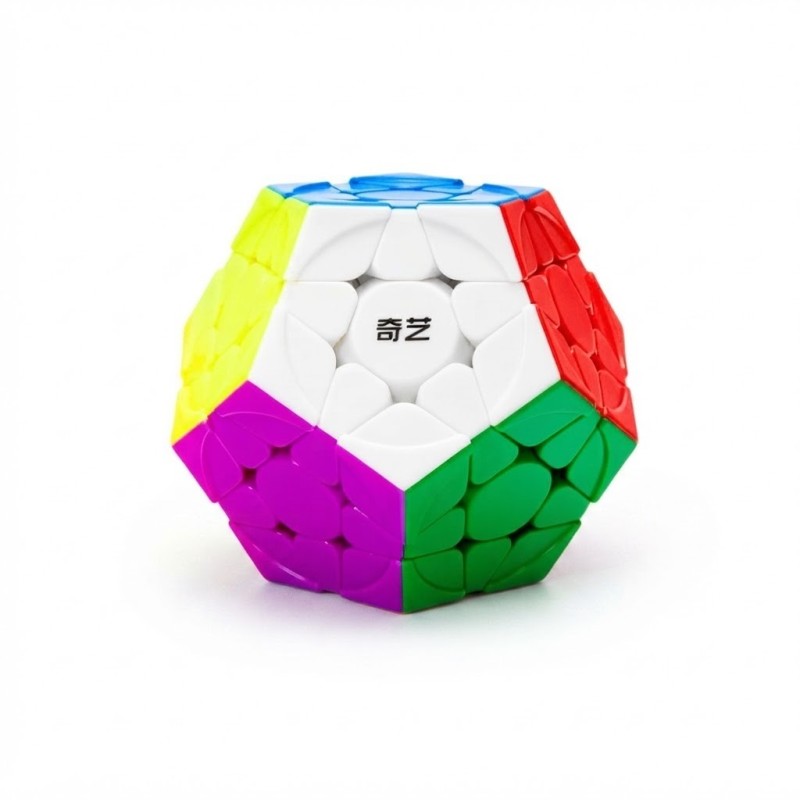
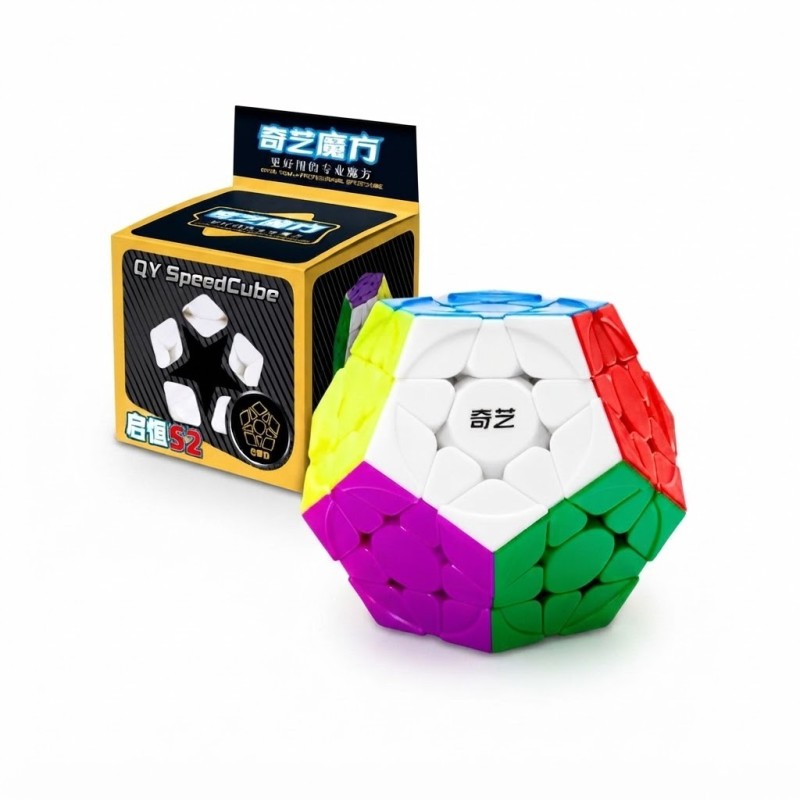 QiYi QiHeng S2 Megaminx Stickerless Dodecaedro
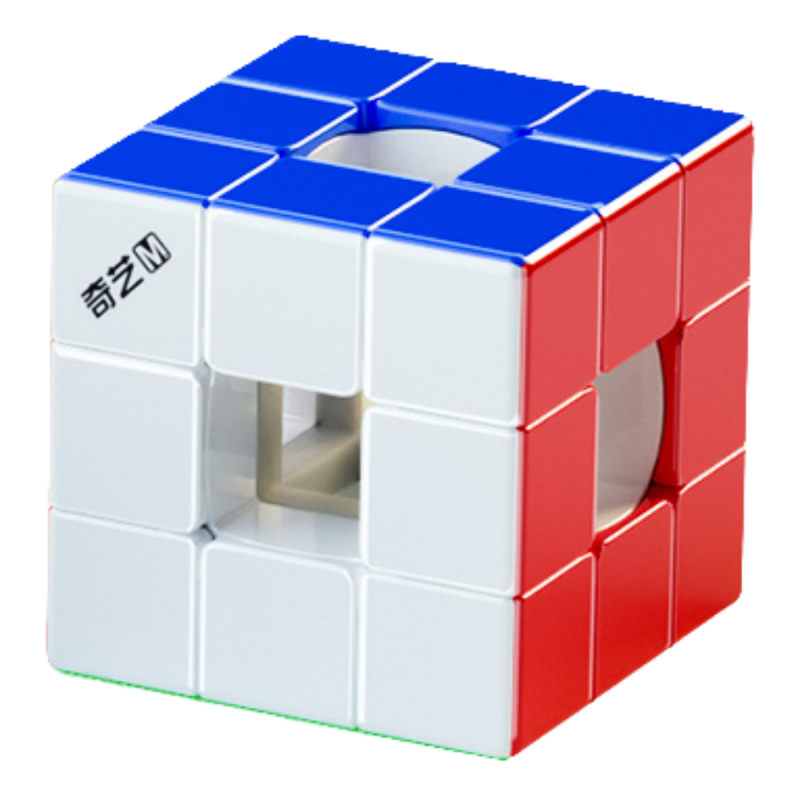
 QiYi Void 3x3 Magnético UV Coated Stickerless
History of the 3x3 world record: from 22.95 to 2.51 seconds
The 3x3 record is the most followed in speedcubing, and its history sums up how the sport has changed over four decades: from a single championship with toy cubes to hundreds of competitions a month with magnetic cubes and electronic timers.
1982: Minh Thai and the first World Championship
On June 5, 1982, the first Rubik's Cube World Championship was held in Budapest, with 19 competitors, one per country. The scrambles were generated by a computer, the cubes were brought on stage in a locked case and each participant had 15 seconds to look at the cube before starting. The winner was Minh Thai from the United States with 22.95 seconds, his best of three attempts.
That championship was a one-off: the cube craze faded and there was no other World Championship until 2003. When the WCA was founded in 2004, it chose to recognize the 1982 results retroactively, so Minh Thai's 22.95 now stands as the first official world record. The difference is that back then the winner was decided by a single time rather than an average.
2003-2008: competitions return and the 10-second barrier falls
The Toronto World Championship in August 2003 brought competitions back. There the record dropped to 16.71 (Dan Knights, USA) and, at the same event, to 16.53 (Jess Bonde, Denmark). Dan Knights also set the first recognized average: 20.00 seconds. The WCA was founded the following year, and Japan's Shotaro Makisumi set four records in a row in 2004, bringing the single down to 12.11.
The following years were a duel between Europeans and Americans: Jean Pons (France), Leyan Lo and Toby Mao (USA), Edouard Chambon (France). The 10-second barrier was broken by France's Thibaut Jacquinot with 9.86 in May 2007, in Spain, at the Spanish Open 2007 in Murcia. In 2008 Chambon lowered it to 9.18 at the Murcia Open, and that same year the Dutch cuber Erik Akkersdijk set 7.08 at the Czech Open, a record that lasted more than two years.
2010-2018: the Feliks Zemdegs era
Australia's Feliks Zemdegs is the central figure of this story. He first broke the single record in November 2010 (7.03) and set a total of ten single and thirteen average 3x3 records. He held the average continuously from January 2010 until April 2017, when a very young Max Park took it with 6.39; Zemdegs won it back two months later.
During those years the single record changed hands several times: Mats Valk (Netherlands) with 5.55 in 2013, Collin Burns (USA) with 5.25 in 2015 and Lucas Etter (USA), who in November 2015 became the first to go under 5 seconds with 4.90. Zemdegs closed his era with 4.22 in May 2018, and his last average record, 5.53 in November 2019, stood until June 2021.
2018-2023: Yusheng Du and Max Park
In November 2018 China's Yusheng Du set 3.47 at the Wuhu Open, an improvement of three quarters of a second in one go that seemed unbeatable for four and a half years. It was finally beaten by American Max Park with 3.13 in June 2023, at Pride in Long Beach. Park, who was diagnosed with autism as a young child, started cubing as an exercise for his fine motor skills and is probably the best known cuber outside the community.
Meanwhile the average was contested by Max Park, China's Ruihang Xu (5.48 in 2021) and Poland's Tymon Kolasiński, who in September 2022 ended up sharing the record with exactly 4.86.
2023-2026: the kids' generation
Since 2023 the 3x3 records have been in the hands of very young competitors. Yiheng Wang took the average in March 2023 (4.69) and kept lowering it down to 3.90 in July 2025; in between, in February 2025, he also took the single from Max Park with 3.08. Two months later, Xuanyi Geng brought it down to 3.05.
In February 2026, in Gdańsk, nine-year-old Teodor Zajder from Poland set 2.76 and became the first human to go under 3 seconds in an official competition. The record lasted eight months: on October 5, 2026, at the Guangzhou Grand Open, Xuanyi Geng set the current 2.51, a quarter of a second faster. The average, after two records by Geng in 2026 (3.84 and 3.71), went back to Wang with 3.51 in June.
| Year | Time | Who | Why it matters |
|---|---|---|---|
| 1982 | 22.95 s | Minh Thai (USA) | First recognized record, Budapest World Championship |
| 2003 | 16.53 s | Jess Bonde (Denmark) | Toronto World Championship, return of competitions |
| 2004 | 12.11 s | Shotaro Makisumi (Japan) | Four records in one year |
| 2007 | 9.86 s | Thibaut Jacquinot (France) | First under 10 s, at the Spanish Open |
| 2008 | 7.08 s | Erik Akkersdijk (Netherlands) | An improvement of more than a second and a half |
| 2010 | 7.03 s | Feliks Zemdegs (Australia) | First of Zemdegs' ten records |
| 2015 | 4.90 s | Lucas Etter (USA) | First under 5 s |
| 2018 | 3.47 s | Yusheng Du (China) | Stood for four and a half years |
| 2023 | 3.13 s | Max Park (USA) | Beats Du's record |
| 2025 | 3.05 s | Xuanyi Geng (China) | After Yiheng Wang's 3.08 |
| 2026 | 2.76 s | Teodor Zajder (Poland) | First under 3 s |
| 2026 | 2.51 s | Xuanyi Geng (China) | Current record in October 2026 |
| Year | Average | Who |
|---|---|---|
| 2003 | 20.00 s | Dan Knights (USA) |
| 2008 | 11.28 s | Yu Nakajima (Japan) |
| 2010 | 9.21 s | Feliks Zemdegs (Australia), first average under 10 s |
| 2017 | 6.39 s | Max Park (USA) |
| 2019 | 5.53 s | Feliks Zemdegs (Australia) |
| 2022 | 4.86 s | Tymon Kolasiński (Poland) and Max Park (USA), tied |
| 2023 | 4.69 s | Yiheng Wang (China) |
| 2025 | 3.90 s | Yiheng Wang (China) |
| 2026 | 3.51 s | Yiheng Wang (China), current in October 2026 |
US national records
The WCA also keeps national records, which are assigned according to the nationality on the competitor's profile, not the place of the competition. These are the US records standing in October 2026:
| Event | Single | Who and when | Average | Who and when |
|---|---|---|---|---|
| 3x3 | 3.13 s | Max Park, Jun 2023 | 4.72 s | Matty Hiroto Inaba, Nov 2025 |
| 2x2 | 0.50 s | Zayn Khanani, Sep 2022 | 0.86 s | Sujan Feist, Dec 2025 and Aug 2026 |
| 4x4 | 15.71 s | Max Park, Jun 2024 | 18.74 s | Max Park, Oct 2025 |
| 5x5 | 30.63 s | Max Park, Oct 2026 | 34.65 s | Max Park, Jul 2026 |
| 6x6 | 57.69 s | Max Park, Apr 2025 | 1:05.04 | Max Park, Oct 2025 |
| 7x7 | 1:30.59 | Max Park, Jul 2026 | 1:36.86 | Max Park, Oct 2025 |
| 3x3 one-handed | 5.62 s | Patrick Ponce, Aug 2026 | 7.72 s | Luke Garrett, Mar 2025 |
| 3x3 blindfolded | 11.56 s | Tommy Cherry, Jun 2026 | 13.97 s | Tommy Cherry, Aug 2026 |
| Multiblind | 63 of 65 in 58:23 | Graham Siggins, Oct 2025 | no average | |
| Fewest moves | 16 moves | Aedan Bryant and Levi Gibson, Jun 2024 | 19.00 moves | Brian Johnson, May 2026 |
| Megaminx | 24.60 s | Alexei Sinyavin, Dec 2024 | 27.92 s | Alexei Sinyavin, Jun 2024 |
| Pyraminx | 0.73 s | Simon Kellum, Dec 2023 | 1.38 s | Jeriyah Griffin, Mar 2026 |
| Skewb | 0.75 s | Carter Kucala, Mar 2024 | 1.52 s | Carter Kucala, Jun 2024 and Mar 2026 |
| Square-1 | 2.85 s | Brian Johnson, May 2026 | 4.63 s | Sameer Aggarwal, Feb 2025 |
| Clock | 1.60 s | Brendyn Dunagan, Jan 2026 | 2.24 s | Brendyn Dunagan, Dec 2025 |
| 4x4 blindfolded | 51.96 s | Stanley Chapel, Jan 2023 | 59.39 s | Stanley Chapel, Jun 2025 |
| 5x5 blindfolded | 1:58.59 | Stanley Chapel, Jan 2026 | 2:27.63 | Stanley Chapel, Dec 2019 |
Names are written exactly as they appear in the WCA database. In 15 of these categories the US record is also the world record, and Max Park alone holds nine US records, all in the NxN cubes.
How the US 3x3 record has evolved
The first US 3x3 record in the WCA database is also the first world record: Minh Thai's 22.95 seconds at the 1982 World Championship in Budapest. In August 2003, at the Toronto World Championship, Dan Knights brought it down to 16.71. From then on progress was fast:
- 2006: Leyan Lo takes the world record with 11.13 in January, and Toby Mao lowers it to 10.48 at the US Nationals 2006.
- 2008-2011: Rowe Hessler is the first American under 10 seconds (9.13 at the US Nationals 2008) and gets down to 6.94 in 2010; Anthony Brooks sets 6.93 in 2011.
- 2015: Collin Burns (5.25) and Lucas Etter (4.90) set world records just seven months apart.
- 2017-2022: Patrick Ponce sets a 4.69 world record in 2017, and Max Park and Asher Kim-Magierek take turns until Park's 3.63 in August 2022.
- 2023: Max Park sets 3.13 at Pride in Long Beach, the world record until 2025 and still the US record.
Americans with a world record
More than 70 American competitors have held a world record in one of today's events. Two of them mark the history of the 3x3:
- Minh Thai: the first recognized record, 22.95 seconds at the 1982 World Championship in Budapest.
- Lucas Etter: the first solve under 5 seconds, 4.90 at River Hill Fall 2015 (Clarksville, Maryland), in November 2015.
World records set in the US
More than 360 world records in today's events have been set at competitions in the United States. Some of the most notable:
- Pride in Long Beach 2023 (Long Beach, California): Max Park's 3.13 in 3x3, which ended Yusheng Du's four and a half year reign.
- Doylestown Spring 2015 (Doylestown, Pennsylvania): Collin Burns sets 5.25 in 3x3.
- Caltech Winter 2006 and US Nationals 2006: Leyan Lo (11.13) and Toby Mao (10.48) bring the 3x3 single closer to the 10-second barrier.
- Burbank Big Cubes 2025 (Burbank, California): Max Park sets the current 6x6 single world record, 57.69 seconds.
How a world record is ratified
A time only counts as a record if it is achieved at an official WCA competition under its regulations. A video at home, however good, does not count. These are the main requirements according to the current regulations (version of April 1, 2026):
Official competition with a WCA Delegate
Every competition is overseen by a WCA Delegate, who is responsible for making sure the regulations are followed. Only results from these competitions go into the world rankings.
- Regulation 1c
- World rankings (9i)
Official computer-generated scrambles
Scrambles are generated by the official WCA program. Each one takes the puzzle to a random state among all possible ones, with the same probability for each.
- Regulation 4b
- Nobody sees them in advance
More detail
The Delegate may not review, filter or regenerate scrambles to pick "fairer" ones. They are applied by a person (the scrambler) and the puzzle is covered so the competitor cannot see it until inspection begins.
15-second inspection
15secondsThe competitor may look at the puzzle for up to 15 seconds without turning it. Starting after 15 seconds adds a 2-second penalty; after 17, the attempt is a DNF.
- +2 s between 15 and 17
- DNF from 17
More detail
Blindfolded events have no separate inspection: memorization is part of the time.
Approved StackMat timer
Time is taken with a WCA-approved timer, the Speed Stacks StackMat, which starts when the hands leave the sensors and stops when they are placed back on them.
- Hundredths truncated
- Change in 2027
More detail
Until now the timer has been used in two-pad mode. From January 2, 2027, the StackMat Pro G5 in four-pad mode will be mandatory, to better check that competitors start and stop according to the rules. The WCA has decided that current records stay valid until they are beaten under the new system.
Average of 5 without best and worst
5attemptsMost events have five attempts; the best and worst are dropped and the remaining three are averaged. One DNF is allowed (it counts as the worst); with two, the average is a DNF.
- Regulation 9f8
- 6x6 and 7x7: mean of 3
Equal to or better than the current record
A result is a record if it equals or beats the previous one. That is why some records are shared, like the fewest moves single or the 2x2 average, which Sujan Feist matched himself.
- Regulation 9i1a
- National, continental and world records
If the same record is improved several times on the same day, only the best result is recognized, and the official date of each result is the last day of the round in which it was set.
Unusual records outside the WCA
Guinness World Records lists some cube-related records that the WCA does not recognize, because they are not human solving competitions run under its regulations. These are some with an official Guinness entry:
The fastest robot
0.103secondsThe "Purdubik's Cube" robot, built by four students at Purdue University (USA), solved a cube in 0.103 seconds on April 21, 2025.
- Guinness, not WCA
- West Lafayette, Indiana
More detail
It improved the previous mark by about two tenths of a second. Robots do not compete in the WCA: they use cameras and motors and do not follow the inspection or scrambles set by the regulations, so their times are not comparable with a person's.
Most cubes solved in 24 hours
6,931cubesBritish cuber George Scholey solved 6,931 cubes in 24 hours in London, in November 2022.
- Guinness
- United Kingdom
Most people solving at once
5,434peopleGuru Nanak Public School in Bidar (India) brought together 5,434 people solving cubes at the same time on November 9, 2025.
- Guinness
- India
Frequently asked questions
What is the Rubik's Cube world record?
As of October 2026, 2.51 seconds for a single solve, by Xuanyi Geng (China), set in October 2026. The best average of five is 3.51 seconds, by Yiheng Wang (China), from June 2026.
Who was the first to go under 3 seconds?
Teodor Zajder from Poland, with 2.76 seconds at a competition in Gdańsk in February 2026. He was nine years old.
What is the US record for the Rubik's Cube?
3.13 seconds for a single solve (Max Park, June 2023) and 4.72 seconds for the average of five (Matty Hiroto Inaba, November 2025), according to the WCA.
What is the 2x2 world record?
0.39 seconds for a single solve (Ziyu Ye, China, October 2025) and 0.86 seconds average (Sujan Feist, USA), as of October 2026.
What is the difference between the single and the average record?
The single is the best individual solve. The average is calculated from five consecutive attempts in the same round, dropping the best and worst and averaging the remaining three, so it is a better measure of consistency.
Does a time recorded at home count as a record?
No. Only results from official WCA competitions count, with scrambles generated by its program, a judge, an approved timer and a Delegate overseeing the event.
What is the record for a Rubik's Cube solving robot?
0.103 seconds, by the robot of a team of students at Purdue University (USA), in April 2025. It is a Guinness record; the WCA does not recognize solves by machines.
What was the first Rubik's Cube world record?
22.95 seconds, by Minh Thai (USA), at the first World Championship, held in Budapest on June 5, 1982. The WCA recognizes it retroactively.
Records are broken by specialists with years of practice, but they all started with a regular cube and a simple method. If you want to get started or improve your times, our Rubik's cubes and speedcubing section has everything from the 2x2 to the big cubes and the puzzles for the other official events.
Want more guides like this one? Sign up for the newsletter.
Keep exploring
- Rubik's Cube: complete guide
- Best Rubik's cubes for speedcubing
- Types of Rubik's cubes
- How to solve a Rubik's cube step by step
- Which Rubik's cube to give as a gift
Rubik's Cubes and Speedcubing
YuXin 2x2 Baseball Shape Mod

YuXin 2x2 Basketball Shape Mod
YuXin 2x2 Ball Shape Mod Purple

Skewb Mirror DianSheng (Pink)
QiYi Magic Snake 60 Blocks Multicolour
QiYi Sail W 3x3 reinforced mechanism 56 mm

QiYi Sail 6x6 black classic beginner 60.5 mm
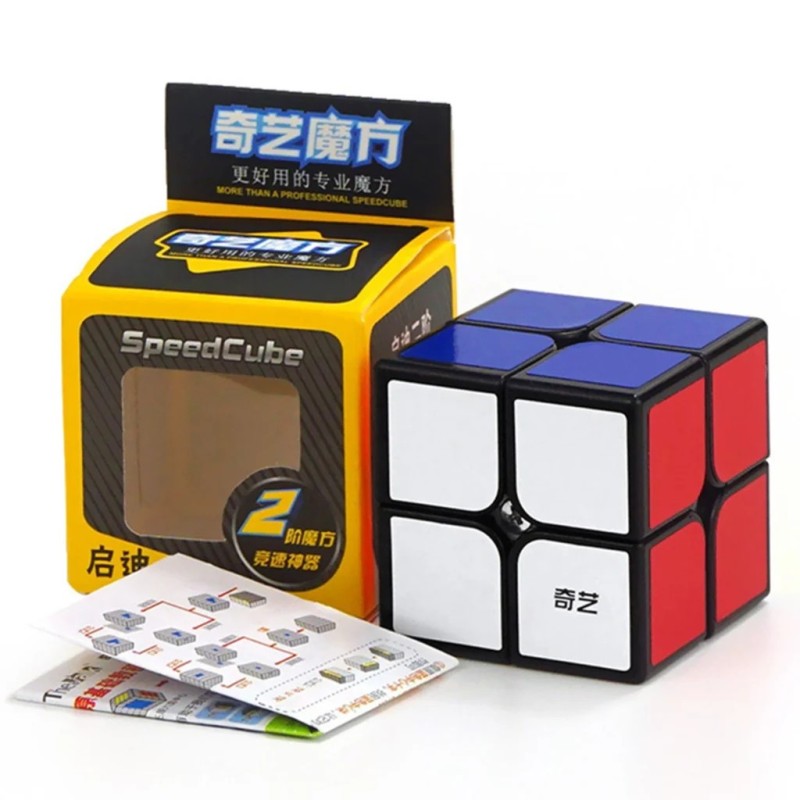
QiYi Sail 2x2 black compact for beginners
Contact our team for any clarification about this document. Contact us


