QiYi
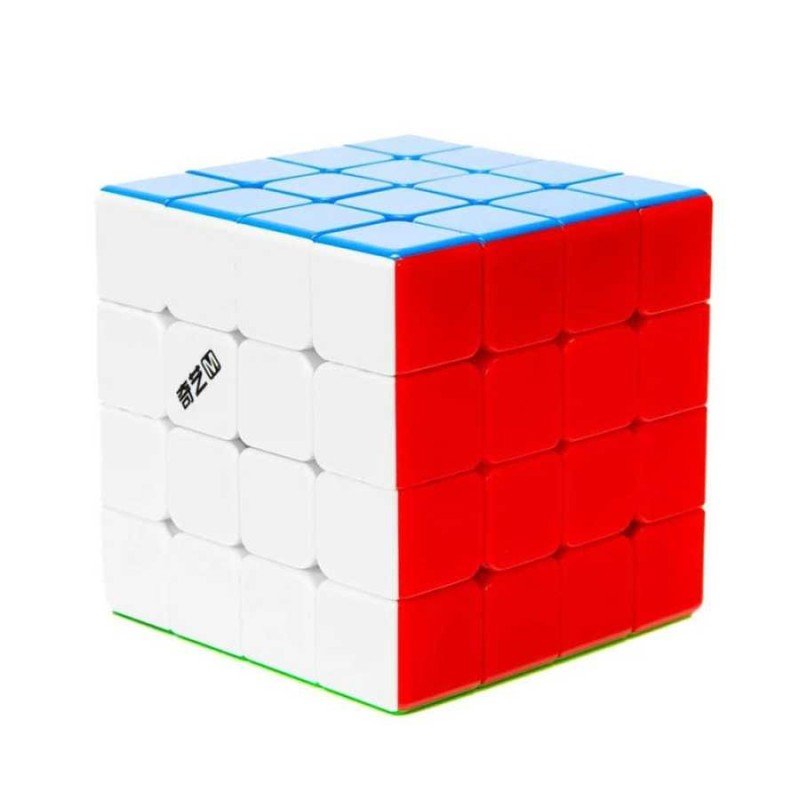
QiYi Warrior 5x5 matte stickerless non-magnetic
€8.23


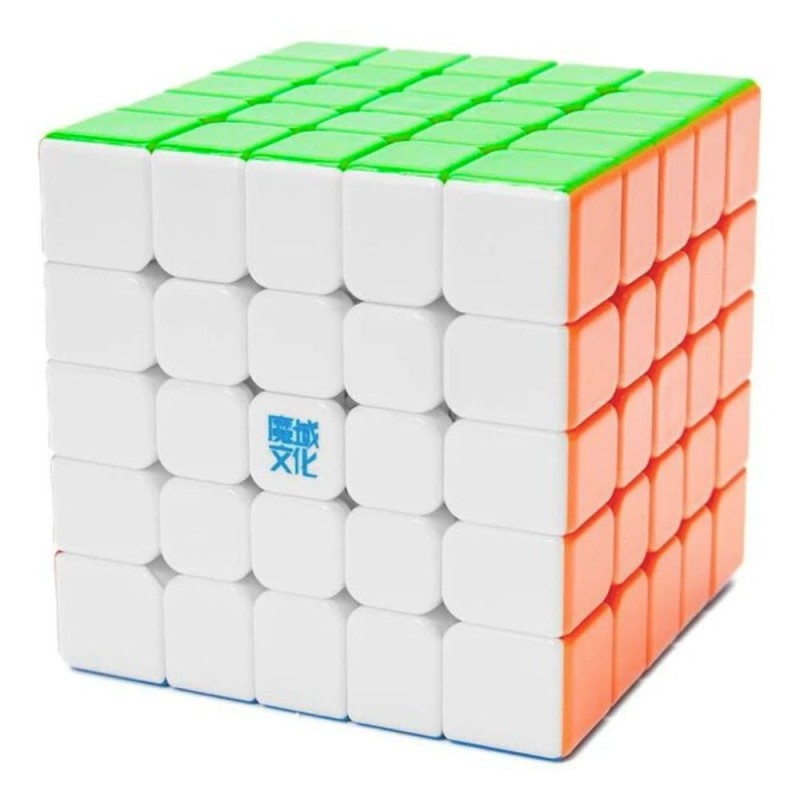
The 5x5, also known as the Professor's Cube, is the natural next step once the 4x4 comes easily. In this category you will find the 5x5 speed cubes we keep in our Madrid warehouse: models without magnets to learn on, mid-range magnetic 5x5 cubes and a flagship speed cube with magnets in the core. Everything shown as available ships from here, not from a supplier with weeks of lead time.
In 5x5 we stock QiYi and MoYu. It is an official WCA event and is competed as an average of five attempts, like the 3x3 and 4x4.
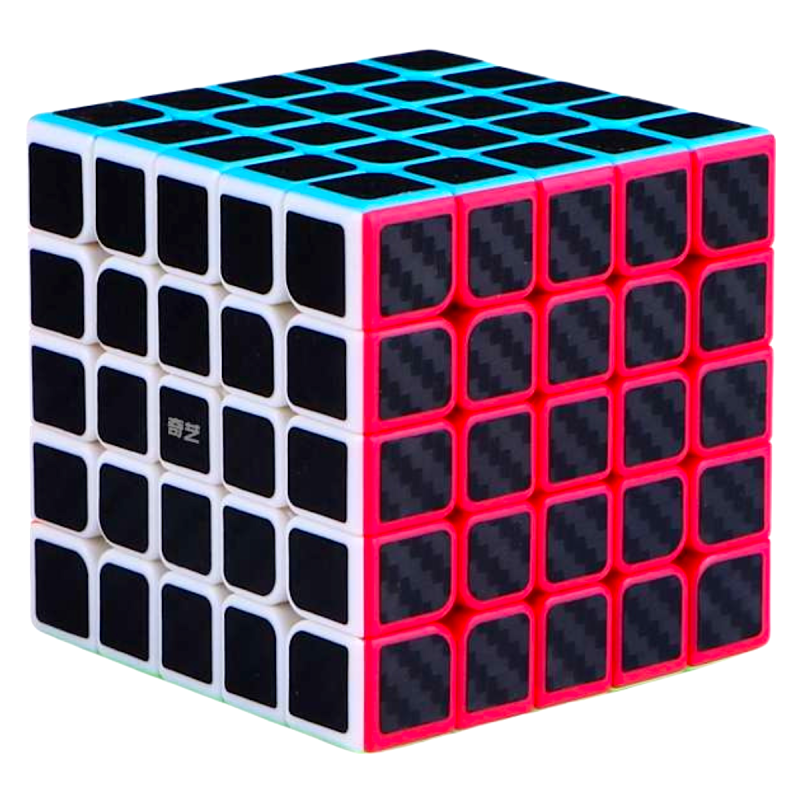
For your first 5x5, a cube that turns freely and does not pop is enough. The QiYi Warrior 5x5 non-magnetic is 59 mm, weighs about 100 g and comes with a solving guide. If you prefer stickers, the QiYi QiZheng S 5x5 Carbon has black carbon fibre effect stickers on coloured plastic.
On a 5x5 there are many layers to keep aligned and magnets help them settle into place. The MoYu MeiLong 5x5 M (60 mm, about 108 g) has moderate-strength magnets and is a very common first magnetic cube. The QiYi Warrior 5x5 magnetic spreads 240 magnets across three levels of layers, with a matte finish.
The QiYi Warrior 5x5 magnetic UV is the same 59 mm, 240-magnet cube with a glossy coating hardened with ultraviolet light, which gives more grip. It weighs about 110 g. It suits you if you already practise often and want a better feel without going to the flagship range.
The MoYu AoChuang V6 5x5 Dual-Track is MoYu's competition model. It is 60.5 mm and has 112 magnets: those in the outer layers plus corner-core magnets, which give stability in fast turns. It comes with a UV coating.
From the 4x4 upwards they are called big cubes. All of them are solved with the same idea, the reduction method: group the centres of each colour, pair the edges and finish as if it were a 3x3. Three things change between sizes: whether there is a fixed centre, whether parity appears, and how much cube you have in your hand.
On odd cubes (3x3, 5x5 and 7x7) the middle piece of each face is attached to the core and does not move, so it sets the colour of that face. On the 5x5 each face has nine centre pieces and one is fixed. On even cubes (4x4 and 6x6) there is no fixed centre and you need to remember which colour goes next to which.
Parity cases are positions that do not exist on a 3x3 and appear when reducing a big cube. On the 4x4 and 6x6 they can come up at the end of the solve, in the orientation and permutation steps (OLL and PLL parity). On the 5x5 and 7x7 those two cannot happen. What can happen on an odd cube is that, when pairing the last two edges, one ends up flipped: it is fixed with its own algorithm before moving on to the 3x3 stage.
A current 5x5 measures between 59 and 60.5 mm, about the same as a 4x4. Competition magnetic cubes are sold in Single-Track, Dual-Track and Triple-Track versions: the first has only the outer-layer magnets, Dual-Track adds corner-core magnets, and Triple-Track adds another set of inner magnets. More tracks means more guided turning and a little more weight.

The Warrior series covers the 5x5 from end to end in the affordable range: non-magnetic, matte magnetic and UV magnetic, all 59 mm. The QiZheng S line is its basic option with stickers.
MeiLong (from its sub-brand MoFang JiaoShi, MFJS) is the beginner line and AoChuang the competition line. If you want several sizes at once, the MeiLong M competition set includes magnetic 2x2, 3x3, 4x4 and 5x5 cubes with a timer, and the MeiLong Bundle 6-Pack brings together 2x2 to 7x7 without magnets.
Big cube algorithms use moves of several layers at once (Rw, 3Rw), which are explained in the Rubik's cube notation. To see where the 5x5 fits among the other puzzles, see the types of Rubik's cubes; to compare models by size, the best Rubik's cubes for speedcubing, and if you are curious about elite times, the Rubik's cube world records. When the 5x5 is no longer enough, the next one is the 7x7, which works the same way with more pieces.
It depends on what you want it for. To learn, a 5x5 without magnets such as the QiYi Warrior. For daily practice, a magnetic one such as the MeiLong 5x5 M or the Warrior 5x5 magnetic. For competition, the MoYu AoChuang V6, with magnets in the core.
Yes, as soon as you can solve it comfortably. With five layers per axis it is easy to leave one half-turned, and the magnets help them settle into place. Today there are magnetic cubes in the beginner range, so the difference from one without magnets is small.
It is not essential. Both are solved by reduction and the 5x5 has a fixed centre, so you do not need to remember the colour scheme. If you can already do the 4x4, you know the centre and edge steps.
It does not have the OLL and PLL parity of the 4x4. Only one case can come up when pairing the last two edges, and it is solved with an algorithm.
They are versions of the same cube with different numbers of magnets. Single-Track has the outer-layer magnets, Dual-Track adds corner-core magnets, and Triple-Track adds inner magnets.
Yes. WCA regulations allow magnets and require a uniform colour per face, which the stickerless models in this category meet.


