
History of poker: from the Mississippi to the online boom
The full history of poker: its European origins, New Orleans, the Wild West, the first WSOP in 1970, the Moneymaker effect and Black Friday in 2011.
On this page
- 1. The origins: poque, pochen and the…
- 2. New Orleans and the Mississippi…
- 3. The Civil War: draw, stud and the full…
- 4. The Wild West: saloons, cardsharps and…
- 5. The 20th century: from the kitchen table…
- 6. 1970: the World Series is born
- 7. The boom (1998-2006): a camera, the…
- 8. Black Friday and the modern era
- 9. Poker in Spain
- 10. Frequently asked questions
- 11. Keep exploring
The history of poker is the history of the United States told in cards: it was born in the floating saloons of the Mississippi, matured in the camps of the Civil War, became legend in the saloons of the Wild West, conquered the casinos of Las Vegas, and ended up as a global phenomenon thanks to a tiny camera, an accountant from Tennessee and an internet connection. Along the way it left behind a few disputed legends (it probably does not descend from a Persian game) and one constant that explains everything: in every era, poker was the game that best reflected how money was won and lost in America. This is its complete history, from 1800 to the present day, with the dates, the names and the historians' arguments.
Contents
- The origins: poque, pochen and the Persian myth
- New Orleans and the Mississippi (1810-1860)
- The Civil War: draw, stud and the full deck
- The Wild West: saloons, cardsharps and the dead man's hand
- The 20th century: from the kitchen table to Las Vegas
- 1970: the World Series is born
- The boom (1998-2006): camera, internet and Moneymaker
- Black Friday and the modern era
- Poker in Spain
The origins: poque, pochen and the Persian myth
Let's start with the most repeated theory. For much of the 20th century, books claimed that poker descended from as-nas, a Persian bluffing game played with a deck of 20 or 25 cards. The theory had charm (Persian sailors teaching it to New Orleans dockworkers), but modern historians, led by David Parlett, took it apart in the 1990s: there is no description of as-nas earlier than 1890 (decades after poker was already documented), its mechanics differ in important ways and the supposed chain of transmission from Persia to Louisiana is pure speculation. Today the academic consensus is more prosaic and more solid: poker is the child of European vying games that settlers brought with them.
There are three documented parents. The French poque: played in French-speaking Louisiana, with bluffing and betting, and the direct source of poker's name. The German pochen: literally "to knock, to boast as a bluff", from which poque itself derives. And the English brag, the three-card bluffing game that contributed the culture of aggressive betting. To this family we have to add a Spanish ingredient: primero (primera in Spanish), the Golden Age vying game that already combined ranked hands and betting in the 16th century, and which historians regard as the common ancestor of the whole European genre. Poker was not invented in one go: it took shape little by little from games with three centuries of history behind them.
New Orleans and the Mississippi (1810-1860)
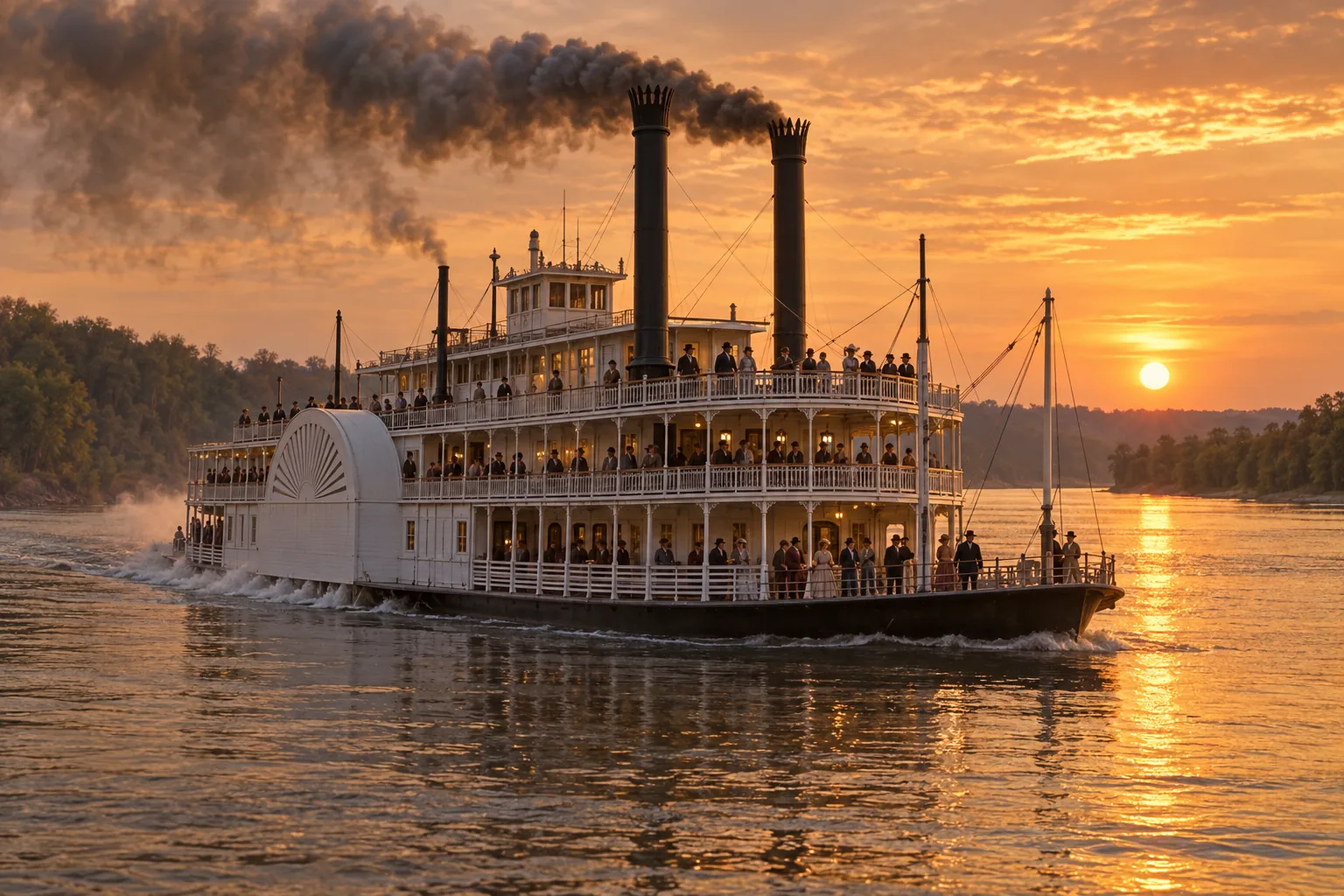
Poker recognisable as such (five cards per player, betting rounds, the best hand takes the pot if nobody backs down first) appears in New Orleans between 1810 and 1825, in the world of French-speaking gambling rooms and, above all, the Mississippi steamboats. The first version was minimalist: 20 cards (ace to ten), four players, five cards each, no draw and no community cards. With the whole deck dealt out, the game was pure betting: there was no luck still to come, only what you held and what you pretended to hold.
The first extensive written account comes from the English actor Joe Cowell (1829) and the first printed description of the rules arrives in 1836; in 1834 the reformed gambler Jonathan H. Green was already calling it the cheating game when describing it on the steamboats. The remark was not unfounded: the ecosystem of early poker was made up of professional riverboat cardsharps, who fleeced merchants and settlers with marked cards and accomplices. Poker was born with a bad reputation and would take well over a century to shake it off.
Around 1840-1850 came the structural change: the adoption of the full 52-card deck, which allowed more players and opened the door to a new hand, the flush. Soon afterwards the draw was added: a second chance to improve your hand that brought an extra betting round and multiplied the strategy.
The Civil War: draw, stud and the full deck
The American Civil War (1861-1865) was for poker what the Napoleonic campaigns were for other European games: the great spreader. Hundreds of thousands of soldiers on both sides killed time between battles playing, and went home with the game learned. From those years and the ones immediately after, the two great classic branches emerged fully formed: five-card draw (closed, with a draw) and stud (with face-up cards, born according to tradition in the army camps), along with new hands such as the straight. In the following decades, the golden age of American invention added the finishing touches: the joker (around 1875), jackpots (the requirement to hold at least a pair of jacks to open, a brake on recklessness) and the first serious written conventions, until the manuals of the late 19th century were already describing a game essentially identical to the draw poker played throughout the 20th century.
The Wild West: saloons, cardsharps and the dead man's hand
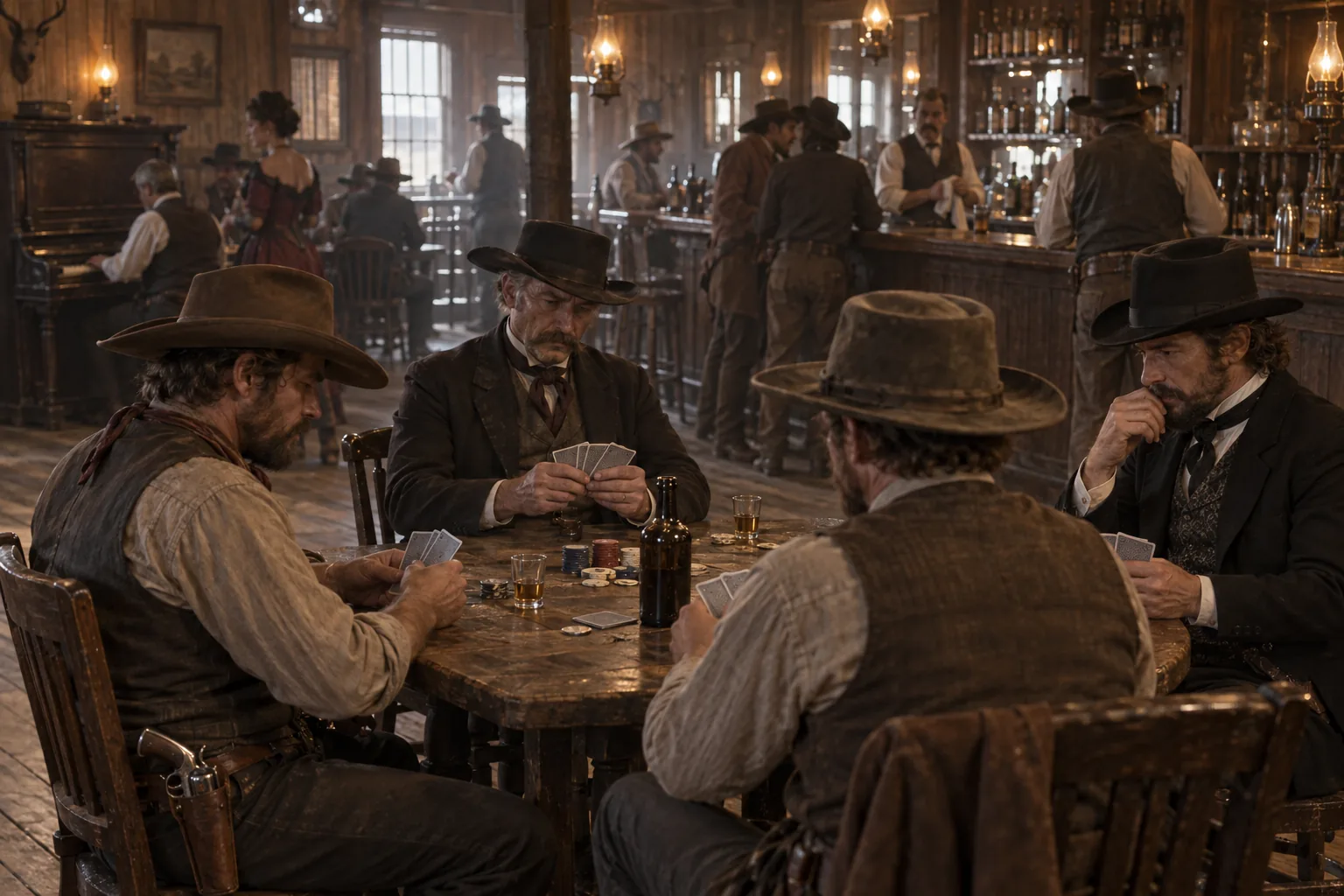
If the Mississippi gave birth to poker, the West made it a legend. In the mining and cattle towns of the second half of the 19th century, the saloon with a poker table was an institution as basic as the church, and from there come the archetypes that cinema would turn into mythology: the cardsharp in a frock coat, the game that ends in a shoot-out, the ace up the sleeve.
The most famous anecdote is essentially true: on 2 August 1876, the gunfighter and gambler Wild Bill Hickok was shot in the back and killed while playing poker in Saloon No. 10 in Deadwood (South Dakota), on the one day he agreed to sit with his back to the door. Tradition has it that his hand held two black pairs, aces and eights, known ever since as "the dead man's hand". Historians argue about the fifth card (it was never reliably recorded), but the hand became part of the game's universal culture.
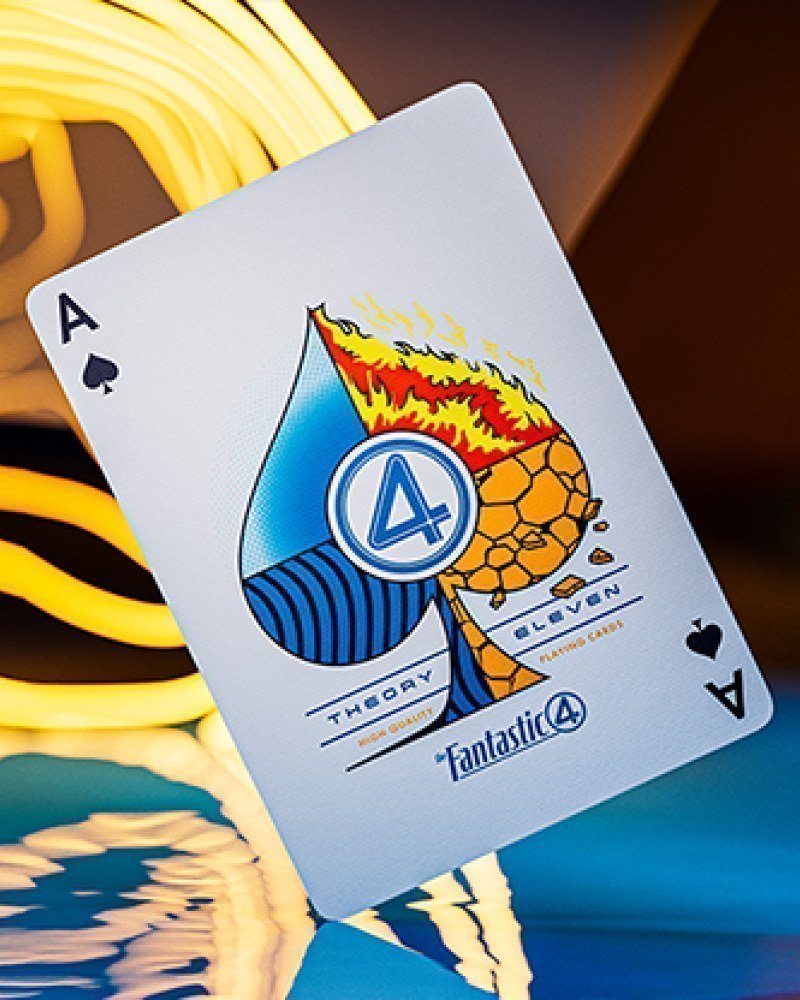
Did you know decks like these exist?
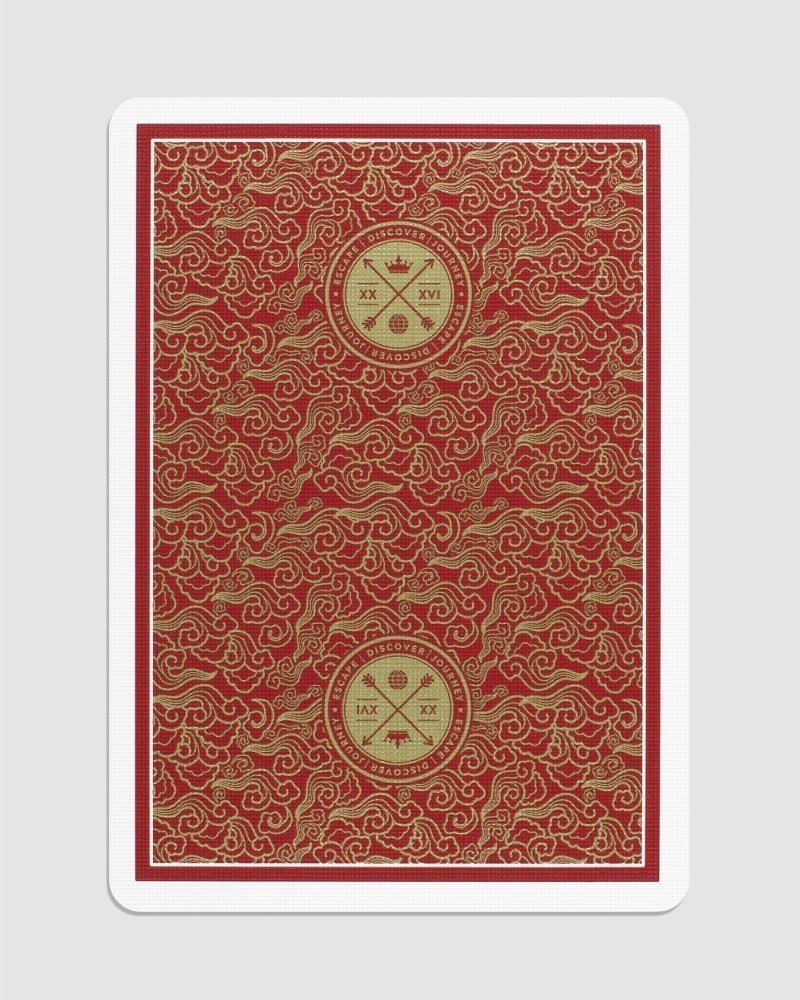
At heart, every deck has the same cards. What changes is everything else: the design, the finish, metallic inks or gilded edges. Take a look at our catalogue and bring your own style to the card table.
Browse our playing cards →




The 20th century: from the kitchen table to Las Vegas
With the frontier closed and gambling banned in almost the whole country, poker in the early 20th century was domesticated: it became America's home game par excellence (the weekly game with friends, with its chips and its rituals) and the common language of barracks and back rooms. From that period comes the way poker vocabulary soaked into American English: poker face, ace in the hole, when the chips are down, pass the buck, expressions born at the table and used today by people who have never played.
Meanwhile, in Texas, the variant that would eventually overtake all the others was taking shape. According to the official 2007 resolution of the Texas legislature, Texas hold'em was born in Robstown, Texas, in the early 20th century. For decades it was a regional secret that Texan professionals (Doyle Brunson, Amarillo Slim, Sailor Roberts) exploited in the state's illegal card rooms, until in 1963-1967 they took it to Las Vegas. Hold'em's advantage was economic: with two cards per player and five community cards, up to ten people could sit at a table, and the four betting rounds rewarded skill over luck more than any earlier format. Brunson called it "the Cadillac of poker games".
The legalisation of gambling in Nevada (1931) had made Las Vegas the natural capital of public poker, and by 1967 hold'em was being played at the Golden Nugget and its neighbours. All it needed was a shop window.
1970: the World Series is born
The shop window was set up by Benny Binion, owner of the Horseshoe casino, in 1970: he invited the best players in the country to a gathering called the World Series of Poker (WSOP). That first year there was no tournament as such: cash games were played over several days and the champion was chosen by a vote of the players themselves. The first vote failed in the most predictable way: everyone voted for themselves, and it had to be repeated with players asked to vote for the second best. The winner was Johnny Moss, "the Grand Old Man of poker", who took home a silver trophy and not a single dollar in prize money.
In 1971 the event adopted the format that would make it history: a freezeout no-limit Texas hold'em tournament; you pay the entry fee, you play until you run out of chips, and the last one standing takes it all. Moss won again. In 1976 and 1977 Doyle Brunson won two years running, both times with the same final hand (10-2, known today as "the Doyle Brunson"), and in 1978 he published Super/System, the first great strategy treatise written by a champion, which the professionals of the day considered a betrayal: it gave away the secrets of the trade for the price of a book. The WSOP grew year after year (the first television cameras arrived early, with Binion a visionary of poker as a spectacle), but it was still a matter for professionals and serious amateurs. What came next changed the picture.
The boom (1998-2006): a camera, the internet and an accountant called Moneymaker
The explosion of poker as a mass phenomenon has three causes with clear dates:
- The pocket camera (1997-1999). The eternal problem with televised poker was that you couldn't see anything: hidden cards are hidden. The solution was the hole-card camera, which shows viewers each player's cards, patented by the businessman and Holocaust survivor Henry Orenstein and first used on the British programme Late Night Poker (1999). Suddenly poker was a thriller anyone could follow: the viewer knew who was lying.
- Online poker (1998). Planet Poker dealt the first real-money hand over the internet on 1 January 1998; PartyPoker and PokerStars arrived in 2001. For the first time in two centuries, anyone could play a thousand hands in an afternoon without leaving home, and qualify for big tournaments for pennies. That same year, 1998, the film Rounders with Matt Damon planted the romantic seed in a whole generation.
- Chris Moneymaker (2003). An amateur accountant from Tennessee with a surname a lazy screenwriter might have invented turned an $86 online satellite on PokerStars into a seat at the 2003 WSOP Main Event... and won it, taking home $2.5 million after knocking out legendary professionals and beating Sammy Farha at the final table, with a much-remembered bluff. ESPN broadcast it with the hole-card camera, and the message the public received was clear: that could be me.
The result is known in the industry as "the Moneymaker effect": the Main Event went from 839 players in 2003 to 2,576 in 2004 and a peak of 8,773 in 2006; online poker became a multi-billion-dollar industry; and for five years hold'em was prime-time television, a dinner-table topic and a worldwide phenomenon, Spain included, with a whole generation of players who came out of those years.
Black Friday and the modern era
The American party hit two legal brakes. The first was the UIGEA of 2006, which choked online gambling payments in the US. The second was the knockout blow: on 15 April 2011, the US Department of Justice shut down the three big online poker sites (PokerStars, Full Tilt and Absolute) overnight, with a 52-page indictment for illegal gambling, bank fraud and money laundering. Poker remembers it as Black Friday: thousands of professionals lost their livelihood or emigrated, Full Tilt fell into a scandal over player funds, and the online market reorganised itself country by country, with licences and borders.
The game, however, did not die out: it became more professional. The modern era is the era of solvers and GTO theory (game theory optimal play), where the best players study with software what Brunson learned the hard way; the era of million-dollar buy-in High Rollers; and the era in which poker is recognised as a mind sport, with its own mathematics, psychology and academic literature. Two hundred years after the Mississippi steamboats, the "luck or skill?" debate has been settled by courts in many countries and by the evidence: over one hand, chance rules; over a thousand hands, the better player wins.
Poker in Spain
Spain lived through the boom with an intensity of its own (university clubs, bar tournaments, a generation of well-known professionals) and brought order to it with the 2011 Gambling Act (Ley 13/2011): since June 2012, online poker in Spain has been played in rooms with a .es licence, first in a ring-fenced market and, since 2018, with liquidity shared with France and Portugal, which brought critical mass back to the tables. In live poker, Spanish casinos keep tournament circuits running and growing. And at home... at home people play as they always have: with coloured chips, with an ordinary poker deck and, in almost every home game, with someone who insists that poker is pure luck and loses every week.
How much does a deck of cards cost?
From €5 to over €100. The 52 cards and the rules stay the same; this is what changes.
 To play€5.95 |  Designer€12.95 |  Premium€17.99 |  Collectible€34.94 | |
|---|---|---|---|---|
| Typical price | €5-9 | €9-15 | €15-30 | €30 or more |
| What sets it apart | Classic casino design | Artist illustration on back and faces | Special inks, embossing and foil on the box | Limited print runs and gilded edges |
| Who it is for | Games at home | Playing with something beautiful | Gifts or cardistry | Collecting and display |
| Example | Tally-Ho Fan Azul | theory11 Medallion | The Sandwich Series (Luncheon Meat) | Kings Wild LOTR Two Towers Gilded |
| See decks | See decks | See decks | See decks |
Frequently asked questions
Where and when was poker born?
In New Orleans and on the Mississippi boats, between 1810 and 1825, as an evolution of European vying games (the French poque, the German pochen, the English brag). The first version used only 20 cards.
Is it true that poker comes from the Persian game as-nas?
Almost certainly not. It's a 19th-century theory taken apart by modern historians such as David Parlett: there are no descriptions of as-nas from before 1890 and the chain of transmission was never documented.
What is the dead man's hand?
Two pairs, black aces and black eights: the hand that tradition attributes to Wild Bill Hickok when he was killed playing poker in Deadwood on 2 August 1876.
When was Texas hold'em invented?
In the early 20th century in Robstown, Texas, according to the official 2007 resolution of the Texas legislature. Texan professionals took it to Las Vegas around 1963-1967, and the WSOP made it the main event from 1970.
What was the Moneymaker effect?
The worldwide poker explosion that followed amateur Chris Moneymaker's win in the 2003 WSOP Main Event, which he reached through an $86 online satellite and won for $2.5 million. The tournament multiplied its entries by ten in three years.
What was poker's Black Friday?
15 April 2011, when the US Department of Justice shut down the three biggest online poker sites. It reshaped the global industry towards regulated markets, such as Spain's in 2012.
Two centuries of history fit into 52 cards: choose yours from our poker playing cards collection, from classic casino decks to collector's editions.
Would you like our poker and card game guides as PDFs? Sign up for the newsletter.
Keep exploring
- How to play Texas Hold'em poker: the complete rules, step by step.
- Poker variants: Omaha, Stud, Razz and all the others.
- History of the poker deck: the story of the object, not the game.
- Card games you can play with a standard deck: the full index
Keep learning
To play with: from our shop


Plastic and paper poker decks, in stock in Madrid.
Poker decks in stock →Playing card shop →