

Poker hands: the complete ranking and the odds behind it
The poker hand ranking from highest to lowest, with exact probabilities, tie-breaker rules, worked examples and answers to the questions that come up most often.
The ten poker hands, from highest to lowest
The first thing that tends to stop someone who is starting to play poker is not the betting or the blinds, but the basic question: when the cards finally go face up, which hand beats which? Standard poker has exactly ten possible hands and having the order clear in your head is all you need to play without depending on anyone else. In this article we go through them one by one, with concrete examples, the exact odds of each one showing up and (something many guides leave out) the rules for breaking ties when two players hold the same hand.
Behind the order there is one very simple rule that explains everything else: the rarer a hand is, the more it is worth. The ranking is not arbitrary or whimsical; it is an exact reflection of the probability of each hand in a pure five-card deal. A royal flush comes out roughly once every 650,000 hands, and that is why it beats a straight flush, which comes out once every 72,000. A full house comes out once every 700 and that is why it beats a flush, which comes out once every 500. Whenever you are in doubt, apply the rule: rare means valuable. The exact probabilities are in a table at the end.
How a poker hand is built
Before we get into the ranking, a simple but important idea: a poker hand is always made of five cards. Not four, not seven. In variants such as Texas Hold'em or Omaha you combine your hole cards with the community cards in the middle to make the best possible five-card hand. In Stud, you pick the best five out of the seven you have been dealt. In a straight draw game, you make your hand directly with the five cards you are holding. But the result, whatever the variant, is always judged over five cards. If you want to know how the deal works in each variant, in the poker variants we explain it in detail.
The four suits (hearts, diamonds, clubs and spades) are equivalent to one another in standard poker. There is no hierarchy. It is a very widespread myth, almost certainly inherited from games such as bridge, that spades outrank the other suits: in poker, they do not. Two flushes of the same height tie even if one is in spades and the other in clubs. The only moment suits matter is when you are making a hand that requires all five cards to match (flush, straight flush, royal flush). If you are interested in the history and the design of these four suits, we have told it in the suits of the poker deck.
The ranking, from top to bottom
Before we detail each hand, here is the full list so that you have it at hand. It reads from highest to lowest:
- Royal flush (ace-high straight flush)
- Straight flush (five in a row, one suit)
- Four of a kind (quads)
- Full house (boat)
- Flush (five of one suit)
- Straight (five in a row)
- Three of a kind (set or trips)
- Two pair (two pairs)
- One pair (a pair)
- High card (no pair)
1. Royal flush
The five highest possible cards of the same suit: 10, J, Q, K, A. There are only four possible royal flushes in a 52-card deck (one per suit), and the probability of being dealt one straight away in a five-card hand is roughly 1 in 650,000. In Texas Hold'em, where your final hand is made from seven available cards (your two plus the five in the middle), the probability goes up a little but it is still almost anecdotal: most recreational players never see one in their whole life.
How ties are broken: they are not. All royal flushes are worth the same. If two players hold a royal flush in the same hand (something that in Texas Hold'em can only happen if all five cards 10-J-Q-K-A of the same suit are in the middle), they split the pot. Suits do not break the tie.
Example: 10♠ J♠ Q♠ K♠ A♠. Yes, there is one royal flush per suit, but they all have the same name and they all win exactly the same.
2. Straight flush
Five consecutive cards of the same suit, stopping short of 10-J-Q-K-A. For example, 5♥ 6♥ 7♥ 8♥ 9♥. It is the second strongest hand in poker and it appears, in a pure five-card deal, roughly once every 72,000 hands. In Texas Hold'em, with seven available cards, the probability gets closer to 1 in 3,500, still very infrequent.
How ties are broken: the straight flush ending in the highest card wins. A 5-6-7-8-9 loses to an 8-9-10-J-Q. If by chance both straight flushes end on the same card (only possible when the five community cards make them), the pot is split.
The wheel case: the straight A-2-3-4-5, known as the wheel or the bicycle, counts as a straight with the ace playing low. If it is also all one suit, it is a low straight flush, not a royal flush. And it loses to any other straight flush, because its highest card is the 5. It is a small but important exception: the ace can go on top (after the K) or at the bottom (before the 2), but never in the middle. A "straight" of Q-K-A-2-3 does not exist.
3. Four of a kind
Four cards of the same rank plus any fifth card, called the kicker. For example, K♦ K♥ K♠ K♣ 7♦. In Spanish, French and Italian this hand is literally called "poker", even though it comes out very rarely: 1 hand in every 4,165 in a pure five-card deal. Over a long night of home poker it is normal not to see a single one; if one does turn up, people talk about it for days.
How ties are broken: first the rank of the four matching cards decides. Quad kings beat quad eights, no discussion needed. If two players hold the same quads (impossible with a single deck unless they are in the middle, which is what happens in Hold'em), the kicker decides, that is, the highest fifth card available among each player's cards.
A piece of jargon: in Texas Hold'em, when your two hole cards are a pair and the other two of that rank come out among the community cards, people informally call it "hidden" or "concealed" quads. If three of a rank are in the middle and you hold the fourth in your hand, it is usually called "exposed" quads. It does not change the ranking; it only matters for the story of the hand, because the second one is much easier for your opponents to spot.

4. Full house
Three cards of one rank and two of another. For example, Q♥ Q♦ Q♠ 4♣ 4♥. It is read as "queens full" or, more precisely, "queens full of fours". The probability is around 1 hand in every 700 in a five-card deal, so over a good night it is almost certain that one shows up.
How ties are broken: here is one of the most frequent mistakes among people who are starting out. The trips come first, not the pair. A full house of "eights with a pair of deuces" (8-8-8, 2-2) beats a full house of "sevens with a pair of aces" (7-7-7, A-A). Aces in the three of a kind beat everything else, no matter the pair. Only if the trips tie does the pair decide. That is why experienced players pay far more attention to which trips they build their full house on than to which pair completes it.
Why it beats a flush: the reason is pure maths. In a deck there are 3,744 possible full houses and 5,108 possible flushes. Since the flush is more frequent, it is worth less. It feels counter-intuitive if you picture five cards all of one suit, which look spectacular, but the numbers are in charge.
5. Flush
Five cards of the same suit that do not make a straight. For example, 2♣ 5♣ 9♣ J♣ A♣: a club flush with an ace. The probability is roughly 1 hand in every 510 in a pure deal. At the table players usually name it by its top card: an ace-high flush.
How ties are broken: by the highest card in each flush. If those tie, you compare the second highest; if those tie too, the third, and so on card by card. The suit never comes into the tie-breaker. Two flushes of the same height tie and the pot is split, even if one is in spades and the other in hearts.
Spades do not outrank other suits: in many traditional card games you can still find "suit hierarchy" lists that belong to other games. In poker no such thing exists. The suits are interchangeable. If you hold A♠ K♠ 9♠ 4♠ 2♠ and your opponent holds A♥ K♥ 9♥ 4♥ 2♥, you tie and you split the pot. This mistake is so common that it is worth saying twice.
6. Straight
Five consecutive cards of mixed suits. For example, 4♠ 5♣ 6♦ 7♣ 8♥. It appears roughly once every 254 hands in a five-card deal. Over a long session you see several.
How ties are broken: the straight ending in the highest card wins. Just as with the straight flush, the wheel A-2-3-4-5 is the lowest straight (ace playing as a 1) and it loses to any other. The highest possible straight (without being a flush) is 10-J-Q-K-A, known as broadway.
Open-ended and inside draws: if you hold 6-7 and the flop brings 8-9-K, you have an open-ended straight draw: you can complete it with a 5 or with a 10, eight cards in total help you. If you hold 5-9 and the flop brings 6-7-K, you have an inside straight draw (a gutshot): only an 8 helps you. The first one gets there roughly 32% of the time from flop to river; the second, only 17%. These are the figures players use to decide whether it is worth paying a bet. All of this is covered in depth in pot odds and poker probabilities.
7. Three of a kind
Three cards of the same rank plus two different cards. Example: 9♠ 9♥ 9♦ K♣ 4♠. There is an important piece of jargon to distinguish in Texas Hold'em:
- Set: when your two hole cards are a pair and the third one lands in the middle. These are hidden trips: your opponent cannot suspect them by looking at the community cards. They are the most profitable ones because your opponent, if he has top pair with the board, bets happily without knowing he is second best.
- Trips: when there is a pair in the middle and you hold the third card of that rank in your hand. This is visible three of a kind: anyone looking at the board can suspect trips and shut down. It is worth exactly the same as a set, but it plays worse because your opponent sees it coming.
How ties are broken: first by the rank of the trips, and then by the kickers from highest to lowest. Trip jacks with A-3 beat trip jacks with K-Q because the first kicker (ace against king) decides before you even look at the second.
8. Two pair
Two pairs of different ranks plus any fifth card. Example: A♣ A♥ 8♠ 8♦ 3♥. It appears in roughly 1 hand in every 21 in a five-card deal. In Texas Hold'em, with seven available cards, the probability is higher still.
How ties are broken: this is where beginners get stuck most often. The rule is this, in order:
- The higher pair decides. Two pair of "aces and eights" beats "kings and queens" because your top pair (aces) is higher than his (kings). It does not matter that your opponent's second pair is a high one.
- If the top pairs tie, the second pair decides. "Aces and eights" beats "aces and sevens".
- If both pairs match, the kicker (the fifth card) decides.
Watch out for the board: in Texas Hold'em it is very common for the two highest pairs to be on the community cards. In that case every active player "has" those two pairs, and what decides the hand is the kicker each one brings. That is why playing A-K is far more profitable than playing K-7 when a pair of kings shows up in the middle: your second card, the ace, beats your opponent's 7.
9. One pair
Two cards of the same rank and three different ones. Example: J♦ J♣ 9♠ 6♥ 2♣. This is the hand that turns up in slightly more than 42% of the hands dealt: practically one in every two. At a Texas Hold'em table, one pair ends up winning many more hands than people imagine, because most opponents do not reach showdown with anything better.
How ties are broken: in order, the rank of the pair, then the first kicker, then the second kicker, then the third kicker. In Texas Hold'em it is very common for two players to hold the same pair made with a card from the middle; there the kicker decides, and that is why the strength of your second hole card matters so much.
A typical example: the board is K♠ 8♦ 4♣ 2♥ Q♥. Player A holds K♦ Q♦ (a pair of kings with a queen kicker, and in fact two pair with the queens on the board). Player B holds K♣ 7♣ (a pair of kings with a 7 kicker). A wins with two pair; but if B held K♣ 5♣, both would have a pair of kings and A's kicker (queen) would beat B's (5). The kicker is not a detail, it is a central part of the evaluation.
10. High card
When you do not even have a pair, your hand is worth whatever your highest card is worth. Example: A♦ J♥ 9♠ 6♣ 3♦, which is read as "ace high with a jack". It appears in roughly half of the hands dealt, but it rarely wins in a game with several players: if you get to showdown with nothing but high card, losing is the normal outcome.
How ties are broken: card by card from highest to lowest. The first card on which the two players differ decides. If all five cards are of the same rank for both players (possible in Texas Hold'em when both of them play the five community cards), the pot is split. The suit does not break the tie.
The lowest possible hand: in standard poker, the worst hand is 2-3-4-5-7 of mixed suits. It does not make a straight (there is no 6) and it does not make a flush (the suits are mixed). It is such a weak hand that it has become an icon: playing 7-2 offsuit is seen as a fun wink and a way of "bluffing with the worst possible hand", precisely because it is worth absolutely nothing.
Did you know decks like these exist?
At heart, every deck has the same cards. What changes is everything else: the design, the finish, metallic inks or gilded edges. Take a look at our catalogue and bring your own style to the card table.
Browse our playing cards →





The exact odds, in one table
These are the probabilities of being dealt each hand directly in a pure five-card hand, according to the standard combinatorial counts (the same ones that appear in any serious probability book and on Wikipedia). We leave them here because they explain mathematically why the order of the ranking is exactly what it is: nobody arbitrarily decided that a full house should beat a flush; there are simply fewer full houses than flushes in the deck.
| Hand | Combinations | Probability | Once every |
|---|---|---|---|
| Royal flush | 4 | 0.000154% | 649,740 hands |
| Straight flush | 36 | 0.00139% | 72,193 hands |
| Four of a kind | 624 | 0.0240% | 4,165 hands |
| Full house | 3,744 | 0.144% | 694 hands |
| Flush | 5,108 | 0.197% | 509 hands |
| Straight | 10,200 | 0.392% | 255 hands |
| Three of a kind | 54,912 | 2.11% | 47 hands |
| Two pair | 123,552 | 4.75% | 21 hands |
| One pair | 1,098,240 | 42.26% | 2.4 hands |
| High card | 1,302,540 | 50.12% | 2 hands |
The total adds up to 2,598,960 possible hands, which is exactly the number of five-card combinations that can be made from a 52-card deck. There is no margin of error and no hidden rounding: it is pure combinatorial maths. If you want a rule of thumb, in three hands out of every four (75%) you are dealt high card or one pair, and only in one out of four do you have something better.
How the odds change in Texas Hold'em
In Texas Hold'em, each player builds his final hand from seven available cards: his two hole cards plus the five community cards. With more cards around, the probability of making any given hand goes up compared with the pure five-card deal. For example, the probability of finishing the hand with at least one pair is roughly 75%, that of finishing with two pair or better is around 25%, and that of finishing with three of a kind or better is around 5%. But the order of the ranking does not change. A full house still beats a flush, and three of a kind still beats two pair. The ranking is universal across all high poker variants.
In variants that deal more cards (Omaha deals four hole cards per player, with the extra rule that you must use exactly two of your four), the odds change again. Certain draws become easier and monster hands appear more often. But the ranking is preserved. If you want to know how a hand is evaluated in Omaha, in the poker variants we explain it.

A hand-against-hand comparison
To see how the ranking fits together in practice, here is a typical Texas Hold'em example. The five community cards are: K♣ 8♣ 8♥ 4♦ 2♠.
- Player A: holds K♥ Q♥. His best five-card hand is K-K-8-8-Q. Two pair, kings and eights, queen kicker.
- Player B: holds 8♠ 7♣. His best five-card hand is 8-8-8-K-7. Three eights with a king kicker.
Player B wins, because three of a kind beats two pair even when the two pair includes kings. The fact that A has a king in his hand does not matter: trips outrank any two pair, full stop. This example is a good reminder that "having the king" is not a hand in itself. What counts is the complete combination.
Another example, with the same board K♣ 8♣ 8♥ 4♦ 2♠, this time to see the kicker in action.
- Player A: A♣ K♦. Best hand: K-K-8-8-A. Two pair, kings and eights, ace kicker.
- Player B: K♥ J♣. Best hand: K-K-8-8-J. Two pair, kings and eights, jack kicker.
Both have exactly the same two pair (kings and eights). The tie is broken by the kicker: the ace beats the jack, so A wins. This shows why playing hands with a good kicker (A-K, K-Q) tends to be profitable in Texas Hold'em: when the king pairs on the board, your second card decides a lot of pots.
A third example, this time to see when the pot gets split. Board: A♥ K♦ Q♣ J♠ 10♥. That is a complete straight from the ace down to the ten.
- Player A: 2♣ 3♠. Best possible hand: A-K-Q-J-10, the straight on the board.
- Player B: 7♦ 8♦. Best possible hand: A-K-Q-J-10, exactly the same one.
Both play the five community cards and neither plays his own. They tie and they split the pot. The suits do not break the tie. It is a rare situation but a perfectly standard one and it shows up every now and then in home games.
The kicker: the card that decides more pots than you think
It deserves its own section because it is the concept that confuses beginners most and the one that decides the most pots in Texas Hold'em. A kicker is a card that is not directly part of the main hand, but which is used to break ties when two players hold hands of the same type and rank. It shows up in four places:
- In four of a kind: when two players have the same quads (only possible if they are on the board), the fifth card decides.
- In three of a kind: when two players have the same trips, the two kickers decide, from highest to lowest.
- In two pair: when two players have the same two pairs, the fifth card decides.
- In one pair: when two players have the same pair, the three kickers decide, from highest to lowest.
- In high card: everything is kickers there, compared from highest to lowest.
The most frequent case in Hold'em is this one: there is a pair on the board, or a high card that both players pair with their hole cards. Both of them have "a pair of X with the board". There, your second hole card is your kicker, and that kicker decides the pot. That is why players who study poker pay a lot of attention to hands such as A-Q, A-J, K-Q: they are hands that not only hold high cards but that also, when they pair a high card on the board, drag a good kicker along with them.
Five very common mistakes when reading hands
1. Believing the suit decides between two flushes
It does not. Two flushes of the same height tie and split the pot. It is a very frequent beginner's mistake, above all because in other card games (bridge, hearts, whist) suit hierarchies really do exist.
2. Thinking the ace only plays high
The ace can make the low straight A-2-3-4-5, known as the wheel, playing as a 1. But it cannot go in the middle: the "straight" Q-K-A-2-3 does not exist. It has only two uses: on top (above the king) or at the bottom (below the 2).
3. Getting the full house tie-breaker backwards
The trips decide, not the pair. Almost every beginner reverses it at first, probably because the pair "is heard" at the end of the name and gives the impression that it closes things out. A reminder: the trips weigh more because they are rarer (you are matching three cards instead of two).
4. Forgetting the kicker
When the main hand ties, the next highest card decides. In Texas Hold'em, playing A-K is better than playing A-7 not because the ace is any different, but because when you both make a pair of aces, your king kicks against his seven and you take the pot. The first time the kicker problem happens to you, you understand it for the rest of your playing life.
5. Mixing up "set" and "trips"
It is not a mistake of evaluation, but it is one of communication. A set (your pair + one on the board) and trips (one of yours + a pair on the board) are identical in value but very different in how they play, because the second one is visible and the first one is not. Experienced players talk about sets with particular fondness, because it is the most reliable way of making three of a kind in Texas Hold'em without your opponent seeing it coming.
A special case: when two hands are identical
Every now and then, two players reach showdown with exactly the same five-card hand: not the same type of hand, but the very same combination. It happens above all when both of them play the five community cards. In that case, the pot is split equally. If the split does not come out exact in chips (a pot of 41 chips between two players, for instance, does not divide into two equal halves), in professional card rooms the "odd" chip goes to the player closest to the left of the button. In home games the criterion is usually whatever the players agree on, or even a draw.
A perfect tie is more common than it seems across several hands: two players with identical two pair (kicker included), two players with the same straight, two players with the same pair and the same three kickers. These are situations where chance itself says that neither of them deserved to take it.
"Low" variants: when the worst hand wins
Everything we have seen in this article applies to high poker, where the highest hand wins. There are variants where the opposite happens: the lowest hand wins. These are the lowball variants (Razz, California lowball, 2-7 triple draw) and the Hi-Lo split formats (Omaha Hi-Lo, Stud Hi-Lo, where the pot is divided between the best high hand and the best low hand).
These variants apply particular rules about whether straights and flushes count or not for the low hand. In ace-to-five lowball, for example, aces play low, straights and flushes do not count, and the best possible hand is A-2-3-4-5 (the "wheel"). In deuce-to-seven lowball, aces play high, straights and flushes do count (against you, because you are looking for the low hand), and the best possible hand is 2-3-4-5-7 without being a flush. They are counter-intuitive rules the first time you read them; we explain them carefully in the poker variants, along with Omaha, Stud and others.
What each hand is also called
Poker has spread around the world carrying a pile of nicknames, borrowings and regional variations, so the same hand often answers to two or three names. These are the equivalences you will hear most often, useful when you play online, watch television or sit down with players from other countries:
- Royal flush = the royal, a royal straight flush
- Straight flush = a steel wheel when it is A-2-3-4-5 in one suit
- Four of a kind = quads, and simply "poker" in Spanish, French and Italian
- Full house = a boat, a full boat, "X full of Y"
- Flush = "colour" in most European languages, named by its top card in English
- Straight = a run, and broadway when it is 10-J-Q-K-A
- Three of a kind = a set when it is hidden, trips when the pair is on the board
- Two pair = "X up", as in aces up or kings up
- One pair = a pocket pair when it is your two hole cards
- High card = no pair, ace high, king high
The rest of the vocabulary used at the table (all-in, check-raise, blinds, dealer, kicker, outs...) is gathered in the glossary of poker terms.
How much does a deck of cards cost?
From €5 to over €100. The 52 cards and the rules stay the same; this is what changes.
 To play€5.95 To play€5.95 |  Designer€12.95 Designer€12.95 |  Premium€17.99 Premium€17.99 |  Collectible€34.94 Collectible€34.94 | |
|---|---|---|---|---|
| Typical price | €5-9 | €9-15 | €15-30 | €30 or more |
| What sets it apart | Classic casino design | Artist illustration on back and faces | Special inks, embossing and foil on the box | Limited print runs and gilded edges |
| Who it is for | Games at home | Playing with something beautiful | Gifts or cardistry | Collecting and display |
| Example | Tally-Ho Fan Azul | theory11 Medallion | The Sandwich Series (Luncheon Meat) | Kings Wild LOTR Two Towers Gilded |
| See decks | See decks | See decks | See decks |
Frequently asked questions
What is the highest hand in poker?
The royal flush: 10-J-Q-K-A all of the same suit. It shows up roughly once every 650,000 hands dealt. If two players hold it in the same hand (something that in Texas Hold'em can only happen if all five cards are on the board), they split the pot: there is no suit hierarchy to break the tie.
Does a straight beat a flush?
No. The flush (five cards of the same suit) beats the straight (five consecutive cards of mixed suits). The reason is probability: there are more possible straight combinations (10,200) than flush combinations (5,108), so the straight comes out more often and is worth less. It is a classic beginner's mistake, above all because a straight visually looks "harder" to make.
Does a full house beat a flush?
Yes. The full house beats the flush. This is another point where people get it wrong at first. A full house comes out roughly once every 700 hands, while a flush comes out once every 500: rarer means more valuable. The rule holds without exceptions across every high poker variant.
What happens if two players have exactly the same hand?
The pot is split equally. If the split does not come out to a round number of chips, in professional games the "odd" chip is given to the player closest to the left of the dealer button. In home games the criterion depends on the house, but the most frequent options are drawing for it or leaving it in the pot for the next hand.
Is the ace worth 1 or 14?
It depends on the hand. When it plays high (in the straight 10-J-Q-K-A or as the top card of a flush, for instance), it counts as the highest card in the deck. When it plays low (in the wheel A-2-3-4-5), it counts as a 1. But it cannot go in the middle: the "straight" K-A-2-3-4 does not exist in standard poker.
Do the suits matter at all?
Only for making a flush, a straight flush or a royal flush (the three hands that require all five cards to share a suit). Once you have the hand, suits are never compared against one another in standard poker. It is different from bridge or from trick-taking games, where suits really do have a hierarchy. In poker, all suits are equal.
Why does one pair win so many hands if it looks so weak?
Because at a table with several players, most of them get to showdown with very little. One pair is the hand you see in roughly 42% of the five-card hands dealt, and in Texas Hold'em, where you build from seven cards, it comes out even more often. A high pair with a good kicker is perfectly capable of winning most small and medium pots, especially if your opponents do not read the texture of the flop well.
What exactly is a "kicker"?
It is a card that is not part of the main hand (the pair, the trips, the two pair) but which is used to break ties when two players hold hands of the same type and rank. In one pair, the three kickers are the other three cards in your hand. In three of a kind, the kickers are the two remaining cards. In four of a kind, it is the fifth card. In Texas Hold'em, when two players share the same pair made with a community card, the kicker (usually your other hole card) decides the pot.
Can you have a straight with the ace in the middle?
No. In poker the ace goes either on top (above the king, in the straight 10-J-Q-K-A) or at the bottom (below the 2, in the straight A-2-3-4-5). Any "straight" along the lines of Q-K-A-2-3 is not a straight in standard poker, just a high card hand.
What are the highest and lowest straight flushes?
The highest straight flush that is not a royal flush is 9-10-J-Q-K all of one suit. The lowest straight flush is A-2-3-4-5 of one suit, that is, the steel wheel. When two players hold a straight flush in the same hand, the one ending in the highest card wins, so the 9-K one would beat both the 8-Q one and the A-5 one.
Putting it into practice
Having the ranking clear does not make you a good player, but not having it clear stops you from playing seriously. It is the first thing you use in every hand, so it pays to have it automatic. The most natural approach, if you are starting out, is to run through it mentally during your first few nights of play. Within a couple of sessions it comes without thinking. And if you have not sat down to play yet, the basic rules of Texas Hold'em (how the cards are dealt, how the betting works, how you get to showdown) are in how to play Texas Hold'em poker.
For a decent evening you want a deck that feels good in the deal and survives a lot of hands without getting marked. Bicycle, Tally-Ho and Bee are the three classic playing references, and all of them pass through our hands before they go into the catalogue. Have a look at the poker decks and, if you are interested in understanding what makes one deck last for hours and another not, the explanation is in the complete guide to the poker deck. For the general hub of all playing card decks, with the main families and the regional variants, there is the full listing.
If the ranking went in without trouble but you want to keep learning, you have two natural paths. One is stepping into the mathematical side with pot odds and poker probabilities, which is where the game becomes far more interesting as soon as you see the numbers from the inside. The other is taking a look at the poker variants, to discover that Hold'em is only one among many, with Omaha, Stud and the lowball formats waiting in case curiosity gets the better of you.
Poker
Bicycle Bridge Black – Playing Cards

Tally-Ho Circle Expert Touch Blue – Playing Cards

Tally-Ho Circle Expert Touch Red – Playing Cards
Bicycle Brown Back – Playing Cards
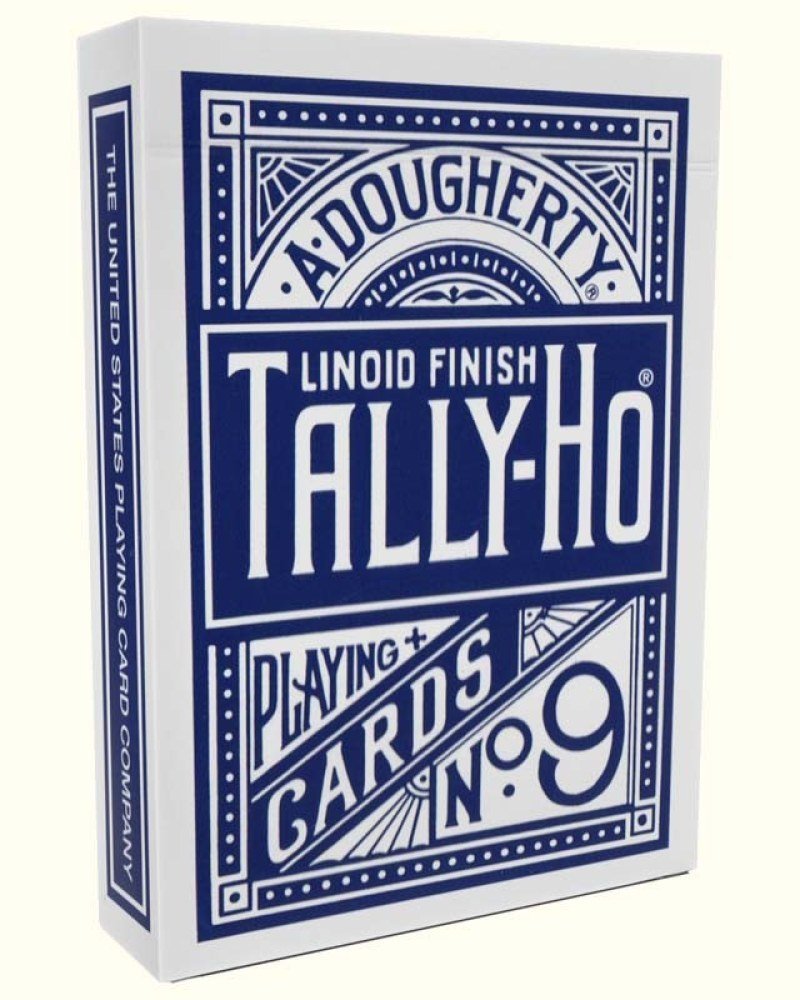
Tally-Ho Fan Blue – Playing Cards
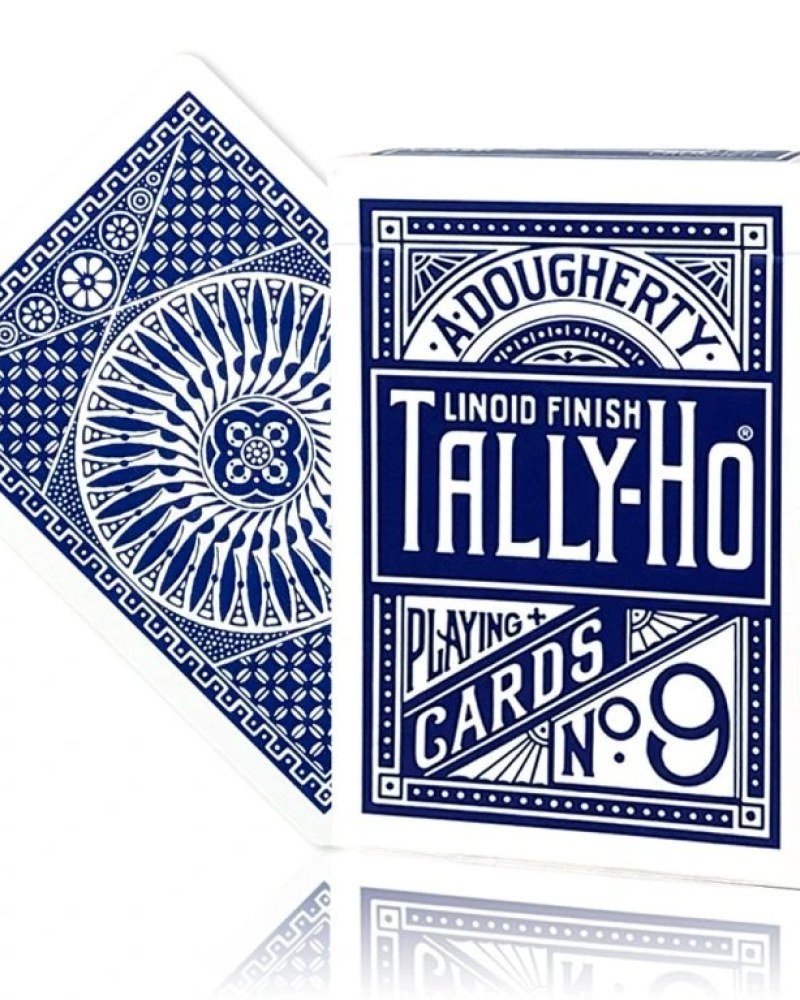
Tally-Ho Circle Blue – Playing Cards

Tally-Ho Circle Red – Playing Cards

Bee Jumbo Index Blue – Playing Cards
Contact our team for any clarification about this document. Contact us


