

How to play Texas Hold'em poker: a complete step-by-step guide
Texas Hold'em rules explained at an easy pace: blinds, flop, turn, river, showdown, examples, common mistakes and tips for your first games.
What Texas Hold'em is and why it is the variant everybody plays
Texas Hold'em is the poker variant that nearly everyone has in mind when they simply say the word poker. It is the one that shows up in the films, the one played at the World Series of Poker, the one broadcast on television and the one that most friendly home games end up playing even when they started out with a different idea. Its fame has a lot to do with two things: the rules can be comfortably explained in a single afternoon and, at the same time, playing it with any judgement gives you a whole lifetime of learning.
The aim of this article is to sit you down at your first hand without leaving you feeling lost. We are going to look, step by step, at how the cards are dealt, how the betting works, what the flop, the turn and the river are, what the blinds mean and what options you have at each moment. There is no need to memorise everything at once: whenever a new term turns up, I explain it right where it appears. And if you have any doubts about which hand beats which, the complete poker hand ranking has an article all of its own.
A little history, just to place it
Texas Hold'em was born, according to the Texas State Legislature itself, in the small town of Robstown in the early years of the twentieth century. For decades it was a more or less local game, played in private games and in the casinos of the southern United States, until in 1963 it reached Las Vegas by way of the California Club. The decisive leap came in 1970, when Benny Binion decided to set up an annual competition at his Horseshoe casino with the best poker players in the country: the World Series of Poker had been born, and from that moment on Hold'em would be tied to those tournaments as their headline format.
The massive explosion arrived, however, many years later. In 2003, an amateur player called Chris Moneymaker qualified for the WSOP main event through an online satellite that cost him less than fifty dollars, and went on to win two and a half million. That coincided with the arrival of the hole card cam (a small camera that let the viewer see each player's face-down cards) and with the online poker boom. Between 2003 and 2004 the number of entrants in the WSOP main event tripled, and ever since then Hold'em has lived somewhere different from every other variant: it is the one everybody knows how to play, or at least believes they know how to play.
What you need to set up a game at home
Before we talk about rules, let us deal with the physical side. A friendly game of Texas Hold'em is played by between two and ten people (although technically the game allows up to twenty-two), and very little is needed to get it going:
- A standard 52-card poker deck, with the four French suits (hearts, diamonds, clubs and spades). The jokers are removed. If you are going to play more than two or three nights, it is worth investing in a quality deck (Bicycle, Bee, Tally-Ho and Copag are the ones most commonly seen on tables all over the world), because cheap cards bend and pick up marks in a single session. In our article on the poker deck we compare the most common options.
- Chips in several colours and denominations. In principle coins will do as well, but chips make the game enormously easier to manage: each colour stands for a value, it is easy to see who has how much and the amounts can be read from across the table. A starter set of two or three hundred chips is plenty for any home game.
- A dealer button, which is a small disc marking who the dealer is on each hand. If you do not have a proper one, any object that stands out will do: a bottle cap, a small glass, a chip with a mark on it.
- A table with a surface that lets the cards slide without catching. The classic felt helps, but any smooth, clean tablecloth will do the job.
If you fancy putting on an evening with the full ceremony (how to hand out chips, how to structure the blinds, what to do when somebody busts), there is a dedicated guide in how to host a poker night at home. For this article we are assuming you already have the basics.
The object of the game, plain and simple
The object of a hand of Texas Hold'em is to win the pot, meaning the chips that have piled up in the middle of the table. There are two ways to do it:
- Reach the end of the hand with the best five-card combination. In that case, after the cards are shown (what is called the showdown), the player with the highest hand takes the pot.
- Get every other player to fold before the end, out of fear, out of caution or because they have decided their hand is not worth enough to keep betting. In that case, the last player standing takes the pot without having to show their cards at all.
This second route is what sets poker apart from most gambling games. At roulette or at blackjack you cannot talk the house into folding; at poker you certainly can talk your opponent into it. That is why poker is usually described as a game of skill with an element of chance, and not the other way round. The cards are in charge, but they are not in charge all the time: in plenty of hands, the player who takes the pot is not the one who had the best cards, but the one who bet as though they did.
The button, the blinds and why you bet before you look
Every hand of Texas Hold'em begins with two compulsory bets that are paid before anyone receives a single card. They are called blinds precisely because they are posted blind: when you pay them, you still have no idea what you are going to be dealt. Their purpose is simple and necessary: without them, a player could sit through hand after hand risking nothing at all, waiting to be dealt a pair of aces. With the blinds there is always money in the pot from the very start, and that is why there is always something to win and something to lose.
The dealer button
The button is a disc that moves one seat to the left every hand and marks who the dealer is on that particular deal. In a home game the player with the button does the dealing; in a casino the croupier always deals, but the button still travels round the table because it determines the order of action and who has to post the blinds.
The two blinds: small and big
- The small blind is posted by the player immediately to the left of the button.
- The big blind is posted by the next player along, to the left of the small blind. It is normally twice the size of the small one.
A concrete example: if your game has 1/2 blinds, the small blind puts in 1 chip and the big blind puts in 2 chips before anything is dealt. Those 3 chips are already in the starting pot. In a game with bigger blinds, say 5/10, the small blind would put in 5 and the big blind 10. That scheme is known in shorthand as the blind level of the game.
Since the button moves one seat to the left every hand, you pay the small blind once per orbit and the big blind once per orbit. No more, no less. In a tournament the blind levels usually go up at set intervals to force the action; in a normal cash game they stay fixed.
Who sits in which seat, and how that changes what you can and cannot play, is covered in detail in positions at the poker table. For now it is enough to know that the blinds are chips already sitting in the pot before the deal, and that the order in which you act depends on where you are in relation to the button.
The deal: your two face-down cards
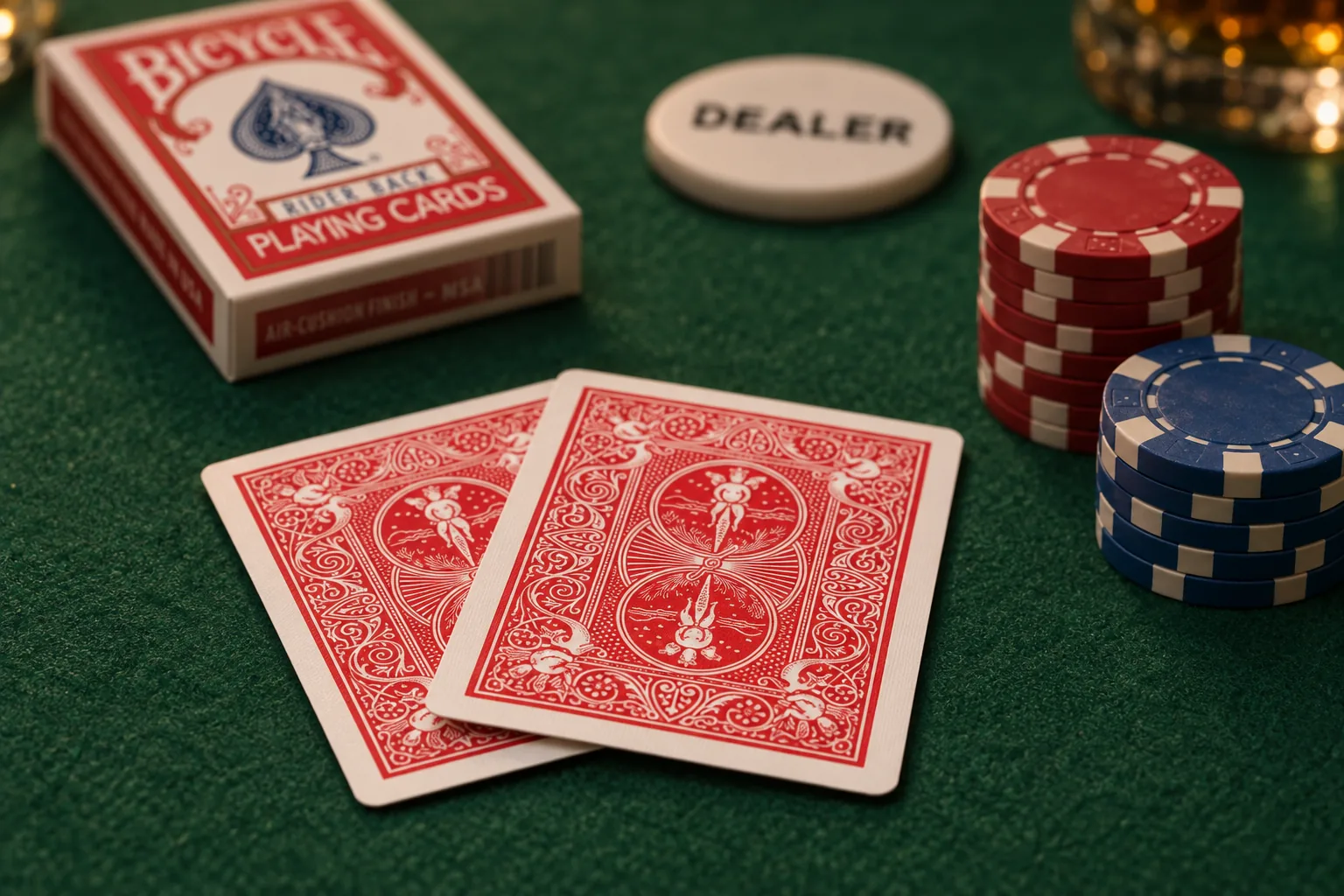
With the blinds posted, the dealer gives two cards face down to each player, one at a time, clockwise, starting with the small blind. These two cards are called the hole cards, and you will also hear them referred to as pocket cards, private cards or down cards. Each player lifts their two cards towards themselves, looks at what they have and decides what to do when the action comes round.
A small but useful tip: look at your cards once, discreetly, and do not pick them up again until it is strictly necessary. Checking your cards over and over is a leak of information that attentive players make use of (they assume, quite rightly, that you are hesitating or that you cannot remember whether you had two hearts or only one). It is a small, honest detail that you pick up by playing.
The four betting rounds, one by one
A hand of Texas Hold'em is divided into four betting rounds. Between one round and the next, the dealer reveals community cards in the middle of the table. Those cards in the middle are used by every player to build their final hand, in combination with their two hole cards. By the end, each player will have seven cards available (their own two plus the five community cards) with which to make the best possible five-card hand.
1. Preflop: the first round, with no cards in the middle
You have your two hole cards. The blinds have been posted. The round known as the preflop begins. The first to act is the player to the left of the big blind. That seat is called under the gun because it acts without any information about what the rest are going to do.
Each player, in turn, has three options:
- Call: pay the same amount as the big blind. If the BB is 2, you put in 2 chips.
- Raise: bet more than the big blind. The minimum raise in no-limit has to be at least double the previous bet.
- Fold: throw your cards in face down. You give up the hand and lose whatever you had already put in (nothing, if you had not posted a blind).
When the action reaches the big blind, that player already has 2 chips in. If nobody has raised, they can simply check (add nothing) and close the round. If somebody has raised, they have to decide between calling the difference, raising further, or folding. The round ends when every active player has put the same amount into the pot.
2. The flop: three cards face up
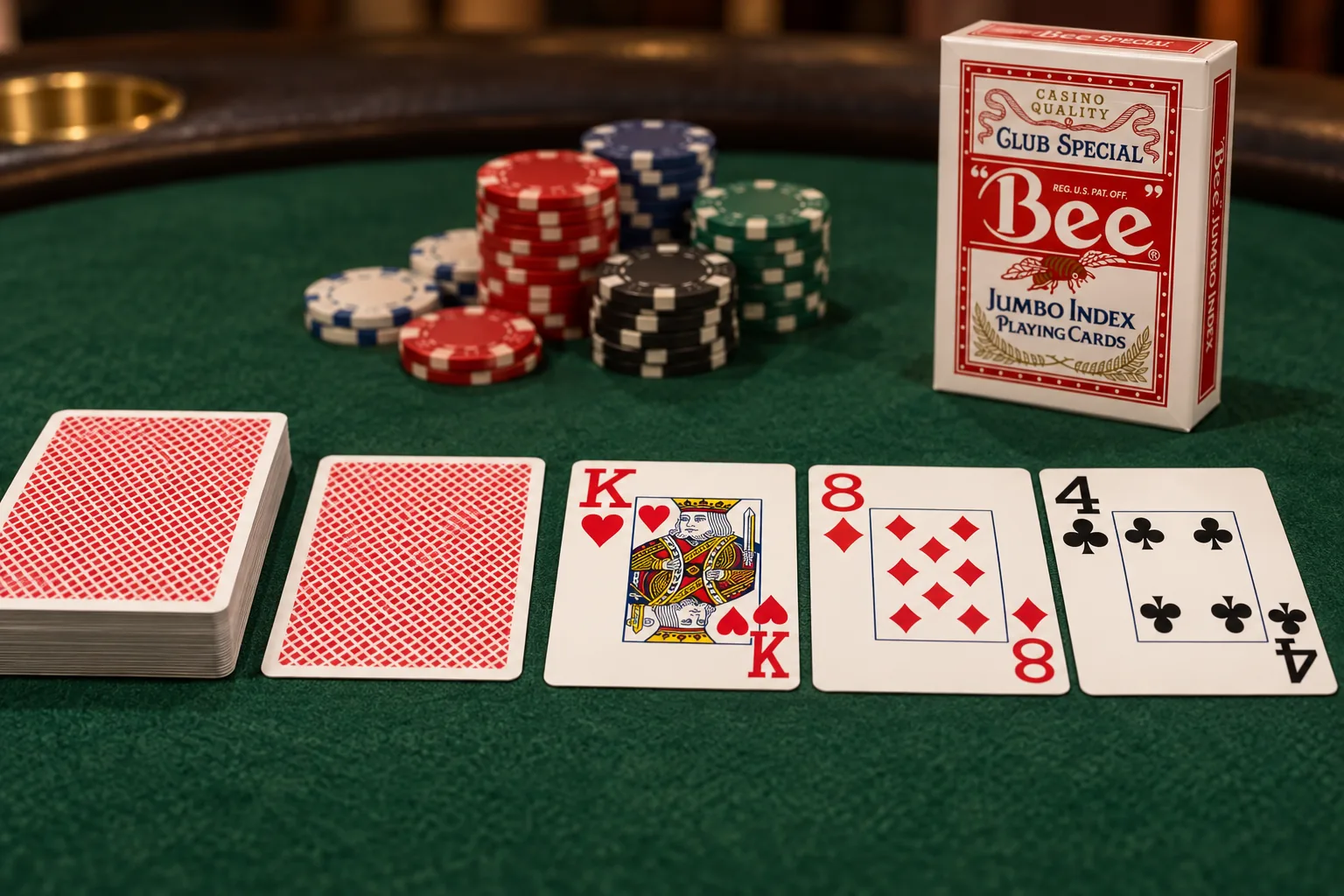
The dealer burns a card (discards it face down without showing it, a tradition designed to make cheating harder if anyone knew the top card of the deck) and then places three cards face up in the middle. That is the flop, and those are the first three community cards that everybody gets to use.
This is the first moment at which you can form an idea of whether your hand has a future or not. If you arrived with a pair of kings in the hole and the flop comes 7-2-5, you still have your high pair and a fair amount of peace of mind. If you had K-Q and the flop comes K-Q-J, you have just made two pair with a straight draw and you are very strong indeed. And if you had 8-9 and the flop comes A-K-2, your hand is probably going nowhere.
The second betting round begins. And here there is an important change compared with the preflop: from the flop onwards, the first to speak is the active player closest to the left of the button, not the one who was under the gun. In practice that means the player on the button acts last in every postflop round, which is a considerable advantage. Since there is no new bet in the round yet, the options are slightly different:
- Check: do not bet, pass the action to the next player.
- Bet: open the betting. The minimum is usually the size of the big blind.
- Fold: always available.
When somebody bets, the players acting after them have to decide between calling, raising or folding. If everybody checks, the next card comes out with no extra money in the pot.
3. The turn: the fourth community card
The dealer burns another card and reveals one more face up. That is the turn, also known as fourth street. There are now four community cards on the table. The third betting round plays out exactly like the one on the flop, with the same options: check, bet, call, raise or fold.
One detail specific to the limit format: if you are playing limit hold'em, the minimum bets usually double on the turn. Where before you were going in multiples of 2, you now go in multiples of 4. In no-limit nothing changes: you can bet anything from the minimum (the BB) up to your entire stack.
4. The river: the fifth and final card
The last community card, also known as fifth street. The dealer burns once more and reveals the fifth and final card. From here on no new card is coming out: whatever you have, you have.
This is the betting round where things get most serious, precisely because nobody can wait to see another card. If you have got this far with a made hand, it is time to get value out of it; if you have got here with a draw (an open-ended straight, a flush that never came), you have to decide whether to fold or to try a bluff.
5. The showdown: turning the cards over
If two or more players are still active after the last betting round, the showdown arrives: the moment of turning the cards over. The order is as follows:
- The first to show is the last player who bet or raised on the river.
- If everybody checked on the river, the first to show is the player closest to the left of the button.
- From there the rest show in order, and each one can either show or throw the hand away without showing (muck) if they know they have lost.
Each player combines their two hole cards with the five community cards to make the best possible five-card hand. They can use both of their cards, only one, or even none at all (if the five cards in the middle already make their best hand). The highest hand wins according to the hand ranking. If there is an exact tie, the pot is split evenly.
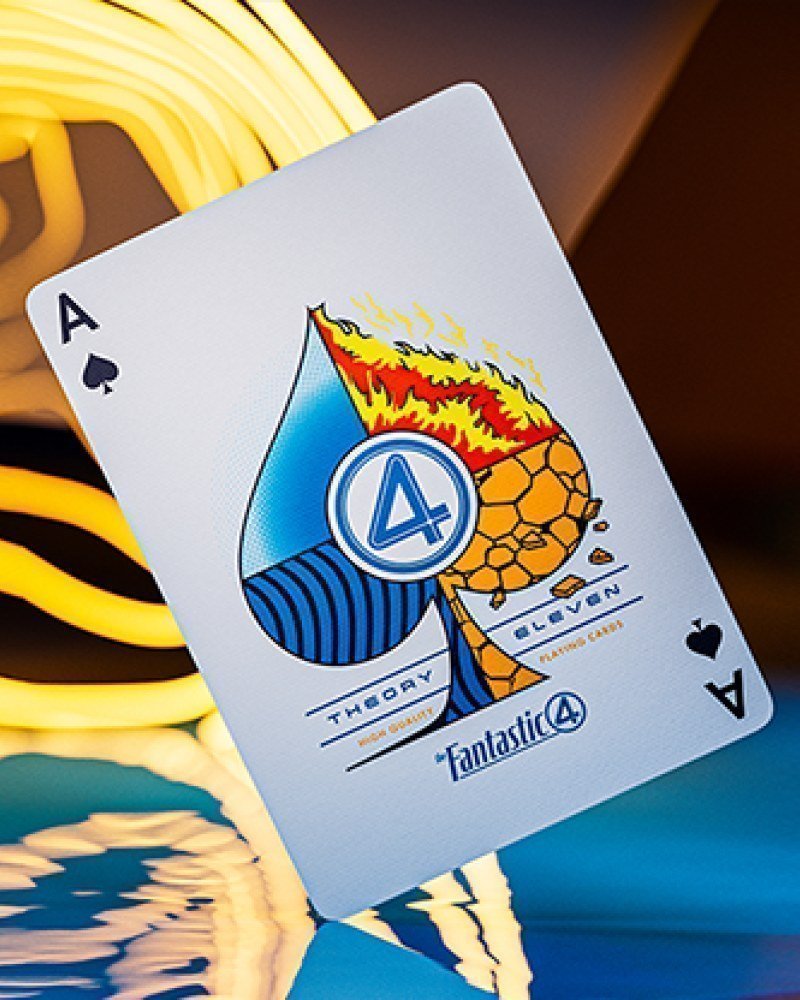
Did you know decks like these exist?
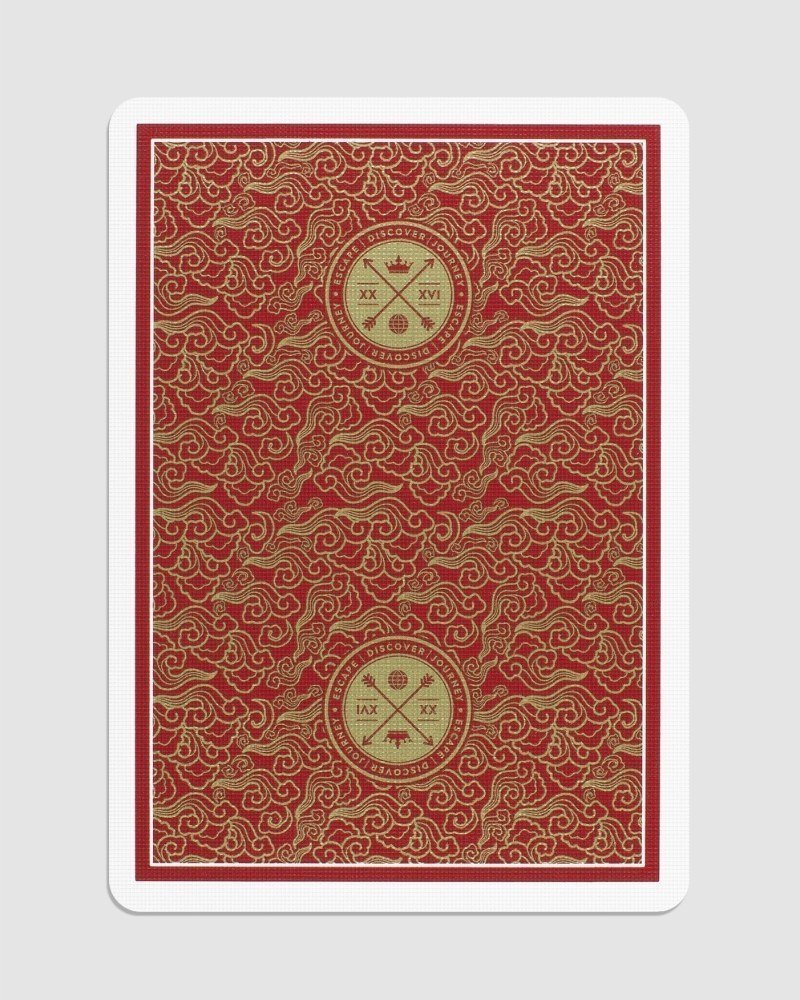
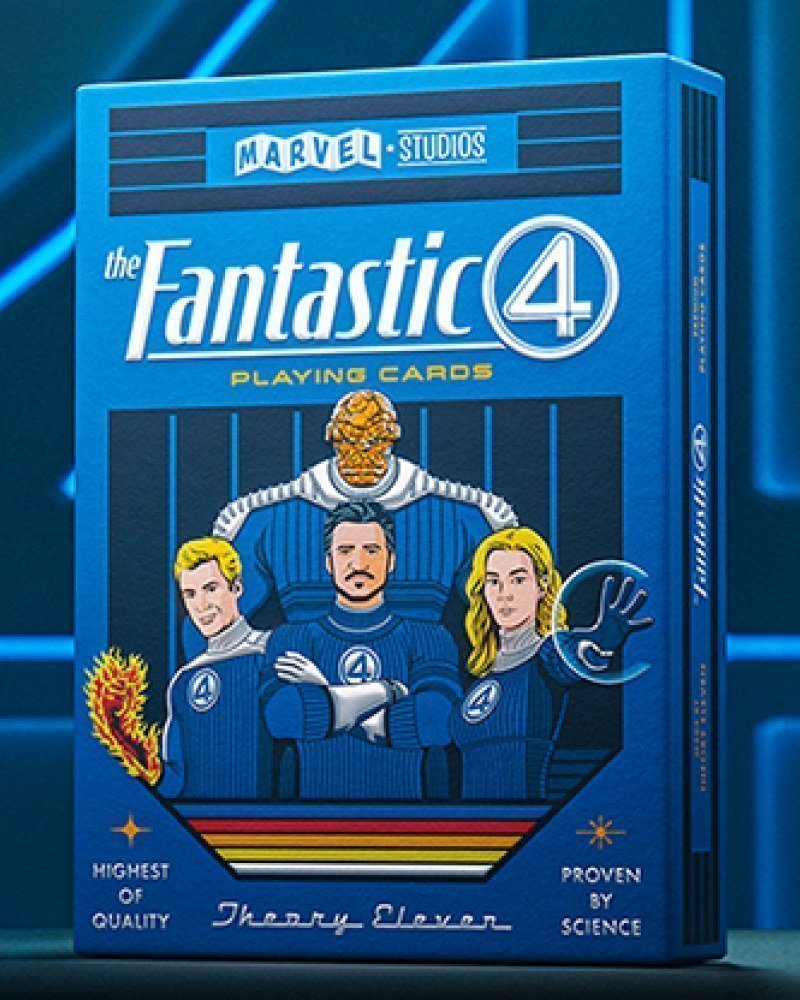
At heart, every deck has the same cards. What changes is everything else: the design, the finish, metallic inks or gilded edges. Take a look at our catalogue and bring your own style to the card table.
Browse our playing cards →




Winning without reaching a showdown
The most frequent way of winning a hand of Texas Hold'em is not showing the best hand at the showdown. The most frequent way, by a comfortable margin, is that everybody else folds first and the pot goes to the last player standing, without any need to show their cards. Nobody will ever know what they were holding unless they decide to show it themselves (out of vanity, as a warning, for fun), which strategically is almost never a good idea.
This detail is what gives poker its particular character. You can win with bad cards if you convince the rest that you have the best ones, and you can lose with the best cards if you get scared and fold at the moment you were meant to call. That is why the psychological side, watching your opponents, the rhythm at which you bet and the size of your bets all weigh so heavily in a game. The cards supply half of it; the other half is supplied by the people.
The actions available to you, in summary
At any point in your turn you have a limited set of decisions. They are these:
- Fold: you hand in your cards and give up the hand. You lose whatever you had already put in. It is always available.
- Check: you do not bet, you pass the action along. Only possible when nobody has bet before you in that round.
- Bet: you put chips in the pot and open the round. Only possible when nobody has bet before you in that round.
- Call: you put in the same amount that the previous player has bet. Only possible when there is already a bet outstanding.
- Raise: you put in more than the previous bet. In no-limit the minimum raise is double the last bet; in limit it is fixed.
- All-in: you bet every chip you have on the table. It is possible in any format, but in limit it has a low ceiling (the maximum bet is already capped by the rule itself).
The natural sequence when somebody has bet before you is call, raise or fold. When nobody has bet, the sequence is check or bet. The whole game is played with these six decisions. If you need more technical vocabulary, the glossary of poker terms collects the ones that come up most often.
The three betting formats: limit, no-limit and pot-limit
When somebody says "a game of no-limit hold'em", they are talking about the betting rules, not the rules of the game. The dealing rules and the hand rankings are identical in all three versions; what changes is how much you can bet at any given moment.
Limit hold'em (fixed limit)
The bets are regulated. In a limit 1/2 game, you cannot bet more than 2 on the preflop and flop rounds, and no more than 4 on the turn and the river. On top of that, only one opening bet and three raises per round are normally allowed. It is the most predictable version, the most mathematical and, traditionally, the one that was played in casinos before the boom of the 2000s. It is still the favourite of many veteran players precisely because its range of decisions is narrower and it punishes the occasional mistake less harshly.
No-limit hold'em (no limit)
The maximum bet at any moment is your entire stack on the table. You can go all-in whenever you like. The minimum bet is the big blind, and the minimum raise is to match the previous bet and add at least the same amount again. This is the format that dominates televised tournaments and the default reference when somebody says poker without specifying. It is also the most volatile: a single badly judged decision can knock you out of the hand and out of the game.
Pot-limit hold'em (pot limit)
The maximum bet at any moment is the size of the pot at that instant. It is a halfway house between limit and no-limit: there is freedom to bet heavily but you cannot go all-in in one swoop unless the pot allows it. It is the usual format for Omaha and it also appears in some Hold'em variants. If Omaha and other formats interest you, I go through them one by one in the poker variants.
Side pots: what happens when somebody goes all-in with fewer chips
One of the details that most confuses newcomers is the business of secondary pots, or side pots. They come about when two or more players carry on betting after another player has gone all-in with fewer chips.
The rule is simple as soon as you see it with an example. Imagine three players: A, B and C. A has 40 chips, B and C have 200 each. A goes all-in with their 40, B calls and C raises to 100. Since A only has 40, they can only compete for what they themselves put in, multiplied by the number of opponents. A main pot of 120 chips is created (40 from each) which A, B and C all compete for. Everything B and C carry on betting above those 40 goes into a separate side pot, which only B and C compete for.
At the showdown the two pots are settled separately. The main pot goes to the best of the three players; the side pot, to the better of B and C. If A wins the main pot but their hand is worse than B's or C's in the side pot, A takes the main one and B or C takes the side one. The logic is to stop somebody with few chips from taking money they could never have called in the first place.
A complete hand, play by play
To see how it all fits together, we are going to play a five-handed hand with 1/2 blinds. Let us call them Ana, Bea, Carlos, Diego and Eva, and the button is in front of Ana. Play moves clockwise, so Bea is the small blind and Carlos the big blind.
- Before the deal. Bea puts in 1 chip (SB) and Carlos puts in 2 chips (BB). Starting pot: 3 chips.
- The deal. The dealer gives two hole cards to each player, starting with Bea. Diego gets A♥ K♦; Ana gets 8♠ 8♣; Carlos gets K♥ Q♣; the rest get cards of no interest for this example.
- Preflop. Diego acts first, sitting to the left of the BB. He sees A-K and decides to raise to 6. Eva looks at her cards, sees an offsuit 9-2 and folds. Ana calls the 6 (with her pair of eights, a decent but delicate holding). Bea, in the SB, folds and loses the chip she had already put in. Carlos, in the BB, already has 2 in; he adds 4 more to call the 6. Pot: 19 chips.
- Flop. Out come K♥ 8♦ 4♣. Ana has just made three of a kind, eights. Diego has a pair of kings with the best kicker (the ace). Carlos also has a pair of kings, with a queen kicker. Carlos acts first and checks. Ana checks too, so as not to give her trips away. Diego bets 10. Carlos calls. Ana raises to 30 to start getting value out of her trips. Diego calls. Carlos hesitates and calls as well. Pot: 109 chips.
- Turn. The 3♠ comes. Nothing relevant on the board. Carlos checks. Ana bets 40 (Diego and Carlos are both still convinced they hold the best pair of kings). Diego calls. So does Carlos. Pot: 229 chips.
- River. The J♥ comes. The board finishes K♥ 8♦ 4♣ 3♠ J♥. There is no flush (the suits are mixed) and no straight. Carlos checks. Ana bets 100. Diego calls. Carlos, with two pair, kings and jacks (using the J in the middle), stands his ground and calls as well.
- Showdown. Ana shows 8♠ 8♣: three of a kind, eights. Diego shows A♥ K♦: a pair of kings with an ace kicker. Carlos shows K♥ Q♣: two pair, kings and jacks, with a queen kicker. Ana's trips beat Carlos's two pair, which in turn would beat Diego's pair. Ana wins the whole pot.
Notice several things. The first is that the hand is decided on the flop, when Ana hides her trips by checking (something known in the jargon as a slow-play). The second is that Carlos and Diego play their pair of kings well right up to the river, but fail to read that Ana is extracting value from them. The third is that Ana has not played spectacularly at all: she made patient use of a favourable flop. Most winning hands in Texas Hold'em look far more like this one than like the big plays you see on television.
Three things worth keeping in mind from your very first hand
1. Position is worth money
Acting last in each round is an enormous advantage, because you reach your decision knowing what everybody else has done. That is why playing from the button (which acts last in every postflop round) is statistically more profitable than playing from under the gun. You do not have to master this concept on your first night, but it is worth bearing in mind: the more hands you see, the more natural it will feel to play more hands from late position and fewer from early position. It is developed at length in positions at the poker table.
2. Your hole cards are not your final hand
It is very common to fall in love with your two starting cards. Being dealt A-K feels almost unbeatable. But if the flop comes 9-8-7 all of the same suit and you do not have a single card in that suit, your A-K is worth exactly the same as a 3-2: two high cards with no connection to the board. The real hand is the five-card combination you can put together with yours plus the ones in the middle. Until the river you do not entirely know what you have.
3. Folding is not losing
The natural instinct, especially when you have gone five hands without being dealt anything good, is to play the next thing you get just to stave off boredom. It is exactly the opposite of what you should do. Experienced players fold their cards preflop the large majority of the time. Saying fold at the right moment is not giving up: it is refusing to put chips into a hand you are probably not going to win. At poker you lose money far faster by calling with one weak hand after another than by letting a decent pair go when the flop does not help.
Starting hand ranges: where to begin without getting overwhelmed
With two cards out of 52, there are exactly 1,326 possible starting hand combinations. Discounting the ones that play identically (for example, A♥ K♠ and A♦ K♣ play the same), they come down to 169 effective combinations: 13 pairs, 78 non-pairs of the same suit (suited) and 78 non-pairs of different suits (offsuit).
Of all of those, a handful are very strong and the rest are middling or simply for throwing away. A pair of aces (A-A) is the strongest hand statistically: it turns up roughly once every 220 hands. Next come kings, queens, and high combinations such as A-K suited and A-K offsuit. A good piece of advice for your first games is to play with a conservative filter: medium or high pairs, hands with two high cards (10 or better) and the odd suited connector (two consecutive cards of the same suit, such as 8-9 of clubs) when you are in late position. Everything else, if you are in any doubt, throw it away.
You do not need to memorise exact charts in order to enjoy yourself. It is enough to ask: do my two cards work together? Two consecutive cards of the same suit work together (straight draw and flush draw). Two high cards work together (possible pairs and a good kicker). One high card and one low card of different suits almost never work together. If your cards are uncoordinated, do not feel guilty about folding.
Very typical mistakes in your first few games
- Playing too many hands. This is mistake number one. Bear in mind that if you deal to five players, on average only one or two of them will have a hand decent enough to call with preflop. If you always call, you are calling with weak hands against good ones.
- Falling in love with ace-anything. Having an ace feels good, but an offsuit A-4 loses a great deal of money against other aces with a high kicker. An ace is not a hand in itself: what matters is what is next to it.
- Calling out of curiosity on the river. If somebody bets big at you on the river and your hand is one of the mediocre ones, resisting the temptation to "pay to see it" saves you chips in the long run. Finding out what the other player had has a concrete price.
- Paying no attention to the board. If your pair of kings is wonderful but the flop brings three cards of the same suit and there are three players raising enthusiastically, your pair of kings has probably already lost. Reading the texture of the flop, the turn and the river is what separates the occasional player from one who wins with any regularity.
- Going all-in on impulse. In no-limit, the all-in is a powerful and dangerous tool. Before you shove, breathe, count to five and ask yourself which specific hand your opponent is going to call you with and how likely you would be to win that call. If the answer is I do not know, this is probably not the moment to push all your chips in.
- Giving your hand away with your face and your timing. If every time you have a good hand you hesitate for two seconds before raising and every time you bluff you bet instantly, your opponents will have read you by the third orbit. Try to act at a similar rhythm in every situation.
Practical advice for your first sessions
There are no shortcuts, but there are a few ideas that save you hours of learning the hard way:
- Start with small blinds. In a friendly game, 1/2 blinds (with chips of token value) are enough to give you action without ruining anybody. If it is a tournament with a real prize, choose stakes you would not mind losing, because on your first night you are going to make mistakes.
- Be consistent and watch. On every hand, even the ones you folded preflop, keep watching what each player bets, how they do it and which cards they show at the end. That passive learning is every bit as useful as playing.
- Do not play tired or upset. In poker, tilt (the emotional state in which you make bad decisions out of frustration) is the fastest way to lose your chips. If you notice that bad runs are making you angry, stop.
- Go over the important hands at the end of the session. Make a note, mentally or on paper, of the hand where you won the most and the one where you lost the most, and think about where you could have done things differently. That exercise, hand by hand, is how most good players improve away from the table.
- Learn one thing per session. Instead of trying to master the whole of poker in one night, set out to concentrate only on position for one evening, only on your bet sizing the next time, only on reading the flop on the third. It works far better than tackling everything at once.
A look at the basic probabilities worth knowing
You do not have to know the whole mathematics of poker to play well, but there is a handful of numbers that help you understand why the game is played the way it is. We leave them here with no greater ambition than that they ring a bell next time you are hesitating over a hand:
- The probability that your two starting cards make a pair is roughly 1 in 17, that is, 5.9%.
- The probability that the flop pairs one of your high cards (if you are not holding a pair) is roughly 33% for each card individually, and 32% that you pair at least one of them.
- If on the flop you have a flush draw (two cards of the same suit among yours and two more on the flop), the probability of completing it before the river is roughly 35%.
- If you have an open-ended straight draw (four consecutive cards, with two ways of completing it), the probability of completing it before the river is roughly 32%.
- The probability of two players making a flush and a straight flush simultaneously in the same hand is so low that most players never live through it. It is one of those hands that turn up twice on television and have whole features devoted to them.
If you fancy venturing into the territory of probabilities, outs, pot odds and all the mathematical vocabulary that poker handles on a daily basis, in pot odds and poker probabilities we work through it calmly and with examples.
A look at the hand ranking, just to have it to hand
When the showdown comes, you have to know which hand wins. This is the order, from the strongest to the weakest, so that you have it in mind:
- Royal flush: 10-J-Q-K-A of the same suit.
- Straight flush: five consecutive cards of the same suit, falling short of a royal flush.
- Four of a kind: four cards of the same rank.
- Full house: three of a kind and a pair.
- Flush: five cards of the same suit, not consecutive.
- Straight: five consecutive cards of mixed suits.
- Three of a kind: three cards of the same rank.
- Two pair: two pairs of different ranks.
- Pair: two cards of the same rank.
- High card: when you do not even have a pair.
Each hand has its own tie-breaking rules: when two players hold the same combination, the decision comes down to an auxiliary card called the kicker, or else to the highest card in the combination. The finer details (what counts in a full house, how a straight is broken, why spades do not beat hearts in a flush) are explained with examples in the complete poker hand ranking.
How much does a deck of cards cost?
From €5 to over €100. The 52 cards and the rules stay the same; this is what changes.
 To play€5.95 To play€5.95 |  Designer€12.95 Designer€12.95 |  Premium€17.99 Premium€17.99 |  Collectible€34.94 Collectible€34.94 | |
|---|---|---|---|---|
| Typical price | €5-9 | €9-15 | €15-30 | €30 or more |
| What sets it apart | Classic casino design | Artist illustration on back and faces | Special inks, embossing and foil on the box | Limited print runs and gilded edges |
| Who it is for | Games at home | Playing with something beautiful | Gifts or cardistry | Collecting and display |
| Example | Tally-Ho Fan Azul | theory11 Medallion | The Sandwich Series (Luncheon Meat) | Kings Wild LOTR Two Towers Gilded |
| See decks | See decks | See decks | See decks |
Frequently asked questions
How many cards are dealt in Texas Hold'em?
Each player receives two face-down cards at the start of the hand. Five community cards are then revealed in the middle: three on the flop, one on the turn and one on the river. In total, each player has seven cards available (their own two plus the five in the middle) with which to make the best possible five-card hand.
Who deals in a home game?
Each player deals in turn, following the button. The button moves one seat to the left on every hand, and whoever has it takes care of dealing that hand. In casinos and professional card rooms there is a fixed croupier, but the button still travels round because it marks the betting order and who pays the blinds.
What happens if nobody raises preflop?
If all the active players merely call the big blind (this action is known as limping), the big blind has the option of checking and closing the round without putting in anything more, because they had already paid the compulsory minimum bet. They can also raise if they want to. That possibility is known as the big blind's option.
What does going all-in mean?
It means betting every chip you have on the table at that moment. It only makes sense in the no-limit and pot-limit formats. If you lose the hand, you are left with no chips and, if it is a tournament without re-entry, you are eliminated. If you win, you take the corresponding pot. When other players have more chips than you, side pots are created as we saw earlier.
Can I use the five cards in the middle and none of my own?
Yes. If the five community cards already make, for example, a royal flush, every player still active at the showdown ties with that royal flush, because each of them can make it using only the five cards in the middle. It is a very rare case but perfectly legal.
How long does it take to learn to play well?
The rules can be learned in under an hour. Playing decently takes between weeks and months of practice, depending on who you play with and whether you study away from the table. Playing well, in the sense of winning money with any regularity, is a matter of years that most enthusiasts never take up in that depth. But to spend a great night with friends you do not need to play well: you need to know the rules and not bet what you cannot afford to lose.
What is the best starting hand?
A pair of aces (A-A), no argument. Statistically it is the strongest hand against any other two-card combination before the flop comes out. Next come a pair of kings, a pair of queens, A-K suited, a pair of jacks, A-K offsuit, a pair of tens and so on down. Worth knowing: even a pair of aces loses fairly often. Against a small pair that makes trips on the flop, against two consecutive cards of the same suit that make a flush, against a hand that lucks into something by accident. No starting hand is a guarantee of anything.
Can you look at another player's cards?
Not while the hand is in progress. It is forbidden to show your cards to somebody still active, or to ask to see theirs. At the showdown, once the cards are being turned over, you can indeed ask to see the hand of any player who has got that far, even if they try to muck it face down. After the hand, everyone shows what they want and keeps quiet about what they want.
What is the difference between a cash game and a tournament?
In a cash game, each chip is worth real money and you can come and go as you please. The blinds stay fixed. In a tournament, all the players start with the same quantity of chips (which have no direct monetary value) and prizes are handed out according to the position in which you are knocked out. The blinds go up periodically to force the action. Tournaments are longer, more emotional and more unpredictable; cash games are more technical and flatter.
Getting off to a good start
If you have caught the bug and want to set up a first game at home, the most practical place to start is with a decent deck. A Bicycle Standard, a Tally-Ho or a Bee feel completely different from the cheap ones at the corner shop, and they are the three most widespread on tables around the world. If you are going to play more seriously, keep a couple of decks in rotation: one that gets worn in and a fresh one in reserve. In our poker deck section you will find the ones we tend to recommend to somebody starting out. For the general hub of all playing card decks by family and use, the full listing is there.
If your way in is the other one, the vocabulary, the glossary of poker terms will save you from more than one awkward moment at the table. And if you want to put on the whole evening (chips, food, atmosphere, house rules), the natural next step is how to host a poker night at home. Poker is more enjoyable the better it is set up around you: it does not take much, but chips that sound right, a deck that spreads smoothly and an unhurried atmosphere change how a night at the table is remembered.
Poker
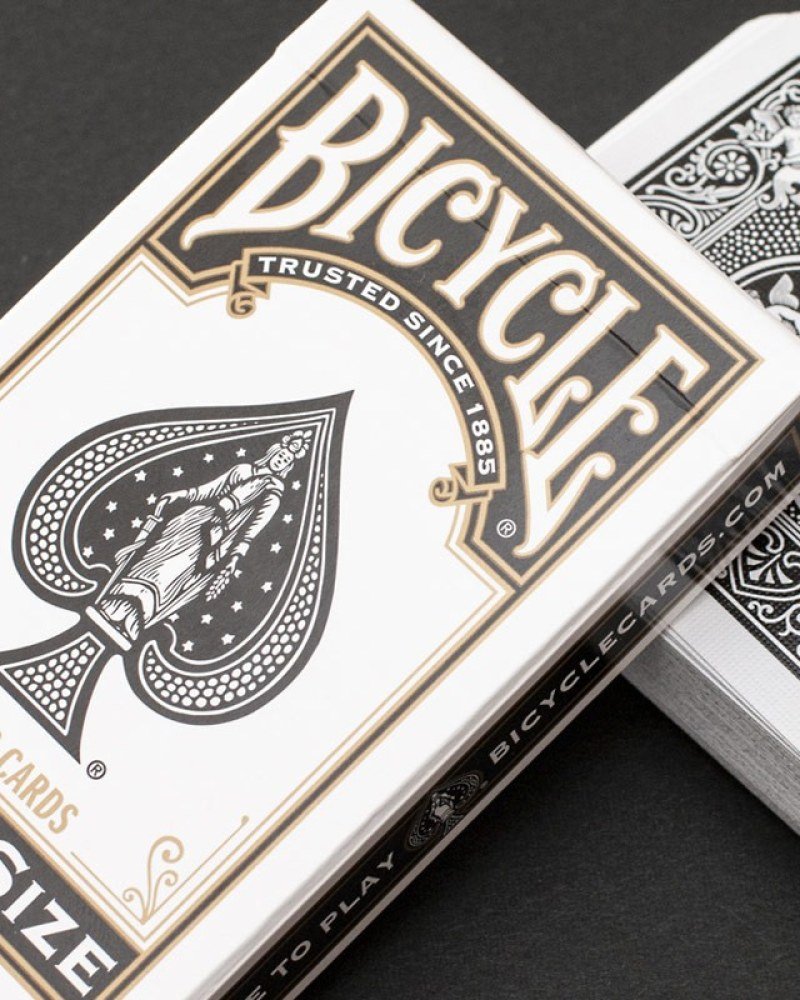
Bicycle Bridge Black – Playing Cards

Tally-Ho Circle Expert Touch Blue – Playing Cards

Tally-Ho Circle Expert Touch Red – Playing Cards
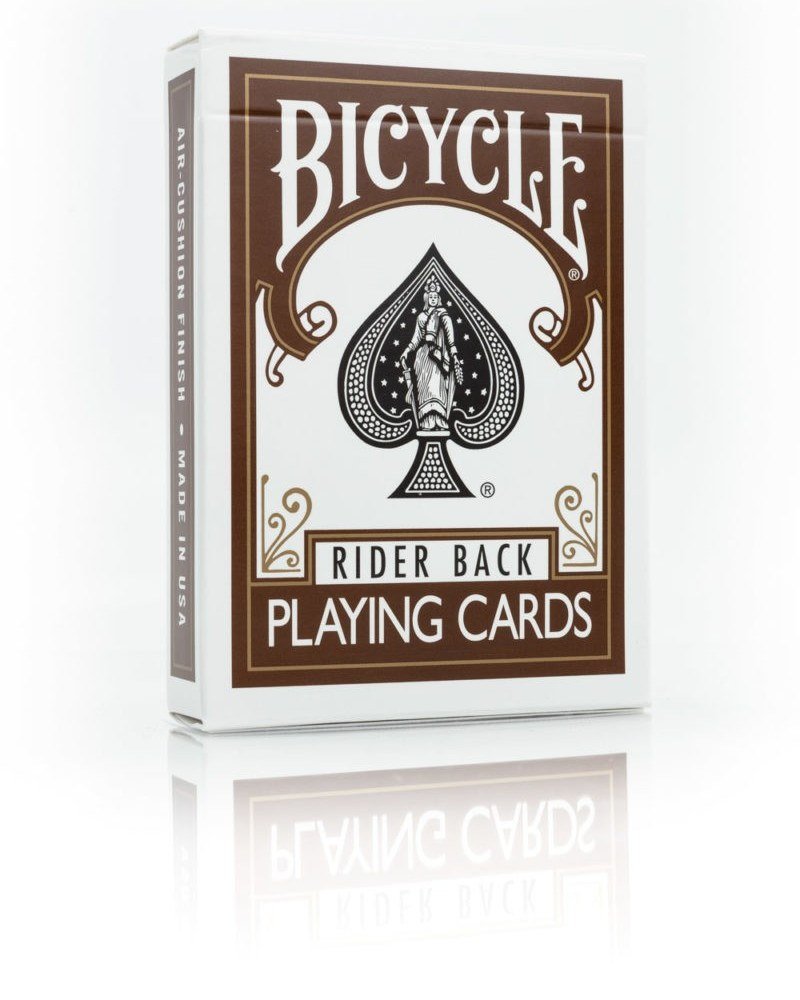
Bicycle Brown Back – Playing Cards
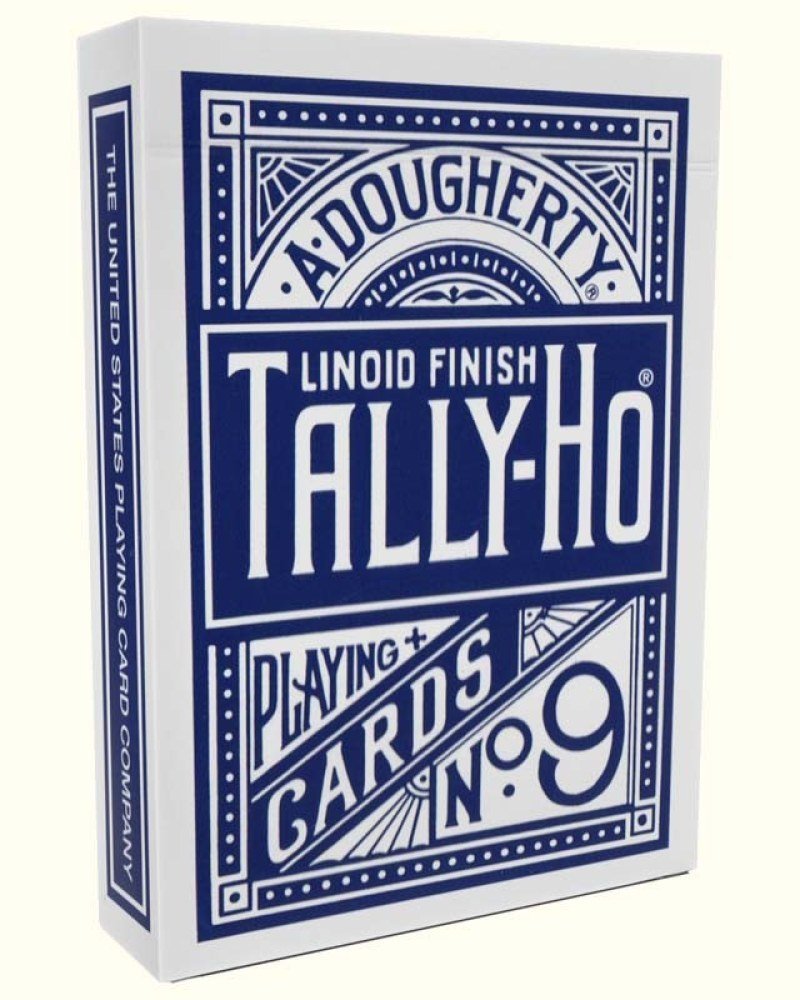
Tally-Ho Fan Blue – Playing Cards
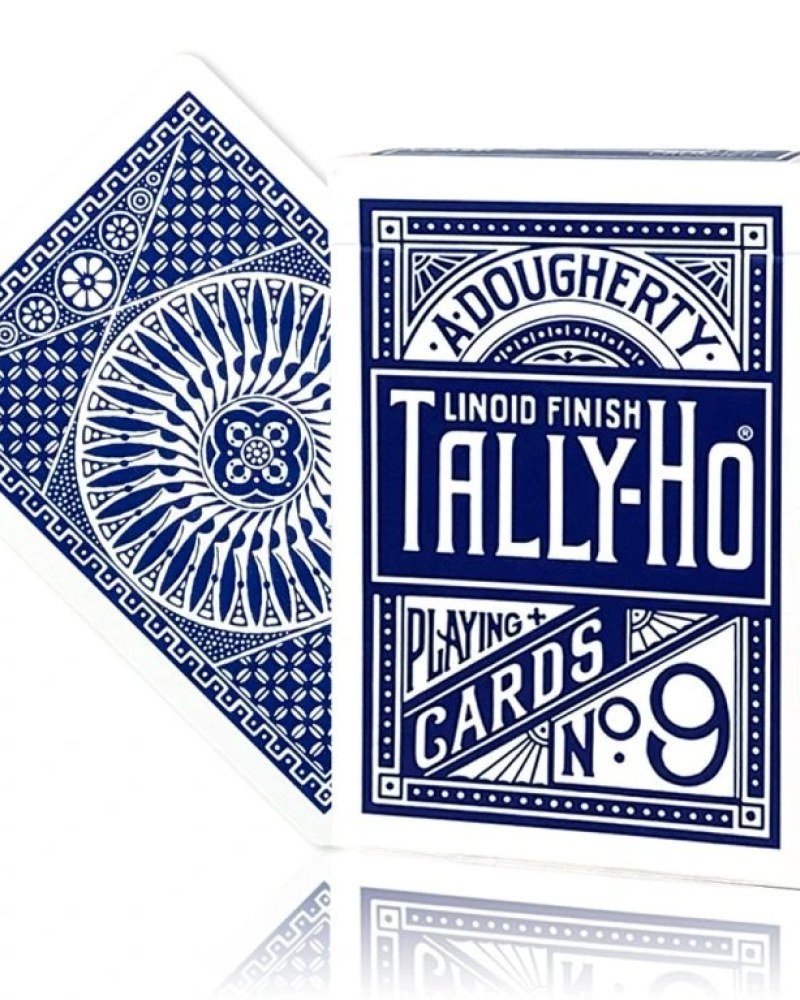
Tally-Ho Circle Blue – Playing Cards

Tally-Ho Circle Red – Playing Cards

Bee Jumbo Index Blue – Playing Cards
Contact our team for any clarification about this document. Contact us


