
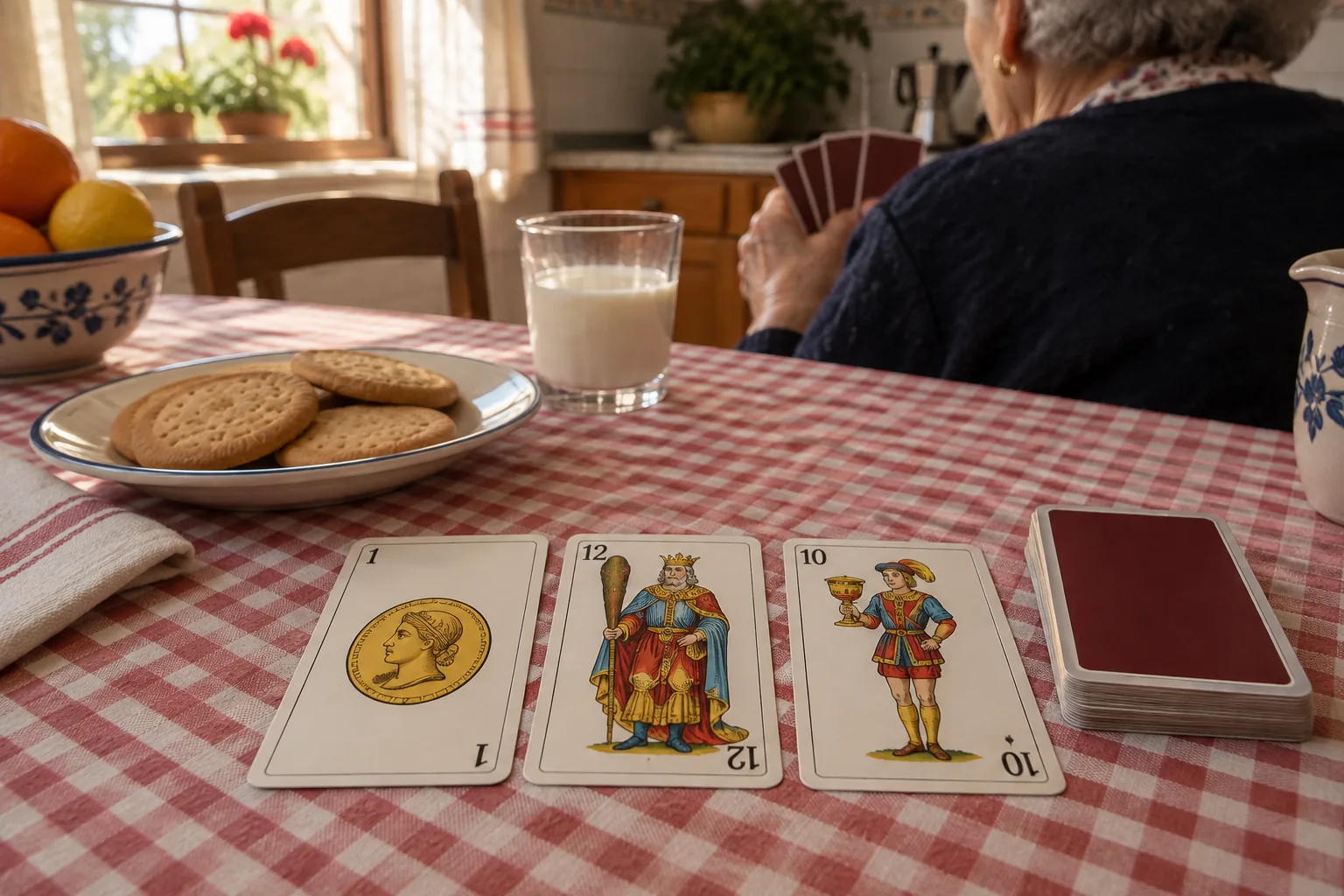
Brisca Card Game Rules: How to Play, Points and Variants
Brisca rules in English: the 40-card Spanish deck, card points, trumps, play for 2, 3, 4 or 6, partner signals, Puerto Rican briscas and briscola.
In short
Brisca (often called briscas in Puerto Rico) is a trick-taking card game played with the 40-card Spanish deck. Each player holds three cards, a card turned face up under the stock sets the trump suit for the whole hand, and after every trick everyone draws back up to three. There is no obligation to follow suit: you may play any card you like. The deck holds 120 points, and the side that takes more than 60 wins the hand.
- Card points: ace 11, three 10, king 4, knight (caballo) 3, jack (sota) 2. Sevens, sixes, fives, fours and twos are worth nothing.
- Card order, strongest first: ace, three, king, knight, jack, 7, 6, 5, 4, 2.
- Players: 2 or 3 playing alone, 4 in two partnerships, 6 in two teams of three.
- Partners may use agreed facial signals to tell each other which trumps they hold.
Brisca is the game many Spanish-speaking families teach first. A child can learn it in one sitting, because there is no bidding, no compulsory suit to follow and only five kinds of cards that score. That simplicity hides real decisions: when to spend a trump, when to throw away a three, and how to tell your partner what you hold without saying a word. This guide covers the full rules for every number of players, the trump exchange with the seven and the two, the traditional partnership signals, how Puerto Rican and Latin American tables differ from Spanish ones, the link with Italian briscola, the main variants and the strategy that separates casual players from the ones who always seem to win.
What you need to play brisca
Brisca uses the Spanish deck in its 40-card form: four suits of ten cards. There are no eights or nines (the 48-card Spanish deck includes them, and they are taken out for brisca), and there are no tens in the French sense, because the three face cards of each suit carry the numbers 10, 11 and 12.
| Spanish name | English | Number printed on the card |
|---|---|---|
| Oros | Coins | Suit |
| Copas | Cups | Suit |
| Espadas | Swords | Suit |
| Bastos | Clubs (batons) | Suit |
| As | Ace | 1 |
| Sota | Jack (knave) | 10 |
| Caballo | Knight (horse) | 11 |
| Rey | King | 12 |
Puerto Rican players often name the face cards by those printed numbers, so you will hear "the 12 of cups" for the king and "the 10s" for the jacks. In Spain the names sota, caballo and rey are more common. Both refer to the same cards. If you want to know where the suits and figures come from, our history of the Spanish deck explains how they took shape.
Playing brisca with a standard 52-card deck
If you do not have a Spanish deck at home, an ordinary French-suited deck works. Remove the 8s, 9s and 10s (and the jokers) to leave 40 cards. The queen then plays the role of the caballo and scores 3, the jack is the sota and scores 2, and everything else works exactly the same. Hearts, diamonds, clubs and spades simply replace the Spanish suits. Our guide to how many cards are in a deck shows how the 40, 48 and 52-card packs relate to each other.
Brisca card values and ranking
The single most confusing point for beginners is that the three is the second strongest card in every suit, above the king. The order is not numerical. A three of cups beats a king of cups, and a two of cups is the weakest card in that suit.
| Rank | Card | Points | Notes |
|---|---|---|---|
| 1 | Ace (as, 1) | 11 | Brisca The most valuable card |
| 2 | Three (tres) | 10 | Brisca Beats the king |
| 3 | King (rey, 12) | 4 | Highest face card |
| 4 | Knight (caballo, 11) | 3 | Queen in a French deck |
| 5 | Jack (sota, 10) | 2 | Lowest scoring card |
| 6 | Seven | 0 | Highest blank card; used in the trump exchange |
| 7-10 | 6, 5, 4, 2 | 0 | Blank cards (in that order) |
Each suit is worth 30 points (11 + 10 + 4 + 3 + 2), so the four suits add up to 120 points. To win a hand you need 61 or more. The aces and threes, eight cards in total, hold 84 of the 120 points, which is why players call them briscas (or "cargas", loads) and why the whole game revolves around who captures them.
How to play brisca, step by step
1. Choose partners and the dealer
In a four-player game each player draws a card: the two highest play against the two lowest, and partners sit facing each other. The player who drew highest deals first. After each hand the deal passes to the right, because brisca, like most traditional Spanish games, is played counterclockwise.
2. Shuffle, cut and deal three cards
The dealer shuffles and the player to the dealer's left cuts, leaving at least four cards in each packet. The dealer then gives three cards to each player, one at a time, moving counterclockwise.
3. Turn up the trump
The next card is turned face up and placed under the rest of the stock, sticking out so everyone can see it. Its suit is trump for the whole hand. Because it lies at the bottom of the stock, the visible trump card is the very last card anyone draws.
4. Play a trick
The player to the dealer's right leads any card. Each other player, in counterclockwise order, plays one card. Here is the rule that defines the game: you never have to follow suit, and you never have to play higher or trump. You can keep your trumps, throw away a blank card or drop a point card on your partner's winning trick. The trick is won as follows:
- If one or more trumps were played, the highest trump wins.
- If no trump was played, the highest card of the suit led wins.
- Cards of any other suit, however high, cannot win. An ace of swords played on a lead of cups loses to the two of cups.
5. Draw back to three
The winner of the trick gathers the cards face down, then everyone draws one card from the stock, starting with the winner and continuing counterclockwise. The winner leads the next trick. In this way every player always has three cards while the stock lasts.
6. Play out the last three tricks
When the stock runs out (the last player to draw takes the face-up trump), there is no more drawing. Everyone plays the three cards left in hand, and these final tricks often decide the game, since players tend to save trumps and loads for this moment.
7. Count the points
Each side adds up the card points in the tricks it took. The side with 61 or more wins the hand. A match is usually played to a number of hands agreed beforehand: best of three, five or seven are the most common.
| Players | Cards used | Tricks per hand | Tricks with drawing | Tricks from hand at the end |
|---|---|---|---|---|
| 2 | 40 | 20 | 17 | 3 |
| 3 | 39 (one card removed) | 13 | 10 | 3 |
| 4 (2 vs 2) | 40 | 10 | 7 | 3 |
| 6 (3 vs 3) | 36 (the four 2s removed) | 6 | 3 | 3 |
The trump exchange: the seven and the two
Almost every brisca table plays with some form of exchange of the face-up trump card. The idea is the same everywhere: a low trump in your hand can be swapped for the visible trump card when that card is worth having. The details change from one place to another, so it is worth agreeing on them before the first deal.
| Situation | Spain | Puerto Rico |
|---|---|---|
| Visible trump is a jack, knight, king, three or ace | The 7 of trumps can take it | The 7 of trumps can take it |
| Visible trump is a 7 or lower | The 2 of trumps can take it | The 2 of trumps can take it at any time |
| Using the 2 for a high trump | No (the 2 only takes a 7 or lower) | Allowed before the first trick, and the 2 has priority over the 7 |
| When you may exchange | After winning a trick, before drawing | Usually on your turn; many tables also ask you to have won a trick |
| Last moment | Not after the second-to-last trick with drawing | Before the stock runs out |
The exchange matters most when the visible card is an ace or a three of trumps: the player with the seven gets an 11 or 10-point trump for a card worth nothing. Some players hold on to the seven and wait, hoping an opponent spends a big trump first, and exchange later. That only works if your table lets you exchange at any point before the stock ends.
How to win: scoring and ties
With 120 points in the deck, the side that takes 61 or more wins the hand. If both sides end on exactly 60, tables handle it in one of three ways:
- The hand is void and nobody scores, which is the rule printed in Spanish rule sheets.
- The hand is a draw, as in Italian briscola and in many Puerto Rican homes.
- The side that took more cards wins the tie, a rule found in some Spanish and Latin American houses.
Each hand won is worth one game point, and the match goes to the first side to reach the target agreed at the start, usually 3, 5 or 7. Some groups give two game points for a hand won by a large margin (more than 100 points, for example).
Did you know decks like these exist?
At heart, every deck has the same cards. What changes is everything else: the design, the finish, metallic inks or gilded edges. Take a look at our catalogue and bring your own style to the card table.
Browse our playing cards →




Brisca for 2, 3, 4 and 6 players
Two players
The game described above, with one difference in who leads: with two players the non-dealer leads the first trick. There are 20 tricks in all: 17 while drawing and 3 at the end. Two-player brisca is the most calculating version, because only one opponent can play against you and you can track almost every card: by the last tricks a careful player knows the opponent's hand.
Three players
Each plays alone. Since 40 does not divide by three, one card is taken out before dealing: a 4 in Puerto Rico and much of Latin America, a 2 in Italy. Either way it is a blank card, so the deck still holds 120 points. There are 13 tricks, and the player with the most points wins (or, in a match, the first to reach the target number of hands).
Four players: the classic partnership game
Two against two, partners sitting opposite, so the order of play alternates between the teams. Each partnership shares one score and one pile of tricks. This is the form most people mean when they talk about brisca, and the one where signals come in. It has 10 tricks per hand: 7 with drawing and 3 at the end.
Six players
Two teams of three, seated alternately so that no two partners sit side by side. The four 2s are removed to leave 36 cards, which gives six tricks per hand. With so few tricks and so many cards hidden in partners' hands, signals and table talk become even more important. In the North African and Sicilian six-player form known as schembil, each team chooses a captain, the only player allowed to ask questions and give orders, and when the stock runs out the captain may look at one partner's hand.
If you are often three at the table, our list of card games for three has more options for an odd number of players.
Partnership signals (señas)
In partnership brisca you may not tell your partner your cards or show them. But in most traditions you may signal: small facial gestures, agreed beforehand, that tell your partner which trumps you hold or what you want them to play. The challenge is to signal when the opponents are not looking, and to watch the opponents for their own signals. Some houses forbid signals altogether, so ask before you start.
| Meaning | Spanish brisca | Italian briscola |
|---|---|---|
| Ace of trumps | Raise your eyes | Stretch the lips over the teeth |
| Three of trumps | Wink one eye | Twist the mouth to one side |
| King of trumps | Pout the lips | Glance upward |
| Knight (horse) of trumps | Twist the mouth to the right | Show the tip of the tongue |
| Jack of trumps | Show the tip of the tongue | Shrug one shoulder |
| I hold briscas (aces or threes of other suits) | Tilt the head to one side | Not standard |
| I have no trumps | Close the eyes briefly | Not standard |
| Play a point card that is not a brisca or a trump | Blow softly | Not standard |
| What do you have? | Stare at your partner | Not standard |
As the table shows, the same gesture can mean different things in different traditions: showing the tongue is the jack in Spain and the knight in Italy. If you play with people from another country or region, agree on the code first. Many families also invent their own signals, which is perfectly legal as long as both teams know signals are allowed.
Around Rome, briscola players go further and allow open table talk from the second trick on: the player to lead may ask a partner whether they hold low trumps, high trumps or point cards, and may give orders such as "play a blank" or "lead without trumping". Some Chilean tables do the opposite and ban any spoken communication. Signals are a large part of other Spanish deck games too; mus and truco have complete systems, explained in our guide to truco.
Puerto Rican and Latin American brisca vs Spanish brisca
Brisca is played across Latin America, from Puerto Rico, Cuba and Mexico to Argentina and Chile, and each country has adapted it. In Puerto Rico it is one of the best known card games and is usually called briscas. The core game is the same everywhere: 40 cards, three in hand, a face-up trump, ace 11 and three 10, no duty to follow suit and 61 points to win. The differences are in the details.
| Point | Spain | Puerto Rico and Latin America |
|---|---|---|
| Name | Brisca | Briscas (Puerto Rico), brisca elsewhere |
| Face cards called | Sota, caballo, rey | Often by number: 10, 11, 12 |
| Direction of play | Counterclockwise | Counterclockwise |
| Exchange with the 2 | Only takes a trump of 7 or lower | Can also take a high trump before the first trick (Puerto Rico) |
| Card removed for three players | No fixed rule | A 4 |
| 60-60 | Usually void | Usually a draw |
| Hunting the three | Not played | Muerte al tres in Cuba and Puerto Rico |
| Bidding version | Not played | Brisca rematada in Chile |
The Latin American variants are described in the cards below. One more thing worth knowing: in Spanish-speaking countries the plural briscas also names the aces and threes of the non-trump suits, the eight cards that carry most of the points. When a Puerto Rican grandmother asks "¿tienes briscas?", she may be asking about those cards, not about the game.
Brisca and Italian briscola
Brisca and briscola, the most popular traditional card game in Italy, are essentially the same game. The card values (11, 10, 4, 3, 2), the 120-point total, the three-card hand, the face-up trump and the freedom to play any card are identical. The differences are mostly about the cards and the customs:
- The deck: Italians play with one of the many regional 40-card packs (Neapolitan, Piacentine, Sicilian, Triestine and others). The southern and central ones use the same suits as the Spanish deck, coins, cups, swords and batons; the northern ones may use French suits. The cards and their order are the same.
- The face cards: in some Italian regions, especially in the south and in parts of Tuscany, the order and values of the knight and the jack are reversed, so the jack ranks above the horse.
- Signals: Italy has its own standard set of gestures and, around Rome, the open conversation between partners described above.
- Five players: briscola chiamata is a separate five-player game with an auction, explained in the variants below.
Across the Mediterranean the same game appears under other names: briškula in Croatia and coastal Slovenia, and bisca in Portugal and Brazil, where the 7 usually replaces the 3 as the second highest card. Portugal's other great ace-ten game, sueca, uses the same card values but makes players follow suit.
Brisca variants
The cards below gather the variants that are well established in more than one source. All of them use the standard card values unless stated.
Muerte al tres
3hunted"Death to the three", also known in English as hunt the three. Played in Cuba and Puerto Rico. The aim is to capture the three of trumps with the ace of trumps.
- Cuba and Puerto Rico
- Ace kills the three
- Sudden win
How it works
The ace of trumps may not be played until the three of trumps has appeared, except on the last trick. If the ace captures the three, the hand ends at once and goes to the side that made the capture. If the three survives, the hand is scored in the normal way.
Brisca rematada
3playersA Chilean three-player game with an auction. All the cards are dealt, so there is no drawing, and the highest bidder plays against the other two.
- Chile
- 10 cards each
- Bidding from 100
How it works
The 2s and 4s are removed to leave 32 cards. Each player gets 10, and two cards go face down as a talon. Players bid the number of points they will take, starting at 100. The winner takes the talon, discards two cards to their own scoring pile and names trumps. If the bidder fails, the points go to the opponents, who do not play as a fixed partnership.
Briscola chiamata
5playersThe Italian five-player game, sometimes called briscolone. Each player gets eight cards and the auction winner calls a card: its holder becomes a secret partner.
- Italy
- 8 cards each
- Hidden partner
How it works
The whole deck is dealt. Players bid by naming a card rank and raising the points they promise to take. The winner names trumps and thereby calls the holder of a specific card, who plays with the bidder against the other three without revealing it until the card is played. Variants include the dark call (trumps named after the first trick) and bidding by points.
Open-hand brisca
2playersKnown in Italy as briscola scoperta. Both players' hands lie face up, so only the cards buried in the stock are unknown.
- Two players
- No hidden hands
- Good for teaching
How it works
The rules and card values are those of normal two-player brisca. Because every decision is visible, it is a good way to teach a beginner why a trump is wasted on a blank card or why a three should not be led into an opponent's ace.
Schembil
6playersA six-player team game from Sicily and North Africa (in Libya, skembeel), with 36 cards and a captain in each team.
- 2 teams of 3
- 36 cards
- Captain called rais
How it works
Each team picks its most experienced player as captain. Only the captain may ask questions or give orders, and the others answer only the captain. When the stock runs out, the captain may look at the cards of one partner, usually the one on their right.
Bisca (Portugal and Brazil)
7second cardThe Portuguese-speaking branch. The 7 usually takes the place of the 3 as the second strongest card and is worth 10 points.
- Portugal, Brazil
- Ace and 7 on top
- 2, 4 or 6 players
How it works
In the most common Portuguese order the 7 ranks right after the ace, followed by king, jack and queen, then the blank cards. Brazil plays both systems, and versions with more cards in hand exist alongside the three-card game.
Where brisca comes from
The oldest documented ancestor of the brisca family is French: brusquembille, a game whose rules were published in 1718 and which was played with the 32-card piquet pack, with chips used for payments. From it came brisque in France and, through the Italian and Spanish 40-card packs, briscola and brisca. Other games in the line, like bezique, added scoring combinations and a final phase where players must follow suit. Brisca and briscola kept the simpler form: no declarations and no forced play.
You will read online that brisca is "the Spanish version of briscola" and also the opposite, that brisca is the ancestor of briscola. Neither claim has solid evidence behind it. What is documented is that both descend from the same French model, spread around the Mediterranean and adapted to the local deck. The form most played today, four players in partnerships with three cards each, became the standard during the 20th century. For the wider family of games that grew up around the Spanish deck, see our overview of Spanish deck games.
Brisca strategy
Know what is still out
You do not need to memorize all 40 cards. Track three things: the eight briscas (aces and threes), the ten trumps and the face-up trump card, which you know will be the last card drawn. With those in your head you will know when your three of a side suit is safe to play and when an opponent can still trump it.
Leading
- Lead blank cards when you have nothing to protect. A 4 or a 5 of a side suit costs nothing and forces the next player to decide.
- Do not lead a three while the ace of that suit is unseen, unless you want to give your opponent 21 points.
- Leading a low trump late in the stock phase can flush out the opponents' trumps before the final three tricks.
Following
- Take loaded tricks with low trumps. If someone leads a three or an ace of a side suit, a 2 or a 4 of trumps is the cheapest way to collect 10 or 11 points.
- Do not spend a trump on a trick worth nothing. Losing a trick of blanks costs you zero points; a trump spent there may be missing later.
- Throw blanks on tricks you cannot win. When you are last and the trick is lost, give away your lowest, least useful card.
Playing with a partner
- Load your partner's tricks. If your partner is winning and the last opponent cannot beat them, play your highest point card that is not a trump: a three, an ace, a king.
- Do not fight your partner. Trumping a trick your partner is already winning throws away a trump.
- Use the signals to plan the end. Knowing that your partner holds the ace of trumps changes how you play the last three tricks.
- Watch the opponents' faces as much as your partner's. Signals are meant to be caught.
The endgame
When the stock runs out, the last three tricks are played without drawing, and they are often full of points because everyone has saved loads and trumps for this moment. Count the trumps that have been played: if only one is left and you hold it, you control the final trick. In the four-player game, the player who leads the first of these tricks is under the most pressure, so a team with the lead should open with whatever forces the opponents to use their trumps early.
How much does a deck of cards cost?
From €5 to over €100. The 52 cards and the rules stay the same; this is what changes.
 To play€5.95 |  Designer€12.95 |  Premium€17.99 |  Collectible€34.94 | |
|---|---|---|---|---|
| Typical price | €5-9 | €9-15 | €15-30 | €30 or more |
| What sets it apart | Classic casino design | Artist illustration on back and faces | Special inks, embossing and foil on the box | Limited print runs and gilded edges |
| Who it is for | Games at home | Playing with something beautiful | Gifts or cardistry | Collecting and display |
| Example | Tally-Ho Fan Azul | theory11 Medallion | The Sandwich Series (Luncheon Meat) | Kings Wild LOTR Two Towers Gilded |
| See decks | See decks | See decks | See decks |
Frequently asked questions
What is brisca?
Brisca is a trick-taking card game for two to six players played with the 40-card Spanish deck. Players hold three cards, a face-up card sets the trump suit and nobody has to follow suit. Aces score 11, threes 10, kings 4, knights 3 and jacks 2, and the side that takes more than 60 of the 120 points wins the hand.
What is brisca called in English?
There is no traditional English name. English speakers use "brisca", "briscas" or the Italian "briscola", which is the same game. The word brisca also names the high cards: the aces and threes of non-trump suits are called briscas.
How many cards do you deal in brisca?
Three to each player. The next card is turned face up to set the trump suit, and after each trick every player draws one card from the stock, so everyone keeps three cards until the stock runs out.
How many points do you need to win at brisca?
At least 61 of the 120 points in the deck. If both sides finish with 60, the hand is void or a draw depending on the house rules. A match is usually played to 3, 5 or 7 hands won.
Do you have to follow suit in brisca?
No. You can play any card at any time, including after the stock runs out. That freedom is what separates brisca from tute and guiñote, where following suit becomes compulsory at the end.
Can you play brisca with a regular deck of cards?
Yes. Take out the 8s, 9s, 10s and jokers from a 52-card deck. The queen plays the role of the knight (3 points) and the jack keeps its 2 points. Everything else is the same.
How many people can play brisca?
Two, three, four or six. With two or three each plays alone; with four the game is played in two partnerships; with six, in two teams of three using 36 cards.
Are brisca and briscola the same game?
Yes, apart from small regional differences. Both use 40 cards, the same card values and the same trump and drawing system. The main differences are the deck design, the signals and some local rules on the trump exchange and the order of the face cards.
Can you use signals in brisca?
In most partnership games, yes, as long as they are gestures and not words, and both teams know signals are allowed. Traditional Spanish signals include raising the eyes for the ace of trumps and winking for the three of trumps. Some houses forbid them.
Brisca is played with the Spanish deck, but if you only have a standard deck at home you can strip it to 40 cards as explained above. In our playing cards section you will find well-made 52-card decks that hold up to many evenings of card games.
Want more guides like this? Sign up for the newsletter.
Keep exploring
- Spanish deck games: mus, tute, brisca, guiñote and more
- Tute rules: declarations, variants and strategy
- Guiñote rules: the Aragonese trick-taking game
- Sueca rules: cards, trumps and points
Playing Cards
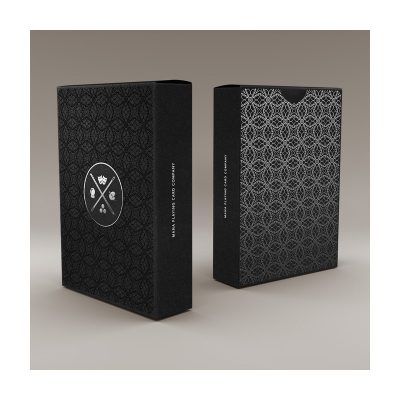
- New
Buskers Exclusive Edition by Erik Mana
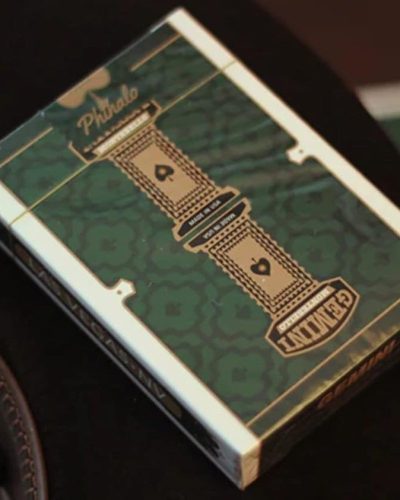
Gemini Casino Phthalo Green – Playing Cards
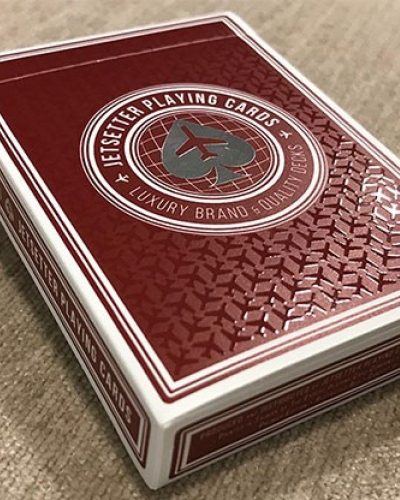
Premier Edition Restricted Red – Playing Cards
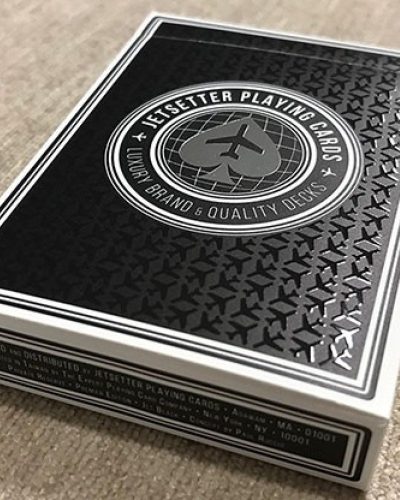
Premier Edition Jet Black Private Reserve – Playing Cards
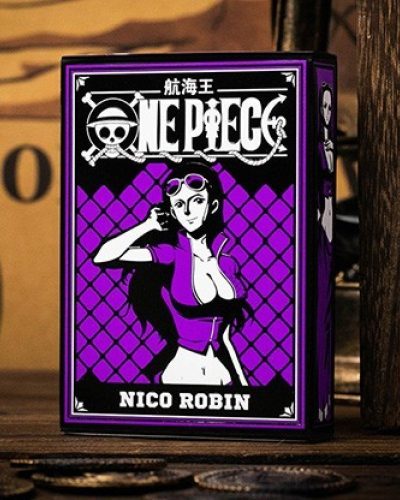
Card Mafia One Piece Robin – Playing Cards
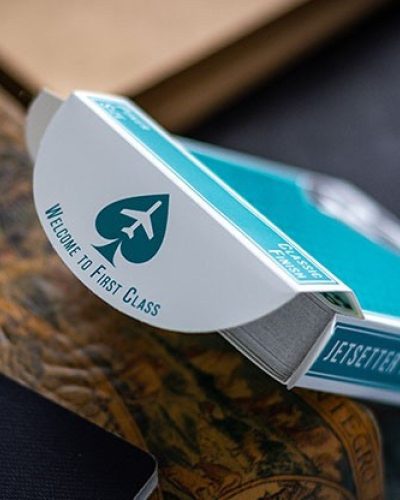
Lounge Edition Terminal Turquoise – Playing Cards
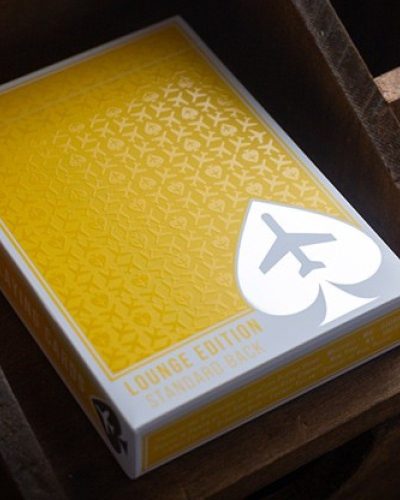
Lounge Edition Taxiway Yellow – Playing Cards
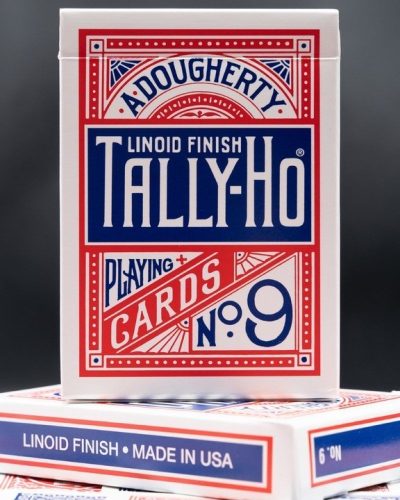
Tally-Ho Gaff – Playing Cards
Contact our team for any clarification about this document. Contact us