
How Many Cards in a Deck? 52, With Jokers and Other Decks
A standard deck has 52 cards plus 2 jokers. Face cards, red cards, aces, the Spanish deck, pinochle, euchre, canasta, tarot and why 52.
In short
A standard deck of playing cards (a poker deck) has 52 cards: four suits (spades, hearts, diamonds and clubs) of 13 cards each. Almost every deck is sold with 2 jokers, so the box usually holds 54 cards, sometimes plus one or two advertising cards that do not count. The Spanish deck has 40 or 48 cards: 48 with the eights and nines, 40 without them, and 50 if it includes two jokers.
- Poker / French-suited: 52 cards + 2 jokers (54 in the box)
- Spanish: 40 (no 8s or 9s), 48 (full) or 50 (48 + 2 jokers)
- Italian: 40 · German Skat: 32 · Swiss: 36 · Tarot: 78
"How many cards in a deck?" looks like a question with a single answer, but it is not. It depends on which deck you are holding, which country you are in and, above all, which game you are going to play: many games do not use the whole deck but a stripped-down version, and some use two decks shuffled together. In this guide you will find first how many cards are in a poker deck, with and without jokers, then the Spanish deck we know best at home in Spain, and then a full reference for the other decks you might come across (pinochle, euchre, canasta, tarot and more), with how many cards per suit, how many face cards, how many aces and a trick for checking in a minute whether your deck is missing one.
How many cards in a poker deck: 52 plus jokers
The deck used for poker, blackjack, bridge, canasta or solitaire is the French-suited deck, so called because its suits were settled in France in the late 15th century. It is the most widespread deck in the world and its make-up is the same whoever prints it:
- 4 suits: spades (♠) and clubs (♣) in black; hearts (♥) and diamonds (♦) in red.
- 13 cards per suit: ace, 2 to 10, and three face cards: jack (J), queen (Q) and king (K).
- 52 cards in total, not counting jokers.
This is what a full suit looks like, from the highest card to the lowest in most games (in some, such as blackjack or certain straights, the ace can also count as a low card):
A 52-card deck by the numbers: face cards, red cards, aces
These are the most searched figures, all of them derived from that 4 × 13 structure:
| What | How many | Detail |
|---|---|---|
| Cards in total | 52 | Without jokers |
| Cards per suit | 13 | A, 2-10, J, Q, K |
| Red cards | 26 | 13 hearts + 13 diamonds |
| Black cards | 26 | 13 spades + 13 clubs |
| Aces | 4 | One per suit |
| Face cards | 12 | 4 jacks, 4 queens and 4 kings |
| Number cards (2 to 10) | 36 | 9 per suit |
| Jokers | Usually 2 | They belong to no suit |
A detail that sometimes causes confusion: if someone counts the face cards and includes the aces, they get 16. Aces are not face cards; they are the 1 of each suit, even though in poker they act as the highest card. If you want to know where the four suits come from and why they have those colours, we explain it in poker deck suits.
How many jokers in a deck?
Today a poker deck from an American or British maker normally comes with two jokers, which are often different from each other (one in full colour and one in black, or one red and one black). German decks usually include three, which is why a German rummy set with two decks holds 110 cards: 2 × 52 plus 6 jokers. Some decks have just one, and special editions may have more.
The joker is the youngest card in the deck. It appeared in the United States in the mid-19th century in connection with euchre, a game in which it served as the top trump, and from there it moved into rummy-style games (rummy, canasta, contract rummy), where it is a wild card that can replace any other. Standard poker does not use it: the 52 cards are enough and the joker stays in the box.

The extra cards: advertising, rules and spares
If you count the cards in a freshly opened Bicycle deck, you will most likely get 56: 52 playing cards, 2 jokers and 2 extra cards. Those last two are advertising cards: the brand, the poker hand ranking, a promotion or, in magic decks, gaffed cards with a specific purpose. The reason is industrial: the printing sheets have room for more than 52 cards, and manufacturers make use of those spare positions. They vary from one edition to the next, and some coloured decks even come with a single joker and a special card.
Why are there 52 cards in a deck? What is known and what is myth
It is one of the most repeated bits of trivia: 52 cards because the year has 52 weeks, 4 suits for the 4 seasons, 12 face cards for the 12 months, 13 cards per suit for the 13 weeks of each season. And to top it off, if you add up the value of every card (ace = 1, jack = 11, queen = 12, king = 13) you get 364, and with one joker, 365, the days of the year.
What is documented points somewhere else. Playing cards reached Europe in the 1370s from the Islamic world, and the clearest ancestor is the Mamluk cards of Egypt. The most famous Mamluk deck, which survives incomplete in the Topkapı Museum in Istanbul, had four suits (coins, cups, swords and polo sticks) with ten number cards and several court cards in each. The International Playing-Card Society describes it as a 52-card deck with three court cards per suit; other scholars, working from the cards that survive, believe it had four court cards and 56 cards. What nobody disputes is the pattern: four suits, ten numbers and a small group of court cards.
That pattern is what European decks inherited, and each country trimmed or extended it in its own way. The French kept ten numbers and three face cards (jack, queen and king): 13 per suit and 52 in total. The Spanish kept three face cards, but without a queen (sota, caballo and rey, that is jack, knight and king), and over time dropped the ten. The Italians ended up with 40. So the number 52 is not the result of a symbolic design but of an inherited structure: 4 suits × (10 numbers + 3 face cards). You can read the full story in the history of the poker deck.
How many cards in a Spanish deck: 40, 48 or 50
The full Spanish deck has 48 cards: four suits (oros or coins, copas or cups, espadas or swords, and bastos or clubs) of 12 cards each, numbered 1 to 9 plus three face cards. The face cards carry the numbers 10, 11 and 12: sota (10), caballo (11) and rey (12), roughly jack, knight and king. There are no cards showing ten pips; the "10" of the Spanish deck is the sota.
Most Spanish games, however, are played with 40 cards: the four eights and four nines are removed. This is the version used for mus, tute, brisca, guiñote, escoba, julepe or siete y media, and the one played across much of Latin America (Argentine truco, Ecuadorian cuarenta). That is why, in a 40-card deck, the 7 is followed directly by the sota, which carries the number 10.
The 50-card version is the 48-card deck with two jokers, the way many Spanish decks have been sold since the mid-20th century. The jokers are not part of the traditional deck; they were added in imitation of the French deck and are used in few games, mainly variants of chinchón (a Spanish rummy game). Fournier, the leading manufacturer, sells its Spanish deck in 40-card and 50-card versions, among others, so that everyone can buy the one they need. If you want to go deeper into its suits and the different designs, see our complete guide to the Spanish deck.
| Game | Cards | What is removed |
|---|---|---|
| Mus | 40 | Eights and nines |
| Tute | 40 | Eights and nines |
| Brisca | 40 | Eights and nines |
| Guiñote | 40 | Eights and nines |
| Escoba | 40 | Eights and nines |
| Siete y media | 40 | Eights and nines |
| Chinchón | 40 or 48 jokers optional | Depends on the table |
| Manilla and butifarra | 48 | Nothing: played with the full deck |
The mus deck: 40 cards that play as if there were 8 kings
Mus, the Basque bluffing game, is played with the 40-card deck and four cards per player, but it has a quirk that confuses learners: in the most common version threes count as kings and twos count as aces. So, for game purposes, the deck has eight kings and eight aces. In Navarre, La Rioja and parts of the Basque Country it is played "with four kings", keeping each card's real value. No special deck is needed: the usual 40-card deck works for both. We explain it in detail in our guide to mus.
The Spanish deck by the numbers
- Cards per suit: 12 in the 48-card deck; 10 in the 40-card deck.
- Face cards: 12 (4 sotas, 4 caballos and 4 reyes). There is no queen.
- Aces: 4, one per suit.
- Colours: it has no red and black cards like the French deck; each suit is recognised by its design. The Spanish deck also has a border line that changes with the suit (unbroken for coins, one break for cups, two for swords and three for clubs), a trick for identifying the suit just by looking at the edge.
Looking for a deck for a particular game?
We stock poker, casino and collector's decks; each product page lists how many cards the deck contains.
See playing cardsDid you know decks like these exist?
At heart, every deck has the same cards. What changes is everything else: the design, the finish, metallic inks or gilded edges. Take a look at our catalogue and bring your own style to the card table.
Browse our playing cards →




How many cards in other decks around the world
Outside the English-speaking world and Spain, the answer changes from country to country. European decks belong to a few suit families (Latin, French, German and Swiss, with the tarot as a separate structure), and each has its usual card count. We go into more detail in types of playing card decks; here are the figures.
Italian deck
40cards1 to 7 and three face cards per suit, like the 40-card Spanish deck. There are more than a dozen regional patterns.
- 10 per suit
- Fante, cavallo and re
- Scopa
- Briscola
The regional patterns and Italian poker
With Spanish-type suits (coins, cups, swords and clubs): Neapolitan, Piacentine, Sicilian, Sardinian and Romagnole. The Neapolitan pattern is the most widespread in the country. With Italian suits (curved swords and crossed batons): Trevisane, Bergamasche, Triestine, Trentine, Bresciane and Bolognese; some also exist in 52 cards. With French suits: Genoese, Piedmontese, Tuscan and Milanese, usually 40 cards, though 36 and 52-card versions also exist.
Italy also plays poker all'italiana with a French deck stripped according to the number of players: the lowest card is 11 minus the number of players. With four players it runs from 7 to ace (32 cards); with five, from 6 to ace (36); with six, from 5 to ace (40).
German deck
32or 36 cardsSuits of hearts, bells, leaves and acorns, with no queen. 32 cards in the north and 36 in the south, with the sixes.
- 8 or 9 per suit
- King, Ober and Unter
- Skat
Why 32 cards
Its highest card is the Daus, which plays as the ace. The game that fixed the 32-card count is Skat, Germany's national card game: each of the three players is dealt 10 cards and 2 are left face down, which form the "skat". Today it is played with both German and French suits, depending on the region.
Swiss deck
36cardsRoses, shields, bells and acorns, nine cards per suit. It is the deck for Jass, the most popular card game in Switzerland.
- 9 per suit
- Banner instead of the 10
- Jass
What each suit contains
Each suit runs from 6 to 9, then the Banner (which acts as the ten and shows a flag), Under, Ober, king and ace. There is a rare 48-card version, with the threes, fours and fives, for an old game called Kaiserspiel.
Tarot
78cardsIt was invented for playing, not fortune-telling, and it is still played in France, Austria and Italy: 56 suit cards, 21 trumps and the Fool.
- 14 per suit
- Jack, knight, queen and king
- French tarot
The "22 trumps" and shorter tarot decks
People sometimes speak of "22 trumps": that is the 21 numbered trumps plus the Fool (the "Excuse" in French tarot), although in play the Fool does not work like an ordinary trump. In four-player French tarot each player is dealt 18 cards and 6 are left in the "dog" (chien). There are shorter tarot decks: Austrian Tarock uses 54, Bolognese tarocco 62 and Sicilian tarocchi 63.
Stripped and doubled decks: pinochle, euchre, canasta and other games that do not use 52
Many games are played with a French deck that has cards removed, or with two decks together. You do not need to buy anything special: just set aside the cards you do not need or shuffle two identical decks together.
Piquet
32cardsThe French deck without the 2s to 6s. It takes its name from a French game for two players.
- No 2s to 6s
- Belote
- Skat with French suits
Russian deck
36cardsThe most common French-suited deck in Russia and much of Eastern Europe, from 6 to ace. It is the deck for durak ("the fool"), Russia's most popular card game; only with five or six players do people occasionally switch to 52 cards.
- 6 to ace
- Durak
Euchre
24cardsAce, king, queen, jack, 10 and 9 of each suit. The British version adds a joker, and the modern joker comes from this very game: it was the highest trump.
- 9 to ace
- 25 with a joker
- United States
Pinochle
48cardsTwo copies each of the ace, 10, king, queen, jack and 9. It is sold as a deck of its own, although you can build one from two identical poker decks. Its ranking is unusual: the 10 sits above the king.
- Duplicate cards
- Doppelkopf
- United States
Canasta
108cardsTwo 52-card decks and four jokers. Six-player variants use three decks and six jokers (162 cards), and Italian burraco is also played with two decks and their four jokers. You will find the rules in canasta rules.
- 2 × 52 + 4 jokers
- Canasta
- Burraco
Summary table: how many cards in each deck
| Deck | Cards | Per suit | Face cards per suit | Typical games |
|---|---|---|---|---|
| Poker / French-suited | 52 (+2 jokers) Most widely used | 13 | 3 (J, Q, K) | Poker, bridge, blackjack, solitaire |
| Full Spanish | 48 (+2 jokers = 50) | 12 | 3 (sota, caballo, rey) | Manilla, butifarra, chinchón |
| 40-card Spanish | 40 | 10 | 3 | Mus, tute, brisca, escoba |
| Italian regional | 40 | 10 | 3 (fante, cavallo, re) | Scopa, briscola |
| German (north) | 32 | 8 | 3 (Unter, Ober, king) | Skat, Schafkopf |
| German (south) | 36 | 9 | 3 | Jass, Bavarian Tarock |
| Swiss | 36 | 9 | 3 (Under, Ober, king) | Jass |
| Tarot | 78 | 14 (+21 trumps and the Fool) | 4 | French tarot, tarocchi |
| Piquet | 32 | 8 | 3 | Piquet, belote |
| Russian | 36 | 9 | 3 | Durak |
| Euchre | 24 (25 with a joker) | 6 | 3 | Euchre |
| Pinochle | 48 | 12 (6 duplicated) | 6 | Pinochle |
| Canasta | 108 | 26 (two decks) | 6 | Canasta, burraco |
| Hanafuda (Japan) | 48 | 4 per month, 12 months | None | Koi-koi |
How to tell if your deck is missing a card
Counting 52 cards one by one is slow and it is easy to lose track halfway. There are quicker, more reliable ways:

- Sort by suit. Make four piles, one per suit, and count each one. If a pile has 12 instead of 13, you know where to look. Put that suit in order from ace to king and the missing card stands out.
- Deal four rows of 13. If you would rather not sort by suit, deal the deck into four piles as if dealing to four players. With 52 cards the four piles come out even, with 13 each. If one is a card short, the deck is incomplete.
- Look for four of each rank. Spread the deck face up in a fan and run through the ranks: four aces, four twos, and so on up to the kings. It is the quickest method once you have some practice.
- With a Spanish deck, do the same with piles of 10 (40-card deck) or 12 (48-card deck). Check first which version you have: if you see no eights or nines, it is the 40-card deck and nothing is missing.
A deck with worn or sticky cards is harder to count and to shuffle. If you want yours to last, we have tips on how to care for your playing cards.
Curious odds with a 52-card deck
Knowing how many cards there are lets you do a few simple calculations that apply to any game:
| What you draw | Calculation | Probability |
|---|---|---|
| One specific card (for example, the ace of spades) | 1/52 | 1.9% |
| Any ace | 4/52 = 1/13 | 7.7% |
| A heart | 13/52 = 1/4 | 25% |
| A red card | 26/52 | 50% |
| A face card (J, Q or K) | 12/52 | 23.1% |
| Two aces as your first two cards | 4/52 × 3/51 | 1 in 221 (0.45%) |
| A royal flush in five cards | 4 / 2,598,960 | 1 in 649,740 |
There are 2,598,960 possible five-card hands, and all the poker odds we explain in the poker hand rankings come from that figure.
52 factorial: every time you shuffle, you probably create a brand-new order
Now for the most striking figure. How many ways are there to shuffle a deck, that is, to arrange its 52 cards in a different order? The first card can be any of the 52; the second, any of the remaining 51; the third, one of 50, and so on down to the last. The total is 52 × 51 × 50 × … × 2 × 1, which mathematicians write as 52! (52 factorial), and it comes to roughly 8.07 × 1067: an 8 followed by 67 digits.
To put that in perspective: about 13.8 billion years have passed since the Big Bang, which is around 4.4 × 10¹⁷ seconds. If someone had shuffled once a second since then, they would have produced a laughably small number of orders compared with 52!. That is why people say a well-shuffled deck is almost certainly in an order that has never existed before. A repeat is not impossible, but the probability is so small that in practice it does not happen.
The key qualifier is "well-shuffled". A new deck comes out of the box in order, and a few shuffles leave a lot of that order behind. In 1992 the mathematicians Dave Bayer and Persi Diaconis studied the riffle shuffle (splitting the deck in two and letting the cards interleave) and concluded that it takes about seven shuffles for a 52-card deck to become practically random. Other analyses, which measure disorder in a different way, bring the figure down to six. After two or three, the deck still keeps recognisable blocks.
| Deck | Cards | Possible orders (approx.) |
|---|---|---|
| Piquet / Skat | 32 | 2.6 × 1035 |
| Russian / Swiss | 36 | 3.7 × 1041 |
| 40-card Spanish / Italian | 40 | 8.2 × 1047 |
| 48-card Spanish | 48 | 1.2 × 1061 |
| Poker | 52 | 8.1 × 1067 |
| Poker with 2 jokers | 54 | 2.3 × 1071 |
| Tarot | 78 | 1.1 × 10115 |
Even the 40-card Spanish deck has a number of possible orders with 48 digits. Every card you add multiplies the total: going from 52 to 54 with the two jokers multiplies the combinations by 53 × 54, almost three thousand times more.
How much does a deck of cards cost?
From €5 to over €100. The 52 cards and the rules stay the same; this is what changes.
 To play€5.95 |  Designer€12.95 |  Premium€17.99 |  Collectible€34.94 | |
|---|---|---|---|---|
| Typical price | €5-9 | €9-15 | €15-30 | €30 or more |
| What sets it apart | Classic casino design | Artist illustration on back and faces | Special inks, embossing and foil on the box | Limited print runs and gilded edges |
| Who it is for | Games at home | Playing with something beautiful | Gifts or cardistry | Collecting and display |
| Example | Tally-Ho Fan Azul | theory11 Medallion | The Sandwich Series (Luncheon Meat) | Kings Wild LOTR Two Towers Gilded |
| See decks | See decks | See decks | See decks |
Frequently asked questions
How many cards are in a poker deck?
52 cards: four suits (spades, hearts, diamonds and clubs) of 13 cards each. Most are sold with 2 jokers, so the box holds 54, and often one or two advertising cards on top of that.
How many cards are in a Spanish deck?
The full deck has 48 (1 to 9 plus sota, caballo and rey in each suit). The 40-card deck, the one most used for playing, removes the eights and nines. With two jokers, it is 50.
How many jokers are in a deck? Is it 52 or 54 cards?
A poker deck usually has 52 playing cards plus 2 jokers, so 54 in the box; German decks include 3 jokers. The traditional Spanish deck has none, but many 50-card versions include 2. Canasta, played with two decks, uses 4.
How many face cards are in a deck of 52 cards?
12: four jacks, four queens and four kings. Aces are not counted as face cards. The Spanish deck also has 12 face cards: sotas, caballos and reyes.
How many red and black cards are in a deck?
26 red (hearts and diamonds) and 26 black (spades and clubs). The Spanish deck has no suit colours; each suit is told apart by its design.
Why does the Spanish deck have no tens?
The face cards take the numbers 10, 11 and 12 (sota, caballo and rey). Early decks had ten number cards per suit, but the Spanish deck ended up dropping the ten, and for many games the eight and nine as well.
How many cards are in a tarot deck?
78: 56 cards in four suits of 14, 21 numbered trumps and the Fool, which has no number.
Do the 52 cards stand for the weeks of the year?
It is a coincidence that became popular later. No historical document links the deck to the calendar: the number 52 comes from the structure of four suits with ten numbers and three face cards that European decks inherited.
If you now know which deck you need for your game, our shop has poker decks for casino use, everyday play and collecting, with the make-up of each one listed on its product page.
Want more guides like this one? Sign up for the newsletter.
Keep exploring
- Types of playing card decks: a guide to the suit systems
- The poker deck: complete guide
- Spanish deck games: mus, tute, brisca, guiñote and more
- Card games you can play with a poker deck
- History of the Spanish deck
- Joker Card History
- Belote rules
- Sueca rules
Playing Cards
- New
Buskers Exclusive Edition by Erik Mana
Gemini Casino Phthalo Green – Playing Cards
Premier Edition Restricted Red – Playing Cards
Premier Edition Jet Black Private Reserve – Playing Cards
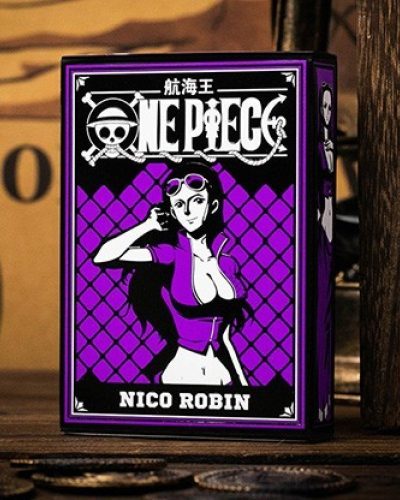
Card Mafia One Piece Robin – Playing Cards
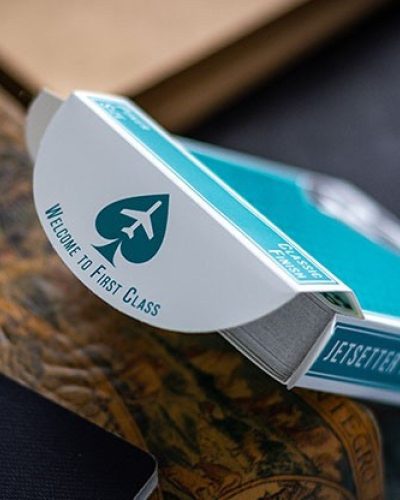
Lounge Edition Terminal Turquoise – Playing Cards
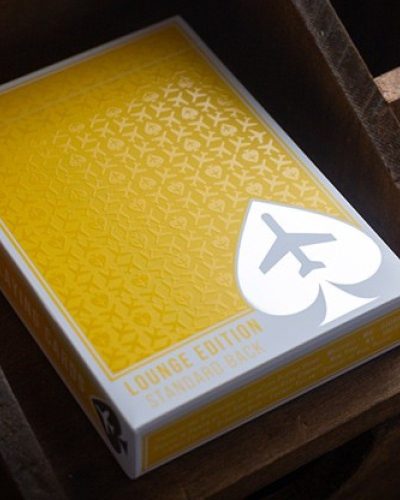
Lounge Edition Taxiway Yellow – Playing Cards
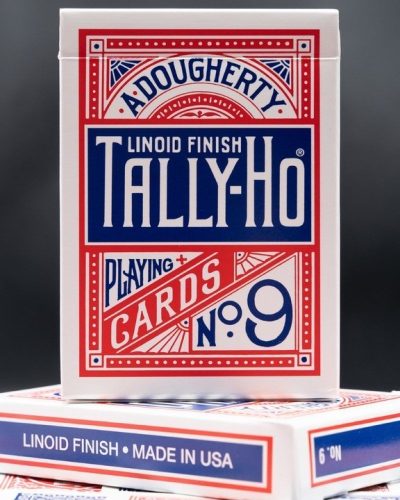
Tally-Ho Gaff – Playing Cards
Contact our team for any clarification about this document. Contact us