

Bee vs Bicycle Cards: Stock, Finish, Back and Uses
Bee vs Bicycle playing cards: same maker, different stock, finish and back. Which to choose for poker, casino games, magic or cardistry, plus Tally-Ho.
In short
Bee vs Bicycle cards is not a contest between rival manufacturers: both brands come from the United States Playing Card Company (USPCC), which has belonged to the Belgian group Cartamundi since 2019. The real differences come down to three things: the card stock (Bee uses a casino-grade stock that is stiffer and more durable; standard Bicycle uses the regular commercial stock), the back design (Bee has diamonds running edge to edge with no border; the Bicycle Rider Back has a white frame) and the use each deck is designed for.
- Bee: casinos, poker and blackjack at home, gambling demonstrations, and anyone who wants a deck that lasts through many sessions.
- Bicycle: magic (it is the standard assumed by almost all teaching material), family games, and anyone who wants a wide choice of designs and a deck that is easy to find.
- Tally-Ho, the third name in the conversation, is also made by USPCC and is chosen mainly for its softer feel, which cardists value highly.
Anyone comparing Bee and Bicycle playing cards usually expects a fight between two competing manufacturers, and that is not what it is. The two brands have the same owner, are printed in the same Kentucky plant and share the same machinery. That is exactly what makes the comparison interesting: the differences that do exist do not come from one factory being better than another, but from specific decisions about the stock, the back and the audience each deck is aimed at. If you are looking for the matchup between Bicycle, Theory11 and Tally-Ho, with the technical detail on stocks, crushing and cuts, you will find it in Bicycle vs Theory11 vs Tally-Ho. Here we focus on the two best-known everyday decks in the world and on when to choose one or the other.
Bee
- Origin
- 1892, New York Consolidated Card Company
- Maker today
- USPCC (Cartamundi group)
- Historic catalog number
- No. 92 ("Club Special")
- Card stock
- Casino grade: stiffer and more durable
- Finish
- Cambric (textured)
- Back
- Diamonds edge to edge, borderless
- Indices
- Standard and jumbo
- Range of designs
- Small: classic back in red and blue, plus collaborations
Best for: poker and blackjack games, heavy use, gambling demonstrations and anyone who prefers a card with some body.
Bicycle
- Origin
- 1885, Russell, Morgan & Co. (Cincinnati)
- Maker today
- USPCC (Cartamundi group)
- Historic catalog number
- No. 808
- Card stock
- Commercial: more flexible and quicker to break in
- Finish
- Air-Cushion (linen texture)
- Back
- Rider Back with a white border
- Indices
- Standard and jumbo
- Range of designs
- Huge: colors, licensed decks, gimmick decks
Best for: magic, family games, learning, and anyone who wants to choose from hundreds of designs.
Two brands, one company: the history behind the similarity
Bicycle: the deck born of the bicycle craze
Bicycle was born in 1885 in Cincinnati, Ohio, at the print shop of Russell, Morgan & Co., a business that had started in 1867 printing posters and labels and moved into playing cards in the early 1880s. There is no mystery about the name: in the late nineteenth century the bicycle was the great craze in the United States and the brand rode the wave, to the point that most of its early back designs show cyclists, wheels or bicycle parts. In 1894 the playing card business was spun off and renamed The United States Playing Card Company, the name it still uses today.
Its most famous back, the Rider Back (design No. 63, with the angel riding a bicycle in the center), appears in the brand's design records from 1887 and is still in production. The number 808 printed on the ace of spades is the line's catalog number, which began to appear on the ace in 1894. Its role in the Second World War is another well-known chapter in the brand's history: USPCC produced decks that, when soaked, peeled apart in layers to reveal sections of maps for Allied prisoners planning an escape.
Bee: born outside USPCC and absorbed in three steps
The first Bee deck was printed in 1892 by the New York Consolidated Card Company, a New York manufacturer formed in 1871 through the merger of three older firms. Two years later, in 1894, USPCC bought the company but did not dissolve it: it let it run as an independent company under its umbrella. In 1930 it combined it with two other acquisitions (Andrew Dougherty, the home of Tally-Ho, and the Standard Playing Card Company) in a subsidiary called Consolidated-Dougherty, which continued to produce Bee, Tally-Ho and Aristocrat. That subsidiary was dissolved in 1962 and folded into USPCC as one more division.
What about the "92" on the ace of spades?
Many websites repeat that the 92 next to the bee on the ace of spades is a tribute to the year the brand was founded. The coincidence is real, but in old catalogs the number worked as a catalog reference, just like Bicycle's 808: in a 1928 catalog, the poker deck was the "No. 92 Club Special", the pinochle deck was No. 97 and the bridge deck was No. 68. In other words, 92 was the poker Bee, and the other Bee formats carried different numbers. Whether the number was chosen to recall 1892 is not documented.
Who makes Bee playing cards today
Bee and Bicycle share an owner and a factory. In 2009 USPCC left its historic plant in Norwood, Ohio, and moved to Erlanger, Kentucky, just across the Ohio River, where it has its headquarters and produces its classic lines. In 2019 its previous owner, Newell Brands, sold it to the Belgian company Cartamundi, a deal that included the Erlanger plant and the plant in Vitoria, Spain, which has been part of the group since USPCC bought Naipes Heraclio Fournier in 1986. Cartamundi now presents Bee as its casino-quality deck and Bicycle as its major consumer brand.
So, from the company's point of view, they are not competitors. They are two products from the same house aimed at different customers, just like Tally-Ho, which has also belonged to USPCC since 1907.
Card stock: the difference you can feel in your hand
If you pick up a freshly opened Bee and a standard Bicycle, the first thing you notice is not the design: it is the body. Bee is printed on the stock USPCC reserves for casino use, and the general impression, in magic forums, in buyer reviews and in the specialist shops that sell it, is the same: thicker, stiffer and with more "snap" when you release it. Standard Bicycle uses the commercial stock, which is more flexible and breaks in sooner.
This has practical consequences in both directions:
- Bee stands up better to heavy use. A stiffer stock bends less with each deal and takes longer to go soft. That is why it is the deck used for playing hundreds of hands.
- Bee needs more breaking in. Straight out of the box it feels stiff; fans and riffle shuffles come out less smooth until the deck has had some use.
- Bicycle gets there sooner. It is more forgiving for beginners, but it wears out sooner if you use it every day.
One detail worth knowing: "Bee stock" and "the Bee brand" are not the same thing. USPCC prints many decks from other brands on its casino stock, from editions for magicians to custom designer decks, and some even carry the Bicycle logo. The Honeybee series, for example, combines its own back design with Bee stock. So if you like the feel of Bee but want a different design, that option exists.
The finish: Bee cambric finish vs Bicycle Air-Cushion finish
The finish is the treatment of the card's surface: the embossing and the coating that determine how the cards slide over one another. Each brand has its own name for it, and this is where history and marketing get mixed together.
Air-Cushion is the name USPCC registered in the early twentieth century for its textured finish. The brand itself describes it in its catalog as a linen texture with a patented Air-Cushion finish: the card has a fine embossing of tiny dimples that leaves small pockets of air between cards, so they glide instead of sticking. It is the finish we associate with the classic Bicycle deck.
Cambric is the name of Bee's finish. The word comes from a fine linen fabric (cambric, originally from Cambrai in France), and in the playing card world it also refers to a textured surface. In old Bee catalogs, each item was offered in two versions, "smooth" or "cambric", and some current editions for magicians are still sold in both variants, cambric or ivory (smooth). Put another way, cambric and Air-Cushion are two brand names for the same family of finish: the embossed card as opposed to the smooth card.
Are they exactly the same process today? USPCC does not publish the technical details of its finishes, and in the forums some people notice no difference while others find Bee slightly "drier". The sensible conclusion is that what you notice when comparing the two decks depends much more on the stock than on the name of the finish.
Did you know decks like these exist?
At heart, every deck has the same cards. What changes is everything else: the design, the finish, metallic inks or gilded edges. Take a look at our catalogue and bring your own style to the card table.
Browse our playing cards →
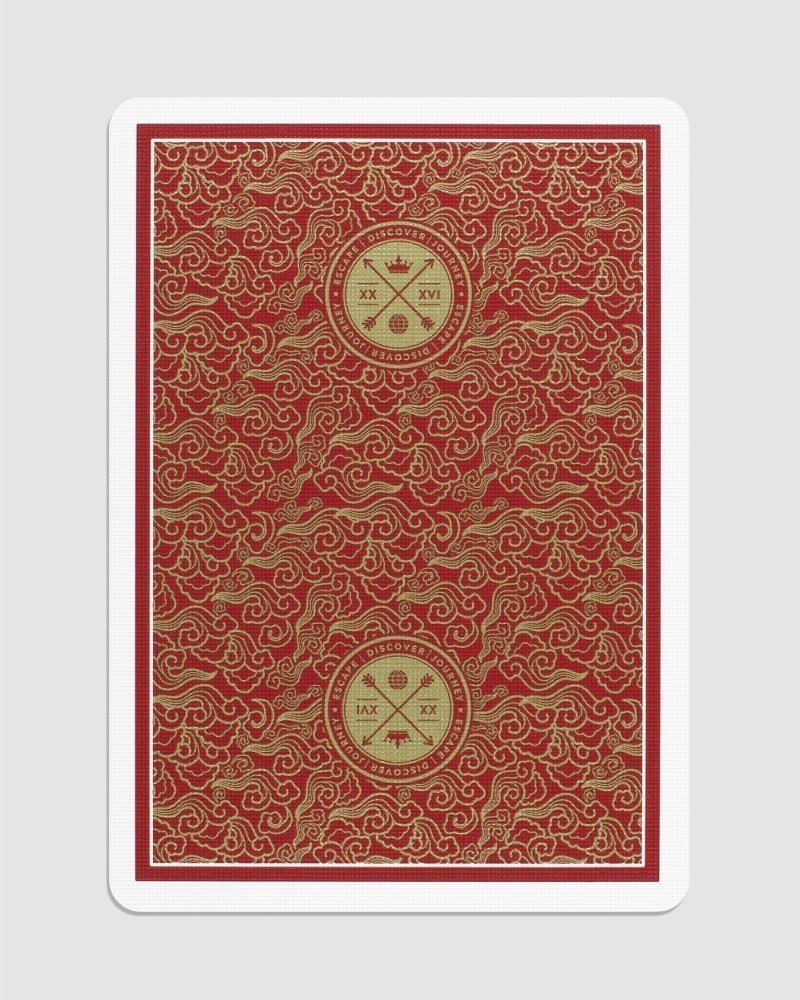





The back: borderless vs bordered playing cards, and why it matters
This is the most visible difference and, for many uses, the most important one.
Bee has the "Diamond Back": a grid of diamonds that runs right to the edge, with no white border. The Bicycle Rider Back has its design inside a white border that separates it from the edge. Neither is better in the abstract; each one favors different techniques.
With an edge-to-edge back, when one card slides out from under another there is no white line to give the movement away: the pattern on the top card blends into the one below it. That is why borderless backs hide second deals and bottom deals better, and why Cartamundi itself presents the Bee back as ideal for concealing false shuffles and seconds. With a bordered back the opposite happens: the white border of the top card stays still while the card underneath comes out, and the movement is easier to see.
On the other hand, the white border helps in other situations. If you lift two cards as one (the well-known double lift), a white border hides it better when the cards are not perfectly aligned. And if a card is reversed in the deck, on a borderless back you can spot it immediately from the edge, while on a bordered back it goes unnoticed.
| Situation | Bee (borderless) | Bicycle Rider Back (bordered) |
|---|---|---|
| False deals (seconds, bottoms) | Hides them better | Easier to spot |
| Lifting two cards as one | Needs perfect alignment | More forgiving |
| Reversed cards in the deck | Visible from the edge | Go unnoticed |
| Look in fans and spreads | Continuous pattern | Pattern of white stripes |
| Visible wear on the edges | Scuffs are more noticeable | White border gets dirty sooner |
Interestingly, Bee was not always borderless. Its 1928 catalog offered both "allover" backs (the design covering the whole card) and several bordered backs, one of them featuring a stylized bee. The borderless diamond back is the one that won out over time and the one that identifies the brand today.
Indices and sizes: standard, Bee jumbo index, poker and bridge
Both brands are sold mainly in poker size, the wider format at 63.5 × 88.9 mm (2.5 × 3.5 inches). There is also bridge size, narrower, at about 57 × 89 mm, designed for holding many cards in the hand in games such as bridge or canasta; none of the Bee and Bicycle decks we discuss here use it.
The indices are the numbers and suits in the corners, and both brands offer them in two sizes:
- Standard index: the classic, with the card's design clearly visible in the center. It is the usual choice for magic and family games.
- Jumbo index: much larger numbers in the corners, on the same poker-size card. They make the cards easier to read from a distance or at a glance when you peek at the corners, which is why they are so common at poker tables, and they also help people with poor eyesight.
A jumbo index does not make a deck casino grade: Bicycle also sells its Rider Back with a jumbo index. What sets a Bee jumbo apart from a Bicycle jumbo is still the stock and the back.
| Format | Dimensions | Bee | Bicycle | Typical use |
|---|---|---|---|---|
| Poker, standard index | 63.5 × 88.9 mm | Yes | Yes (Rider Back) | Magic, general play |
| Poker, jumbo index | 63.5 × 88.9 mm | Yes | Yes (Rider Back Jumbo) | Poker and blackjack |
| Bridge | ≈ 57 × 89 mm | Existed (No. 68) | Some models | Bridge, canasta |
Use by use: where each one wins
In casinos
For decades Bee has been the USPCC brand aimed at casinos. What is documented is how casinos use it: they order custom Bee decks, usually with the venue's logo worked into the diamond back, and the brand offers that customization to casinos directly. Decks retired from the tables often end up resold to collectors and magicians; American magic shops sell used Bee decks from casinos such as the Isle or the Lakeside Inn, and Penguin Magic has sold a lotus-back Bee from a casino in East Asia. Bee decks with the logos of major Las Vegas casinos also circulate.
The reasons behind that choice are practical: a stock that holds up through many hands, the option to customize the back and the supply capacity of a manufacturer of that size. Bee is not the only casino deck on the market (plastic cards such as Copag or KEM, the latter also made by USPCC, cover a good part of that ground), but it is the paper deck most associated with that world.
In magic
Here Bicycle wins clearly, and not because of quality. The Rider Back is the de facto standard of card magic: almost every book, video and commercial trick assumes you are using one, and many gimmick decks (double-backed cards, blank-faced decks, stripper decks) are made with the same back. Bicycle includes them in its own catalog. If a trick comes with special Rider Back cards, you need a Rider Back deck for them to match. Add to that what we saw about the back: the white border is more forgiving with double lifts and hides reversed cards, two basic tools of card magic.
Bee has its niche in gambling magic: cheating demonstrations, false deals and casino-themed routines, where the borderless back helps and where the audience also recognizes the deck as "the casino one". Many magicians use it for that and stick with Bicycle for everything else. Have a look at our magic playing cards if you are putting your kit together.
In cardistry
Neither is the usual choice for cardists, who tend to prefer decks with crushed stock and a symmetrical back, such as the Tally-Ho Circle Back. That said, both work for learning. Bicycle breaks in sooner and is more forgiving at first; Bee stays in good shape for longer and its borderless back makes fans with a very striking continuous pattern, at the cost of being stiffer for the first few days. If you are just starting out, what matters most is the feel and the symmetry of the back, as we explain in cardistry for beginners.
For home poker
For a weekly game, the jumbo index Bee is probably the most sensible choice: it is the closest to what you would see at a casino table, the stock holds up through many sessions and the large indices avoid any doubt when cards are shown. A jumbo index Bicycle does the job perfectly well if you already have one or want a particular back. Either way, keep two decks with different back colors, one red and one blue, and alternate them: while one is being dealt, the other is being shuffled. You will find the full equipment list in how to set up a home poker night.
Durability, warping and how they handle when shuffling
It is one of the questions people search for most: which cards are less likely to bend or warp. The short answer is Bee, because of the stock. A stiffer card recovers its shape better after each riffle shuffle and takes longer to go "soft"; dealers who specialize in casino stock point out precisely that it stays flat instead of curling with use.
But there are two important caveats:
- Warping depends more on how you treat the deck than on the brand. Cards curl mainly because of humidity and because they are always shuffled in the same direction. A Bee kept somewhere damp and shuffled roughly will curl; a well-cared-for Bicycle can last a long time. We explain this in detail in how to care for playing cards.
- There is variation between batches. USPCC does not guarantee that two print runs of the same model will behave identically, and in the forums you often read that a Bicycle or a Bee from one year handles slightly differently from another. Comparisons describe trends, not laws.
As for handling: standard Bicycle comes out of the box slicker and more flexible, fans easily, and riffle shuffles become even very quickly. Bee feels drier and stiffer at first; after a few playing sessions it settles in and develops a very distinctive snap when you release the cards, which is part of what its fans like about it.
Price and regional availability
On price they are in the same league: both are everyday decks and, in their classic versions, Bee usually costs a little more than the standard Bicycle Rider Back. The difference is small and comes down to the stock. Where there is a real gap is in special editions: Bicycle has hundreds of colored backs, licensed decks (Disney, TV series, bands) and metallic editions that cost quite a bit more than the basic deck, while Bee has a much shorter catalog, focused on the classic back and a few collaborations.
Availability also varies by country. In the United States both are easy to find; in Europe, Bicycle is in almost any toy or game shop because Cartamundi distributes it widely, while Bee comes in fewer versions and is found mainly in specialist shops. That is why many players in the UK and Europe end up buying their first Bee online even after years of playing with Bicycle.
If you are going to play a lot, start with Bee
We stock the classic jumbo index Bee in red and in blue, the pair used at poker tables.
See Bee decksHow to tell fake Bee cards from the real thing
Bee is an inexpensive and very well-known deck, a combination that makes it a target for imitations, especially on online marketplaces. The brand does not publish an official list of security features, but these simple checks help:
- The ace of spades: it should carry the bee seal with the No. 92 reference and a sharp print, with no blurred edges.
- The box and the seal: the manufacturer's name (The United States Playing Card Company) and the brand details printed clearly; the seal should be intact.
- The registration of the back: on a genuine Bee the diamond grid is well centered and identical on every card. An off-center back or dull colors are a bad sign.
- The feel: if you have a Bee you trust, compare them. The stiffness and finish of a real Bee are hard to imitate with cheap stock.
- The seller: buying from specialist shops or official distributors is the safest way to avoid surprises.
Watch out for similar names, too. Many decks play on the bee in their name or back design (Honeybee, Queen Bee, beetle or honeycomb backs) and are not from the Bee brand, even though some are printed on the same stock. They are not fakes: they are different products, and it is worth knowing that before you buy.
And Tally-Ho: tally ho vs bicycle vs bee
Many people search for all three together, so it is worth placing it. Tally-Ho was born in 1885 at the house of Andrew Dougherty in New York, one of the great nineteenth-century manufacturers, credited with the Linoid finish. USPCC bought Dougherty in 1907 and Tally-Ho went through the same Consolidated-Dougherty subsidiary as Bee. Today it is another USPCC brand, with two classic backs (Fan Back and Circle Back) and a reputation in cardistry earned by its soft feel. The technical comparison with Bicycle is in Bicycle vs Theory11 vs Tally-Ho.
| Criterion | Bee | Bicycle Rider Back | Tally-Ho |
|---|---|---|---|
| Origin | 1892, New York Consolidated | 1885, Russell, Morgan & Co. | 1885, Andrew Dougherty |
| Part of USPCC since | 1894 (fully integrated in 1962) | Always | 1907 |
| Typical stock | Casino grade, stiff | Commercial, flexible | Crushed, soft |
| Finish name | Cambric | Air-Cushion | Linoid |
| Back | Borderless diamonds | Cyclist, bordered | Fan or Circle, bordered |
| Break-in | Slow | Fast | Almost immediate |
| Resistance to heavy use | High | Medium | Medium |
| Range of designs | Small | Huge | Medium |
| Main strength | Table games and casino | Magic and general play | Cardistry and fine handling |
Verdict by type of player
Neither deck is better than the other in absolute terms; each one suits certain uses better. This is the advice we give in the shop when someone cannot decide between the two:
| Profile | Choose | Why |
|---|---|---|
| Weekly poker game | Bee jumbo index (red and blue) | Lasts through many sessions, with easy-to-read indices |
| Blackjack or casino games at home | Bee | It is the deck associated with the casino table |
| Getting started in magic | Bicycle Rider Back | It is the deck almost all teaching material assumes |
| Cheating and gambling demonstrations | Bee | The borderless back hides false deals better |
| Family games: rummy, gin rummy, solitaire | Bicycle | Inexpensive, easy to find and available in many designs |
| Learning cardistry | Neither is ideal; Tally-Ho is better | Crushed stock and a symmetrical back |
| A gift for a card enthusiast | A special edition Bicycle | Wide range of designs and licensed decks |
If after all this you are still not sure, the most practical solution is also the cheapest: buy one of each. Given what a deck like this costs, holding both and playing with them for a couple of weeks will tell you more than any comparison. And if you want the full picture of formats and brands, see which deck of cards to buy.
How much does a deck of cards cost?
From €5 to over €100. The 52 cards and the rules stay the same; this is what changes.
 To play€5.95 |  Designer€12.95 |  Premium€17.99 |  Collectible€34.94 | |
|---|---|---|---|---|
| Typical price | €5-9 | €9-15 | €15-30 | €30 or more |
| What sets it apart | Classic casino design | Artist illustration on back and faces | Special inks, embossing and foil on the box | Limited print runs and gilded edges |
| Who it is for | Games at home | Playing with something beautiful | Gifts or cardistry | Collecting and display |
| Example | Tally-Ho Fan Azul | theory11 Medallion | The Sandwich Series (Luncheon Meat) | Kings Wild LOTR Two Towers Gilded |
| See decks | See decks | See decks | See decks |
Frequently asked questions
Are Bee and Bicycle the same company?
Yes. Both are brands of the United States Playing Card Company, which makes them in Erlanger, Kentucky, and has belonged to the Belgian group Cartamundi since 2019. Bee started at another company, the New York Consolidated Card Company, which USPCC bought in 1894.
Which is better, Bee or Bicycle?
It depends on the use. Bee is better for heavy play, especially poker or blackjack, thanks to its more durable casino stock. Bicycle is better for magic and general play thanks to its bordered back, quick break-in and range of designs.
Why do casinos use Bee cards?
Because of a stock designed for dealing many hands, the option of ordering them with the casino's logo on the back and the supply capacity of their manufacturer. It is not because the borderless back prevents cheating: that kind of back actually hides false deals better.
Which deck lasts longer or bends less?
With equal care, Bee, because its stock is stiffer. Even so, humidity and the way you shuffle affect warping more than the brand does.
What does 92 mean on Bee cards?
It is the historic catalog number of the poker Bee, in the same way that 808 is Bicycle's. It matches the year the deck was created, 1892, but in old catalogs other Bee decks carried different numbers (97 for pinochle, 68 for bridge).
What is the cambric finish?
It is the name of Bee's textured finish, the equivalent of Bicycle's Air-Cushion: a fine embossing on the surface that helps the cards slide. Historically it was offered as an alternative to the smooth version, called smooth or ivory.
Can you use a Bee deck for magic?
Yes, especially for gambling demonstrations and false deals. For general magic most people prefer the Bicycle Rider Back, because the white border helps with double lifts and reversed cards, and because commercial gimmick decks usually come with that back.
What is the difference between a standard and a jumbo index?
The size of the numbers and suits in the corners. The card itself is the same size; the jumbo index is much larger and easier to read from a distance, which is why it is so widely used at poker tables.
If you already know which one suits you, our shop has the jumbo index Bee in both colors and a wide selection of Bicycle playing cards, from the classic Rider Back to colored and licensed editions.
Want more guides like this one? Sign up for our newsletter.
Keep exploring
- Bicycle vs Theory11 vs Tally-Ho: the facts without the myths
- Which deck of cards to buy: an expert guide without the hype
- How to care for playing cards: the physics that keeps them in shape
- Home poker night: the complete guide
- How to Shuffle Cards
Playing Cards
- New
Buskers Exclusive Edition by Erik Mana
Gemini Casino Phthalo Green – Playing Cards
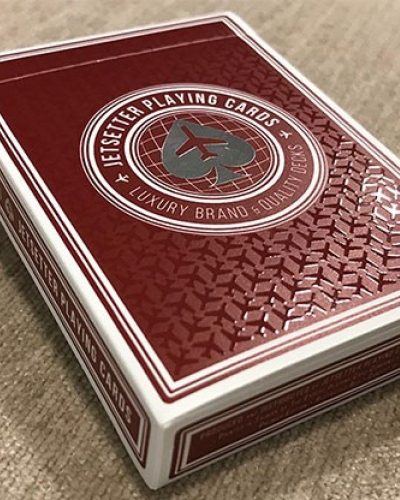
Premier Edition Restricted Red – Playing Cards
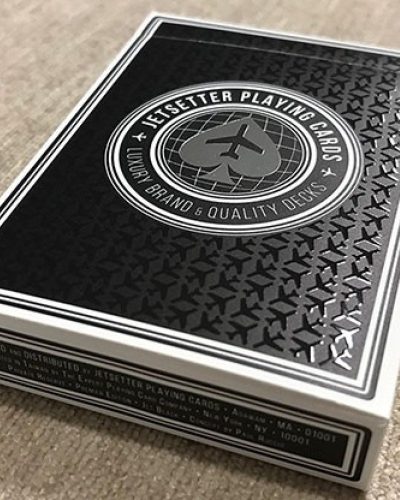
Premier Edition Jet Black Private Reserve – Playing Cards
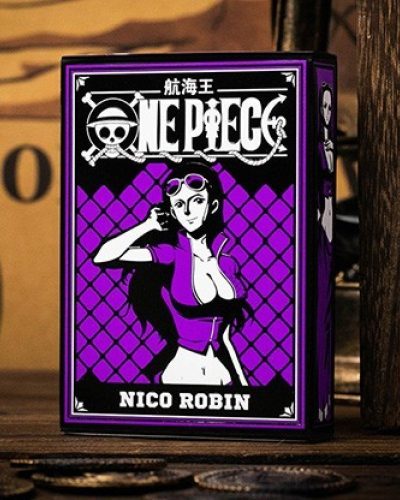
Card Mafia One Piece Robin – Playing Cards
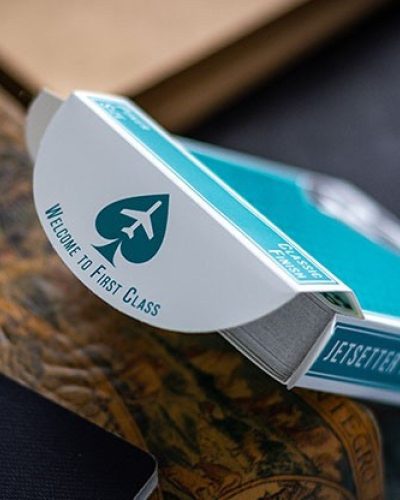
Lounge Edition Terminal Turquoise – Playing Cards
Lounge Edition Taxiway Yellow – Playing Cards
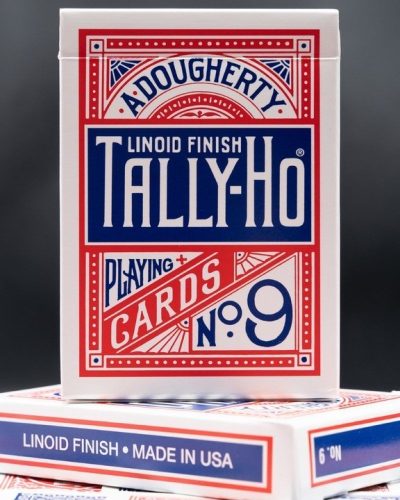
Tally-Ho Gaff – Playing Cards
Contact our team for any clarification about this document. Contact us