
Complete poker glossary: 130+ terms listed A to Z
Poker dictionary from A to Z with more than 130 terms explained in plain English: actions, bets, hands, table slang, tournaments and mindset.
A language inside the language
Poker has a vocabulary of its own, and a good part of it is not ordinary English at all. Words like raise, fold and check carry a very precise meaning at the table and almost nothing of their everyday sense; others have a plain-English twin that nobody at the table ever bothers with (bluff rather than lie, blind rather than forced bet, muck rather than discard pile); and the rest is table slang that crept in from some back room decades ago, stuck to the felt and never came off. If in your first serious game somebody announces a squeeze, a donk bet or a check-raise and your mind goes completely blank, this glossary was written for you.
I have grouped the terms letter by letter so that you can read it straight through, like a short manual, or jump directly to the one you were looking for. When a term has more than one accepted form I give both, and I have tried to make the difference clear between the pairs that get mixed up most often: set against trips, bluff against semi-bluff, bad beat against cooler, fish against whale. If you have not got the basic rules down yet, you are better off starting with how to play Texas Hold’em or going over the hand rankings and coming back afterwards.
How the glossary is organised
Below you have the dictionary proper, sorted letter by letter. Every entry has a short definition and, whenever it is worth it, an example or a note on how the word is actually used. At the end of the glossary there is an alphabetical summary table with the essential terms, a frequently asked questions section covering what people look up most, and a practical closing section to take with you to the table.
These are the thematic blocks that appear mixed together inside the alphabetical order: actions (what you can do when it is your turn), bets and moves (types of bet and types of raise), strategic concepts, hands and draws, table and money slang, tournaments and mindset. If you would rather search by thematic block than by letter, have a look at the summary table at the end.

A-Z dictionary
A
- Action. A player’s specific turn, and in slang also the amount of betting and raising going on at a table. “There is a lot of action here” means the table bets and raises often; a table without action is a boring table.
- Add-on. An optional purchase of extra chips at the end of the rebuy period in a tournament. Any player can take it, whether they have many chips or few, and it serves to reinforce the stack before the elimination phase begins.
- Aggression. A style based on betting and raising rather than on calling. Well-executed aggression is one of the clearest hallmarks of the modern winning player.
- Air. A hand with no value whatsoever, one you can only win with by bluffing. Betting “with air” means firing without anything to show at showdown.
- All-in. Betting every chip you have in front of you in a single action. It is only allowed in no-limit and pot-limit. In a tournament, a lost all-in knocks you out; in cash, it leaves you with nothing in front of you until you reload.
- Angle shooting. A move on the edge of ethics that exploits grey areas in the rules to gain an advantage. It is not formal cheating, but it is considered dirty play and many card rooms will warn you (or throw you out) if you persist.
- Ante. A compulsory bet paid by every player (or only by the big blind, in the modern “big blind ante” format) before each hand. Its job is to inflate the pot and force action from a certain tournament level onwards.
B
- Backdoor. A draw that needs both remaining cards to complete, normally the turn and the river. A “backdoor flush” means holding three cards of the same suit on the flop and needing two more.
- Bad beat. Losing a hand that statistically you were going to win by a mile. It hurts, it happens and it cannot be avoided. Good players accept it; beginners get angry and end up playing on tilt.
- Balance. Playing the same type of hand with very different actions so that your opponent cannot read you. If you always raise with the good ones and call with the medium ones, you are predictable; balancing means slipping the odd bluff in among the hands you usually just call with.
- Bankroll. The total money you set aside for poker, kept separate from your personal finances. The classic rule is not to play a cash level you do not have at least 20-30 buy-ins for in your bankroll.
- Barrel. Continuing to bet on later streets after a c-bet on the flop. A “double barrel” is betting flop and turn; a “triple barrel” adds the river as well.
- Bet. Putting chips in the pot when nobody has bet before you in that round. The minimum size is usually the size of the big blind.
- Big blind (BB). The larger of the two compulsory blind bets. It is always paid by the player two seats to the left of the button. In tournaments it is used as the unit of measurement for the stack (“I have 40 BB”).
- Blind. A compulsory bet paid before receiving any cards. In Texas Hold’em there are two: the small blind (SB) and the big blind (BB). They rotate one position every hand.
- Blocker. Holding a card that makes it mathematically less likely that your opponent has a particular hand. If you have an ace, there is one ace fewer for him to hold; that is a blocker against his ace hands.
- Blocking bet. A small bet made from out of position to discourage the opponent from making a much larger one. You give up chips now to save yourself more later.
- Bluff. Betting or raising with a hand you know is not the best one in order to force your opponent to fold. If you get called, you lose what you bet; if he folds, you take the pot without showing.
- Bluff catcher. A hand that only wins if the opponent was bluffing: it beats none of his value hands but it does beat his bluffs. Calling with a bluff catcher means believing his betting range holds plenty of bluffs.
- Board. The community cards sitting in the middle. “Board texture” is how connected or how dangerous those cards are.
- Boat. Slang synonym for a full house.
- Bottom pair. A pair made with the lowest card on the board. It is usually weak: it loses to any middle or top pair.
- Bounty. In bounty and PKO tournaments every elimination pays out in cash or is added to the prize stack of whoever does the eliminating. It changes the mathematics of the tournament radically once short stacks are around.
- Broadway. A straight from ten to ace (T-J-Q-K-A), the highest one you can make without suits mattering.
- Bubble. The point in a tournament when only one elimination is missing before the prize money starts. It is usually the tensest phase of the entire competition.
- Button. The disc that marks the player acting as dealer in the hand. It rotates one position every hand. It is the best position at the table: you always act last on the flop, turn and river.
- Buy-in. The amount you have to pay to enter a cash game or a tournament.
C
- Call. Putting in exactly the same amount as the last bet made in order to stay in the hand.
- Calling station. A player who calls a lot of bets and raises very few. He is the ideal opponent for value betting with moderately strong hands.
- Cap. In fixed-limit formats, the maximum number of raises allowed in one round. A “capped range”, on the other hand, is a GTO concept: an opponent’s range from which you can rule out the very strong part because he did not raise when he could have.
- Cash game. A game in which every chip is worth its real value and you can sit down and get up whenever you like. The opposite of a tournament.
- C-bet or continuation bet. The bet made on the flop by the player who raised preflop, giving continuity to his aggression. It works because most flops do not improve the opponent.
- Check. Not betting and passing the turn to the next player without putting chips in. You can only do it if nobody has bet before you in that round.
- Check-raise. Checking with the intention of having somebody bet so that you can then raise them. A classic aggressive move used to extract value or to represent sudden strength.
- Chip leader. The player with the most chips in the tournament at that moment.
- Chop. Splitting the pot when there is a tie; or splitting the tournament prize money when the players reach a deal at the final table.
- Cold call. Calling a raise without having put chips in the hand beforehand. It is considered a low-level move in modern strategy because it applies no pressure.
- Combo draw. A combined draw, normally an open-ended straight plus a flush draw. It can reach 15 outs and turns your hand into practically a coinflip against a made hand.
- Connectors. Consecutive cards, whether of the same suit or not (for example 8-9). “Suited connectors” are consecutive and of the same suit as well, and they are among the favourite hands of aggressive players because of their drawing potential.
- Cooler. A hand in which you lose a lot of money because your hand is very strong but your opponent’s is even stronger (set over set, flush over flush, full house over full house). Unlike a bad beat, in a cooler nobody did anything wrong: the cards simply came out that way.
- Counterfeit. Having your hand wiped out by a community card. The classic example: you hold two pair (say 8-8-3-3 on the board) and a king lands on the river; now both players have “three pairs” and the kicker decides it.
- Cutoff. The seat immediately to the right of the button. It is the second best position at the table after the button itself.
D
- Dead money. Chips already in the pot from players who have folded, or the money contributed by the weakest opponents in the tournament. It is something you go after.
- Deep stack. A deep stack (100 BB or more in cash, over 50 BB in a tournament). It lets you play with more creativity and make far more use of implied odds.
- Dealer. The person who deals the cards, or the player occupying the button position if there is no professional dealer in the game.
- Donk bet. Betting on the flop out of position against the preflop raiser (instead of checking to him, which would be the natural flow). Historically a beginner’s move (“donk” = donkey), today it is accepted as a tactic in certain spots.
- Double barrel. Betting flop and turn as the preflop aggressor. See barrel.
- Drawing dead. Being in a situation where you can no longer win no matter what you do: even if you complete your draw, you are still behind. An obligatory fold as soon as you realise it.
- Drawing hand. A hand “under construction”: it is worth nothing yet but it has a draw to something (a straight, a flush).
E
- Early position. The first seats to act on each street. You should play tighter ranges from here because you are carrying an information disadvantage.
- Effective stack. In a hand between two players, the smaller of the two stacks. It is the most that can be won or lost in that particular hand.
- Equity. Your statistical probability of winning the pot given what you hold and what you suspect your opponent holds. A hand with 60% equity against his range is a favourite.
- Expected value (EV). The expected value of a decision: how much it is “worth” on average in the long run. All modern poker study boils down to making decisions with positive EV.
- Exploit. A strategy adapted to the specific mistakes of your opponent. Against weak opponents it usually returns more profit than playing pure GTO.
F
- Fish. A weak player, whether through inexperience or through style. Without the “lots of money” nuance of the whale. If you sit down at a table and cannot spot the fish within five minutes, you are the fish.
- Flop. The first three community cards placed in the middle after the preflop round.
- Flush. Five cards of the same suit, not consecutive. It beats a straight, trips, two pair, one pair and high card.
- Flush draw. Four cards of the same suit waiting for the fifth. Nine outs in the deck.
- Fold. Throwing your cards away and abandoning the hand. You lose whatever you had put in the pot and you stop playing that hand.
- Fold equity. The expected gain from a bet or a raise coming from the chance that your opponent folds. The greater your fold equity, the more profitable semi-bluffs become.
- Free card. Seeing the next street without anybody having bet. Very useful when you are on a draw and in position: if your opponent checks, your check buys you a free card.
- Freeroll. A tournament with no entry fee, and also a situation in which you “can only win” (you are risking nothing that is not already guaranteed to you).
- Freezeout. A tournament with no rebuys. If you run out of chips, you are eliminated. It is the purest form of competition.
- Full house. Three of a kind plus a pair. It beats a flush, a straight, trips, two pair and everything below. It only loses to quads, a straight flush and a royal flush. See the hand rankings.
G
- Gap hand. Connected cards with a gap in them (7-9, T-Q). You lose some of the straight potential compared with pure connectors, but it is still a playable hand at the right price.
- GTO (Game Theory Optimal). The mathematically optimal strategy derived from game theory: it assumes your opponent is also playing optimally. Today it is the reference framework for professional study even though almost nobody executes it perfectly.
- Grinder. A player who makes a living out of small but constant profits over many hands. He usually plays low or mid stakes with iron discipline.
- Gutshot. A straight draw missing a card in the middle. Four outs.
H
- Heads-up. When only two players are left. It is the final one-on-one of a tournament and also a game format in its own right (two players and nobody else).
- Hero call. Calling in a very difficult, borderline situation, more on intuition than on strict mathematics. When you get it right you are the hero; when you get it wrong you are the donk.
- Hero fold. Folding a strong hand in a spot where many would call, out of conviction that your opponent holds something better.
- Hijack. The seat two positions to the right of the button. It is the opportunistic opening position par excellence: a fairly wide range.
- High card. A hand with no combination made at all. It only beats another high card with a worse top card.
- Hole cards. The private cards each player receives. In Hold’em there are two; in Omaha, four.
I
- ICM (Independent Chip Model). A mathematical model that converts tournament chips into expected money. It is used to make decisions in tournaments where chip value is not linear. Critical near the bubble and near the big payouts.
- Implied odds. Pot odds calculated while also counting the chips you believe you will be able to win from your opponent on later streets if you hit your draw. They are explained alongside pot odds in pot odds and probabilities.
- Isolation raise. A raise designed so that only one player calls, or nobody does, clearing the table of the middling players. Useful when you want to take on a specific opponent one on one.
- ITM (In The Money). Having reached the prize money in a tournament. Once you are ITM, a payout is guaranteed.
J
- Jam. To go all-in. “Jamming” means shoving every chip into the middle in one go.
- Junk. A starting hand with no potential (7-2 offsuit, for example). Folding junk preflop from early position is the most basic thing there is and the one most ignored by beginners.
K
- Kicker. The side card that decides matters when two players have the same main combination. If you both have a pair of kings, the kicker rules. That is why playing A-K is far better than playing K-7.
L
- LAG (Loose Aggressive). A playing style that combines a wide range with high aggression. Very profitable if executed well; lethal for the bankroll if executed badly.
- Laydown. Folding a strong hand because you think you are beaten. A synonym for hero fold when a premium hand is involved.
- Level. Each segment of a tournament with a fixed size of blinds and antes. Levels go up every 15-20 minutes in online tournaments and every 30-60 in live play.
- Limp. Entering the pot preflop by just calling the big blind, without raising. It is traditionally considered weak play although in amateur and home cash games you see it constantly.
- Live cards. Cards that can still come to improve your hand. “If I have two live overcards, I have six outs”.
- Loose. A player who plays a lot of hands, most of them weak. The opposite of tight.
M
- Made hand. A hand that is already complete and does not depend on future cards. Two pair on the flop is a made hand.
- Main pot. The principal pot; when there are all-ins with different stack sizes it gets separated from the side pot.
- Maniac. An ultra-loose, ultra-aggressive player. He raises and re-raises with almost anything. He hands out a lot of money but he is hard to face.
- MTT (multi-table tournament). A tournament played across several tables that merge as players are eliminated, until the last nine (or six, depending on the format) survivors form the final table. Prize money grows exponentially from there on.
- Middle position. The seats in between EP and LP. You can open with a wider range than in early position, but not as wide as in late.
- Min-raise. The smallest raise allowed. Preflop, twice the big blind.
- Monster. A very strong made hand (a set, a high flush, a full house). “I had a monster and they paid me off”.
- Muck. Discarding your hand face down without showing it. At showdown, calling a bet obliges you to show; if your opponent folds, you can muck.
N
- Nit. A hyper-passive, conservative player who only puts chips in with premium hands. Predictable, but hard to beat if he never breaks his pattern.
- No-limit. A poker format in which you can bet all your chips at any moment. It is the most popular variant of Hold’em.
- Nuts. The best possible hand in a given situation. If you have the nuts, no opponent can beat you with the cards that are out there.
- Nut flush. The highest possible flush on a board, normally holding the ace of that suit in your hand.
O
- Offsuit. Cards of different suits. A-K offsuit is written AKo; A-K of the same suit, AKs.
- Open (open raise). Being the first player to raise preflop.
- Open-ended. A straight draw missing a card at either of the two ends. Eight outs. It is the strongest straight draw there is.
- Orbit. A full lap of the button. It is used to measure how long things have been going on: “I have gone three orbits without winning a hand”.
- Outs. The cards left in the deck that can still improve your hand to the level you need in order to win.
- Overbet. A bet larger than the current size of the pot. It is used to polarise the range: you should only overbet with very strong hands or with carefully planned bluffs.
- Overcall. Calling after others have already called, with an implied claim of strength.
- Overcard. A card in your hand higher than any card on the board. A-K on a 9-7-2 flop is two overcards.
- Overpair. A pocket pair in your hand higher than any card on the board. K-K on a 9-7-2 flop is an overpair.
P
- Pair. Two cards of the same rank. See the full hand rankings.
- Passive. A playing style that overuses the check and the call. The opposite of aggression. It is usually a losing style in the long run.
- PLO (Pot Limit Omaha). A variant of Omaha with a maximum bet size equal to the pot. It is the fashionable variant among professionals because of its greater technical complexity.
- Pocket pair. A pair dealt to you face down preflop. The probability of being dealt any pair in Hold’em is 5.9% (roughly one hand in seventeen).
- Polarized. A range split between very strong hands and bluffs, with nothing in between. The opposite of a linear range.
- Position. Your seat in relation to the button. The later you act, the more information you have.
- Pot. The chips won and sitting in the middle of the table at any given moment.
- Pot-committed. A situation in which you have already put so many chips in the pot that folding is a mathematical disaster.
- Pot-limit. A format in which the maximum bet is the current size of the pot.
- Pot odds. The ratio between what you have to pay and the size of the pot. They are explained in detail in pot odds and probabilities.
- Preflop. The phase of the hand before the flop. It is played with the hole cards alone.
- Protection bet. A bet made with a vulnerable made hand in order to charge your opponent’s draws a high price, rather than to bluff or for pure value.
- Push. To go all-in. A synonym for jam and shove.
Q
- Quads. Four cards of the same rank. Extremely rare: it turns up in roughly 1 hand in 4,165.
R
- Rag. A low, irrelevant card, above all when it appears on the turn or the river and changes nothing.
- Rainbow. A board with no two cards of the same suit. “Dry” as far as flush draws are concerned.
- Raise. Betting more than the previous bet. In no-limit, the maximum is every chip you have.
- Rake. The commission the house takes out of each pot in exchange for running the game. It usually runs from 3% to 10% with a maximum cap.
- Rakeback. A refund of part of the rake paid in online rooms. An important benefit for high-volume grinders.
- Range. The set of hands with which an opponent could be doing what he is doing. It is the modern way of thinking about poker: you do not think about your opponent’s exact hand, but about his range.
- Rebuy. Buying chips within the rebuy period of a tournament if you drop below a certain threshold.
- Reg (regular). A regular at a table or a room. He is usually technically competent without being a shark.
- Reraise. Raising again after you have already been raised. The first preflop reraise is the 3-bet, the second one the 4-bet.
- Ring game. A synonym for a cash game.
- River. The fifth and last community card.
- Rock. An extremely tight player who only takes part with premium hands. A synonym for nit but with the added nuance of “immovable”.
- Royal flush. A straight flush from ten to ace. The best possible hand in poker.
- Runner-runner. Completing a hand through the back door (“backdoor”), receiving exactly the two cards you needed on the turn and the river.
S
- Satellite. A small tournament whose prize is entry into a big one. The classic route for an amateur into the most expensive events.
- Scare card. A card on the turn or river that completes a dangerous draw or changes the texture of the board.
- Semi-bluff. Betting with a hand that is not the best one today but which has a genuine draw to improve. If you force a fold, you win; if you get called, you still have equity.
- Set. Three of a kind made with a pocket pair plus a card of the same rank in the middle. Very hard for an opponent to read. One of the most profitable hands in Hold’em.
- Shark. A strong player who gets into soft games in order to take money out of them.
- Shootout. A tournament format in which you have to win your entire table in order to move on to the next phase. There are no table merges as in a normal tournament.
- Short stack. A short stack (under 20 BB in a tournament). It calls for a different strategy, almost always push-fold.
- Showdown. The final phase of the hand, in which the remaining players show their cards to decide the winner.
- Side pot. The secondary pot created when one player goes all-in and others with more chips carry on betting. The all-in player can only win the main pot.
- Sit and go (SNG). A single-table tournament that starts as soon as the seats are full. It has no fixed start time.
- Slow play. Playing a very strong hand passively so as not to frighten your opponent off and to take more chips from him on later streets. Dangerous if he is on a draw.
- Small blind (SB). The smaller of the two compulsory blinds. It is paid by the player immediately to the left of the button.
- Snap call. Calling instantly, without thinking. It usually signals very strong hands or hands that are clearly callable with no dilemma attached.
- Splash the pot. Throwing your chips towards the pot in a disorderly way, without stacking them. It is frowned upon because it makes the bet impossible to count.
- Split pot. A pot divided between two or more players holding the same winning hand.
- Squeeze. A 3-bet when there has already been a raise and at least one call in between. It is called that because it “squeezes” both the original raiser and the callers.
- Stack. All the chips you have in front of you at the table. Your stack is the most you can bet and the most you can lose.
- Straddle. An extra voluntary blind paid by the player to the left of the big blind. It doubles the BB and obliges everybody to match that size.
- Straight. Five consecutive cards of any suit.
- Straight flush. Five consecutive cards of the same suit. Only the royal flush beats it.
- String bet. Putting chips in with several separate movements without declaring the raise. Forbidden: the bet counts only up to the first movement.
- Suck out. Winning a hand as the underdog who improves on the turn or the river. A bad beat seen from the other side.
T
- TAG (Tight Aggressive). A playing style with a tight range but an aggressive approach. The standard recommended to intermediate players: few hands, but played hard.
- Tell. An involuntary signal (physical or behavioural) that gives away an opponent’s hand. In live play, good players make a living out of reading small tells.
- Three-bet (3-bet). The third bet of a round: the blind is the first, the raise is the second, the reraise is the 3-bet.
- Tight. Playing few hands, only with strict preflop selection criteria. The opposite of loose.
- Tilt. An altered emotional state that leads you into worse decisions. Recognising it and getting up from the table before you burn through your chips is one of the most valuable skills in poker.
- Time bank. Extra time you can use when you need to think beyond the normal decision clock. Standard online.
- Top pair. A pair made with your card and the highest card on the board. K-9 on a K-7-2 flop = top pair.
- Tournament. A knockout format in which the chips have no real value and the prizes are paid according to final position.
- Trap. Playing a very strong hand passively in order to trap bets from your opponent. Closely related to the slow play.
- Trips. Three of a kind made with one of your cards plus a pair on the board. Unlike a set, it is visible.
- Triple barrel. Betting flop, turn and river as the preflop aggressor. It is only done with very strong value or with a meticulously planned bluff.
- Turn. The fourth community card, between the flop and the river.
- Two pair. Two different pairs. Be careful about overvaluing them on wet boards.
U
- Under the gun (UTG). The first position to the left of the big blind. The earliest seat and the one that demands the tightest range.
- Underdog. The hand with the lower probability of winning in a confrontation. The opposite of the favourite.
- Upswing. A period in which you win more than you statistically deserved. It evens out in the long run with the downswings.
V
- Value bet. Betting with a hand you believe is better than your opponent’s, expecting him to call with worse. The opposite of the bluff: you are not trying to make him fold, you are trying to make him pay.
- Variance. The distance between what you mathematically ought to win and what you actually win over a given period. In the long run it tends towards zero; in the short run it can be brutal.
- Villain. In written hand analysis, the generic opponent facing the “hero” (the person telling the hand).
W
- Whale. A player with a lot of money and poor technique. Professionals actively look for them.
- Wheel. The A-2-3-4-5 straight. In Hold’em it is the lowest straight possible; in lowball variants, the best hand of all.
- Wired pair. A pair dealt face down preflop (a pocket pair).
- Wrap. A straight draw with more than one card able to complete it, typical of Omaha. It can reach 20 outs.
Did you know decks like these exist?
At heart, every deck has the same cards. What changes is everything else: the design, the finish, metallic inks or gilded edges. Take a look at our catalogue and bring your own style to the card table.
Browse our playing cards →




Alphabetical summary table
This table gathers the most looked-up terms for quick reference. It is designed so that you can go over it before a session without rereading the whole glossary.
| Term | Category | Short definition |
|---|---|---|
| All-in | Action | Betting every chip in one go. |
| Ante | Table | Compulsory bet before the hand. |
| Backdoor | Draw | A draw needing two cards in a row. |
| Bad beat | Mindset | Losing a hand you were winning by a mile. |
| Bankroll | Money | Total money set aside for poker. |
| Blind | Table | Compulsory blind bet. |
| Bluff | Strategy | Betting with nothing to force a fold. |
| Bluff catcher | Strategy | A hand that only beats bluffs. |
| Broadway | Hands | Straight from ten to ace. |
| Bubble | Tournaments | The moment before the first payout. |
| Button | Table | The disc marking the dealer. |
| Buy-in | Money | Minimum entry to play. |
| Call | Action | Matching the previous bet. |
| C-bet | Betting | Continuation bet on the flop. |
| Check | Action | Passing the turn without betting. |
| Check-raise | Betting | Checking and then raising on the same street. |
| Cold call | Betting | Calling a raise with no previous chips in the pot. |
| Combo draw | Draw | Combined straight and flush draw. |
| Continuation bet | Betting | See c-bet. |
| Cooler | Mindset | Losing with a strong hand to an even stronger one. |
| Cutoff | Table | The seat to the right of the button. |
| Donk bet | Betting | Betting out of position into the preflop aggressor. |
| Drawing dead | Strategy | No card can win it for you any more. |
| Effective stack | Table | The smaller stack of two players in a hand. |
| Equity | Strategy | Statistical probability of winning the pot. |
| Fold | Action | Throwing the hand away and leaving the round. |
| Fold equity | Strategy | Expected gain from making the opponent fold. |
| Freezeout | Tournaments | Tournament with no rebuys. |
| Full house | Hands | Three of a kind plus a pair. |
| GTO | Strategy | Optimal play by game theory. |
| Gutshot | Draw | Inside straight draw. Four outs. |
| Heads-up | Tournaments | Final one-on-one between two players. |
| Hero call | Strategy | Calling in a marginal spot on intuition. |
| Hijack | Table | Seat two positions right of the button. |
| ICM | Tournaments | Expected money value of chips. |
| Implied odds | Strategy | Pot odds counting expected future gain. |
| ITM | Tournaments | In the money. |
| Kicker | Hands | Side card that decides ties. |
| LAG | Style | Loose Aggressive. |
| Limp | Betting | Entering preflop by just calling the BB. |
| Muck | Table | Discarding the hand without showing it. |
| Nit | Style | Extremely tight player. |
| Nuts | Hands | The best possible hand. |
| Open | Betting | Being the first to raise preflop. |
| Open-ended | Draw | Open-ended straight draw. Eight outs. |
| Outs | Strategy | Cards that can still improve your hand. |
| Overbet | Betting | A bet larger than the pot. |
| Overpair | Hands | Pocket pair higher than the board. |
| Pot odds | Strategy | Ratio between the call and the pot. |
| Push | Action | To go all-in. |
| Quads | Hands | Four of a kind. |
| Rake | Money | House commission on every pot. |
| Range | Strategy | Set of hands the opponent can hold. |
| Rebuy | Tournaments | Buying chips within the allowed period. |
| River | Table | Fifth community card. |
| Satellite | Tournaments | Qualifying tournament into a bigger event. |
| Semi-bluff | Strategy | Bluff with a hand that has a draw to improve. |
| Set | Hands | Three of a kind with a pocket pair. |
| Short stack | Table | Short stack in a tournament. |
| Showdown | Table | Final phase where the hands are shown. |
| Side pot | Table | Secondary pot after an all-in. |
| Slow play | Strategy | Playing passively with a very strong hand. |
| Squeeze | Betting | 3-bet against a raise plus a call in between. |
| Stack | Table | Chips in front of the player. |
| Straddle | Table | Extra voluntary blind left of the BB. |
| TAG | Style | Tight Aggressive. |
| Tilt | Mindset | Emotional state that worsens decisions. |
| Top pair | Hands | Pair with the highest card on the board. |
| Trips | Hands | Three of a kind with a pair on the board. |
| Turn | Table | Fourth community card. |
| UTG | Table | Under The Gun, the first position. |
| Value bet | Betting | Betting a strong hand to get paid. |
| Variance | Mindset | Statistical fluctuation of results. |
| Whale | Style | Weak player with a lot of money. |
| Wheel | Hands | The A-2-3-4-5 straight. |
How much does a deck of cards cost?
From €5 to over €100. The 52 cards and the rules stay the same; this is what changes.
 To play€5.95 To play€5.95 |  Designer€12.95 Designer€12.95 |  Premium€17.99 Premium€17.99 |  Collectible€34.94 Collectible€34.94 | |
|---|---|---|---|---|
| Typical price | €5-9 | €9-15 | €15-30 | €30 or more |
| What sets it apart | Classic casino design | Artist illustration on back and faces | Special inks, embossing and foil on the box | Limited print runs and gilded edges |
| Who it is for | Games at home | Playing with something beautiful | Gifts or cardistry | Collecting and display |
| Example | Tally-Ho Fan Azul | theory11 Medallion | The Sandwich Series (Luncheon Meat) | Kings Wild LOTR Two Towers Gilded |
| See decks | See decks | See decks | See decks |
Frequently asked questions
What is the difference between fold and “mucking”?
They are close to synonyms. Fold is the action of giving up the hand, and mucking is the physical gesture of pushing the cards face down into the discard pile. In professional live play fold is used regardless of the language the game is being played in. Another common phrase is “laying it down”, although that one belongs more to the amateur table.
What is a 3-bet?
It is the third bet of a round. The blind counts as the first, the initial raise from the first raiser as the second, and the next reraise is the 3-bet. It is considered either a show of strength or a calculated bluff. It is the point at which ranges start to compress: whoever 3-bets preflop has a far more defined range than whoever merely opens.
What does “being on tilt” mean?
Being emotionally affected after losing a hand (or several) and starting to make worse decisions out of anger, frustration or fear. Recognising tilt and getting up from the table before you burn through your chips is one of the most useful skills you can develop. Professionals have personal “break” protocols for certain specific triggers.
What are the nuts?
The best possible hand in a given situation. The nuts change on every street depending on the cards that come out. If a board keeps evolving in a dangerous direction, the nuts you started with may stop being the nuts.
What is a bluff catcher?
A hand you are only going to win with if your opponent was bluffing: it beats none of his value hands but it does beat his bluffs. Middle pair on a dangerous board is the typical example: it is only good for “catching” a bluff. Calling with a bluff catcher makes sense if you think your opponent bluffs more often than he bets pure value in that spot.
What does “bubble” mean in a tournament?
The moment when only one elimination is missing before the following players start getting paid. It is the tensest point of any tournament: nobody wants to be “the last one who does not cash”. From the bubble onwards, decisions change drastically because of the ICM factor.
Why do people say “fish” or “whale”?
It is slang used to identify the target players. A “fish” is a weak player; a “whale” is a weak player with a lot of money on top of that. Professionals do not sit down at a table without first spotting the fish: they are the main source of profit in any game.
What is the difference between a set and trips?
A set is three of a kind made up of a pocket pair of yours plus a card of the same rank in the middle. Trips, on the other hand, is three of a kind made up of a single card of yours plus a pair in the middle. The set is far more valuable: it is hard for your opponent to read because two of the three cards are hidden in your hand. Trips are visible: anybody can see the pair in the middle and suspect the third card.
What is the difference between a bad beat and a cooler?
In a bad beat you lose as the mathematical favourite: your opponent had few cards left to beat you and he got one of them. In a cooler nobody did anything wrong: your hand was very strong and his was stronger still. A bad beat makes you angry with yourself for having put in so many chips as the favourite; a cooler feels worse in the short term, but technically there is nothing to reproach yourself for.
What does GTO mean?
Game Theory Optimal. It is the mathematically optimal strategy derived from game theory, the one that cannot be exploited by any opponent. In practice nobody executes it perfectly because it involves complex calculations, but it is the reference framework for modern professional study.
Taking it to the table
Poker vocabulary is picked up quickly if you play regularly. What costs the most is not understanding the individual words, but recognising when to apply each concept live. That only comes from playing plenty of hands and, above all, from watching people better than you play. If you know somebody with more mileage and the patience to go over hands with you, make the most of it: a single session with commentary is worth ten of studying alone.
If you are still not clear on the basic rules, or you want to understand exactly how a hand is followed from beginning to end, it is all in how to play Texas Hold’em. The natural steps after the glossary are understanding why position at the table matters so much and how to work out pot odds before every decision. With those two concepts plus the hand rankings, you already have the minimum theory you need not to lose through sheer ignorance.
For a decent evening with friends you do not need to master all this jargon: with the basic actions (check, bet, call, raise, fold) and the names of the hands you have more than enough. What does help is a deck that feels good to deal with. Bicycle Standard and Tally-Ho are the classics and you can see them among any poker deck in our catalogue. And if you want to set the game up properly, we go through the whole kit in how to host a poker night at home. If you fancy exploring beyond Hold’em, take a look at the poker variants: there is one for every kind of table.
Poker
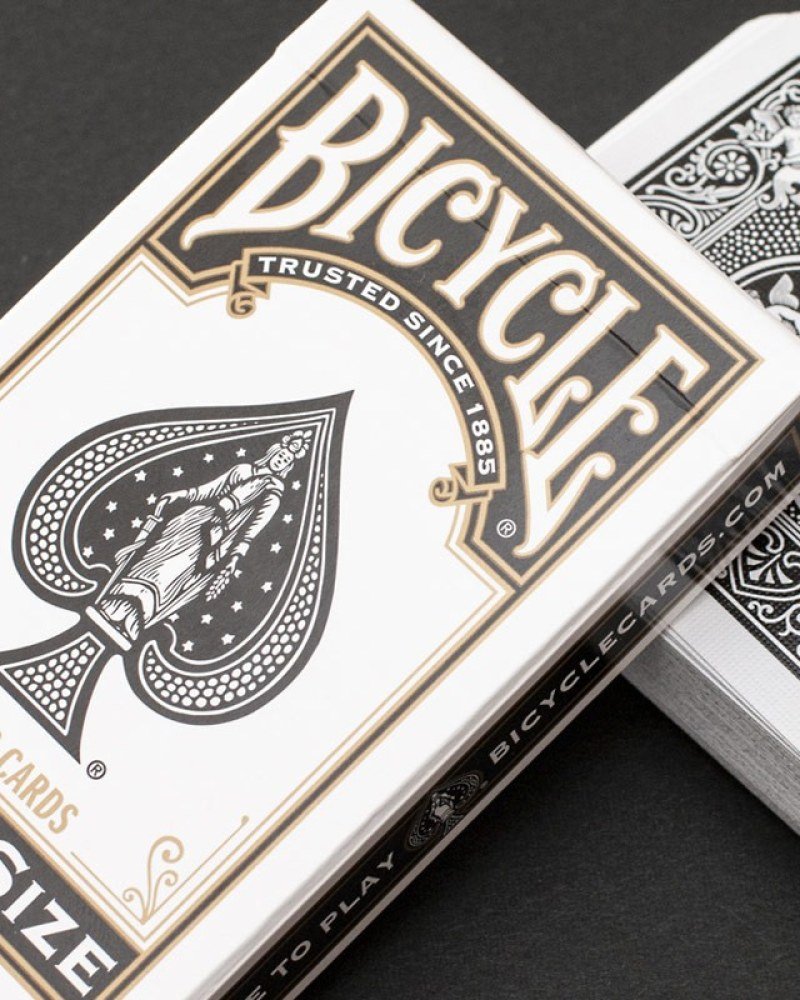
Bicycle Bridge Black – Playing Cards

Tally-Ho Circle Expert Touch Blue – Playing Cards

Tally-Ho Circle Expert Touch Red – Playing Cards
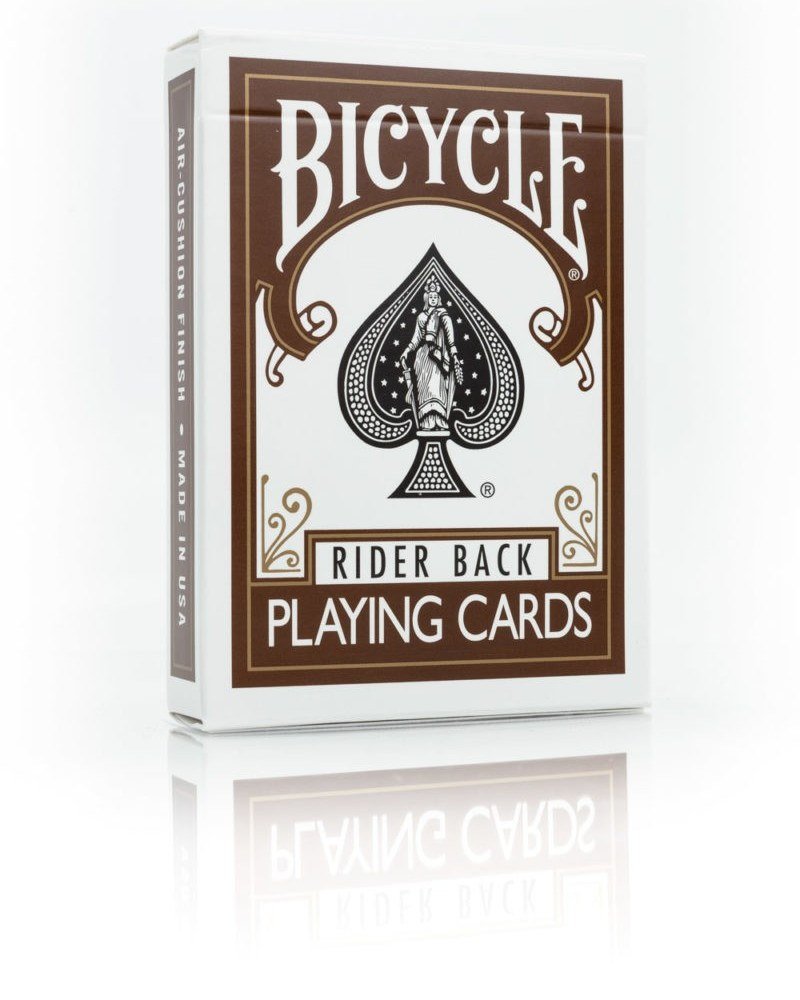
Bicycle Brown Back – Playing Cards
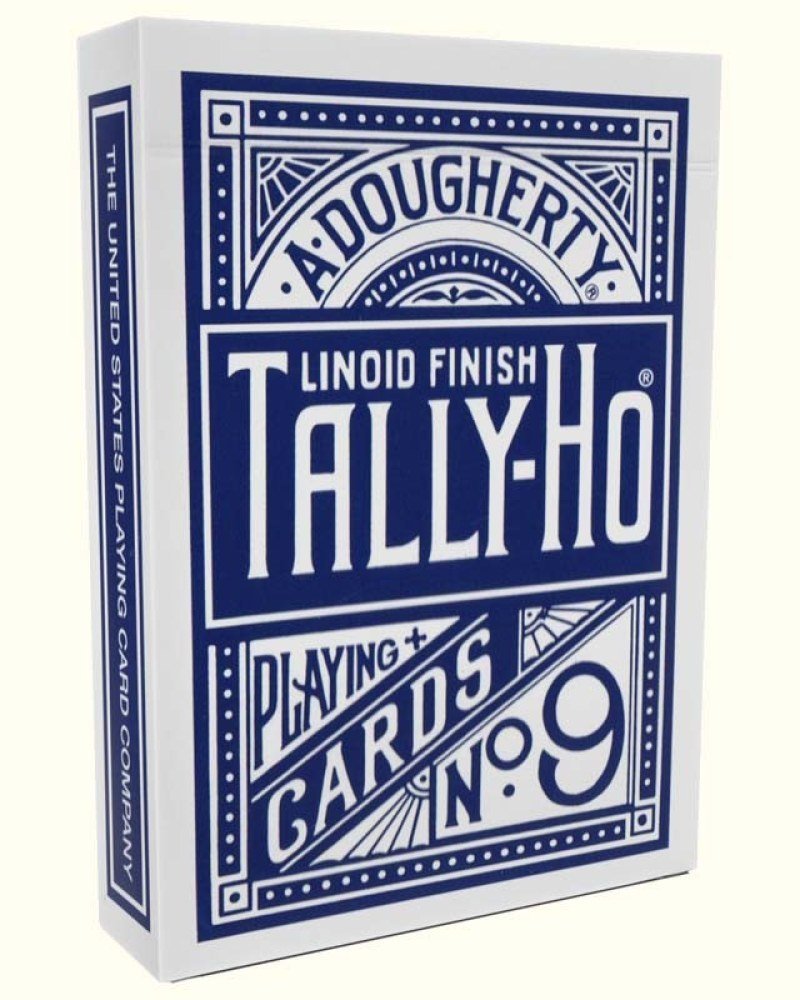
Tally-Ho Fan Blue – Playing Cards
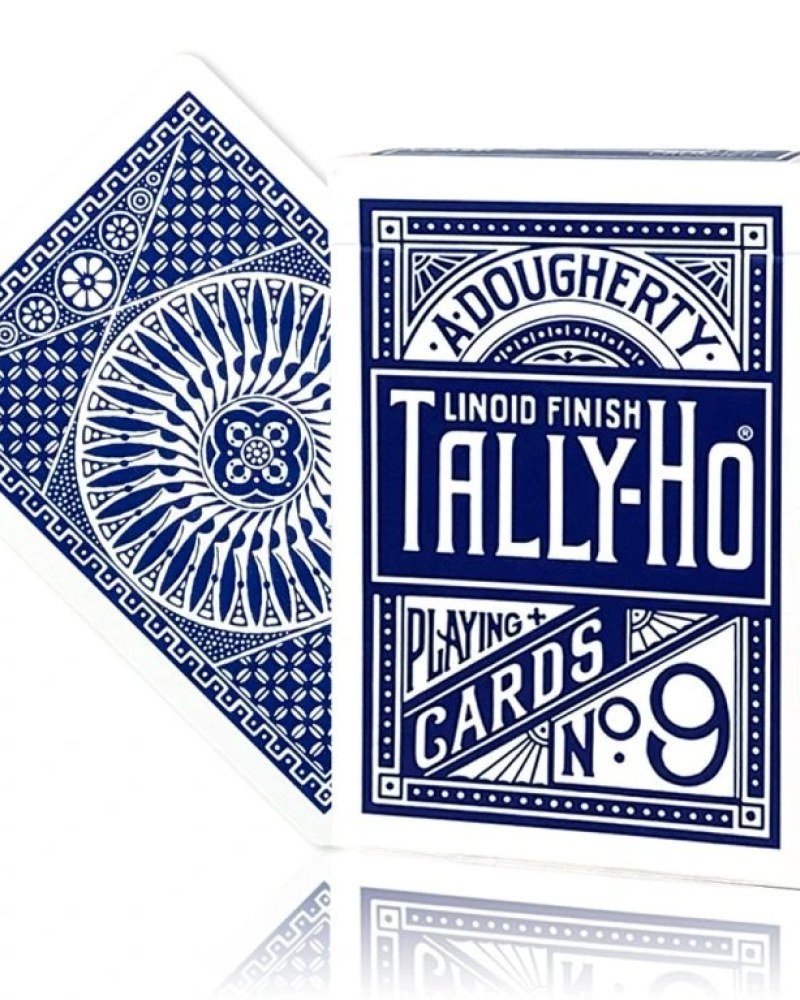
Tally-Ho Circle Blue – Playing Cards

Tally-Ho Circle Red – Playing Cards

Bee Jumbo Index Blue – Playing Cards
Contact our team for any clarification about this document. Contact us


