

Pot odds in poker: how to count outs with the rule of 4 and 2
A guide to pot odds, outs, implied odds, equity and the rule of 4 and 2 in Texas Hold'em, with probability tables by number of outs and step-by-step decision examples.
The basic maths you need to play poker well
Poker has a reputation as a game of psychology and bluffing, and there is certainly something to that. Underneath all of that layer, however, there is a simple mathematical skeleton that decides which decisions are profitable in the long run and which ones quietly drain your stack hand after hand. The good news is that the poker maths you need in order to play decently is not complicated: it fits on a single card. The less good news is that almost nobody applies it properly at the beginning, and that is exactly why so many intermediate players lose against someone who merely knows how to count outs.
In this guide I am going to explain the two basic tools, pot odds (the relationship between what you pay and what is at stake) and outs (the cards that can improve your hand), along with the mental rule for combining them without reaching for a calculator: the rule of 4 and 2. That is the bare minimum. If you master it, you will already be above the vast majority of home-game players. After that we will add the next layers: implied odds, reverse implied odds, fold equity and a few notions of real equity against ranges.
If you do not yet know the hand ranking or how a hand of Texas Hold’em actually works, it is better to read those articles first and then come back here. And if any term escapes you along the way, have a look at the glossary of poker terms.
What outs are and why they are counted
An “out” is a card which, if it arrives on a later street, improves your hand into one that you believe is going to win. The definition matters: it is not just any card that improves your hand, but any card that improves it enough to beat what you think your opponent is holding. An out against one hand is not always an out against another.
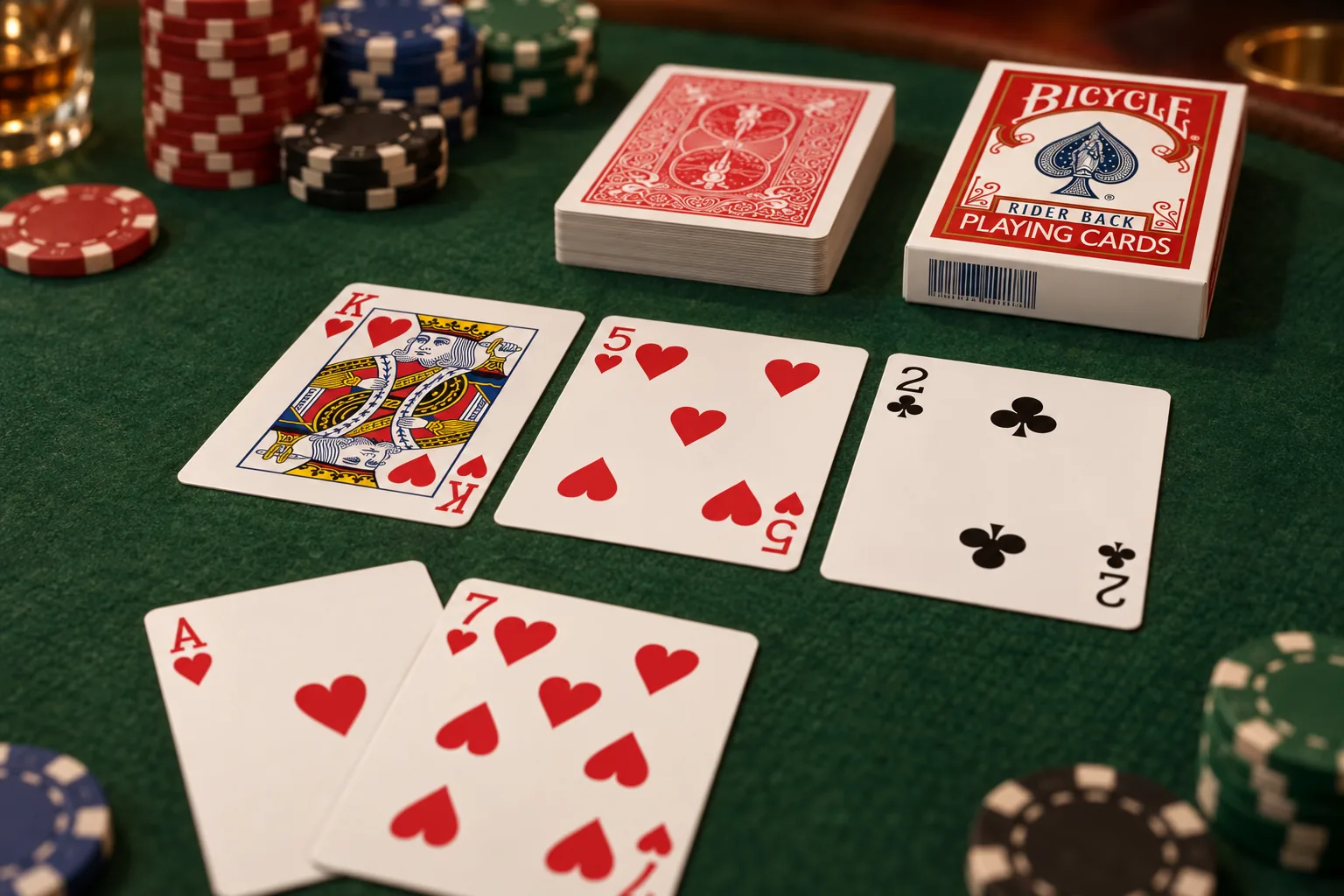
Let us go to the most typical example. You hold A♥ 7♥ and the flop comes K♥ 5♥ 2♣. You have a flush draw in hearts. There are thirteen hearts in the deck, four of which are already visible (two of yours and two on the flop). That leaves nine hearts in the deck: nine outs to complete the flush.
That is the basic count. From there it is worth memorising the typical number of outs for each draw, because in a live game you are not going to have time to count them all from scratch.
Table of outs by draw
| Draw | Outs | Example |
|---|---|---|
| Flush draw (four to a suit) | 9 | Four cards of the same suit. |
| Open-ended straight draw | 8 | 4-5-6-7 with a connected flop; any 3 or 8 completes it. |
| Inside straight draw (gutshot) | 4 | 4-5-7-8; only the 6 completes it. |
| Double gutshot | 8 | Two possible gaps, each one with four cards. |
| Flush draw + open-ended straight draw (combo) | 15 | Very strong: practically a coinflip against a made hand. |
| Flush draw + gutshot | 12 | An intermediate combo. |
| Two overcards | 6 | A-K on a board of lower cards. |
| Pair to a set on the next card | 2 | Only the fourth card of that rank is left. |
| Two pair to a full house | 4 | Two cards of each remaining rank in your hand. |
| Set to a full house or quads | 7 | One card of the set plus three of every other rank on the table. |
| Pair + flush draw | 14 | A made pair plus an active flush draw. |
| Pair + gutshot | 6 | Four straight outs plus two for the set. |
| Backdoor flush draw | ~1.5 effective | It needs two cards of the suit in a row. |
These numbers are memorised quickly simply by playing. The important thing is not to over-count: if a card gives you the flush but hands the straight to your opponent, that out is not yours, it is his. When there is a risk that the very same card improves the other player, we talk about dirty outs or tainted outs. It is far better to be conservative in your counting than optimistic.
Counting clean outs against dirty outs
Here is an example. You hold 9♠ 8♠ on a 7♣ 6♠ 2♣ board. You have an open-ended straight draw (any 5 or 10 completes the straight). In theory that is 8 outs. But notice that there are two clubs on the board: if a 5♣ or a 10♣ arrives you complete your straight, but your opponent could complete a flush if he started with two clubs. Those two outs are dirty: you count 8 in raw terms, but only 6 of them are genuine if your opponent has an active flush draw.
In practice, if you are in doubt between two scenarios, subtract one or two outs as a matter of prudence. An accurate 15% of equity is worth more than an overestimated 20%.
From outs to percentage: the rule of 4 and 2
Once you have your outs, the next step is knowing what probability you have of one of them arriving. The exact calculation requires division and nobody feels like pulling out a calculator in the middle of a hand. That is precisely why the rule of 4 and 2 exists, one of the most useful tools in modern poker.
The rule says:
- If you have two cards still to come (you are on the flop): multiply your outs by 4. That gives you, approximately, the percentage probability of improving between the flop and the river.
- If you have one card still to come (you are on the turn): multiply your outs by 2. That gives you, approximately, the percentage between the turn and the river.
Let us test it with the flush draw example: nine outs on the flop.
- Probability of making the flush from flop to river (two cards): 9 × 4 = 36%. The exact figure is 35.0%. A minimal margin of error.
- Probability of making the flush from turn to river (one card): 9 × 2 = 18%. The exact figure is 19.6%. Once again, practically the same thing.
The rule is an approximation, but for normal out counts (up to 14) the error is one percentage point at most. That is more than enough to decide at the table. For very high out counts (more than 12), the approximation drifts a little further away: which is why a refined version exists.
Refinement for high out counts
When you have more than 10 outs and you are on the flop, the ×4 rule overshoots slightly. To fine-tune it, after multiplying by 4, subtract whatever goes above 10. Example with a 15-out combo draw: 15 × 4 = 60%; now subtract (15 − 10) = 5. Your real equity is approximately 55%. The exact figure is 54.1%. Again, very close indeed.
For low out counts (1-9) the ×4 rule is practically exact. For 10-15 outs, applying the refinement stops you from overestimating.
Complete table: outs to percentage
This table is the most useful part of the article. With it you have in front of you the three things you need every single time you evaluate a draw: the outs you hold, the real probability from flop to river and the real probability from turn to river.
| Outs | Flop → River (%) | Turn → River (%) | Rule of 4 and 2 |
|---|---|---|---|
| 1 | 4.3 | 2.2 | 4 and 2 |
| 2 | 8.4 | 4.3 | 8 and 4 |
| 3 | 12.5 | 6.5 | 12 and 6 |
| 4 | 16.5 | 8.7 | 16 and 8 |
| 5 | 20.3 | 10.9 | 20 and 10 |
| 6 | 24.1 | 13.0 | 24 and 12 |
| 7 | 27.8 | 15.2 | 28 and 14 |
| 8 | 31.5 | 17.4 | 32 and 16 |
| 9 | 35.0 | 19.6 | 36 and 18 |
| 10 | 38.4 | 21.7 | 40 and 20 |
| 11 | 41.7 | 23.9 | 44 and 22 |
| 12 | 45.0 | 26.1 | 48 and 24 |
| 13 | 48.1 | 28.3 | 52 and 26 |
| 14 | 51.2 | 30.4 | 56 and 28 |
| 15 | 54.1 | 32.6 | 60 and 30 |
| 20 | 67.5 | 43.5 | 80 and 40 |
If you look closely at the last column, for low out counts the approximation works without any tweaking at all. From 10 onwards, the ×4 rule overestimates by between 2 and 6 points; there it is worth applying the refinement.
What pot odds are
Pot odds are the relationship between what you have to pay in order to stay in the hand and the size of the pot. They tell you, in mathematical terms, how much you are going to be paid for every chip you put in if you end up winning the hand.
A basic example. The pot holds 80 chips. Your opponent bets 20. The pot therefore becomes 100 (80 plus the 20 he just put in). To continue, you have to pay 20. The pot odds are 100:20, which simplifies to 5:1. As a percentage: 20 / (100 + 20) = 16.7%. You are being asked to put in 16.7% of the final pot in order to have a shot at 100% of it.
Ratio versus percentage
There are two ways of expressing pot odds and both of them say exactly the same thing:
- Ratio. The traditional form (“they are laying you 4 to 1, pay off the draw”). It is what you hear at the table when people are speaking from memory.
- Percentage. Far more practical for comparing directly against the equity of your draw. If you know you have a 20% chance of completing and the pot odds are 18%, it is a profitable call.
The conversion is direct. A ratio of X:1 corresponds to a percentage of 1 / (X + 1). That is to say, 4:1 = 20%, 3:1 = 25%, 5:1 = 16.7%, 2:1 = 33.3%. The following table summarises the most common conversions.
Table of typical pot odds
| Situation (pot:call) | Simplified ratio | Percentage you need |
|---|---|---|
| Pot 200, you pay 50 | 4:1 | 20.0% |
| Pot 100, you pay 20 | 5:1 | 16.7% |
| Pot 150, you pay 50 | 3:1 | 25.0% |
| Pot 100, you pay 50 | 2:1 | 33.3% |
| Pot 100, you pay 100 (bet = pot) | 1:1 | 50.0% |
| Pot 100, you pay 33 (half-pot bet) | 3:1 | 25.0% |
| Pot 100, you pay 66 (two-thirds of the pot) | ~1.5:1 | 40.0% |
| Pot 100, you pay 200 (2x overbet) | 0.75:1 | 57.1% |
| Pot 100, you pay 10 | 11:1 | 8.3% |
Here is a practical shortcut: when your opponent bets half the pot, you need 25% equity to call; when he bets two-thirds, you need 40%; when he bets the full size of the pot, you need 33.3%; and when he fires a 2x overbet, you need 57%. Memorise those four values and you already have nearly every common bet size covered.
Did you know decks like these exist?
At heart, every deck has the same cards. What changes is everything else: the design, the finish, metallic inks or gilded edges. Take a look at our catalogue and bring your own style to the card table.
Browse our playing cards →





The decision: when to call a draw
Here comes the important bit. The basic question of mathematical poker is a simple one: is the percentage probability of completing my draw greater than the percentage the pot odds are demanding of me?
If your probability of improving is greater than the pot odds, the play is profitable in the long run and you should call. If it is lower, it is not. The reason is purely statistical: over time you will hit your draw exactly as often as your probability says you will, and you only collect the pot when you win. If you call an 18% draw getting pot odds that demand 25%, you are losing 7 percentage points of margin in every single hand of that type. A thousand hands like that and you have thrown your stack straight in the bin.
Example 1: the borderline decision
You have the flush draw from the start of the article (nine outs in hearts). You are on the turn, with one card left to come. The pot holds 100 chips. Your opponent bets 30. To continue, you pay 30.
- Probability of making the flush: 9 × 2 = 18% (by the rule). Real figure: 19.6%.
- Pot odds: final pot = 100 + 30 + 30 = 160. You pay 30. Percentage: 30/160 = 18.75%.
You have roughly a 19% chance of winning and they are asking you for 18.75% of the pot. This is a break-even situation: the play is practically at zero. In spots like this the decision is made by implied odds (what you believe you will extract afterwards) and by position. Strictly mathematically, it is a marginal call.
Example 2: the easy call
The same flush draw on the turn. Pot 100, but your opponent only bets 10.
- Probability of improving: 19%.
- Pot odds: final pot = 100 + 10 + 10 = 120. You pay 10. Percentage: 10/120 = 8.3%.
Here calling is extremely easy: you have a 19% chance while paying only 8.3% of the pot. You are receiving more than double what you are “mathematically worth”. In the long run that decision makes you chips.
Example 3: the easy fold
The same flush draw on the turn. Pot 100, your opponent bets 100 (a pot-sized bet).
- Probability of improving: 19%.
- Pot odds: final pot = 100 + 100 + 100 = 300. You pay 100. Percentage: 100/300 = 33.3%.
You have 19% and they are asking you for 33.3%. Calling loses money in the long run. Fold, even with a pretty flush draw.
Example 4: a gutshot against a small bet
You hold 8♠ 7♣ and the board is 5♥ 6♦ K♣ 2♠. Only the 4 or the 9 complete your straight (4 outs; strictly a double gutshot if we count both gaps as available, but here let us simplify it as 4 clean outs at one end). Pot 100, your opponent bets 20 on the turn.
- Probability: 4 × 2 = 8% (real figure 8.7%).
- Pot odds: final pot 140. You pay 20. Percentage: 20/140 = 14.3%.
You need 14.3% and you have 8.7%. A mathematical fold. A gutshot is only worth calling against very small bets, or when the implied odds are clearly high (a big opponent, deep stacks, the chance of extracting a fat bet from him if the 4 or the 9 arrive and look like apparent “blank” cards).
Example 5: a combo draw against an all-in
You hold 9♥ 8♥ on a Q♥ J♠ 4♥ board. You have a flush draw (9 outs) and an open-ended straight draw with the 10 (although part of it overlaps: the 10♥ only counts once). Adjusting for that, you have somewhere around 12-15 clean outs depending on how you count. You are on the flop and your opponent moves all-in for 100 chips into a pot of 60.
- Probability of improving from flop to river with 12-15 outs: 45-54% (adjusted rule).
- Pot odds: final pot 260. You pay 100. Percentage: 100/260 = 38.5%.
You have 45-54% equity and they are asking you for 38.5%. This is a standard call. With flop combo draws, your opponent’s all-in is almost always profitable for you if your equity is above 40%.
Implied odds: the pot of the future
Strict pot odds are a still photograph of the pot at this precise moment. But in no-limit, if you complete your draw you can win extra chips on later streets: your opponent bets the river, you raise, he pays you off. Those extra chips you expect to win are the implied odds.
To calculate them you add to the current pot whatever you estimate your opponent will pay you afterwards if you connect. If the pot is 100, you have to pay 30 and you believe that when you complete the flush your opponent will pay you another 50 chips on the river, then your “effective pot” is 150 + 30 + 30 = 210. Your implied pot odds are 30/210 = 14.3%. Far more profitable than the real 18.75%.
Implied odds require judgement. If your opponent is very conservative and is going to fold the moment the third heart lands on the river, your implied odds are zero (or even negative, if you add in the emotional cost of the check-check and realising you lost that street). If he is very loose and will pay off a big bet even seeing the suit out there, they are high. That is why it is a far more subjective calculation than strict pot odds.
The factors that increase your implied odds are:
- Deep stacks: there is room for big bets later on.
- A calling station opponent: he pays with any top pair.
- Your draw is well camouflaged (your opponent cannot suspect your completed hand).
- You are in position: you control the bet sizes on the river.
And the ones that reduce them:
- Short stacks: there are not enough chips left for a fat bet afterwards.
- A nit opponent: he folds the second he sees any movement.
- Your draw is obvious on the table (three hearts in plain sight, for instance).
- You are out of position: your opponent can simply check the river after the scare card.
Reverse implied odds: the pot of the future working against you
The mirror image of implied odds. There are hands which, even when they connect, are going to cost you more chips than they win, because when you “win” you win small pots and when you “lose” you lose big ones. That asymmetry is exactly what reverse implied odds describe.
The classic example: calling preflop with K-J when a strong opponent has raised. If the flop brings a king, you have top pair but with a dubious kicker. If your opponent bets the flop, the turn and the river, it is highly likely he is playing A-K (which has you dominated) or a set. You are going to pay three streets only to discover that you lose. If, on the other hand, your opponent gives up on the flop, the pot is tiny. You win little when you win and you lose a lot when you lose.
Hands with high reverse implied odds are almost always the intermediate ones: dominated by better hands of the same family (K-J vs A-K, A-9 vs A-K, top pair with no kicker), which on top of that tend to get paid off when they are behind, while the hands that beat them just keep on betting. For the amateur player they are a steady source of losses: he thinks “I had top pair” and in reality he has been bleeding hundreds of big blinds per series in that very same kind of spot.
Fold equity: the non-mathematical part of the equation
So far all the equity came from improving your hand. But there is another source of value when you are the one betting or raising: the possibility that your opponent throws his hand away. That is fold equity.
When you make a semi-bluff with a flush draw, your expected gain has two components:
- The percentage of the time your opponent folds. You win the pot without ever reaching showdown.
- The percentage of the time your opponent calls, multiplied by the equity you hold with your draw.
A semi-bluff with 9 flush outs against an opponent who folds 40% of the time has 40% fold equity plus a residual equity of 60% × 35% = 21%. Total: a 61% probability of winning the pot. Compared with the 35% of pure equity you get if you limit yourself to calling, being the one who starts the betting is usually better.
That is why good players very often prefer to raise their draws instead of calling with them: you are adding two different ways of winning to the very same play. Fold equity depends on:
- The size of your bet (the bigger it is, the more fold equity).
- Your opponent’s range (the wider it is, the more folds you will get).
- The texture of the board (dangerous boards frighten people more).
- Your previous image (if you have been playing tight, your bets carry more weight).
Equity: the real percentage against your opponent
Outs and pot odds assume a simplified scenario: “I have a draw, my opponent has a made hand, which one wins?”. In reality you do not know exactly what your opponent holds, and sometimes it is your made hand that beats his draw right now (you have top pair with no draw and your opponent has the flush draw).
The concept that covers all of this is equity: your statistical probability of winning the pot given everything you know. It is what hand simulators calculate (PokerStove, Equilab, Flopzilla). For example, A-K offsuit against a suited J-T preflop has an approximate equity of 60% against 40%. You are not going to calculate exact equity in a live game, but it is worth having an idea of the most common confrontations.
Table of equity in common matchups
| Matchup (preflop) | Approximate equity | Common name |
|---|---|---|
| High pair vs low pair (AA vs KK) | 82% - 18% | A total cooler. |
| Medium pair vs two overcards (99 vs A-K) | 54% - 46% | The classic coinflip. |
| Low pair vs high pair (55 vs QQ) | 20% - 80% | Four to one. |
| A-K vs a medium pair (A-K vs 88) | 46% - 54% | The coinflip that shows up in every tournament. |
| A-K vs A-Q | 73% - 27% | Domination by kicker. |
| A-K vs a pair of kings (KK) | 34% - 66% | Two overcards against a high pair. |
| Suited connectors vs a high pair (78s vs QQ) | 22% - 78% | Almost four to one. |
| Top pair top kicker vs a flush draw on the flop | 65% - 35% | Favourite, but not comfortable. |
| Set vs a flush draw on the flop | 75% - 25% | A clear favourite. |
| Set vs a combo draw (15 outs) on the flop | 55% - 45% | A disguised coinflip. |
| Overpair vs an open-ended straight draw on the flop | 59% - 41% | A slight edge for the pair. |
| Two pair vs a flush draw on the flop | 65% - 35% | Similar to top pair. |
Three lessons come out of this table and they are worth internalising:
- A high pair against two overcards is only a slight favourite. It is the classic coinflip and it turns up in every major tournament.
- A high pair against a lower one is roughly 80/20. Four to one. When somebody tells you he “got unlucky” with a medium pair against AA, the mathematics says it was entirely to be expected.
- A combo draw is practically a coinflip against most made hands. That is why aggressive players raise them rather than call with them: free fold equity on top of a confrontation that is already neutral in itself.
Five situations where pot odds decide
1. Calling a flush draw on the turn
The most common spot of all. Nine outs, 18-20% from turn to river. If they are asking you for less than 20% of the pot, call. If they are asking for more, fold. And take care: when the board is two-toned rather than mono-suited, you have to discount a little in case your opponents hold higher flush draws.
2. Continuing with a gutshot
Four outs, 8-9% from turn to river. You need extremely generous pot odds or excellent implied odds to call. In general, gutshots are not called against big bets; only against a check or small bets, and preferably when there is room to extract chips afterwards if you connect.
3. Calling with a medium pair and a set draw
Two outs to make a set. Only 4-5% from turn to river. You almost never call for that alone. But if you hold a medium pair that beats plenty of your opponent’s hands and you also have a set draw, you add up the total equity: sometimes it is that extra 4% that justifies a decision which would be marginal without counting the set.
4. Deciding whether to call your opponent’s all-in with a combo draw
Here the equities are the key. A combo draw (a flush plus an open-ended straight draw) with 15 outs runs at 55-60% from flop to river: against a made hand it is a slight favourite. If the pot odds are reasonable, the call is standard. With 12 outs (flush plus gutshot) it is still profitable in the majority of cases.
5. Stealing the blinds from the button
Pot odds also work the other way round. If you raise from the button to 3 BB and the two blinds usually fold 60% of the time, you are “being laid” 60% of the current pot without having seen a single community card. That alone justifies opening with marginal hands you would otherwise never play.
Preflop probabilities worth keeping in your head
For Texas Hold’em without reaching for a calculator, these are the preflop probabilities that will serve you best in a live game. They are worth memorising: they pop into your head effortlessly and they help you calibrate your preflop bets and calls.
| Preflop situation | Probability | Frequency |
|---|---|---|
| Being dealt any pair | 5.9% | 1 in every 17 hands |
| Being dealt AA | 0.45% | 1 in every 221 |
| Being dealt KK, QQ, JJ or TT | 1.8% | 1 in every 55 |
| Being dealt a premium pair (TT or better) | 2.3% | 1 in every 44 |
| Being dealt A-K (suited or offsuit) | 1.2% | 1 in every 82 |
| Being dealt A-K of the same suit | 0.30% | 1 in every 330 |
| Being dealt two cards of the same suit | 23.5% | ~1 in every 4 |
| Being dealt two consecutive cards (suited or offsuit) | 15.7% | ~1 in every 6 |
| Being dealt suited connectors (T-9s down to 5-4s) | 1.8% | 1 in every 55 |
| Flopping a set with a pocket pair | 11.8% | ~1 in every 8.5 |
| Pairing the flop with two different unpaired cards | 32.4% | ~1 in every 3 |
| The flop coming with all three of the same suit | 5.2% | 1 in every 19 |
| The flop being rainbow (three different suits) | 39.8% | ~1 in every 2.5 |
| The flop bringing a pair | 17.0% | 1 in every 6 |
| The flop bringing three of the same suit as your suited hand | 11.8% | 1 in every 8.5 |
| Flopping a flush draw with a suited hand | 10.9% | 1 in every 9 |
| The flop bringing three connected cards | 3.4% | 1 in every 30 |
One figure surprises a lot of people: being dealt a pair in Hold’em is three times rarer than most people believe. Being dealt AA specifically happens once every 221 hands, so if you sit down in a two-hour cash game it is perfectly normal never to see it. Flopping a set with a pocket pair, on the other hand, happens close to 12% of the times you play one, which is often enough to make set-mining with medium pairs the standard strategy against opponents who are going to pay big on the flop.
Common mistakes when applying all of this
Knowing it in theory is not enough. In a live game most errors do not come from not knowing the mathematics but from applying it badly. The four most typical ones:
- Overestimating your outs. Counting as outs cards that also improve your opponent (dirty outs). When the board is two-toned and you are holding an open-ended straight draw, every card of the third suit is an out that could also hand the flush to the other player. Count conservatively.
- Ignoring position when calculating implied odds. Out of position you do not control the sizings on the river. Your opponent will check when his hand is not worth your bet and will bet when it is. Your real implied odds are lower than you think.
- Applying the ×4 on the turn. This is a very common error: the rule of 4 only works on the flop (two cards still to come). On the turn it is only twice your outs, not four times. Those who get muddled here overestimate their equity by a factor of two and call when they should be folding.
- Confusing equity with the probability of winning “right now”. Your equity is the probability of winning at the end of the hand, counting every card still to come. If your opponent bets the river and you calculated your equity correctly on the flop, that equity no longer applies: on the river, your hand either wins or loses. Equity is a decision-making tool on the flop and the turn, not on the river.
How much does a deck of cards cost?
From €5 to over €100. The 52 cards and the rules stay the same; this is what changes.
 To play€5.95 To play€5.95 |  Designer€12.95 Designer€12.95 |  Premium€17.99 Premium€17.99 |  Collectible€34.94 Collectible€34.94 | |
|---|---|---|---|---|
| Typical price | €5-9 | €9-15 | €15-30 | €30 or more |
| What sets it apart | Classic casino design | Artist illustration on back and faces | Special inks, embossing and foil on the box | Limited print runs and gilded edges |
| Who it is for | Games at home | Playing with something beautiful | Gifts or cardistry | Collecting and display |
| Example | Tally-Ho Fan Azul | theory11 Medallion | The Sandwich Series (Luncheon Meat) | Kings Wild LOTR Two Towers Gilded |
| See decks | See decks | See decks | See decks |
Frequently asked questions
What are pot odds in poker?
The relationship between the cost of your next decision (usually a call) and the total size of the pot after paying it. It tells you what percentage of the pot you are investing for the chance to take the whole thing. If your probability of winning is greater than that percentage, the play is profitable in the long run.
What are outs?
The cards left in the deck that are capable of improving your hand into one that would win. For example, if you have four cards of the same suit on the flop, there are nine cards of that suit left in the deck: nine outs to make the flush.
How does the rule of 4 and 2 work?
It is a trick for estimating your probability of completing a draw without a calculator. Multiply your outs by 4 if you have two cards still to come (flop to river), or by 2 if you have one (turn to river). Example: with a nine-out flush draw on the flop, 9 × 4 = 36%. The real figure is 35%. The margin of error is one or two points at most.
What is the difference between pot odds and implied odds?
Pot odds only take the current pot into account. Implied odds add in the extra chips you estimate you will be able to extract in future bets if you complete your draw. They are more subjective because they depend on how you think your opponent is going to play afterwards.
Do I need to know probabilities in order to play poker?
To play well, yes. The rules can be learned in one afternoon without knowing anything about probability, but making good decisions in the long run requires knowing how to count outs and compare them with pot odds. What you need to know fits on a single card and can be mastered in a few weeks of playing thoughtfully.
Do pot odds work the same way in home games as in professional tournaments?
Yes, the mathematics is identical. The difference is that in tournaments, especially near the bubble, there is an additional factor (ICM) that changes the real value of the chips and can turn decisions that are mathematically correct in cash games into mistakes in a tournament. But the pure pot odds calculation does not change.
What is a coinflip?
A situation where the equities are roughly 50/50. The most typical one is a medium pair against two overcards: for example, 8-8 vs A-K. Professionals avoid getting involved in coinflips whenever they can, because in the short term it is pure chance and in the long term their technical edge does not really come into play.
What is fold equity?
The expected gain you have when you bet or raise thanks to the possibility that your opponent throws his hand away. You do not improve your hand: you win the pot directly without going to showdown. Combined with the equity of your draw, it forms the complete semi-bluff equation.
And what about reverse implied odds?
The opposite of implied odds. They are the extra chips you believe you are going to lose on later streets if you connect with your draw but, even so, remain behind an even better hand held by your opponent. Hands with high reverse implied odds (top pair with no kicker, K-J against an early raise) hurt amateurs without them ever noticing.
Why do good players sometimes raise with draws instead of calling with them?
Because a raise adds fold equity (winning the pot outright) on top of the equity of the draw itself. A semi-bluff with nine outs against an opponent range that folds 40% of the time can carry 55-60% of EV, far above the 35% of a passive call. On top of that, taking the initiative lets you represent more hands on later streets and control the sizings much better.
Taking it to the table
The mathematics of basic poker fits into what you have just read: count outs, calculate pot odds, use the rule of 4 and 2, then add implied odds and fold equity on top. With that in hand you are already well above the average casual player. The hard part is not learning the calculations: it is doing them at the table, in the middle of the pressure, without spending a full minute thinking. And that only comes with practice.
To get started, the most useful thing is to force yourself to calculate outs and pot odds on every single hand of your first few sessions, even when the decision is obvious. Within ten sessions those calculations will be automatic. From then on, the decisions that look like “intuition” are in large part that very mathematics, already internalised. One trick that helps enormously: after each session write down three hands where you hesitated, calculate the pot odds and the equity calmly at home, and check whether your decision was correct or not. A month of that exercise teaches you more than a year of reading theory.
If you do not play regularly yet and you want to put together an evening at home to start trying things out, everything is covered (kit, chips, blinds, rules) in how to organise a poker night at home. For a decent game, what feels best when you are dealing is a quality deck. You can see the classic models among the poker decks in our catalogue.
If you want to keep going deeper, the natural next steps are: mastering the positions at the table, getting to know the poker variants beyond Hold’em, and going back over the glossary of terms whenever somebody drops a technicality you do not recognise. With those four blocks (mathematics, position, variants, vocabulary) you already have the complete foundation of a competent amateur player.
Poker
Bicycle Bridge Black – Playing Cards

Tally-Ho Circle Expert Touch Blue – Playing Cards

Tally-Ho Circle Expert Touch Red – Playing Cards
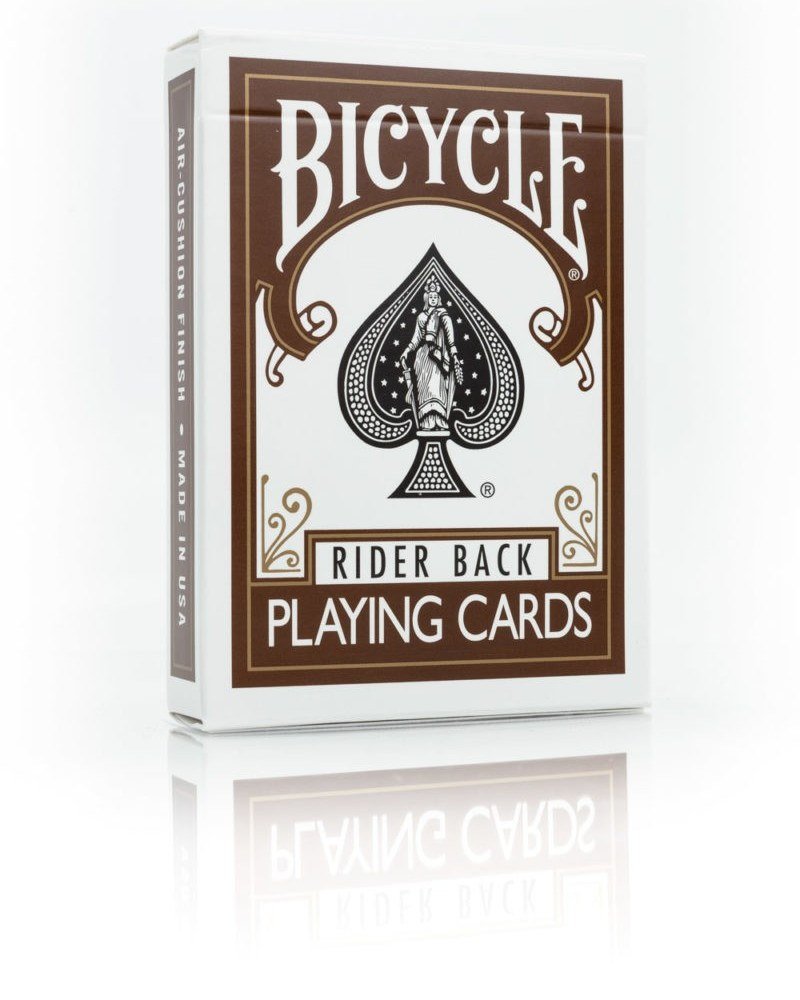
Bicycle Brown Back – Playing Cards
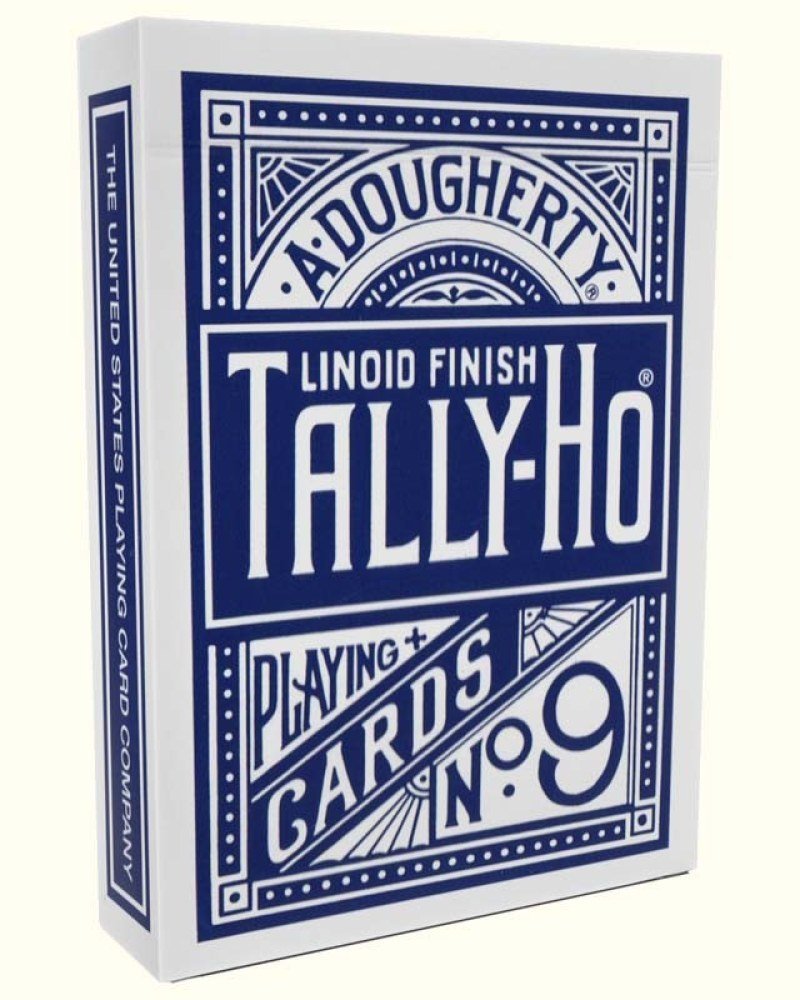
Tally-Ho Fan Blue – Playing Cards
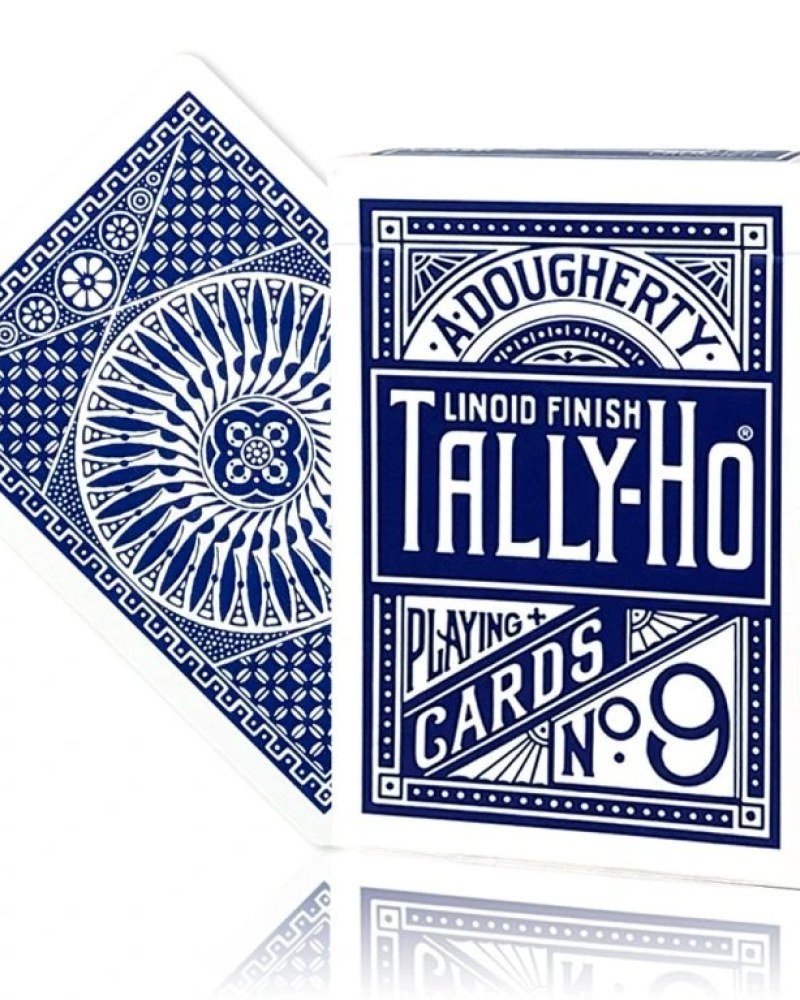
Tally-Ho Circle Blue – Playing Cards

Tally-Ho Circle Red – Playing Cards

Bee Jumbo Index Blue – Playing Cards
Contact our team for any clarification about this document. Contact us


