
Gin rummy rules: knocking, gin, undercut and strategy
Gin rummy rules: the two-player game invented in 1909, how knocking, going gin and the undercut work, plus scoring and a strategy for your discards.
On this page
Gin rummy is what you get when someone distils a whole family of games down to the essentials: two players, ten cards and a single decision repeated turn after turn, does this card bring me closer or get in my way? It was born in 1909 at a whist club in Brooklyn, it has a named inventor, and it enjoyed a second wave of popularity in golden-age Hollywood, where Bogart and half the industry killed the waiting time on set with one knock after another. It is a very complete two-player card game: quick to learn, hard to exhaust, and with the elegant cruelty of the undercut, when you end the hand only to find that your quiet opponent had the better one. Here you have the history, the complete rules, when it pays to knock and the main variants.
What you need to play gin rummy
- A standard 52-card deck, without jokers.
- Two players. It is the classic head-to-head game (there are adaptations for 3 and 4, but the standard game is a duel).
- Pen and paper to keep score up to 100.
History: a whist teacher, his son and Hollywood
Gin rummy has an unusual birth certificate for a card game: it was formalised in 1909 by Elwood T. Baker, a whist teacher from Brooklyn, at the Knickerbocker Whist Club in New York. His technical contribution was precise: in the rummy of the day, players could lay melds on the table during the hand; Baker banned all of that until the end and added the rule that defines the game: you can only end the hand when your unmatched cards (the deadwood) add up to 10 points or fewer. According to tradition, the name came from his son C. Graham Baker, a screenwriter: if the family already had a game called rum, the new, drier one deserved to be called gin.
The game lay dormant for two decades until, in the 1930s and 1940s, Hollywood adopted it as the unofficial pastime of film sets: it was quick, could be interrupted between takes without fuss, and it was addictive. Columns of the time portray Humphrey Bogart, Lauren Bacall and half the industry hooked on it; from the studios it spread to clubs, cruise ships and kitchens across America, where it is still the two-player game par excellence.
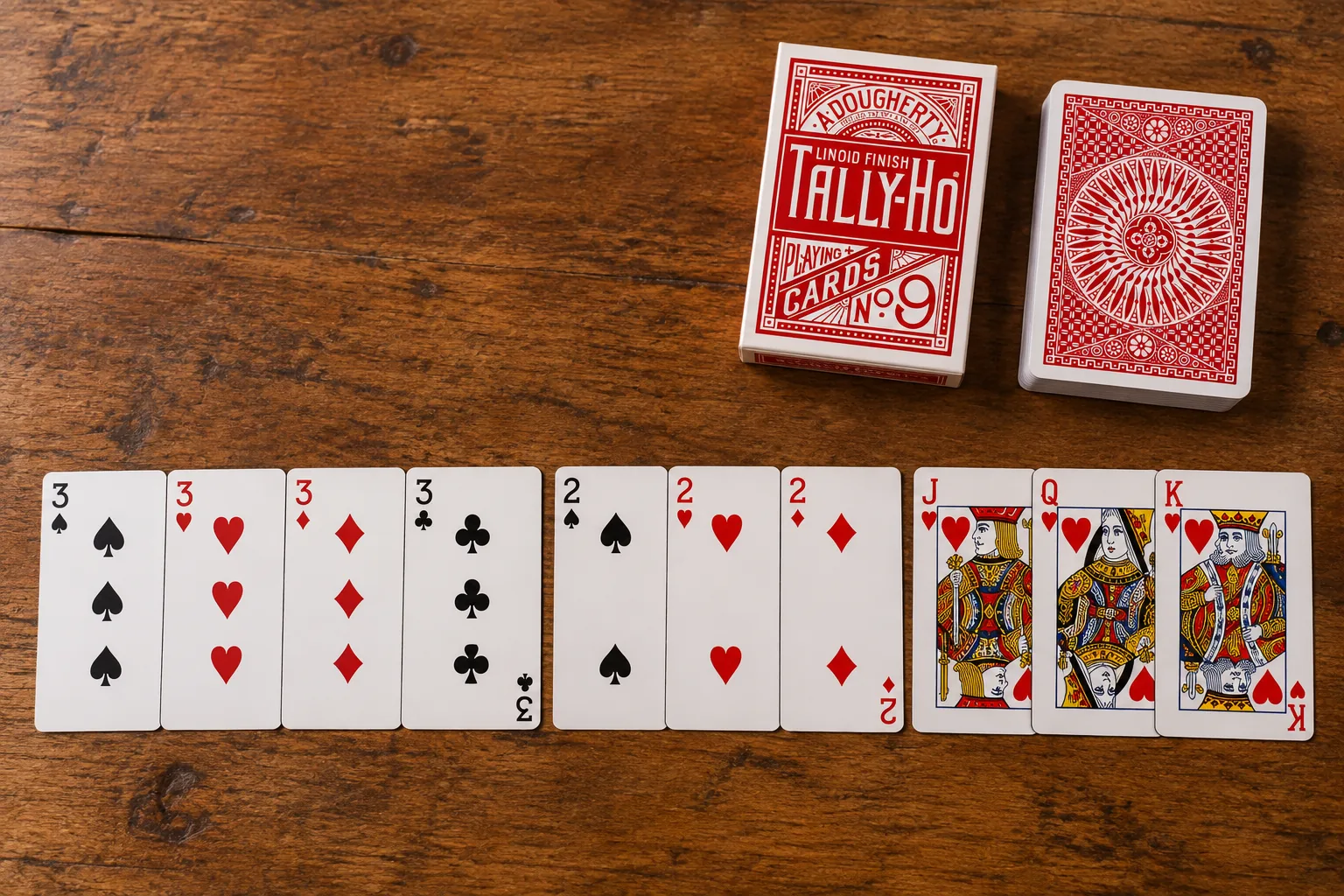
The aim of the game
Use your ten cards to form melds (sets of three or four cards of the same rank, or runs of three or more consecutive cards in the same suit) and bring your deadwood down to 10 or less so that you can end the hand. The game is played to 100 points over several hands.
Did you know decks like these exist?
At heart, every deck has the same cards. What changes is everything else: the design, the finish, metallic inks or gilded edges. Take a look at our catalogue and bring your own style to the card table.
Browse our playing cards →




How to play, step by step
1 · The deal
Ten cards to each player. The next card is turned face up (it starts the discard pile) and the rest form the stock. The non-dealer decides whether to take that first card; if neither player wants it, the non-dealer draws from the stock and play begins.
2 · Your turn
You draw a card (from the stock or the top of the discard pile) and discard another. That's it. All the depth of the game lies within that one move: taking from the discard pile gives information away; you are telling your opponent exactly what you are looking for.
3 · Ending the hand: knock or gin
- Knock: when your deadwood adds up to 10 or less, you can end the hand as you discard (traditionally by rapping the table with your knuckles, hence the name). Both players reveal their cards.
- Gin: ending the hand with all ten cards melded and zero deadwood. You get a 25-point bonus and full protection: there is no defence against gin.
4 · Scoring (and the undercut)
Court cards count 10, the ace 1 and the rest their face value. After a knock:
- The defender can lay off their unmatched cards on the knocker's melds (a fourth seven on their set of sevens), reducing their own deadwood.
- The knocker scores the difference between the two deadwood counts.
- But if, after laying off, the defender has the same or less deadwood than the knocker, it is an undercut. The defender scores the difference plus a 25-point bonus, and the knocker learns a lesson about haste.
Hands are added up until someone reaches 100, with end-of-game bonuses for hands won. With the traditional three-column scoresheet ("Hollywood scoring"), three games are played at once: an invention, of course, of the film studios.
Strategy
- Knock early. The numbers in gin rummy are stubborn: an early knock with 8 to 10 points of deadwood wins more than it loses. Waiting for gin usually costs you.
- The discard pile is a mirror. Every card your opponent throws away tells you what they are NOT after; every card they take from the pile tells you what they ARE after. By the middle of the hand a good player can read half of the opposing hand.
- Don't feed your opponent. Before you discard, ask yourself what they have been picking up. Holding a dangerous card for a couple of turns (a defensive hold) costs little and breaks up their runs.
- Middle cards (5-6-7) are worth more: they fit into more possible runs than aces and kings. All else being equal, keep the middle and let go of the ends.
- Keep an eye on the stock. When only a few cards are left, the hand is a draw if nobody knocks (two cards left means the hand is void). Knowing how many turns remain changes whether you push on or dig in.
Variants
- Oklahoma gin: the first face-up card sets the maximum deadwood for knocking (if it is a 4, you can only knock with 4 or less; if it is an ace, only gin counts). Very popular; it adds tension.
- Straight gin: you can only end the hand by going gin, with no knocking. Hands last longer.
- Hollywood scoring: the studios' triple scoresheet; each hand counts in one, two or three simultaneous games depending on your progress.
- Partnership and three-handed gin: adaptations for more people; they work, but the soul of the game is the duel.
Did you know?
- Gin rummy shares a grandparent with the Spanish game of chinchón: both descend from the Mexican game conquian, documented in 1857. Chinchón kept the 40-card Spanish deck; gin took the 52-card French deck: two grandchildren of the same game an ocean apart.
- On golden-age Hollywood sets gin was so ever-present that columnists called it "the official game of the waiting room"; there are memoirs of whole shoots tallied up in dollars of gin lost between actors.
- The undercut is one of the few penalties in classic card games designed specifically against impatience: the game rewards ending the hand quickly... and punishes you if you end it quickly and badly. That balance is Baker's own work.
How much does a deck of cards cost?
From €5 to over €100. The 52 cards and the rules stay the same; this is what changes.
 To play€5.95 |  Designer€12.95 |  Premium€17.99 |  Collectible€34.94 | |
|---|---|---|---|---|
| Typical price | €5-9 | €9-15 | €15-30 | €30 or more |
| What sets it apart | Classic casino design | Artist illustration on back and faces | Special inks, embossing and foil on the box | Limited print runs and gilded edges |
| Who it is for | Games at home | Playing with something beautiful | Gifts or cardistry | Collecting and display |
| Example | Tally-Ho Fan Azul | theory11 Medallion | The Sandwich Series (Luncheon Meat) | Kings Wild LOTR Two Towers Gilded |
| See decks | See decks | See decks | See decks |
Frequently asked questions
How many cards are dealt in gin rummy?
Ten to each of the two players, using a standard 52-card deck without jokers.
What is a knock and when can you do it?
Ending the hand when your unmatched cards add up to 10 points or less. You announce it as you discard and both players show their cards.
What does going gin mean?
Ending the hand with all ten cards melded and no deadwood. It earns a 25-point bonus and your opponent cannot lay off any cards.
What is an undercut?
If, after laying off, the defender has the same or less deadwood than the knocker, the defender wins the hand plus 25 extra points. It is the natural brake on hasty knocks.
Are gin rummy and chinchón related?
They are first cousins: both descend from 19th-century Mexican conquian. The deck (52 against 40 cards) and the size of the hand change, not the spirit.
If you play often: a good-quality poker deck from our collection of poker playing cards shuffles better and doesn't get marked, and in a memory game, marked cards are cheating by accident.
Would you like these rules as a PDF, along with the guides to the other games? Sign up for the newsletter.
Keep exploring
- Card games with a poker deck: the complete index
- Chinchón rules: the Spanish cousin, played with a 40-card deck.
- Canasta rules: the partnership rummy with two decks.
- Solitaire rules: for when there is no opponent around.
- Card games for two players
- Burraco and scala 40 rules
Keep learning
- Klondike solitaire rules Learn to play classic solitaire (Klondike patience): setting up the seven columns, the moves, draw one or draw three…
- Continental Rummy Rules Continental rummy rules: the seven contracts, decks and jokers, buying out of turn, scoring with examples, and how it…
- Canasta rules Canasta rules explained: natural and mixed canastas, red threes, how to freeze the discard pile, the full scoring and…
- Hearts card game rules How to play Hearts: the trick-taking game where winning means losing, the three-card pass, the 13-point queen of…
- President card game rules How to play President (Scum, Asshole, Capitalism): card ranking, legal plays, ranks, the card exchange, revolution…
- Cheat card game rules How to play Cheat (I Doubt It): cards face down, call the next rank whether it's true or not, when to challenge and…
- Blackjack rules Learn how to play blackjack: card values, hit, stand, double down and split, the dealer's turn, basic strategy…
Decks to play with: from our shop
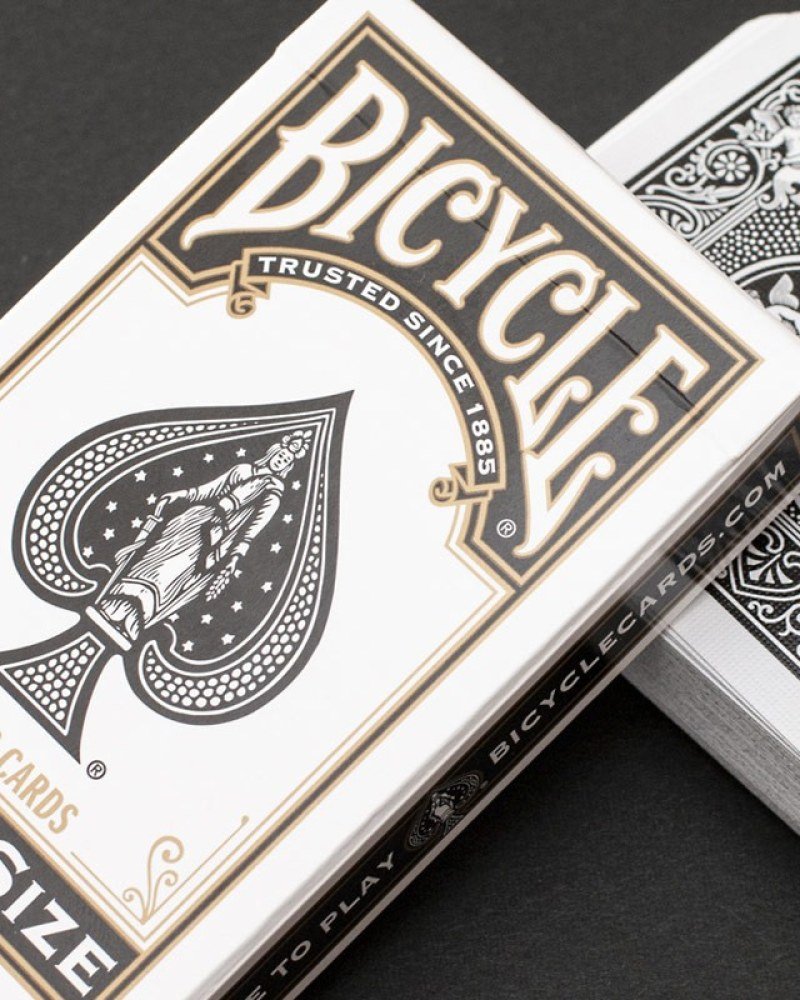


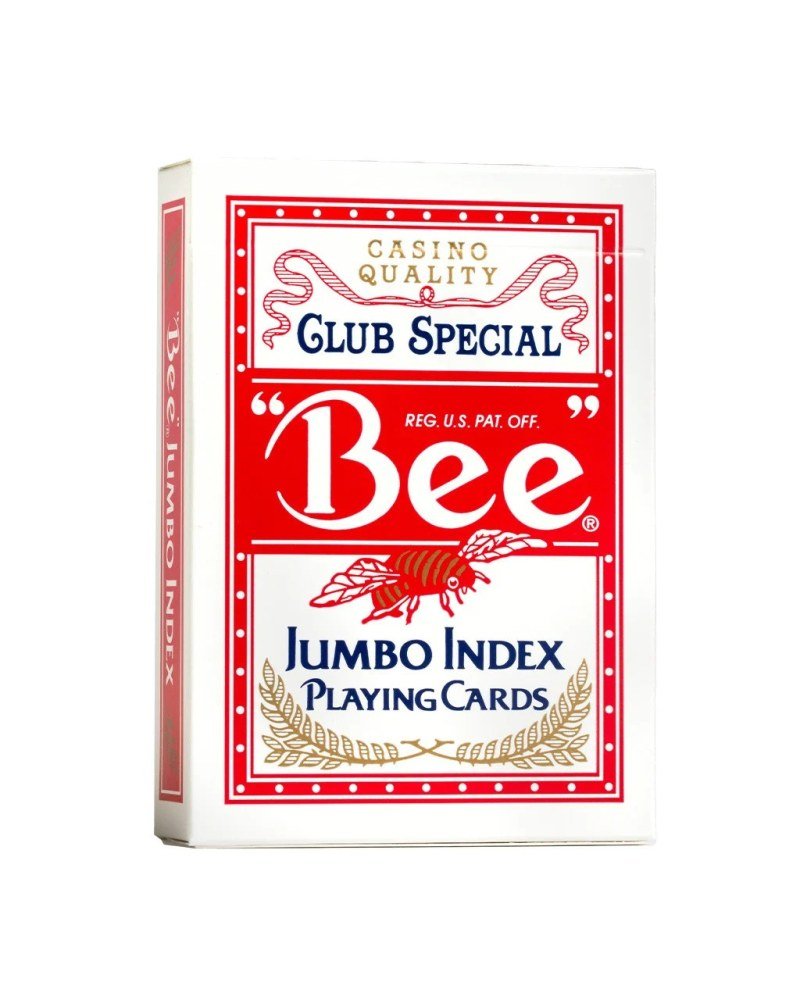
Spanish, French, poker and collector decks, in stock in Madrid.
Poker decks in stock →All our decks →