
Blackjack rules: how to play 21 at home, plus basic strategy
Learn how to play blackjack: card values, hit, stand, double down and split, the dealer's turn, basic strategy explained simply and the best house rules.
On this page
- 1. What you need to play blackjack
- 2. History: from Cervantes' veintiuno to MIT
- 3. Card values
- 4. How to play, step by step
- 5. Basic strategy, explained without the…
- 6. House rules worth agreeing on
- 7. Blackjack and siete y media: first cousins
- 8. Did you know?
- 9. Frequently asked questions
- 10. Keep exploring
Blackjack is the most played casino game in the world for a simple reason: it is the only one where the way you play affects the result. No system beats a roulette wheel, but in blackjack every decision (hit, stand, double, split) has a mathematically correct answer, and knowing it cuts the house edge to less than half a percentage point. It is also a game with three centuries of history, a direct Spanish relative (siete y media, "seven and a half") and a famous chapter in which a mathematics professor showed with a 1960s computer that the house could lose. In Britain many people first met it at home as pontoon, its close cousin. This guide brings together its documented history, the full rules for playing at home, the basic strategy table explained simply and the variants worth agreeing on before the deal.
What you need to play blackjack
- A 52-card poker deck (casinos use 4 to 8 decks shuffled together; at home, one or two work perfectly).
- 2 or more players: one acts as the dealer (the bank) and the others play against them. The bank can rotate.
- Chips, coins or matchsticks: without a stake, even a token one, the game loses its pulse.
History: from Cervantes' veintiuno to MIT
The blackjack family (getting close to a number without going over) is older than casinos. In Spain, veintiuno ("twenty-one") is documented in the Golden Age: in Rinconete y Cortadillo (1613) Cervantes portrays two rogues who are experts at cheating at ventiuno, which makes Spanish literature the first written witness of the family. The version that conquered the world took shape in France as vingt-et-un in the 18th century, moved to Britain and crossed to North America in the 19th.
The modern name was born in the United States around 1899-1900: to attract players, some gambling houses paid a bonus if the 21 was made with the ace of spades and a black jack, the "black jack". The bonus disappeared; the name stuck. The next twist came in 1962, when the mathematician Edward O. Thorp published Beat the Dealer after simulating the game on an IBM computer: he showed that by counting the cards already played, a player could turn the house edge around. The book was a bestseller, casinos changed rules and decks, and card counting entered popular culture, all the way to the MIT team of the 1990s and films such as 21.
Card values
- 2 to 10: their face value.
- Court cards (J, Q, K): 10 points.
- Ace: 11 or 1, whichever suits you best at any given moment. A hand with an ace counting as 11 is called "soft"; if the ace counts as 1, it is "hard".
The perfect hand is a blackjack: an ace plus a ten-value card as your first two cards. It pays 3 to 2 (you bet 10, you win 15).
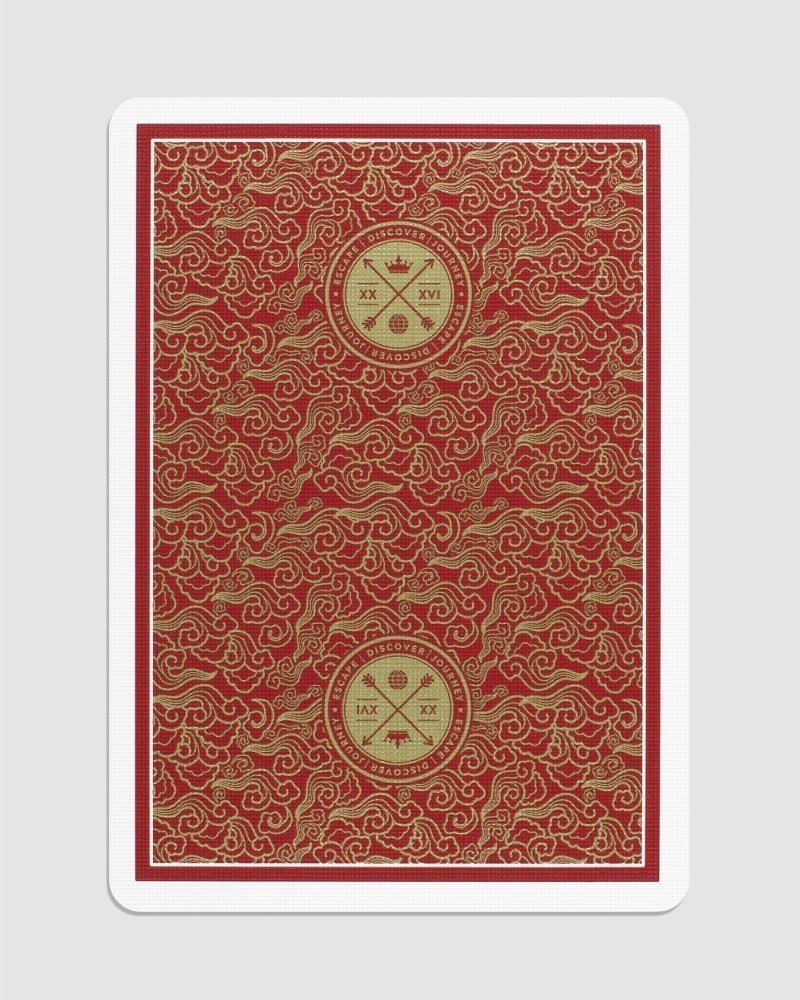
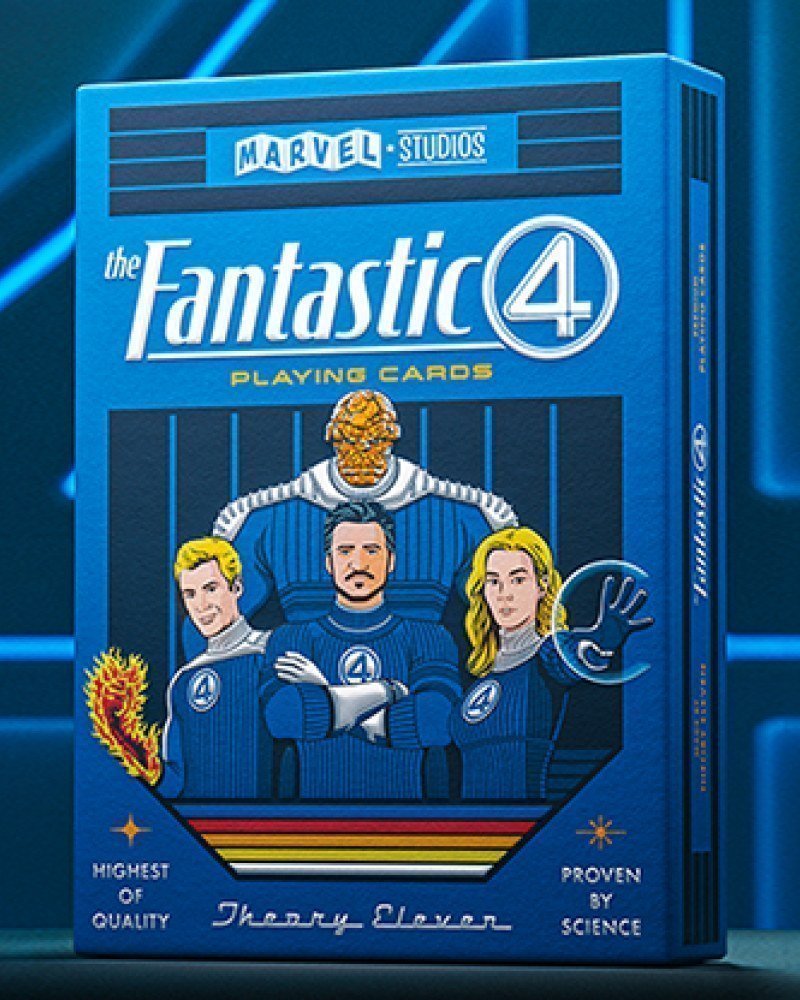
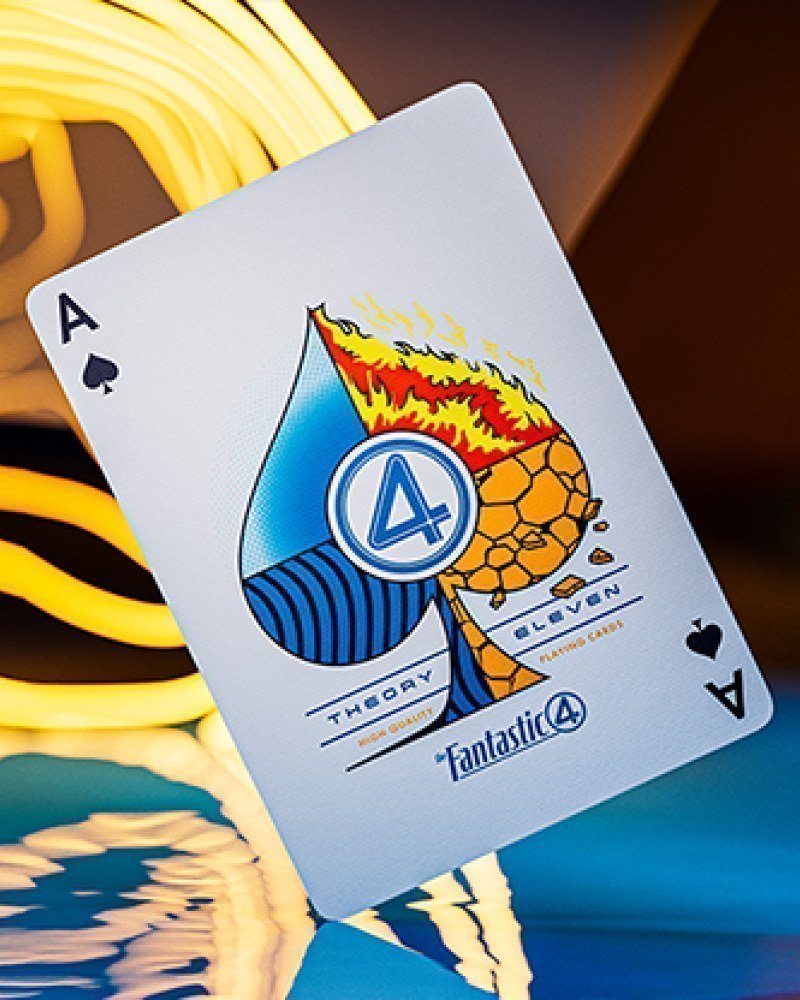
Did you know decks like these exist?
At heart, every deck has the same cards. What changes is everything else: the design, the finish, metallic inks or gilded edges. Take a look at our catalogue and bring your own style to the card table.
Browse our playing cards →




How to play, step by step
1 · The deal
Each player places a bet. The dealer gives each player two face-up cards and takes two: one face up and one face down (the "hole card").
2 · The player's turn
In order, each player decides what to do based on the dealer's visible card:
- Hit: take another card. You can keep doing this as long as you do not go over 21.
- Stand: keep the hand you have.
- Double down: double your bet in exchange for receiving exactly one more card. Mostly used on 10 and 11.
- Split: with a starting pair (two eights, two aces...), split it into two separate hands by placing a second, equal bet.
- Bust: going over 21. You lose your bet on the spot, whatever the dealer does afterwards. This is where the whole mathematical edge of the house comes from: you can bust before the dealer even plays.
3 · The dealer's turn
The dealer turns over the hole card and plays by fixed rules, with no decisions: hit on 16 or less, stand on 17 or more. (Agree beforehand on what happens with a soft 17: under the most common rule, the dealer stands on it too.)
4 · The payout
- If the dealer busts, everyone still in the game gets paid.
- If not, whoever has more points than the dealer wins; a tie ("push") returns the bet.
- A natural blackjack pays 3 to 2 and only ties with another blackjack.

Basic strategy, explained without the table
Thorp's full table fills an entire grid, but its ideas fit into six rules that settle 90% of hands:
- On 11, nearly always double; on 10, double unless the dealer shows a 10 or an ace. These are the hands with the most good cards still to come.
- On 12-16 (the bad hands), look at the dealer's card: if it is 2 to 6 (a "bust card"), stand and let the dealer go bust; if it is 7 or higher, hit even though it hurts.
- On hard 17 or more, always stand.
- Always split aces and eights; never split tens or fives (20 is already a winner; two fives make a 10 to double on).
- Soft hands can hit without fear: an ace and a 6 (soft 17) hits or doubles; it cannot bust with one card.
- Never take insurance. When the dealer shows an ace and offers "insurance", it is a side bet with a clear edge for the house. Card counters are the only ones who sometimes take it, and you are not counting.
Played this way, the house edge stays at around 0.5%, the lowest of any commercial gambling game. Played "on instinct", it rises to 2-4%.
House rules worth agreeing on
- Rotating the bank: after a fixed number of rounds, or it passes to whoever gets a blackjack. Being the bank is an advantage, so agree on it.
- The blackjack payout: 3 to 2, as it has always been. If someone suggests 6 to 5 (a modern casino fashion), they should know it raises the house edge considerably.
- Doubling and re-splitting: at home it is usual to allow doubling on any hand and splitting up to twice. The more you allow, the better for the players.
- The "five cards" rule (popular in Spain, and known in British pontoon as the five-card trick): a hand of five cards that has not gone bust wins automatically. It does not exist in casinos, but at many Spanish tables it is law. Ask first.
Blackjack and siete y media: first cousins
If your family plays siete y media at Christmas, as many in Spain do, you already know blackjack without realising it: the same 17th-century family, the same tension of drawing without going over, the same tie in the bank's favour. What changes is the target (7.5 instead of 21), the deck (Spanish instead of French) and one rule blackjack does not have: the card dealt face down, "a la muda". We have a separate full guide to it.
Did you know?
- Thorp's 1962 book sold more than 700,000 copies and forced the Las Vegas casinos to change the rules of the game in 1964. It lasted a few weeks: players protested so much that the casinos reversed the change and chose to add more decks instead.
- The MIT team won millions counting cards in the 1980s and 1990s with a team system (discreet counters plus a "big player" who bet heavily). It was not illegal; the casinos responded with the only legal weapon they had: banning them.
- Counting cards is not memorising the deck: it is keeping a running number (+1 for low cards, −1 for high ones) that shows when the remaining cards favour the player. The idea fits on a napkin; carrying it out under pressure does not.
How much does a deck of cards cost?
From €5 to over €100. The 52 cards and the rules stay the same; this is what changes.
 To play€5.95 |  Designer€12.95 |  Premium€17.99 |  Collectible€34.94 | |
|---|---|---|---|---|
| Typical price | €5-9 | €9-15 | €15-30 | €30 or more |
| What sets it apart | Classic casino design | Artist illustration on back and faces | Special inks, embossing and foil on the box | Limited print runs and gilded edges |
| Who it is for | Games at home | Playing with something beautiful | Gifts or cardistry | Collecting and display |
| Example | Tally-Ho Fan Azul | theory11 Medallion | The Sandwich Series (Luncheon Meat) | Kings Wild LOTR Two Towers Gilded |
| See decks | See decks | See decks | See decks |
Frequently asked questions
What are court cards and aces worth in blackjack?
Court cards are worth 10; the ace is worth 11 or 1, whichever suits you. A natural blackjack is an ace plus a ten-value card in the first two cards dealt.
When does the dealer hit and when do they stand?
It is a fixed rule: hit on 16 or less and stand on 17 or more. The dealer does not decide, the dealer just follows the rule.
What is doubling down and when should you do it?
Doubling your bet in exchange for just one more card. It is mainly worth it on 11 and on 10, when the dealer's card is a weak one.
Is insurance worth it?
No. It is a side bet with an edge for the house. Always turn it down, unless you are a professional card counter, in which case you would not be reading this.
Are blackjack and twenty-one the same thing?
Blackjack is twenty-one with an American name and a special payout for the ace plus 10 hand. It belongs to the same family Cervantes was already describing in 1613.
For the bank at your home games: a poker deck that glides well from our collection of poker decks, and if the group is large, two identical decks, just like in a casino.
Would you like these rules as a PDF, along with our guides to the other games? Sign up for the newsletter.
Keep exploring
- Card games with a poker deck: the full index
- Siete y media rules: the Spanish cousin, three centuries older.
- History of poker: the other great American betting game.
- Poker night at home: the same kit works for blackjack too.
Keep learning
- Klondike solitaire rules Learn to play classic solitaire (Klondike patience): setting up the seven columns, the moves, draw one or draw three…
- Continental Rummy Rules Continental rummy rules: the seven contracts, decks and jokers, buying out of turn, scoring with examples, and how it…
- Canasta rules Canasta rules explained: natural and mixed canastas, red threes, how to freeze the discard pile, the full scoring and…
- Gin rummy rules Gin rummy rules: the two-player game invented in 1909, how knocking, going gin and the undercut work, plus scoring…
- Hearts card game rules How to play Hearts: the trick-taking game where winning means losing, the three-card pass, the 13-point queen of…
- President card game rules How to play President (Scum, Asshole, Capitalism): card ranking, legal plays, ranks, the card exchange, revolution…
- Cheat card game rules How to play Cheat (I Doubt It): cards face down, call the next rank whether it's true or not, when to challenge and…
Decks to play with: from our shop


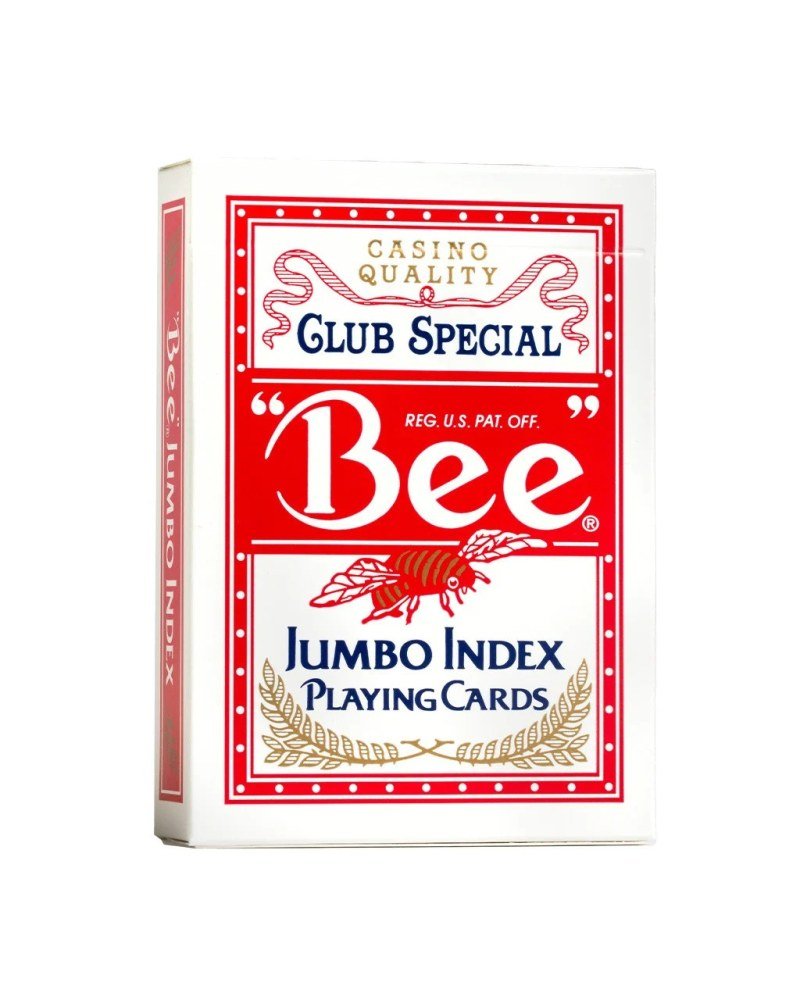
Spanish, French, poker and collector decks, in stock in Madrid.
Buy poker decks →Playing card shop →