
Scopa rules: how to play, scoring and primiera
How to play scopa, the Italian card game: capturing, scoring, primiera values, settebello, playing with a standard deck, scopone and cirulla rules.
On this page
- 1. What scopa is and where it is played
- 2. The deck: 40 cards with Italian suits
- 3. Players and the deal
- 4. How to play scopa: capturing
- 5. Scopa scoring: cards, coins, settebello…
- 6. The game: to 11 or to 21
- 7. Scopa and escoba: how they differ
- 8. Scopa variants
- 9. Chitarrella's rules
- 10. Strategy: how to play better
- 11. Common beginner mistakes
- 12. Italian table vocabulary
- 13. Frequently asked questions
- 14. Keep exploring
In short
Scopa is Italy's most widely played capturing card game. It uses a 40-card deck with Italian suits (denari, coppe, spade and bastoni), usually for two players or two teams of two. Each player gets 3 cards and 4 are laid face up on the table. On your turn you play one card and capture the table card of the same value, or a group of cards that adds up to that value. If you clear the table, you have made a scopa and score a point.
- Card values: ace (1) to 7 at face value; fante 8, cavallo 9 and re (king) 10.
- Key rule: if a card of your value is on the table, you must take that card and not a sum.
- Points each hand: most cards, most denari, the settebello (7 of denari), the primiera and one for every scopa.
- Game: first to 11 points wins (21 when playing in teams, or by agreement).
If you have played escoba de 15, the Spanish cousin, you already know half of scopa: the face-up table, the sweep and the end-of-hand count of cards, coins and sevens. The other half is what gives scopa its character. You are not trying to make fifteen; you match the value of the card you play, so every turn becomes a small calculation about what you leave for your opponent and what you hold back. This guide covers the full scopa card game rules for the classic version, scoring with the primiera table, the regional Italian decks, how to play scopa with a standard deck, and the main variants, from scopone scientifico to cirulla.
What scopa is and where it is played
Scopa is Italian for "broom", and the name describes the move at the heart of the game: sweeping every card off the table in one go. It belongs to the family of capturing games, known in English as fishing games, which have no tricks and no trumps: you take cards from the table by matching them with cards from your hand.
Together with briscola and tressette, scopa makes up the trio of Italy's most popular card games. There is no single national rulebook, largely because each part of the country has its own deck and its own house customs. The basic rules, though, are the same from Turin to Palermo.
Origins: what is known and what is not
The exact origin of scopa is not documented. What we do know is that by the 18th century it was widespread in Italy and especially popular in Naples. Its scoring hints at an old family tie: the primiera, the point for the best four-card combination, takes its scale of values from a Renaissance gambling game of the same name (called primero in English).
Italian emigrants took scopa to Argentina and Brazil, where it is mostly played in its fifteen-adding form. North Africa has its own very popular branch, Tunisian chkobba, with almost identical scoring. In Spain it gave rise to escoba, covered further down.
The deck: 40 cards with Italian suits
Scopa is played with a 40-card deck, with no numbered eights, nines or tens. Each suit has ten cards: ace to seven and three court cards, the fante (jack), the cavallo (knight) and the re (king).
The four suits are the same as those of the Spanish deck, under different names:
| Italian | English meaning | In a poker deck | Role in scopa |
|---|---|---|---|
| Denari (also ori) | Coins | Diamonds | Scoring suit: denari point and settebello |
| Coppe | Cups | Hearts | Ordinary suit |
| Spade | Swords | Spades | Ordinary suit |
| Bastoni | Clubs (batons) | Clubs | Ordinary suit |
Denari is the only special suit. Italians sometimes call it "the beautiful suit", which is why the seven of denari is known as the settebello ("beautiful seven") and, in some variants, the king of denari as the re bello.
Card values for capturing
Scopa has no ranking of cards by strength: all that matters is the number value. The court cards continue the count after the seven.
| Card | Value | In a French-suited deck |
|---|---|---|
| Ace (asso) | 1 | Ace |
| 2 to 7 | Face value | 2 to 7 |
| Fante | 8 | Jack |
| Cavallo | 9 | Queen |
| Re | 10 | King |
Italian regional decks
Italy has no national deck. Each region keeps its own pattern, inherited from local card printers of past centuries, and in practice people play scopa with whatever deck the local tobacconist sells. There are three families, depending on the suit style.
- Spanish-style suits (round cups, straight swords, club-shaped batons): used in the south, the centre and parts of the north. These are the napoletane (Neapolitan), piacentine, siciliane, romagnole and sarde decks.
- Italian-style suits (curved swords and straight batons that cross each other on the number cards): the decks of the north-east and eastern Lombardy, such as the trevigiane (or trevisane), triestine, bergamasche, bresciane and trentine.
- French suits (hearts, diamonds, clubs and spades): used in Liguria, Piedmont, Tuscany and Milan, with the genovesi, piemontesi, toscane and lombarde (or milanesi) decks. Here the court card worth 9 is a queen instead of a knight.
| Deck | Suit style | Where it is used | Notes |
|---|---|---|---|
| Napoletane | Spanish | Campania and much of the south and centre | The best-selling regional deck |
| Piacentine | Spanish | Emilia; originally from Piacenza | Spanish-style pattern of the centre-north |
| Siciliane | Spanish | Sicily | The island's own pattern |
| Sarde | Spanish | Sardinia | The island's own pattern |
| Romagnole | Spanish | Romagna | Regional pattern |
| Trevigiane | Italian | Veneto (Treviso, Venice) | The standard deck in the Veneto |
| Triestine | Italian | Trieste, Friuli and the Adriatic coast | Widely used along the Adriatic |
| Bergamasche and bresciane | Italian | Bergamo and Brescia | Lombard patterns with Italian suits |
| Trentine | Italian | Trentino | Regional pattern |
| Genovesi | French | Liguria | The deck used for cirulla |
| Piemontesi, toscane and lombarde | French | Piedmont, Tuscany and Milan | J, Q and K instead of fante, cavallo and re |
For the game it makes no difference which one you use: they all have 40 cards and the same values. What changes is the look, and sometimes the names players give the cards at the table. If you are curious about the history of these patterns, see our guide to types of playing card decks.
Players and the deal
The classic form is two players. It is also played three-handed, each for themselves, and four-handed in two teams, with partners sitting opposite each other. Six can play in three teams, though this is less common. For four players many Italians prefer scopone, covered under variants.
In scopa, dealing and play go counter-clockwise: the first to receive cards and the first to play is the player on the dealer's right.
- Draw lots to choose the first dealer. After that, the deal passes to the next player in the direction of play.
- The dealer shuffles and the opponent cuts.
- Deal 3 cards to each player, face down.
- Place 4 cards face up in the middle of the table.
- The rest of the deck stays face down to one side.
When everyone has played their three cards, the dealer gives each player 3 more, but adds nothing to the table: the table only holds what players have left there. This continues until the deck runs out. With 36 cards left to deal after the opening 4, the rounds work out like this:
| Players | Cards per round | Rounds per hand |
|---|---|---|
| 2 | 6 | 6 |
| 3 | 9 | 4 |
| 4 (two teams) | 12 | 3 |
| 6 | 18 | 2 |
Three kings on the table: redeal
If the 4 opening table cards include three or four kings, the hand is cancelled and the same player shuffles and deals again. The reason is arithmetic: a king can only capture another king (a matching card always takes priority over a sum), and with too few kings left in the deck nobody could clear the table for the whole hand.
How to play scopa: capturing
The player on the dealer's right leads. On each turn a player places a single card from their hand face up, and one of two things happens:
- Capture. If the table holds a card of the same value, or a group of cards whose sum equals the value of your card, you take those cards together with the one you played and put them face down in your pile.
- Discard. If your card cannot capture anything, it stays on the table with the others.
The three capture rules
- Matching value. A 5 takes a 5. If there are two fives on the table, you choose one of them, but only one.
- By sum. If no card matches your value, you may take two or more cards that add up to exactly that value. A re (10) can take a 6 and a 4, or a 7, a 2 and an ace. If several combinations are possible, you choose.
- The matching card comes first. If the table has both a card of your value and a group that adds up to the same, you must take the matching card and leave the group. This rule settles more arguments than any other, and it is the biggest difference between scopa and escoba.
An example of the third rule: the table has a fante (8), a 5 and a 3. You play your fante. Even though 5 and 3 make 8, you have to take the other fante, and the 5 and 3 stay on the table. If there were no fante on the table, you could take the 5 and the 3.
Another point people often ask about: one card makes one capture. If you play a 7 and the table has a 4, a 3, a 5 and a 2, you can take 4 + 3 or 5 + 2, but not all four cards at once, even though they form two groups of seven.
Do you have to capture?
You are free to choose which card to play, including one that captures nothing. What you cannot do, under the most common rule, is play a card that can capture and leave it on the table without taking anything. If the card you play can capture, it captures. Some tables, especially in scopone, leave this to the player; if you are playing with new people, agree on it before you start.
The scopa: sweeping the table
When a capture takes every card on the table, you have made a scopa and score a point. So it is not forgotten at the count, the card you made it with goes face up and sideways in your pile of captured cards. At the end of the hand these crossways cards are counted.
After a scopa the table is empty, and the next player has no choice but to leave a card there, which starts a new table.
There is one important exception: the last play of the hand never counts as a scopa, even if it clears the table. The last card of the hand is played by the dealer (or the dealer's partner), and if that play counted it would be an almost free point every hand.
The end of the hand
Once every card in the deck has been played, any cards left on the table go to the last player who made a capture. They count towards cards, denari and primiera, but not as a scopa.
Scopa scoring: cards, coins, settebello and primiera
At the end of each hand every player (or each team, combining their piles) goes through their captured cards. There are four fixed points at stake, plus one for each scopa:
| Point | Who wins it | When it is certain | Tie |
|---|---|---|---|
| Carte (cards) | Whoever has the most cards | With 21 of the 40 | 20 to 20: nobody |
| Denari (coins) | Whoever has the most denari | With 6 of the 10 | 5 to 5: nobody |
| Settebello | Whoever has the 7 of denari | Always awarded | Cannot be tied |
| Primiera | Highest total from the best card in each suit | Depends on sevens and sixes | Equal totals: nobody |
| Scope | One point per scopa | Count the crossways cards | Not applicable |
With three players the thresholds drop: with 14 cards nobody can beat you for the cards point, because the other two only have 26 between them. If two players tie for the highest figure, nobody gets the point.
The primiera, step by step
The primiera (in some areas called settanta, "seventy") is the hardest point to grasp at first, and also the one that most often decides close hands. It works like this:
- From your captured cards, pick the best card in each of the four suits.
- Each card has a special primiera value, different from its capture value.
- Add the four values. The highest total wins the point.
- If you are missing a suit, you cannot win the primiera, even if your other three cards are sevens.
| Card | Primiera value |
|---|---|
| 7 | 21 |
| 6 | 18 |
| Ace | 16 |
| 5 | 15 |
| 4 | 14 |
| 3 | 13 |
| 2 | 12 |
| Fante, cavallo and re | 10 |
Two things stand out. First, the ace is worth more than the 5 even though it captures as a 1: this is the scale inherited from the old game of primiera. Second, court cards are the worst thing you can hold for this count. The highest possible primiera is 84, with all four sevens (4 × 21).
Primiera examples
| Case | Best card in each suit | Sum | Total |
|---|---|---|---|
| Player A | 7 of denari, 7 of coppe, 6 of bastoni, ace of spade | 21 + 21 + 18 + 16 | 76 |
| Player B | 6 of denari, 6 of coppe, 7 of bastoni, 5 of spade | 18 + 18 + 21 + 15 | 72 |
| Player C | 7 of denari, 7 of coppe, 7 of spade, no bastoni | One suit missing | No primiera |
| Player D | 7, 7, 6 and ace against another 7, 7, 6 and ace | 76 against 76 | Tie: nobody |
A beats B 76 to 72, and the difference lies in the sevens: A has two and B only one, even though B has two sixes. As a rule of thumb, whoever has more sevens usually wins the primiera, and if sevens are level, whoever has more sixes. You only need to add things up properly when both piles have the same sevens and sixes. That is why hardly anyone does the sum at the table: you count sevens, then sixes, then aces.
Here is a full two-player hand as an example. Marco ends with 23 cards, 4 denari, the settebello, a primiera of 76 and two scope. Lucia has 17 cards, 6 denari, a primiera of 72 and one scopa. Marco scores cards, settebello, primiera and two scope: 5 points. Lucia scores denari and her scopa: 2 points.
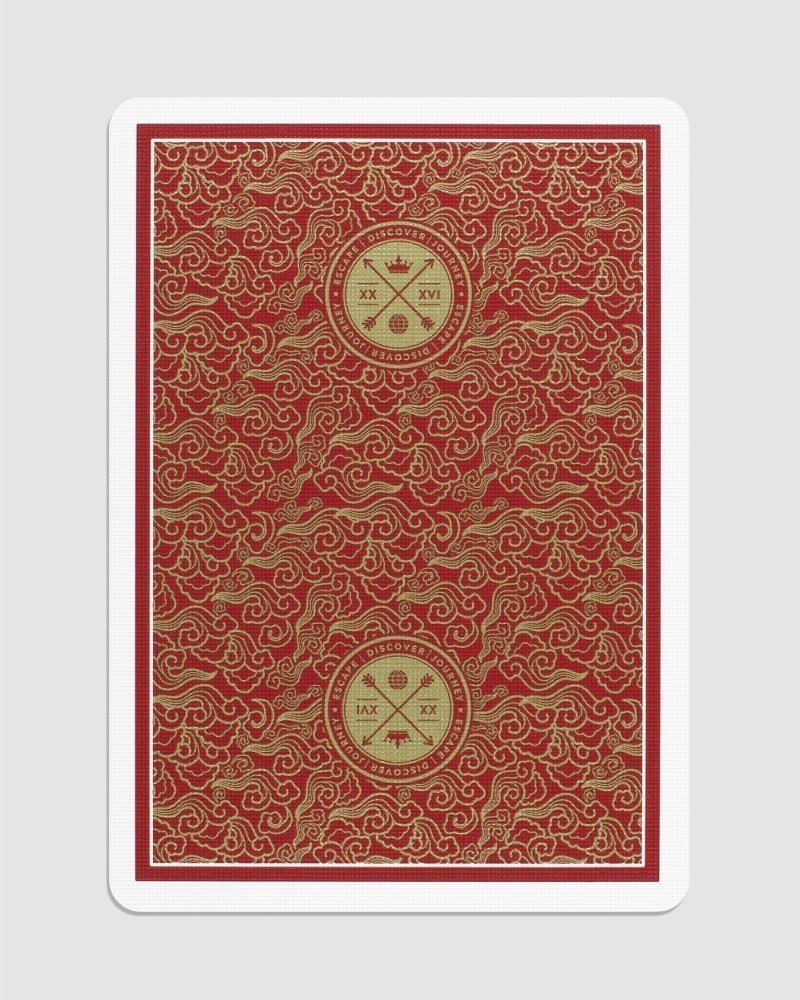
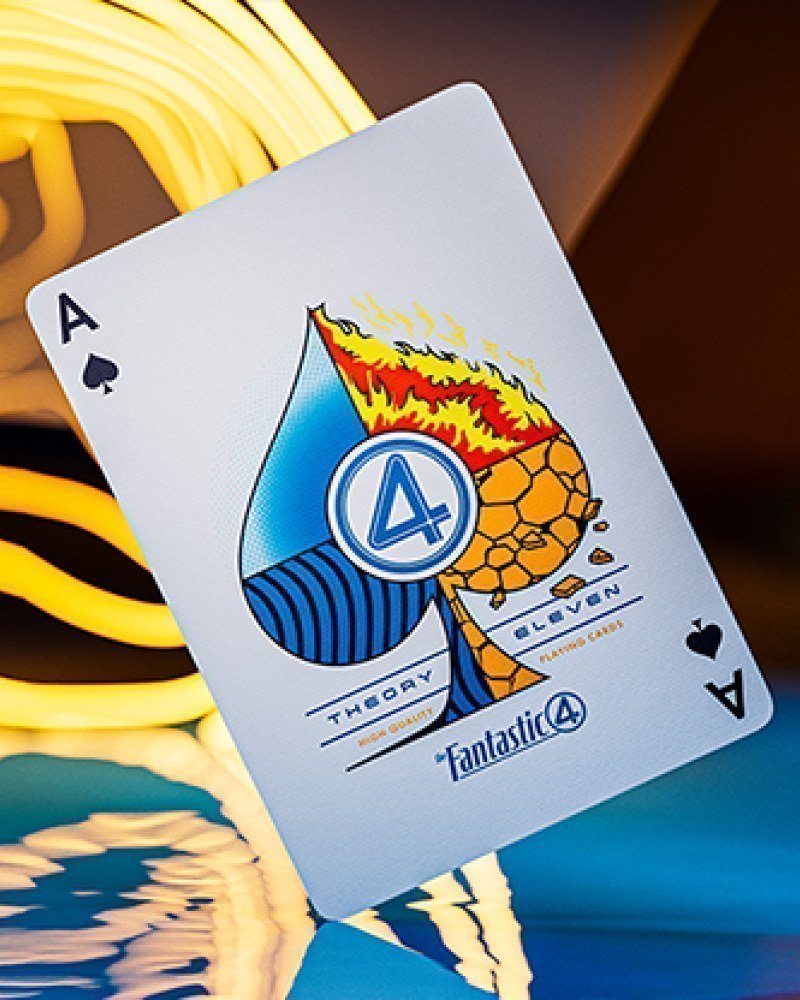
Did you know decks like these exist?
At heart, every deck has the same cards. What changes is everything else: the design, the finish, metallic inks or gilded edges. Take a look at our catalogue and bring your own style to the card table.
Browse our playing cards →





The game: to 11 or to 21
Points carry over from hand to hand, and the game ends when someone reaches the agreed target:
- 11 points: the classic target for two players.
- 16 points: common with three players.
- 21 points: usual for teams and for variants with extra points. Games to 31 are played when there are many bonuses.
Points are counted at the end of the hand, not during play, so you cannot claim the win mid-hand even if you hold the settebello and a scopa with 10 points on the board. If both players pass the target in the same hand, the one with more points wins. If they are level, another full hand is played.
Scopa and escoba: how they differ
Spanish escoba and Italian scopa are the same kind of game, and it shows in the table layout, the sweep and much of the scoring. They are not interchangeable, though, and players switching from one to the other tend to make the same mistakes. The full rules of the Spanish version are in our guide to escoba de 15; here is just what changes.
| Classic scopa | Escoba de 15 | |
|---|---|---|
| How you capture | Matching card, or a group adding up to your card's value | Table cards that, added to yours, make 15 |
| Matching card | Must be taken before any sum | No such capture: a 5 cannot take a 5 (that makes 10) |
| Your card in the sum | Not added: it is the value to match | Added: it is part of the 15 |
| Four opening cards | Three kings on the table cancel the deal | If they total 15 or 30, the dealer sweeps them and scores an escoba |
| Sevens point | Full primiera with the value scale | Setenta or, in the simple version, most sevens wins |
| Deck | Italian regional, 40 cards | Spanish, 40 cards |
In practice this changes a lot. In scopa, a single card on the table is an invitation to whoever holds its twin, and the game revolves around pairs of matching cards. In escoba pairs mean nothing: what you watch is what you leave on the table so that nobody can complete fifteen. Italy also has a variant played exactly by adding to fifteen, scopa a quindici, described a little further down.
Scopa variants
Italy has dozens of local scopa variants. These are the five most widely played, and the ones worth knowing before you sit down at an Italian table.
Scopone scientifico
4playersThe four-player partnership version, the most studied and the one known as a thinking game. Almost all the cards are dealt at the start, so there is no stock and everything can be worked out.
- Two teams of two
- 9 cards + 4 on the table, or 10 with none
- Target: 11 or 21
Scopone rules
The deal. In the most common form each player receives 9 cards and 4 are placed face up on the table; cards are dealt in batches of three to each player, with two going to the table in between. If three or four kings are among the four table cards, there is a redeal. In the other form, scopone a 10 carte, each player gets 10 cards and the table starts empty.
The name. "Scientifico" does not always mean the same thing. In some areas it refers to the 9-card version with 4 on the table, which a Neapolitan rulebook from the late 19th century already called "scientific"; elsewhere, and in some English-language guides, the name is kept for the 10-card version. If you sit down to play, settle which one you mean.
Scoring. The same as scopa: cards, denari, settebello, primiera and scope. Many tables add the napola. In the 10-card version some players count the dealer's final sweep as a scopa; in the 9-card version the last play does not count.
The tactical idea. The dealer's team (the mazzieri) tries to keep the table cards in pairs, because that lets them control play and take the last cards. The other team (the one di mano, who lead) tries to break those pairs with captures by sum, which is called sparigliare.
Scopa d'assi or asso piglia tutto
1ace takes allThe ace becomes the most powerful card: if you play it and there is no ace on the table, you take every card in one go. Very popular in families and in teams.
- 2 to 4 players
- The ace sweeps the table
- Usually played to 21
More detail
The ace. If there is already an ace on the table, the ace you play only takes that ace (the matching card comes first). If the table is empty, the ace stays there.
Does it count as a scopa? Names vary by region here. In asso piglia tutto ("ace takes all") as a children's game, the ace sweep does score as a scopa. In the scopa d'assi adults play, it usually does not: the ace clears the table but scores no scopa point. At some tables an ace played on an empty table captures itself.
With four. It is often played in teams with 10 cards dealt to each player, no opening table cards, and the napola as an extra point.
Scopa a quindici (scopa 15)
15the sumThe variant where you capture by making fifteen, as in Spanish escoba. This is the form Italian emigrants took to Argentina and Brazil.
- 2 to 4 players
- Played card + table = 15
- Target: 21 or 31
More detail
Three ways to play it. In the strictest, only the fifteen sum counts and capturing a matching card disappears. In another, both are allowed, the normal capture and the fifteen capture, and the player chooses (at some tables, with the obligation to take the fewest cards). The third adds an ace that takes everything and scores a scopa; this one is usually played to 31.
Scoring is the same as normal scopa, with the full primiera.
Cirulla
51pointsThe great variant of Genoa and Liguria. It mixes scopa, the fifteen game and the ace game, and adds bonuses for cards in hand and a wild card. Long games with lots of points.
- Genoese French-suited deck
- Usually 4, in teams
- 7 of hearts is wild
Cirulla rules
Capturing. You can capture a matching card, a sum equal to your card, a sum of fifteen counting your card, or play an ace that takes the whole table if there is no other ace on it. If two or more aces are among the opening table cards, there is a redeal.
Hand bonuses, declared by showing your cards: three cards totalling 9 or less are worth 3 points (like 3 scope); three cards of the same value are worth 10. The 7 of hearts, the matta, can be any value from 1 to 10, but only to form these bonuses.
Dealer's bonus. If the four opening cards total 15, the dealer takes them and scores a scopa; if they total 30, two.
Scoring. The four normal points, the scope and two diamond bonuses: the piccola (ace, 2 and 3 of diamonds, 3 points, plus one for each card in sequence up to a maximum of 6) and the grande (J, Q and K of diamonds, 5 points). The game goes to 51.
Four-player scopa in teams
2teamsNormal scopa, with the same rules, played by two teams. It is the simplest way to play with four and the best way to learn before moving on to scopone.
- Partners sit opposite
- 3 cards per round, 3 rounds
- Usually played to 21
More detail
The deal. 3 cards to each player and 4 to the table, as usual. With four players each round uses 12 cards, so there are three rounds per hand.
Piles. Each team keeps its captures in a single pile, and the count is done by team. Both partners' scope are added together.
Signals. Not allowed. Unlike mus or truco, in scopa you do not talk to your partner or make signs; everything you know about their hand you work out from what they play.
Extra points many tables add
Besides the full variants, there are bonuses added to normal scopa by prior agreement. The most common:
| Bonus | What you need | Points |
|---|---|---|
| Re bello | Capture the king of denari | 1 |
| Napola | Ace, 2 and 3 of denari in your pile | 3, plus 1 for each denari card in sequence (4, 5, 6...) |
| Napoleone | All ten denari | Depending on the table, wins the game or scores 10 |
With napola, a team holding the ace, 2, 3, 4 and 5 of denari scores 5 points, on top of the denari point if they have the majority. Because these bonuses push scores up, games with napola are played to 21 or 31.
A poker deck works for scopa too
We do not stock Italian regional decks, but any 52-card French deck with the eights, nines and tens removed gives you a scopa deck like those used in Genoa or Milan.
Browse playing cardsChitarrella's rules
Any serious discussion of scopone sooner or later brings up the name Chitarrella, whom many Italians regard as the authority on card game rules, much as Edmond Hoyle is in the English-speaking world. Two collections circulate under that name: one on tressette and its variant mediatore, and another, added later, on scopone, with 44 rules.
Who was Chitarrella?
Nobody knows. Tradition speaks of a Neapolitan priest who supposedly wrote his rules around 1750, and that date is repeated in many books and websites. Research into playing card history takes it apart:
- The famous 1750 edition has never turned up. The publisher who had mentioned it admitted he had made it up.
- The oldest surviving edition of the tressette rules dates from 1840, printed in Naples: a 16-page booklet with the Latin text on one side and the Italian translation on the other, organised into numbered chapters and sections like a legal code.
- The scopone rules do not appear in that edition or in any 19th-century one. Their first documented edition is from 1937, in Milan, presented as the second edition of a 1932 printing that has never been found.
The strongest theories place the origin of the texts among the lawyers and law students of 19th-century Naples, which is also where scopone became fashionable. The style, with very short sentences in mock Latin that sound like proverbs, fits that setting far better than an 18th-century cleric. In short, the rules are real and have been quoted for almost a century, but the author is a pseudonym and the texts are much younger than the legend claims.
What they say about scopone
Chitarrella's scopone rules are not a rulebook on dealing or scoring but a playing manual: which card to play in each situation. Their central idea, picked up by every later text, is that the two teams have different goals:
- The dealing team (the mazzieri) has the advantage of playing the last card of the hand and taking whatever is left on the table. Their game is to keep the cards paired: if a 6 lands on the table, they try to bring out the other 6, so the number of cards of each value stays even and captures follow a predictable rhythm.
- The leading team tries the opposite: sparigliare, to unpair. They do it by capturing by sum (an 8 taking a 5 and a 3), which leaves the remaining fives and threes in odd numbers and throws off the opponents' count.
All the other advice follows from this: remember how many cards of each value have been played, do not leave a card on the table whose twin your opponent may hold, and play the card your partner can cover. It sums up why scopone is known as a game of memory and calculation rather than luck.
Strategy: how to play better
Scopa looks like a game of luck on the first evening, and stops looking like one as soon as you start counting. These are the principles that make the most difference.
Watch the table total
The highest card value is 10. So if the table adds up to 11 or more, nobody can make a scopa with the next card (in scopa d'assi the ace is the exception). Before you play, add up what will be left on the table. If your card leaves the table at 10 or less, you are offering your opponent a scopa: with a 4 and a 3 on the table, any 7 sweeps it.
The most dangerous case is leaving a single card on the table. Only do it if you know the other three cards of that value have already gone or are in your hand.
Count the cards of each value
There are four cards of each value. Keeping track of how many sevens, sixes or kings have gone is what separates the casual player from the one who wins. If three fives have gone and you hold the fourth, you can leave a 5 on the table without worry. If two have gone and you hold one, your opponent may have the last one.
Sevens count double
Every seven works for two points at once: the primiera and, if it is the seven of denari, the settebello. A seven is also a useful capturing card on almost any table. When you can choose between two captures, the one that gets you a seven is nearly always better. A sensible order of priority is: settebello, other sevens, sixes, denari and, last, number of cards.
Take more cards when nothing else matters
If two captures are equal for primiera and denari, take the one with more cards. For example, with a re you can take a 7 and a 3, or a 6, a 3 and an ace: if sevens are not a concern, the second capture adds one more card towards the cards point.
Think about the end of the hand
Cards left on the table at the end go to the last player who captured. The dealer plays the last card of every hand and has the edge in taking them, so the opponent should try to capture in their final turns or leave little on the table. Holding back a card you know will capture in the last round is an easy way to collect a pile of cards at the end.
In teams: play for your partner
In four-player scopa and in scopone, your partner plays straight after the opponent who follows you, so every card you leave on the table is also a chance for them. If your partner leaves a 5, an opponent takes it with another 5 and you hold a third, playing it is usually safe: only one 5 is left in play. And if an opponent leaves a card your partner can capture, do not take it away without good reason. Everything is communicated through the cards, never through gestures.
Common beginner mistakes
- Taking a sum when a matching card is on the table. If you play a fante and there is a fante on the table, you take the fante, even if there is a 5 and a 3 next to it.
- Counting the last play as a scopa. The final sweep of the hand does not score.
- Giving the primiera to someone with three sevens and a missing suit. Without all four suits there is no primiera.
- Mixing up scopa and escoba. In classic scopa your card is not added towards fifteen: it is the value you need to match.
- Making two captures with one card. One card, one capture, even if the table has two groups with the same total.
If you enjoy capturing games and want more for two, our guide to two-player card games has scopa alongside other classics, and the one on card games for four or more covers team alternatives. For another long-session Italian game, see the burraco and scala 40 rules.
Italian table vocabulary
If you play with Italians or with an app in Italian, these are the terms you will hear.
| Term | Meaning |
|---|---|
| Presa | Capture: the cards you take from the table in one play |
| Scopa (plural scope) | A capture that clears the table; worth one point |
| Settebello | The 7 of denari, worth a point on its own |
| Primiera or settanta | Point for the best four-card combination, one per suit |
| Carte | Point for whoever has the most cards |
| Denari | The coins suit, and the point for whoever has most of it |
| Mazziere | The dealer; in scopone, mazzieri means the dealer's team |
| Di mano | The player or team that leads |
| Sparigliare | To capture by sum so the cards of a value are left unpaired |
| Tallone | In scopone, the cards left on the table at the end, taken by the last player to capture |
| Re bello | The king of denari, worth a point at some tables |
| Napola | Bonus for holding the ace, 2 and 3 of denari, plus the cards that follow |
How much does a deck of cards cost?
From €5 to over €100. The 52 cards and the rules stay the same; this is what changes.
 To play€5.95 |  Designer€12.95 |  Premium€17.99 |  Collectible€34.94 | |
|---|---|---|---|---|
| Typical price | €5-9 | €9-15 | €15-30 | €30 or more |
| What sets it apart | Classic casino design | Artist illustration on back and faces | Special inks, embossing and foil on the box | Limited print runs and gilded edges |
| Who it is for | Games at home | Playing with something beautiful | Gifts or cardistry | Collecting and display |
| Example | Tally-Ho Fan Azul | theory11 Medallion | The Sandwich Series (Luncheon Meat) | Kings Wild LOTR Two Towers Gilded |
| See decks | See decks | See decks | See decks |
Frequently asked questions
How many cards are in a scopa deck?
40 cards in four suits of ten: ace to 7 and three court cards (fante, cavallo and re). With a 52-card poker deck, just remove the eights, nines and tens.
What are the fante, cavallo and re worth?
For capturing, the fante is worth 8, the cavallo 9 and the re 10. In the primiera, however, all three are worth 10 points each, less than any number card.
Do you have to take a matching card?
Yes. If the table has a card of your value, you must take that one and not a group adding up to the same. If there are two cards of your value, you choose one.
How is the primiera worked out in scopa?
Pick your best card in each suit and add their values: 7 = 21, 6 = 18, ace = 16, 5 = 15, 4 = 14, 3 = 13, 2 = 12 and court cards = 10. The higher total wins. If you are missing a suit you cannot win it, and if there is a tie nobody gets the point.
How many scopa points are there in each hand?
Four fixed points (cards, denari, settebello and primiera) plus one for every scopa. Cards, denari and primiera can go unclaimed if tied; the settebello is always awarded.
Does the last play count as a scopa?
No. A capture that clears the table with the last card of the hand does not score a scopa point, although the cards still count for the rest of the scoring.
How many points is a game of scopa?
11 points in the classic two-player version. In teams, or with extra bonuses such as napola, 21 is the norm, and sometimes 31.
What is the difference between scopa and scopone?
Scopone is always played by four, in two teams, and almost all the cards are dealt at the start (9 each with 4 on the table, or 10 with none). With no stock, you can work out the other players' hands, which makes the game far more tactical.
You do not need a special deck for scopa: if you have no Italian regional deck, any French-suited deck without the eights, nines and tens works just as well. Our shop has a selection of playing cards suited to scopa and many other table games.
Want more guides like this one? Sign up for the newsletter.
Keep exploring
Keep learning
- Belote rules Belote rules explained: card values, the two-stage deal, when you must trump, belote and rebelote, dix de der, capot…
- French tarot rules French tarot rules, the card game: 78-card deck, bouts, bidding, chien, poignée, petit au bout and scoring, plus the…
- Skat rules Skat card game rules explained: the deal, bidding values, game value calculation, Grand, Null, Schneider, Schwarz…
- Doppelkopf Rules How to play Doppelkopf under the official tournament rules: trump order, Re and Kontra, the marriage, solos, no 90…
- Jass rules Jass rules explained: 36-card deck, Puur and Nell, Obenabe and Undenufe, Weis and Stöck, 157 points per hand…
- Burraco rules and scala 40 rules Burraco and scala 40 rules explained: the deal, the pozzetto, the pinella, the 40-point opening, going out, FIBUR and…
- Scala 40 rules How to play scala 40, Italian rummy with 108 cards: 13 cards each, the 40-point opening, joker and ace values, going…
- Sueca rules Sueca rules explained: card values, trumps, following suit, the renúncia, the bandeira, scoring at 61 and 91 points…
Decks to play with: from our shop
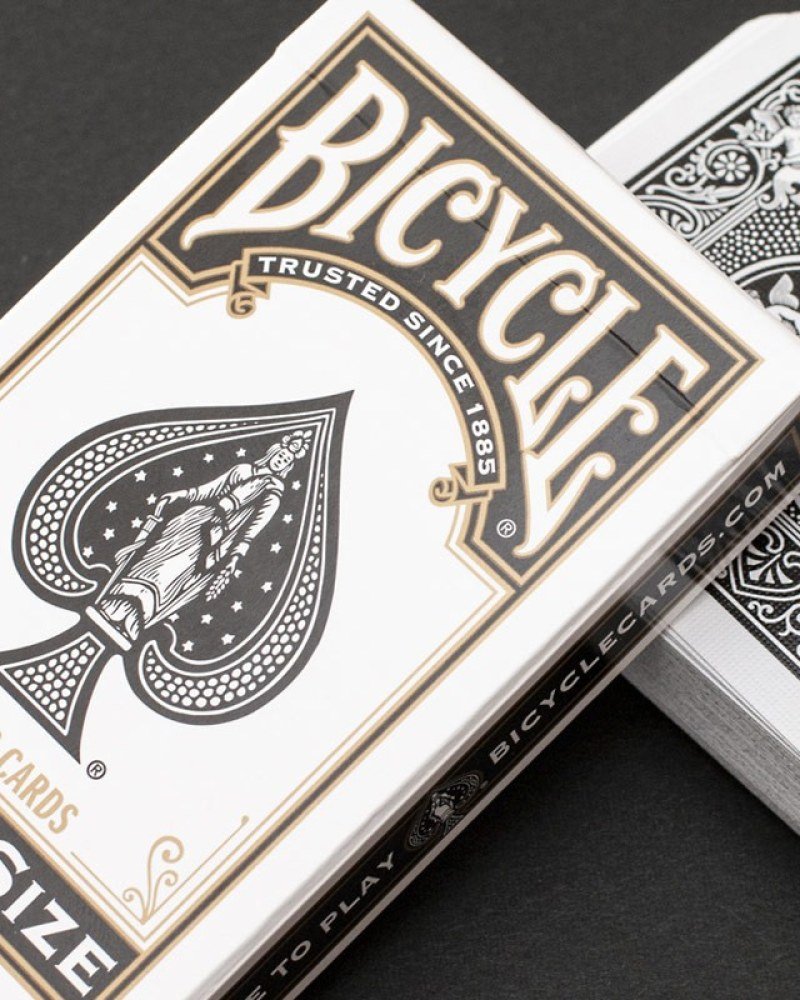


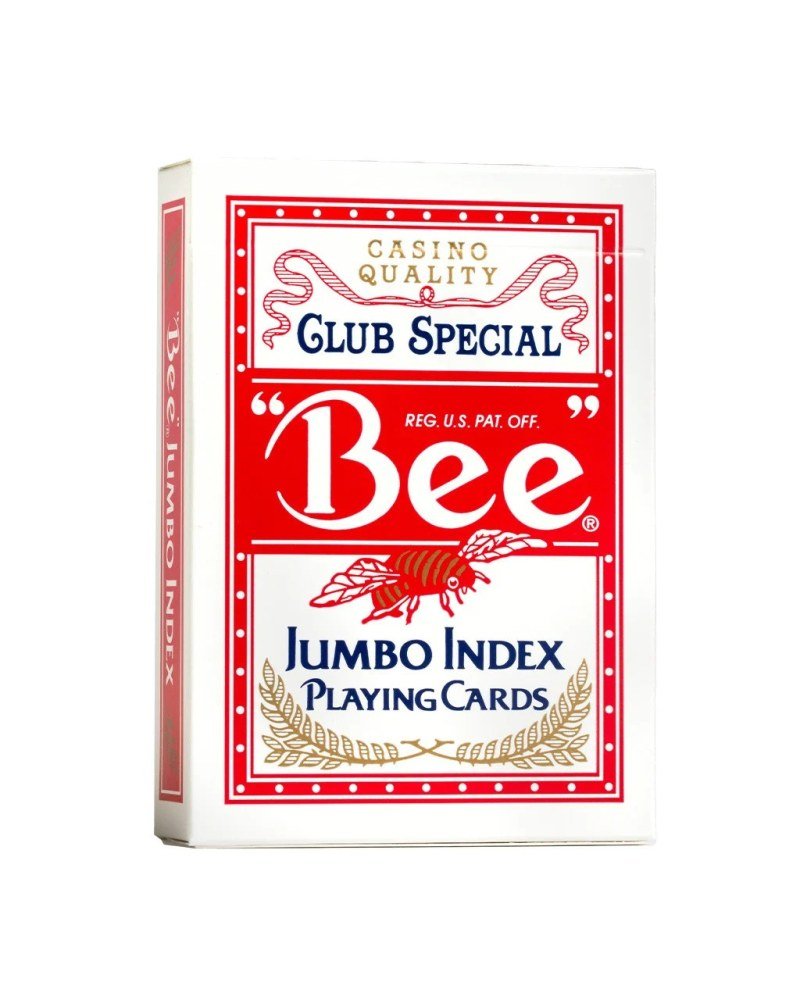
Spanish, French, poker and collector decks, in stock in Madrid.
Buy poker decks →Playing card shop →