

Sevens card game rules: Cinquillo and Pocha (Oh Hell!)
How to play cinquillo, the Spanish Sevens, and pocha, the Spanish Oh Hell!: dealing, bidding, scoring tables, variants and strategy.
In short
Cinquillo and pocha are both played with the 40-card Spanish deck, but they have nothing in common. Cinquillo is the Spanish version of the Sevens card game (Fan Tan): the player holding the five of coins starts, and rows of each suit are built on the table, up and down from the five. The first player to run out of cards wins. Pocha is the Spanish version of Oh Hell!: before each hand is played, every player says how many tricks they will take, and only those who hit the exact number score well.
- Cinquillo: 3 to 6 players, the whole deck is dealt and you must play if you can. You only pass when no card fits.
- Pocha: 3 to 6 players (4 or 5 is ideal). Hands start with one card, go up until the whole deck is dealt and then come back down.
- Pocha scoring: a correct bid scores 10 points plus 5 per trick; a missed bid loses 5 for each trick of difference.
- The pocha dealer bids last and may not make the total of the bids equal the number of tricks, so someone always misses.
Anyone who grew up in Spain probably learned to play cards with one of these two games. Cinquillo is the classic family game for a quiet afternoon: it takes a minute to explain, children understand it and six people can play at once. Pocha belongs more to long evenings among adults, with a sheet of paper for the score and plenty of rivalry, because it makes you judge what your hand is worth and spoil everyone else's bids. In this guide we explain the rules of both step by step, with dealing and scoring tables, the most common variants and how they relate to games from other countries such as Sevens or Oh Hell!
What you need to play
Both games use the 40-card Spanish deck: four suits (coins, cups, swords and clubs, in Spanish oros, copas, espadas and bastos) with ten cards each, from 1 to 7 plus three court cards, the sota or jack (10), the caballo or knight (11) and the king (12). If your deck has 48 or 50 cards, take out the eights, the nines and the jokers. There is more detail on the different deck formats in our guide to the Spanish deck.
For cinquillo you need nothing else. For pocha it helps to have paper and a pen, because the score builds up hand after hand. In both games the deal and the play go to the right, that is counterclockwise, as in most Spanish deck games.
| Cinquillo | Pocha | |
|---|---|---|
| Type of game | Shedding game: placing cards on the table | Trick-taking game with exact bidding |
| Players | 3-6 | 3-6 Best with 4-5 |
| Deck | 40 cards | 40 cards (36 without the twos with 3 or 6 players) |
| Trumps | None | Set by a card turned up in each hand |
| Goal | Be the first to run out of cards | Take exactly the number of tricks you bid |
| Difficulty | Low, suitable for children | Medium, easier with some experience of trick-taking games |
Cinquillo rules: the Spanish Sevens card game
Cinquillo belongs to a family of games known in English as card dominoes, and the name explains it well: just as in dominoes, the cards are chained together on the table and you can only play one that fits what is already there. In Catalonia and the Valencia region it is known as cinquet.
The deal
Shuffle and deal all the cards, one at a time, until none are left. With four players each receives ten cards. With any other number of players the cards do not divide evenly and some players will have one card more than the rest. That is fine: it is a small disadvantage that evens out because the deal rotates from hand to hand.
| Players | Cards per player |
|---|---|
| 3 | 14, 13 and 13 |
| 4 | 10 each |
| 5 | 8 each |
| 6 | 7 for four players and 6 for the other two |
Who starts: the five of coins
The player holding the five of coins starts by placing it face up in the middle of the table. From then on the turn passes to the player on the right. On each turn you may play:
- A five of another suit, which opens a new row.
- The next card up or down in a row already on the table, always in the same suit.
For example, if only the five of coins is on the table, the next player may play the six of coins, the four of coins or any other five. Nothing else.
How the rows grow
Each suit forms its own row. From the five you go up 6, 7, jack, knight and king, and down 4, 3, 2 and ace. Since the deck has no eights or nines, the jack comes straight after the seven: this is the card beginners find hardest to remember. The rows are usually laid out one below the other, with the fives lined up in the middle, so you can see at a glance which cards are playable.
| Suit | 1 | 2 | 3 | 4 | 5 | 6 | 7 | Jack | Knight | King |
|---|---|---|---|---|---|---|---|---|---|---|
| Coins | 3 | 4 | 5 | 6 | 7 | Jack | ||||
| Cups | 4 | 5 | 6 | |||||||
| Swords | 5 | |||||||||
| Clubs |
In that position the playable cards are: the two or the knight of coins, the three or the seven of cups, the four or the six of swords and the five of clubs. Any other card has to wait.
Passing
If you have no card that fits, you pass and the next player goes. The key is the other half of the rule: if you can play, you must. You are not allowed to pass to hold a card back. If you have several playable cards, you choose the one that suits you best, and that is where all the strategy of the game lies.
Who wins
The first player to run out of cards wins the hand. You can play a single hand, but the usual thing is to play several and keep score with points or with chips.
How to score
Cinquillo has no single official rulebook and every household keeps score its own way. These are the most common methods:
| System | How it works | End of the game |
|---|---|---|
| Points | The winner of the hand scores 5 points plus 1 for each card the others still hold | The first to reach 50 (short game) or 100 points (long game) wins |
| Chips | Each player puts one chip in the pot before the deal and another every time they pass. The winner takes the pot and collects one chip from each opponent for every card left in their hand | Whenever agreed, or when someone runs out of chips |
| Penalty | The losers write down the cards they have left as points against them | The first to reach an agreed limit loses |
The chip system comes from the international version of the game, which was played for money or chips and where passing costs you. That adds a pressure the points version does not have: every time you have no move, you pay.
Basic cinquillo strategy
Cinquillo has more strategy than it seems, because every card you play opens the way for other cards, yours or your opponents'. The ideas that work best:
- Hold on to the cards that block. If you have the six of swords and also the seven and the king, keeping the six stops anyone from playing a high sword. If you have nothing behind it, holding it does you no good.
- Open the suits where you have many cards. If you hold five cups, you want the cups row to move forward. If you hold only one, delaying it hurts the others.
- Fives are a weapon. As long as you hold a five, that whole suit is closed to everyone. Playing it early or late is the most important decision in each hand.
- Leave the end cards for last. Aces and kings block nobody, because nothing comes after them. If you have other options, play those first and keep the end cards until you have no choice.
- Watch who passes. If a player passes just when the clubs row is open, you know they have neither the four nor the six of clubs.
Cinquillo variants
Law of the five
Before the game starts, all four fives are placed on the table. Every suit is open from the beginning and blocking with the fives disappears.
- Faster games
- Less blocking strategy
Free pass
You may pass even if you have a playable card. This changes the game a lot, because you can hold a key card for as long as you like.
- More tactical
- Often combined with a chip per pass
Timed
Each player has a limited time to choose a card, usually measured with an hourglass. If time runs out, they lose their turn.
- Fast pace
- Good with children
Cinquillo with a stock
2-3playersWith few players the whole deck is not dealt: each player receives a fixed number of cards and the rest stay face down as a stock.
- A player who cannot play draws
- If the drawn card fits, it is played
More detail
The number of starting cards varies from house to house: seven or ten per player are the amounts most often mentioned.
Los seises (the sixes)
The same game, but the rows start from the six instead of the five. The player holding the six of coins starts.
- Sometimes played with 48 cards
- Usually played with chips or coins
More detail
In the Catalan version with 48 cards, a player who cannot play puts a coin in the pot and the first to run out of cards takes all of it. With the 48-card deck, the rows go up from the six to the king (12), passing through the eight and the nine.
Cinquillo in other countries: Sevens, Fan Tan and Parliament
Cinquillo is the Spanish version of a game known across half the world. The main difference is the starting card: with the 52-card French-suited deck, the rows start from the seven, which is the middle card of each suit, and that is why in English it is called Sevens. In the 40-card Spanish deck the middle is lower down, and the five plays that role.
| Name | Where | Difference from cinquillo |
|---|---|---|
| Sevens / Parliament | United Kingdom | 52-card deck, rows from the seven. Often the seven of hearts or of diamonds starts |
| Fan Tan | United States | 52-card deck and a pot of chips: you pay when you pass and the winner collects for each card left |
| Domino | France | In some versions the first player chooses the number all the rows start from |
| Shichi Narabe | Japan | Its name means "sevens in a row" |
| Sjuan | Sweden | Rows from the seven, as in Sevens |
This means that if you have a poker deck rather than a Spanish one, you can play Sevens with the same rules: only the starting number changes. We explain the suits of that deck (spades, hearts, diamonds and clubs) in the article on poker deck suits.
Did you know decks like these exist?
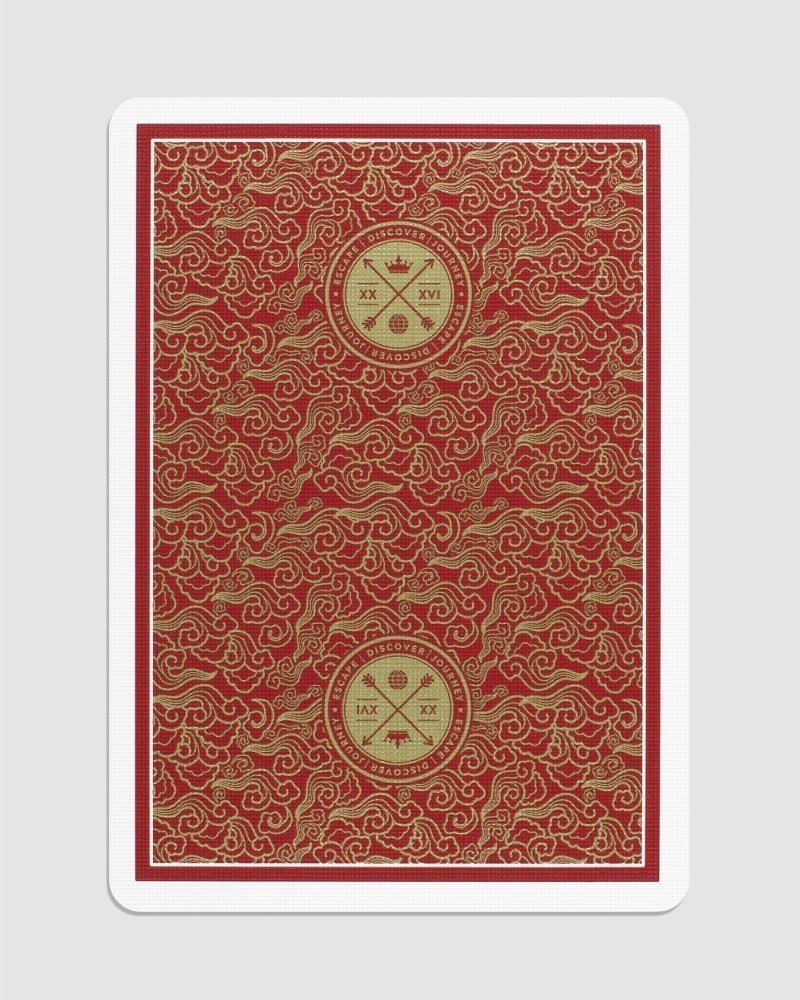
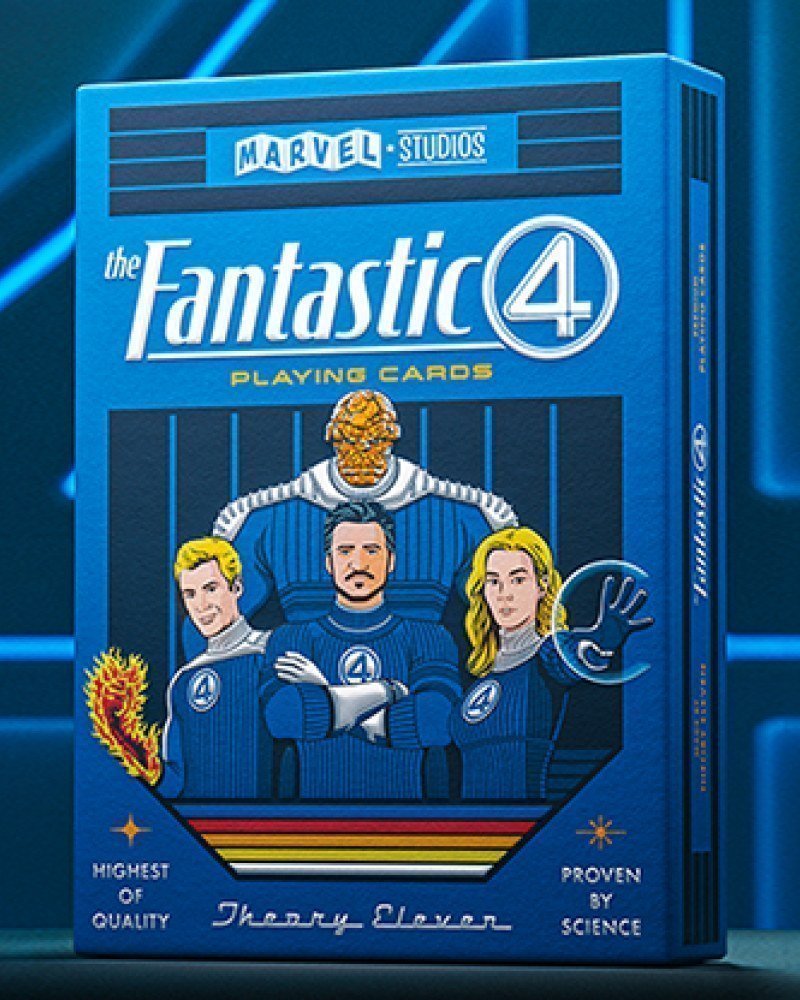
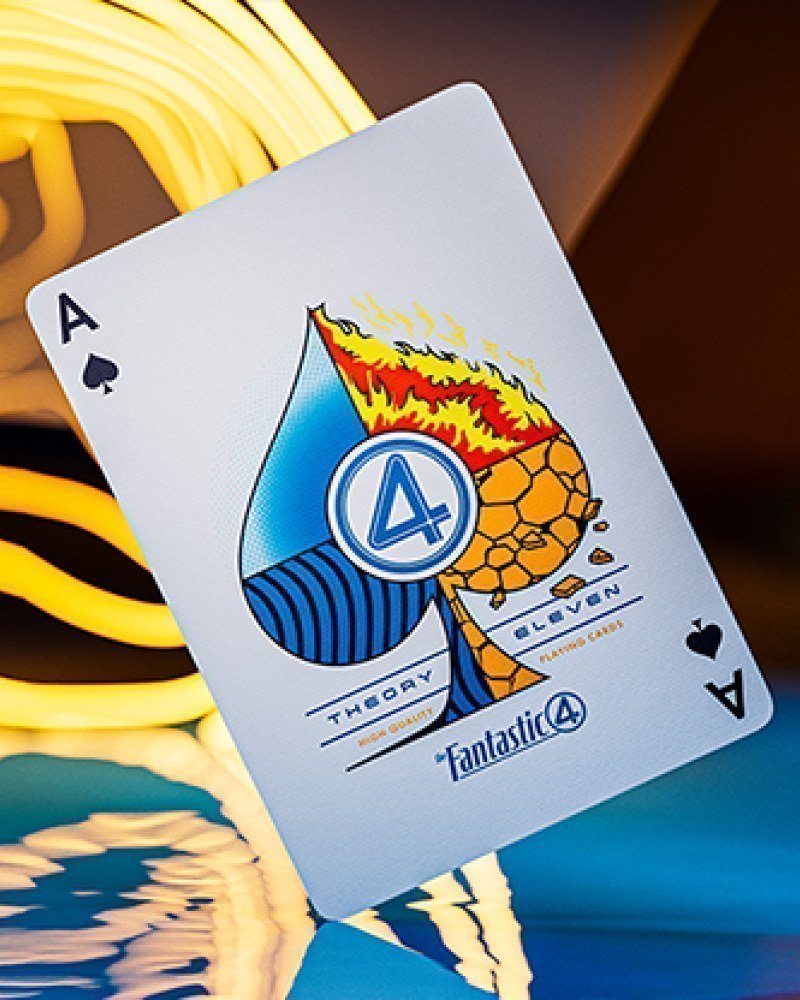
At heart, every deck has the same cards. What changes is everything else: the design, the finish, metallic inks or gilded edges. Take a look at our catalogue and bring your own style to the card table.
Browse our playing cards →




Pocha rules: the Spanish Oh Hell! card game
Pocha is a trick-taking game with trumps in which the winner is not the player who takes the most tricks, but the one who best predicts how many they will take. It is played with the following and trumping rules of tute, so if you know tute you have already learned half of pocha. It is the Spanish version of a game of English-speaking origin: Oh Hell!, which we cover further down. In Latin America the equivalent version is called podrida, and in Mexico it is also known as the game of tricks (juego de las bazas).
Card ranking
In pocha the cards carry no point values: all that matters is who wins each trick. The order, from highest to lowest, is the same as in tute or brisca:
| 1st | 2nd | 3rd | 4th | 5th | 6th | 7th | 8th | 9th | 10th |
|---|---|---|---|---|---|---|---|---|---|
| Ace | Three | King | Knight | Jack | Seven | Six | Five | Four | Two |
Any card of the trump suit beats any card of the other suits, even the two of trumps against the ace of another suit.
Players and cards
Everyone plays for themselves. Four or five players is most common. With three or six, the twos are removed so that the deck divides evenly.
| Players | Cards in play | Maximum per player |
|---|---|---|
| 3 | 36 (no twos) | 12 |
| 4 | 40 | 10 |
| 5 | 40 | 8 |
| 6 | 36 (no twos) | 6 |
The rounds: up and down the river
The most distinctive feature of pocha is that a different number of cards is dealt in each hand. The most common pattern is this:
- In the first hand each player is dealt one card.
- In each following hand one more card is dealt, until the whole deck is dealt.
- With the full deck, as many hands are played as there are players, so that everyone deals once with the maximum.
- Then you go down one card at a time until you are back to one card per player.
| Stage | Cards per player | Hands |
|---|---|---|
| Going up | 1, 2, 3, 4, 5, 6, 7, 8, 9 | 9 |
| Full deck | 10, 10, 10, 10 | 4 |
| Going down | 9, 8, 7, 6, 5, 4, 3, 2, 1 | 9 |
| Total | 22 hands |
It is a long game. That is why many tables play shorter versions: only the way up, or only the full-deck hands. The number of hands is always agreed before starting.
Dealing and trumps
The first dealer is chosen by lot. The player on their left cuts and the dealer deals the cards one at a time, to the right. The player sitting to the dealer's right is the mano (the lead player): they bid first and lead to the first trick. With each new hand the deal passes to the next player.
Once the cards are dealt, the dealer turns the next card of the pack face up: its suit is trumps for that hand. When the whole deck is dealt there is no card left to turn, so the dealer shows their last card before keeping it, and that sets trumps.
Bidding
Before any card is played, each player looks at their hand and says out loud how many tricks they will take. The mano starts and the turn goes round to the dealer. You may bid zero. Once made, a bid cannot be changed, and it is best to write it on the score sheet so nobody forgets it.
The dealer bids last and has one restriction: they may not say a number that makes the total of all bids equal the number of tricks in the hand. If five tricks are in play and the others have bid 1, 2 and 0, the dealer may say anything except 2. This way it is impossible for everyone to succeed. The disadvantage rotates, because a different player deals each hand.
How each trick is played
The mano leads any card they like. The others play in turn following the obligations of tute:
- Follow suit: if you have cards of the suit led, you must play one of them.
- Head the trick: on top of that, if you can beat the highest card of that suit on the table, you must do so.
- Trump: if you have no cards of the suit led, you must play a trump. And if someone has already played a trump, you must play a higher one if you have it.
- If you cannot win the trick (you have none of the suit, no trumps, or your trump is lower than the one already played), you play any card you like.
- Trump lead: if someone leads a trump, everyone who has trumps must play one, and beat it if they can.
The highest trump wins the trick. If no trump has been played, the highest card of the suit led wins. Whoever wins the trick collects it and leads to the next.
These obligations are what varies most from table to table. Some people play without the obligation to head the trick, or allow discarding even when you hold a trump. Make it clear before dealing, because they change bidding calculations a lot: with the obligation to head the trick, a high card may be forced to win a trick you did not want. Breaking the rules of play is a renuncio (a revoke), and the penalty is also agreed at the start.
Scoring
At the end of the hand each player's result is written down:
| Result | Points |
|---|---|
| You make your bid | +10 plus +5 for each trick taken |
| You miss your bid (over or under) | −5 for each trick of difference |
| Player | Bid | Tricks taken | Calculation | Points |
|---|---|---|---|---|
| Ana | 0 | 0 | 10 | +10 |
| Luis | 3 | 3 | 10 + 3 × 5 | +25 |
| Marta | 1 | 2 | 1 trick of difference × 5 | −5 |
| Pablo (dealer) | 3 | 1 | 2 tricks of difference × 5 | −10 |
In the example the bids add up to 7 with 6 tricks in play: Pablo, who was dealing, could not say 2. Points accumulate from hand to hand and at the end the player with the most wins. If there is a tie, extra one-card hands are played until someone breaks it.
Note that making a zero bid already scores 10 points. That is why a weak hand is not a bad hand in pocha: what counts is getting the number right, not holding good cards.
Pocha variants
There are many variants and they change from one group of friends to another. These are the most widespread, and they should always be agreed before the first hand:
Hand of coins
One or more hands in which trumps are always coins, without turning a card.
- Scores double at some tables
More detail
In some areas the hands with coins as trumps count double for everyone, and in others the cups hands are multiplied too. Most commonly all hands are worth the same.
No trumps
A hand with no trump suit: the highest card of the suit led always wins.
- Harder to calculate
- Aces win if you hold the suit
Auction
No card is turned. Players bid without knowing trumps and whoever makes the highest bid chooses the suit.
- For experienced players
Hacer la pocha (making the pocha)
Bidding that you will take every trick in the hand and doing it. Some tables reward it above the normal score.
- Bonus varies widely
- Only in hands with many cards
More detail
There is no fixed amount: in some places the score for the hand is doubled and in others a flat 100 points is awarded. A minimum number of cards or players is usually required for it to count.
Short game
Only the way up is played, until the hand in which the whole deck is dealt, or only the hands with all the cards.
- Shorter games
- Agreed before starting
Basic pocha strategy
- Count your sure tricks. The ace of trumps always wins. The three of trumps only loses to the ace, and the aces of other suits win if nobody trumps. Everything else is likely, not certain.
- Low trumps win too. If you have no cards in a suit (what Spanish players call a fallo, a void), any low trump can take tricks in that suit.
- In hands with few cards, think zero. With one or two cards per player, bidding zero and making it is the easiest thing to achieve.
- Get rid of dangerous cards in time. If you have already made your tricks, shed your high cards when another player is sure to win with a trump.
- Play against the other bids. If an opponent needs one more trick to make their bid, try to stop them getting it. If they already have what they wanted, try to give them another. That is what makes pocha so competitive.
The pocha family: Oh Hell!, Wizard and Up and Down the River
Pocha is the Spanish adaptation of a British game first documented in the 1930s, in London and New York. In English it goes by a huge list of names: Oh Hell!, Oh Well!, Blackout, Contract Whist, Nomination Whist or Up and Down the River. All versions share the central idea: bidding the exact number of tricks.
Oh Hell!
52cardsThe British and American version. French-suited deck with the ace as the highest card and the poker order of court cards.
- Also has the dealer rule
- Must follow suit, need not always trump
More detail
The most widespread Oh Hell scoring is simpler than in pocha: one point for each trick taken and a 10-point bonus for a correct bid. In the Blackout variant only correct bids score, with 10 plus the number of tricks bid. The dealer restriction, called the hook in English, is the same as in pocha, although some tables drop it.
Up and Down the River
The name the game goes by in Australia and New Zealand. It describes the sequence of hands exactly: you go down from ten cards to one and back up again.
- 4 to 8 players
- 19 hands (10-1-10)
Wizard
60cardsA commercial version created in 1984 by the Canadian Ken Fisher. It adds to the 52-card deck four wizards, which always win, and four jesters, which always lose.
- 3 to 6 players
- Based on Oh Hell!
Podrida
The Latin American name. It is played with the Spanish deck or the 52-card French-suited deck and, like pocha, forces you to trump when you cannot follow suit.
- Argentina and Mexico
- Same following and trumping rules
The difference you notice most when moving from Oh Hell! to pocha lies in the rules of play. In the English game you only have to follow suit; in pocha, as in tute, you must also head the trick and trump. That makes a pocha hand easier to read, because you know that an opponent who does not trump has no trumps either. If you like trick-taking games with a standard deck, you may also enjoy Hearts, where the aim is to avoid taking certain cards.
More games for the same deck
Dozens of games are played with the 40-card deck, from mus to escoba. You will find them sorted by type in our guide.
See Spanish deck gamesHow much does a deck of cards cost?
From €5 to over €100. The 52 cards and the rules stay the same; this is what changes.
 To play€5.95 |  Designer€12.95 |  Premium€17.99 |  Collectible€34.94 | |
|---|---|---|---|---|
| Typical price | €5-9 | €9-15 | €15-30 | €30 or more |
| What sets it apart | Classic casino design | Artist illustration on back and faces | Special inks, embossing and foil on the box | Limited print runs and gilded edges |
| Who it is for | Games at home | Playing with something beautiful | Gifts or cardistry | Collecting and display |
| Example | Tally-Ho Fan Azul | theory11 Medallion | The Sandwich Series (Luncheon Meat) | Kings Wild LOTR Two Towers Gilded |
| See decks | See decks | See decks | See decks |
Frequently asked questions
Who starts in cinquillo?
The player holding the five of coins starts by placing it in the middle of the table. The turn then passes to the player on the right.
Can you pass in cinquillo if you have cards?
Under the standard rules, no: if you have a card that fits, you must play it. Only in the free pass variant may you pass whenever you want.
How many people can play cinquillo?
Three to six. With four players each receives ten cards; with any other number, some have one card more. For two players the variant with a stock to draw from is used.
How do you score pocha (and Oh Hell)?
In pocha, a player who makes their bid scores 10 points plus 5 for each trick. A player who misses loses 5 points for each trick of difference, whether they go over or fall short.
Why can't the dealer bid any number in pocha?
Because if the total of the bids equalled the number of tricks, everyone could succeed. The rule ensures that at least one player always misses, and since the deal rotates, the disadvantage is shared by everyone.
How many cards are dealt in pocha?
It depends on the hand. You start with one card per player, go up one at a time until the whole deck is dealt, play as many full hands as there are players and then come back down to one.
Are pocha and podrida the same game?
They are the same game under different names. Pocha is the name most used in Spain and podrida in Latin America, where it is also often played with the 52-card French-suited deck.
Can you play cinquillo with a poker deck?
Yes. With the French-suited deck the game is called Sevens or Fan Tan, and the rows start from the seven instead of the five, because it is the middle card of a 13-card suit.
To play either game all you need is a deck that will last through many hands and, if you choose the international version, an ordinary poker deck. You can browse our selection of playing cards or, if you are curious about the origin of the coins, cups, swords and clubs suits, read the history of the Spanish deck.
Want more guides like this one? Sign up for the newsletter.
Keep exploring
- Tute rules: declarations, trumping and variants
- Brisca rules
- Chinchón rules with scoring and variants
- Spanish deck games
- Card games: full list by type
Playing Cards

Gemini Casino Phthalo Green – Playing Cards

Icon Black – Playing Cards

Premier Edition Restricted Red – Playing Cards

Premier Edition Jet Black Private Reserve – Playing Cards

Card Mafia One Piece Robin – Playing Cards

Lounge Edition Terminal Turquoise – Playing Cards

Lounge Edition Taxiway Yellow – Playing Cards

Cardistry Fanning Yellow Edition – Playing Cards
Contact our team for any clarification about this document. Contact us


