
Solitaire Card Games: 19 Patience Games to Play Alone
Solitaire card games explained: Klondike, FreeCell, Spider, Pyramid, Golf, Clock patience and more, with layouts, key rules and real win rates.
In short
Card games to play alone are called solitaire (in Britain and much of Europe, patience). With a standard 52-card deck the most played are Klondike (classic solitaire, draw one or draw three), FreeCell, Pyramid, Golf and Clock patience; with two decks, Spider and Forty Thieves. With a 40 or 48-card Spanish deck you can play adapted versions of several of them. Below are 19 solitaire card games explained, with the layout, the key rule, the difficulty and, where a serious calculation exists, how many games can be won.
- To start with: Klondike draw one, Golf or Pyramid.
- If you want to think: FreeCell, Beleaguered Castle or Calculation, where almost everything is up to you.
- If you just want to pass the time: Clock, which plays itself and comes out once in 13 games.
All solitaire games share one idea: you shuffle, lay the cards out in a fixed pattern and move them according to a set of rules until you reach a goal. What changes from one game to the next is that goal. In most of them you have to sort the deck into piles by suit, from ace to king. In others you have to eliminate cards in pairs or by adding up, as in Pyramid. In a few you have to gather the whole deck into a single pile, as in Accordion, and in others the aim is to score by placing cards well, as in Poker Squares.
The second big difference is how much information you have. In open games, such as FreeCell, every card is face up from the start and the game is a problem you can reason through completely. In closed games, such as Klondike, there are face-down cards and a stock you draw from, so you are playing with probabilities. That is why some solitaire games can almost always be won and others depend mainly on the shuffle. This guide is organised by family, and at the end there is a table with all of them to compare. If you are looking for a game to play with other people, see our guides to two player card games, three player card games and card games for 4 or more.
Basic solitaire vocabulary
Solitaire rules are much easier to follow once you know six or seven words. They are the same in almost every game, although each book or app words them slightly differently.
| Term | Other names | What it is |
|---|---|---|
| Tableau | Layout, columns, piles | The rows or columns of cards dealt at the start, on which cards are moved. It is the working area. |
| Foundations | Home cells, bases | The piles where cards are placed in order, usually one per suit from ace to king. Filling them is usually the goal. |
| Stock | Talon, draw pile | The cards left over after the deal, face down, which you draw from during the game. |
| Waste | Discard pile, waste pile | Where drawn cards that cannot be played land face up. Normally only the top one can be used. |
| Reserve | Reserve pile | A group of cards set aside at the start and used little by little, like the 13 cards in Canfield. |
| Free cells | Cells, holding spaces | Spaces where you can park a single card. They are FreeCell's trademark. |
| Space | Empty column, gap | A column that has run out of cards. Each game says what can go there: any card, only a king, or nothing. |
| Redeal | Pass, round | Using the waste as a new stock, or gathering up and redealing the columns. Many games limit how many redeals you get. |
Two more phrases come up all the time: building down means placing a card one rank lower on another (an 8 on a 9), and alternating colours means red on black and black on red. When a rule says in suit, the card you place must be the same suit as the one beneath it.
Klondike and its family: columns, face-down cards and a stock
This is the family most people think of as "solitaire". They all have columns with face-down cards that you need to turn over, you build down on the columns and up on the foundations, and the challenge is to free buried cards in time.
Klondike (classic solitaire)
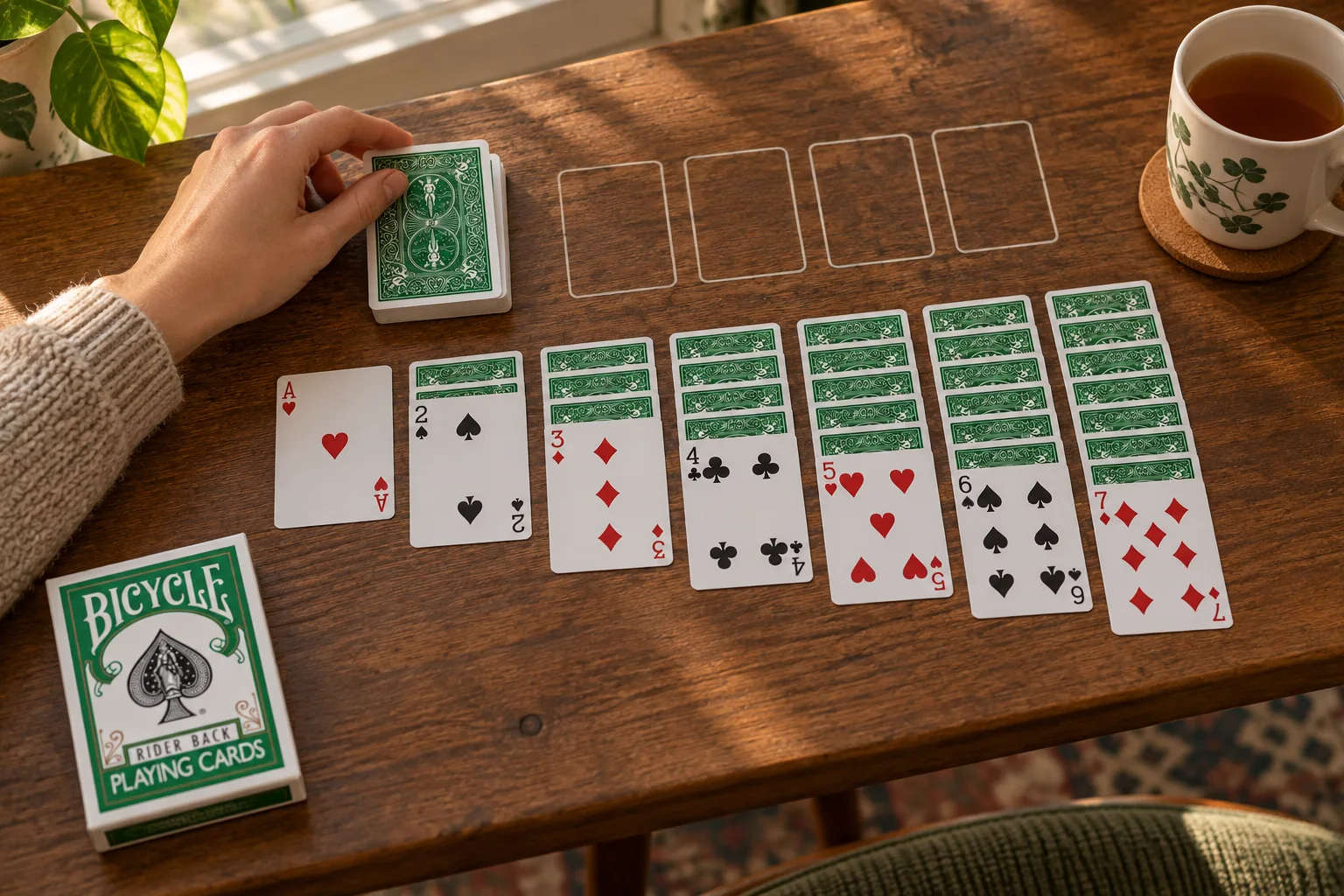
7columnsSolitaire in its best-known form. Seven columns with one face-up card on top of each, a stock, and four foundations to fill from ace to king. Microsoft included it in Windows from 1990, which made it the best-known solitaire in the world.
- One 52-card deck
- 10-15 min
- Medium
- About 4 in 5 deals can be solved
Layout, goal and key rule
Layout: 28 cards are dealt into seven columns, from one to seven cards, with only the top card face up. The remaining 24 form the stock. Goal: move all 52 cards to the four foundations, one per suit, from ace to king. Key rule: on the columns you build down in alternating colours (a black 9 on a red 10), and a space only takes a king or a sequence headed by a king.
The big decision is draw one or draw three. With draw one you see the whole stock on every pass. With draw three (the "three-card solitaire" so many people search for) you can only play the top card of each three, so many cards stay hidden just when you need them and the game gets much harder. Each household also decides how many passes through the stock are allowed: unlimited, three or just one.
How many come out: nobody has worked out the exact figure with face-down cards, a problem the mathematician Persi Diaconis once called an embarrassment to applied probability. What is known is the ceiling: if every card were known from the start, a program solves around 82 % of deals in the draw-three version. Playing for real, without seeing the cards, the actual percentage is a good deal lower. You will find step-by-step rules, scoring and strategy in our guide to Klondike solitaire rules.
Yukon
0stockA Klondike without a stock: every card is dealt into the columns from the start. In return, you can move any group of face-up cards even if they are not in sequence, which gives you many more options.
- One 52-card deck
- 10-20 min
- Medium
- No reliable figure
Layout, goal and key rule
Layout: deal as in Klondike (seven columns of one to seven cards, only the top one face up), then add the remaining 24 cards face up, four on each column except the first. This gives columns of 1, 6, 7, 8, 9, 10 and 11 cards, with the top five visible in all except the first. Goal: fill the four foundations from ace to king.
Key rule: you build down in alternating colours, but you can move any face-up card together with everything on top of it, in sequence or not. The only thing that has to fit is the card you move and the card that receives it. Spaces only take kings. There is a harder variant, Russian Solitaire, in which you build in suit instead of alternating colours.
Canfield (Demon)
13reserveA quick, hard game with a 13-card reserve to empty and foundations that do not start at the ace. Canfield is its American name; in the UK it is known as Demon.
- One 52-card deck
- 5-10 min
- Hard
- 71 % with all cards known
Layout, goal and key rule
Layout: 13 cards are dealt into a reserve pile with the top card face up, one card to the first foundation and one card to each of the four columns. The rest is the stock. Goal: complete the four foundations.
Key rule: the card dealt to the first foundation sets the starting rank for all of them (if it is a 7, all four foundations start at 7 and go 8, 9... king, ace, 2 up to 6). The columns are built down in alternating colours, also round the corner (a king can go on an ace). You draw three at a time, and spaces in the columns are filled from the reserve. You can only move a whole column, not part of one.
How many come out: with all cards known, a program wins around 71 % of deals; playing blind, with the reserve face down and draw three, you win far fewer.
Scorpion
49on the tableA cross between Yukon and Spider with a single deck: you move unordered groups as in Yukon, but the goal is to build four complete sequences from king to ace in the same suit within the columns.
- One 52-card deck
- 15-20 min
- Hard
- No reliable figure
Layout, goal and key rule
Layout: 49 cards in seven columns of seven. In the first four columns the bottom three cards are face down; the other three columns are entirely face up. The three spare cards are kept aside. Goal: build four sequences from king to ace, each in one suit.
Key rule: you build down in suit and can move any face-up card together with all the cards on top of it. Spaces only take a king (or a group headed by a king). When there are no moves left, the three spare cards are placed on the first three columns. The hard part is that the face-down cards in the first columns tend to hide exactly what you need.
Solitaire games with every card in view
These games have no face-down cards: from the first moment you can see where every card is, so the game is a puzzle you can think through from start to finish. They are the favourites of anyone who wants to win by how they play rather than by how the cards fell.
FreeCell
4cellsOne of the most popular computer solitaire games. Eight face-up columns and four free cells to park single cards. Almost every deal can be solved, so losing is usually the player's fault.
- One 52-card deck
- 5-15 min
- Medium
- Over 99.99 % can be solved
Layout, goal and key rule
Layout: all 52 cards are dealt face up into eight columns, four of seven cards and four of six. Above them are four empty free cells and four foundations. Goal: move every card to the foundations, by suit and from ace to king.
Key rule: on the columns you build down in alternating colours and move one card at a time. Each cell holds a single card, and a space takes any card. In practice you can move several cards in sequence at once if you have enough cells or spaces to do it card by card. The skill lies in not filling the cells too early.
Origin: it descends from Baker's Game, which Martin Gardner described in 1968 in Scientific American and which built in suit. Paul Alfille changed that rule to alternating colours and in 1978 programmed the first version for the PLATO educational system. It later came to Windows and became famous.
How many come out: of the 32,000 numbered deals in Microsoft's version, all can be solved except one, deal number 11982. In studies of billions of random deals, only about one in 84,000 turns out to be impossible.
Beleaguered Castle
8rowsThe four aces go to the foundations before you start and the rest of the deck is dealt face up in eight rows on either side. Once dealt, there is no stock and no luck: everything depends on planning.
- One 52-card deck
- 10-20 min
- Hard
- 68 % with perfect play
Layout, goal and key rule
Layout: take out the four aces and place them in a column in the centre as foundations. The remaining 48 cards are dealt face up into eight rows of six, four to the left and four to the right of the aces. Goal: build everything onto the foundations by suit up to the king.
Key rule: only the card at the outer end of each row can be moved, and you build down regardless of suit. An empty row takes any card. Since nothing is hidden, a program playing perfectly wins 68 % of deals: the rest cannot be solved however hard you think. Its best-known relatives are Streets and Alleys, where the aces are not taken out first, and Citadel.
Baker's Dozen
13columnsThirteen columns of four face-up cards, hence the name (a baker's dozen is thirteen). It is one of the friendliest ways into open solitaire games.
- One 52-card deck
- 10-15 min
- Easy to medium
- No reliable figure
Layout, goal and key rule
Layout: 52 cards in 13 columns of four, face up and overlapping so that all can be seen. Before you start, any king that is not at the bottom of its column is moved to the bottom. Goal: fill the four foundations from ace to king.
Key rule: only the top card of each column can be moved, you build down regardless of suit and an empty column can never be filled again. The first priority is to free the aces; the second, not to bury low cards under higher ones of the same suit.
La Belle Lucie
18fansA 19th-century classic with the cards spread in fans of three. It looks lovely laid out and is quite hard to win: most games get stuck.
- One 52-card deck
- 10-15 min
- Hard
- No reliable figure
Layout, goal and key rule
Layout: 17 fans of three cards are dealt face up, plus a single card that acts as the 18th fan. Goal: move the cards to the foundations by suit, from ace to king.
Key rule: only the top card of each fan can be moved, one at a time, and you build down in suit. An empty fan is never refilled, not even with a king. When there are no more moves, the fans are gathered up, shuffled and dealt again in threes, up to two times. A low card buried under a higher one of its own suit blocks the fan for good, which is why it pays to watch the kings: at the bottom of a fan they do no harm; on top of other cards of their suit, they do. It is also known as Lovely Lucy, The Fan or Midnight Oil.
Pairing and discarding solitaire games
Here the aim is not to sort the deck but to make it disappear: in pairs that add up to a number, by consecutive cards, or by matching suit or rank. These games are quick, easy to learn and very good for a short session.
Pyramid
13the sumYou build a pyramid of 28 cards and remove pairs that add up to 13. The upside is that it teaches adding up without you noticing; the downside is that with strict rules it hardly ever comes out.
- One 52-card deck
- 5-10 min
- Easy to learn
- From 7 % to 83 % depending on the rules
Layout, goal and key rule
Layout: 28 cards in seven overlapping rows, from one to seven cards, forming a face-up pyramid. The remaining 24 form the stock. Goal: remove every card in the pyramid (in the strict version, the stock as well).
Key rule: the ace counts 1, the jack 11, the queen 12 and the king 13; the rest count their number. You remove pairs of exposed cards (with no other card on top) that add up to 13, and kings are removed on their own. Stock cards are drawn one at a time and can be paired with an exposed card in the pyramid or with the top card of the waste. The number of passes through the stock varies from house to house.
How many come out: in simulations of a hundred million deals, with a single pass through the stock and all 52 cards to be removed, you win around 7 % of games. If clearing the pyramid is enough and you can go through the stock as often as you like, you win more than 80 %. So it is worth agreeing the rules before comparing results.
Golf
35on the tableSeven columns of five face-up cards that you clear one at a time if they are one rank higher or lower than the last card played. It is scored like golf: the fewer cards left, the better.
- One 52-card deck
- 3-5 min per hole
- Easy
- 45 % with all cards known
Layout, goal and key rule
Layout: 35 cards face up in seven columns of five, one face-up card beside them to start the foundation pile, and 16 cards in the stock. Goal: move every card from the columns onto that pile.
Key rule: the bottom card of any column can go onto the pile if it is one rank higher or lower than the top card of the pile, regardless of suit. There is no turning the corner from ace to king, and nothing can be played on a king, so a king on the pile breaks the chain. When you are stuck, you turn a card from the stock onto the pile. There is no second pass.
Scoring: each card left in the columns is one point; if you clear them all, each card left in the stock takes one off. A full round is nine deals, like nine holes. With all cards known, a program clears the table in 45 % of deals.
TriPeaks
3peaksThe best-known variant of Golf, very popular on phones. The cards form three peaks instead of columns, and the upper cards stay face down until they are uncovered.
- One 52-card deck
- 3-5 min
- Easy
- No reliable figure
Layout, goal and key rule
Layout: 28 cards in three overlapping pyramids: 18 face down and a bottom row of ten face up. The remaining 24 are the stock, and the first is turned up to start the pile. Goal: clear all three peaks.
Key rule: as in Golf, an exposed card goes onto the pile if it is one rank higher or lower than the top card, whatever the suit. When a face-down card has nothing left on top of it, it is turned over. If there is no move, you draw from the stock. The skill is in choosing which branch to follow to chain together as many cards as possible.
Monte Carlo
25cardsA five-by-five grid where you remove touching pairs of the same rank. Very simple and ideal for children who already recognise the cards.
- One 52-card deck (or 40 and 48)
- 5-10 min
- Easy
- No reliable figure
Layout, goal and key rule
Layout: 25 cards face up in five rows of five; the rest is the stock. Goal: discard the whole deck in pairs.
Key rule: you remove two cards of the same rank that touch horizontally, vertically or diagonally. Then you "close up" the remaining cards, shifting them towards the top left corner to fill the gaps in reading order, and top up the grid from the stock until it is back to 25. There is some strategy: sometimes it is better not to remove a pair so that, after closing up, it ends up next to another. It is also known as Weddings.
Aces Up
4pilesFour piles; whenever two cards of the same suit show, the lower one is discarded, and you win if only the four aces are left at the end. It takes two minutes to play and you lose almost every time.
- One 52-card deck
- 2-3 min
- Easy
- About 3 in 100
Layout, goal and key rule
Layout: four cards face up in a row; the rest in the stock. Goal: discard the 48 cards that are not aces.
Key rule: if two or more of the top cards of the four piles are the same suit, discard all but the highest (the ace is high). When a pile is empty, you can move the top card of another pile into it. If there is nothing to do, deal four more cards, one on each pile. Played normally you win about one game in 35; a program that analyses every move reaches 11 %. It is also known as Idiot's Delight.
Accordion
1final pileThe whole deck in a row, and you stack cards onto their neighbour or onto the card three places to the left if they match in suit or rank. The goal is to end up with a single pile.
- One 52-card deck (any deck works)
- 10-15 min
- Very hard
- 1 in 100 when played as you deal
Layout, goal and key rule
Layout: deal the cards face up in a row from left to right, and you can stop dealing at any point to make moves. Goal: gather all 52 cards into a single pile.
Key rule: a card (or a pile, which moves as a whole with its top card) can go onto the card immediately to its left or onto the card three places to the left, if they match in suit or rank. In the example, the 5 of diamonds can go onto the 2 of diamonds (neighbour, same suit) or onto the 5 of clubs (three places left, same rank), but not onto the king. You are never forced to move.
How many come out: the classic handbooks say that played as you deal it comes out roughly once in a hundred games. If you deal the whole row first and plan with everything in view, the picture changes completely: in simulations of millions of deals, a program has found a solution for practically all of them.
Did you know decks like these exist?
At heart, every deck has the same cards. What changes is everything else: the design, the finish, metallic inks or gilded edges. Take a look at our catalogue and bring your own style to the card table.
Browse our playing cards →




Solitaire games of pure luck and of calculation
Two extremes. Clock plays itself, with no decisions at all, and is fine for passing the time or teaching a child. Calculation is the opposite: there is hardly any luck in how it is played, and every card makes you think about where to put it.
Clock patience
1/13comes outThirteen piles laid out like the hours on a clock face, with the kings in the centre. There is nothing to decide: you keep moving cards until everything is turned up or the fourth king appears too early.
- One 52-card deck
- 5 min
- None (pure luck)
- Exactly 1 in 13
Layout, goal and key rule
Layout: deal 13 piles of four cards face down: twelve in a circle, like the hours, and one in the centre. The ace is one o'clock, the jack eleven and the queen twelve; the kings go in the centre. Goal: turn every card face up.
Key rule: turn over the top card of the centre pile and place it face up under the pile for its hour; then take the top card of that pile and repeat. If a king turns up, it goes under the centre pile. You lose if the fourth king appears while there are still face-down cards on the hours.
How many come out: since everything is decided as soon as you shuffle, the chance of winning is exactly 1 in 13 (7.7 %). Simulations of billions of games confirm it. It is also known as Sundial.
Calculation
4foundationsFour foundations that go up in ones, twos, threes and fours, regardless of suit. You play one card at a time, and the skill lies in placing well the cards you cannot use yet.
- One 52-card deck
- 10-15 min
- Hard
- No reliable figure
Layout, goal and key rule
Layout: take out an ace, a 2, a 3 and a 4 of any suit and lay them in a row as foundations. Below them leave room for four waste piles. Goal: move all 52 cards to the foundations until all four end on a king.
| Foundation | Goes up in | Sequence |
|---|---|---|
| Ace | Ones | A 2 3 4 5 6 7 8 9 10 J Q K |
| 2 | Twos | 2 4 6 8 10 Q A 3 5 7 9 J K |
| 3 | Threes | 3 6 9 Q 2 5 8 J A 4 7 10 K |
| 4 | Fours | 4 8 Q 3 7 J 2 6 10 A 5 9 K |
Key rule: turn up one card from the stock at a time. If it fits on a foundation, it goes there; if not, it goes on top of one of the four waste piles, from which only the top card can be taken to a foundation. A widely shared tip is to keep one of the piles for kings, which are always the last card on every foundation. It is also known as Broken Intervals.
Solitaire games with two decks
With 104 cards games last longer and there is more room to recover from a bad start. You need two decks of the same size (it does not matter if the backs are different) and a good-sized table.
Spider solitaire
104cardsTen columns and eight complete sequences from king to ace to build within the columns themselves. You can build regardless of suit, but only same-suit groups move together, and that is where all the difficulty lies.
- Two 52-card decks
- 20-40 min
- Medium to very hard (1, 2 or 4 suits)
- No reliable figure for real play
Layout, goal and key rule
Layout: in the most common version, the computer one, 54 cards are dealt into ten columns (the first four with six cards and the other six with five), with only the top card face up. The remaining 50 form the stock, which is dealt in five batches of ten, one card on each column. Some classic books deal 50 cards into ten columns of five and leave a final batch of four. Goal: build eight same-suit sequences from king to ace; each complete sequence is removed.
Key rule: any card can go on another one rank higher, whatever the suit, but a group only moves as a whole if it is a same-suit sequence. An empty column takes any card or group, and you cannot deal a new batch while there are empty columns.
Levels: digital versions are played with one suit (all 104 cards are spades), with two (spades and hearts) or with all four. With one suit it is an approachable pastime; with four, you lose most games. There is a single-deck version, Spiderette, dealt like Klondike.
Forty Thieves (Napoleon at St Helena)
40on the tableForty cards face up in ten columns of four, eight foundations and a single pass through the stock. You move one card at a time and build in suit, so there is little margin: it is one of the hard ones, and the luck of the draw counts for a lot.
- Two 52-card decks
- 20-30 min
- Hard
- No reliable figure
Layout, goal and key rule
Layout: 40 cards are dealt face up into ten columns of four, overlapping so all can be seen. Above them, leave room for eight foundations. The remaining 64 form the stock. Goal: build all 104 cards onto the eight foundations, by suit and from ace to king.
Key rule: only the top card of each column can be moved, one at a time, and you build down in suit. A space takes any card. You draw from the stock one at a time to the waste, of which only the top card can be used, and there is no second pass. Emptying one or two columns early usually decides the game. In the United States it is called Forty Thieves or Big Forty, and in Europe it is often known as Napoleon at St Helena.
Solitaire with a Spanish deck (and with Italian cards)
Almost all the classic solitaire games were created for the 52-card French-suited deck, and books outside Spain record hardly any games specific to the Spanish deck. What people play in Spain and Latin America with coins, cups, swords and clubs are mostly adaptations of those classics. The same goes for the 40-card Italian decks used for scopa (Neapolitan, Piacentine or Sicilian patterns): they have the same structure as the 40-card Spanish deck, so everything below works with them too.
The Spanish deck has two differences that force a change of rules. The first is that its suits do not come in two colours, so the "alternate red and black" rule cannot be applied. The second is that it has fewer cards: 40 or 48 instead of 52, with 10 or 12 cards per suit instead of 13. If you want to know where those numbers come from, we explain it in how many cards are in a deck.
Classic solitaire with a Spanish deck
40or 48This is ordinary Klondike with one rule changed: since there are no colours, on the columns you place a card on one a rank higher and of a different suit. The foundations are filled by suit, from the ace (the 1) to the king.
- 40 or 48-card Spanish deck
- 10-15 min
- Medium
- No reliable figure
Layout, goal and key rule
Layout: the deal into seven columns of one to seven cards, with the top card face up, uses 28 cards. With the 40-card deck only 12 are left for the stock, and they run out quickly; with the 48-card deck there are 20 and the game feels more like the French-suited one. That is why many people prefer to play it with the 48-card deck. Goal: move every card to the four foundations.
Key rule: on the columns you build down with cards of a different suit (a 6 of cups on a 7 of clubs, for example). The order is the deck's natural one: 1, 2, 3, 4, 5, 6, 7 (8 and 9 in the 48-card deck), jack, knight and king. Some Spanish solitaire apps offer several levels: in the easiest you can move whole sequences and spaces only take kings; in the hardest you can only move the top card of each column.
Clock patience with a Spanish deck
10pilesClock works with any deck that has four cards of each rank: just make as many piles as the deck has ranks and keep the centre one for the kings.
- 40 or 48-card Spanish deck
- 5 min
- None (pure luck)
- No published calculation
How to set it up
The 40-card deck has ten ranks, so you make nine piles of four cards in a circle (1 to 7, jack and knight) and a tenth in the centre for the kings. With the 48-card deck you get eleven piles in the circle (1 to 9, jack and knight) plus the centre. From there it plays exactly the same: turn over the top card of the centre pile, take it to its pile, pick up the top card of that pile, and so on, until everything is turned up or the fourth king comes out too early.
Pyramid with a Spanish deck
12the sumPyramid is adapted by changing the target sum. With the 48-card deck the king counts 12 and is removed on its own, and pairs must add up to 12 instead of 13.
- 48-card Spanish deck
- 5-10 min
- Easy to learn
- No reliable figure
How to set it up
The pyramid is still 28 cards in seven rows, and with the 48-card deck 20 cards are left in the stock. The values are the printed numbers: jack 10, knight 11 and king 12. You remove pairs of exposed cards that add up to 12 (a 5 with a 7, a 1 with a knight, two sixes) and kings are removed on their own. With the 40-card deck the sum does not work out as neatly, so for this adaptation it is best to use the 48-card deck.
Monte Carlo and Accordion with a Spanish deck
40or 48These two are played without changing any rules, because they only check whether two cards share a rank or a suit, and that works just the same with coins, cups, swords and clubs.
- 40 or 48-card Spanish deck
- 5-15 min
- Easy (Monte Carlo) and very hard (Accordion)
- No reliable figure
What changes
In Monte Carlo you lay out the same 25-card grid and remove touching pairs of the same rank. With 40 cards the stock is shorter and the game ends sooner. In Accordion you make the same row and stack onto the neighbour or onto the third card to the left if suit or rank match. With fewer cards there are fewer possible moves, but also fewer cards to gather.
Beyond classic solitaire: Poker Squares
Not every one-player card game is about sorting or discarding. Poker Squares (Poker Patience) is a scoring game: you do not win or lose, you try to beat a target score. It is especially interesting for poker players, because it makes you think constantly about probabilities and the poker hand rankings.
Poker Squares
10handsYou place 25 cards, one at a time, in a five-by-five grid. Each row and each column is a poker hand, and at the end you add up the points for all ten hands.
- One 52-card deck
- 5-10 min
- Medium
- Played for points
Layout, goal and key rule
Layout: shuffle and turn up cards from the stock one at a time. Goal: score as many points as possible with the five rows and five columns. Key rule: each card goes in whichever space you choose, but once placed it cannot be moved. The tension lies in deciding whether to save a row for a flush while keeping a column for three of a kind.
| Hand | American | English |
|---|---|---|
| Royal flush | 100 | 30 |
| Straight flush | 75 | 30 |
| Four of a kind | 50 | 16 |
| Full house | 25 | 10 |
| Flush | 20 | 5 |
| Straight | 15 | 12 |
| Three of a kind | 10 | 6 |
| Two pair | 5 | 3 |
| One pair | 2 | 1 |
The American system rewards hands that are rare in ordinary poker; the English system rewards hands that are hard to make in this grid, which is why it values a straight more than a flush. The classic solitaire authors Albert Morehead and Geoffrey Mott-Smith counted a game as won from 200 points in the American system or 70 in the English one.
The 19 solitaire games at a glance
The last column gives the percentage of games that can be won only where there is a serious calculation behind it. Read it with care: in games with face-down cards, the figure usually measures how many deals can be solved if every card were known, which is a ceiling, not what a person wins playing blind.
| Game | Deck | Length | Difficulty | Games that come out |
|---|---|---|---|---|
| Klondike Popular | 52 | 10-15 min | Medium (hard with draw three) | About 82 % with everything in view |
| Yukon | 52 | 10-20 min | Medium | No reliable figure |
| Canfield | 52 | 5-10 min | Hard | 71 % with everything in view |
| Scorpion | 52 | 15-20 min | Hard | No reliable figure |
| FreeCell Popular | 52 | 5-15 min | Medium | Over 99.99 % |
| Beleaguered Castle | 52 | 10-20 min | Hard | 68 % |
| Baker's Dozen | 52 | 10-15 min | Easy to medium | No reliable figure |
| La Belle Lucie | 52 | 10-15 min | Hard | No reliable figure (most do not come out) |
| Pyramid Popular | 52 (48) | 5-10 min | Easy to learn | 7 % (strict) to 83 % (unlimited passes) |
| Golf | 52 | 3-5 min | Easy | 45 % with everything in view |
| TriPeaks | 52 | 3-5 min | Easy | No reliable figure |
| Monte Carlo | 52 (40, 48) | 5-10 min | Easy | No reliable figure |
| Aces Up | 52 | 2-3 min | Easy | About 3 in 100 |
| Accordion | 52 (40, 48) | 10-15 min | Very hard | 1 in 100 played blind; nearly all with everything in view |
| Clock | 52 (40, 48) | 5 min | Pure luck | 1 in 13 (7.7 %) |
| Calculation | 52 | 10-15 min | Hard | No reliable figure |
| Spider Popular | 2 × 52 | 20-40 min | Medium to very hard | No reliable figure |
| Forty Thieves | 2 × 52 | 20-30 min | Hard | No reliable figure |
| Poker Squares | 52 | 5-10 min | Medium | Played for points (200 American, 70 English) |
Which solitaire game to choose for each situation
| Situation | What works | Games |
|---|---|---|
| You have never played | Short rules and quick games | Golf, Pyramid, Monte Carlo, Klondike draw one |
| You want to win through skill | Every card in view | FreeCell, Beleaguered Castle, Baker's Dozen |
| You like working things out | Every card is a decision | Calculation, Poker Squares |
| You have an afternoon to spare | Two decks and long games | Spider, Forty Thieves |
| You want a tough challenge | Few games come out | Klondike draw three, Canfield, Scorpion, four-suit Spider |
| For a child | Recognising numbers and adding up | Clock, Monte Carlo, Pyramid |
| You only have a Spanish deck | Adapted games | Classic solitaire with different suits, Clock, Monte Carlo, Pyramid with the 48-card deck |
| Little space (plane or train tray table) | Few piles | Aces Up, Clock, Calculation |
With real cards there is one thing the computer does for you: shuffling properly. If you gather the cards up nearly in order at the end of a game and give them a couple of cuts, the next deal will be full of sequences and the game will be artificially easy. To get a truly random deal you need to shuffle thoroughly; in how to shuffle cards we explain how many times it takes.
For solitaire, a deck that glides well
Every game in this guide except Spider and Forty Thieves is played with a single 52-card deck.
Browse playing cardsHow much does a deck of cards cost?
From €5 to over €100. The 52 cards and the rules stay the same; this is what changes.
 To play€5.95 |  Designer€12.95 |  Premium€17.99 |  Collectible€34.94 | |
|---|---|---|---|---|
| Typical price | €5-9 | €9-15 | €15-30 | €30 or more |
| What sets it apart | Classic casino design | Artist illustration on back and faces | Special inks, embossing and foil on the box | Limited print runs and gilded edges |
| Who it is for | Games at home | Playing with something beautiful | Gifts or cardistry | Collecting and display |
| Example | Tally-Ho Fan Azul | theory11 Medallion | The Sandwich Series (Luncheon Meat) | Kings Wild LOTR Two Towers Gilded |
| See decks | See decks | See decks | See decks |
Frequently asked questions
Which solitaire game is easiest?
Golf and Pyramid are the easiest to learn: in the first you only look for cards one rank higher or lower, and in the second for pairs that add up to 13. If you want the one that lets you win most often, FreeCell: almost every deal can be solved, although you have to think to find the solution.
How do you play solitaire with real cards?
In classic solitaire (Klondike) you deal 28 cards into seven columns, from one to seven, with the top card face up, and the rest stays as the stock. On the columns you place each card on one a rank higher and of the opposite colour, and you move cards up to four foundations by suit, from ace to king. There is a full step-by-step guide in our Klondike solitaire rules.
What is draw-three solitaire?
It is Klondike with cards drawn from the stock three at a time. You can only play the top card of each three, so many cards stay hidden when you need them. It is the harder version of Klondike.
What solitaire games can you play with a Spanish deck?
The most common are adapted classic solitaire (each card on one a rank higher and of a different suit, because the Spanish deck has no colours), Clock, Monte Carlo, Accordion and Pyramid with the 48-card deck, where pairs add up to 12. All of this also works with the 40-card Italian cards used for scopa.
What types of solitaire are there?
By goal, there are four main types: sorting the deck onto foundations by suit (Klondike, FreeCell, Spider), eliminating cards (Pyramid, Golf, Monte Carlo), gathering everything into one pile (Accordion) and scoring (Poker Squares). By information, they divide into open games, with every card in view, and closed games, with face-down cards and a stock.
Can every solitaire game be won?
In many solitaire games some deals cannot be solved however well you play: in Klondike, even seeing every card, around one in five is impossible, and in Clock you win only one game in 13. FreeCell is the great exception: of the 32,000 deals in Microsoft's version, only number 11982 has no solution.
What is the difference between solitaire and patience?
They are the same thing. Patience is the older name and is still used in Britain and much of Europe (Patience in German too); solitaire is the name that took hold in America and spread worldwide with computers. In France they are called réussites.
For almost all of these games a standard 52-card deck is all you need; if you are interested in the differences between models, sizes and finishes, our poker deck guide explains them, and the shop has a selection of playing cards for everyday play.
Want more guides like this? Sign up for the newsletter.
Keep exploring
- Klondike solitaire rules: how to play step by step
- Two player card games: 25 classics by deck
- Three player card games
- Card games for 4 or more players
- List of card games by type and number of players
Playing Cards
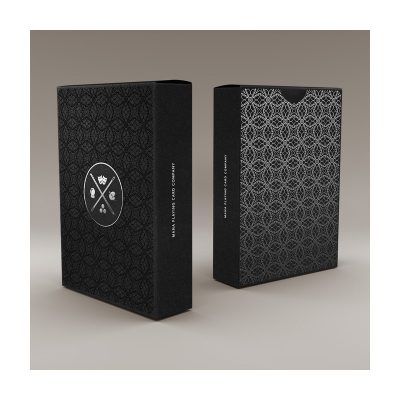
- New
Buskers Exclusive Edition by Erik Mana
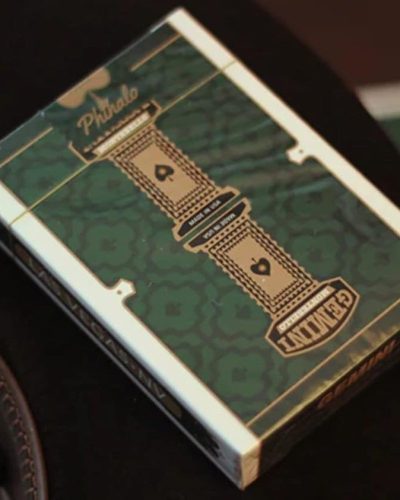
Gemini Casino Phthalo Green – Playing Cards
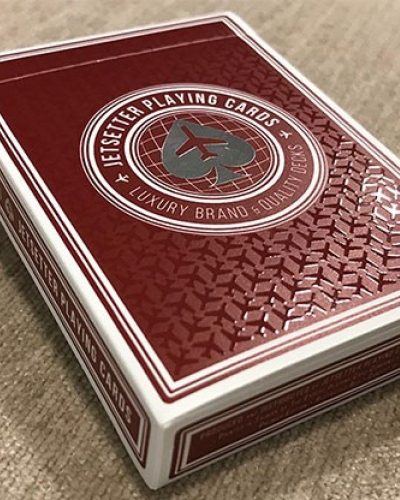
Premier Edition Restricted Red – Playing Cards
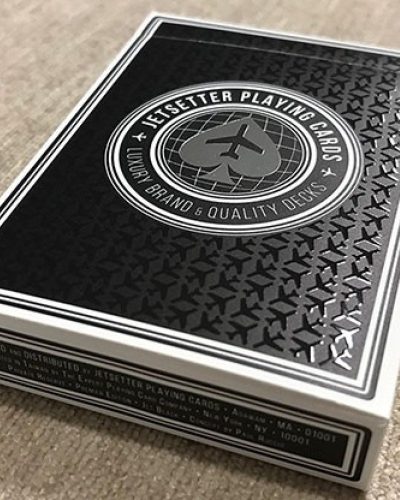
Premier Edition Jet Black Private Reserve – Playing Cards

Card Mafia One Piece Robin – Playing Cards
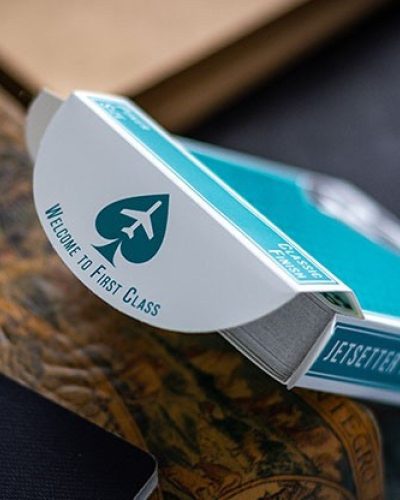
Lounge Edition Terminal Turquoise – Playing Cards
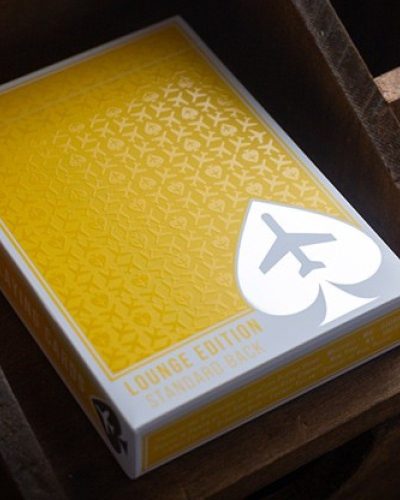
Lounge Edition Taxiway Yellow – Playing Cards
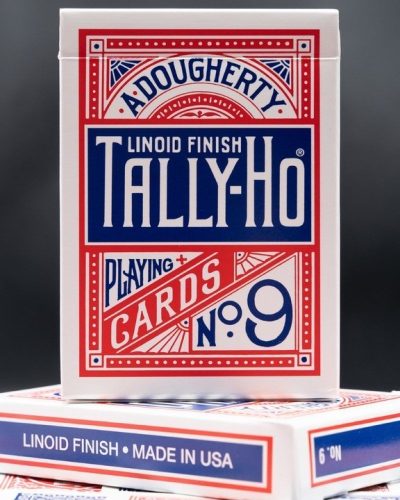
Tally-Ho Gaff – Playing Cards
Contact our team for any clarification about this document. Contact us