

Card Games for Kids: 22 Easy Games by Age, 4 to 10+
Easy card games for kids with a regular deck, sorted by age: war, go fish, old maid, crazy eights, snap, cheat and more, with rules and tips for parents.
In short
With an ordinary deck of cards, a standard 52-card deck or a Spanish one, you can play dozens of card games for kids. Between 4 and 6 years old, the games that work are those that only ask children to recognise numbers and pairs: war, memory, old maid and go fish. Between 7 and 9 come games with rules that have exceptions or that involve adding up: crazy eights, sevens, stealing bundles and escoba. From 10 onwards, bluffing and strategy come in: cheat, siete y media and Klondike solitaire.
- You do not need to buy special games: almost all the classic kids card games use a regular 52-card deck or a 40-card Spanish deck.
- For small hands, large-index decks (bigger numbers in the corner) help, as do games in which the cards are not held in a fan.
- Every country has its classics: bataille in France, Schwarzer Peter in Germany, rubamazzo in Italy and burro in Portugal.
Card games for kids have an advantage that few toys can match: they fit in a pocket, can be learned in five minutes and grow with the child. The same deck that is used for finding pairs today will be used for adding up to fifteen in three years' time and for bluffing in six. Below are 22 family card games sorted by age, with how many can play, what each one practises and how it is played, plus the classics children play in France, Italy, Germany and Portugal.
The ages are a guide. When a manufacturer gives a minimum age (the American brand Bicycle does so in all its rules), it is usually lower than ours because it assumes an adult is playing alongside and helping. Here, the age indicates when a child can play a whole game on their own and understand what they are doing.
How to choose kids card games by age
What decides whether a game suits a child is not so much their age as what the game asks them to do on each turn. There are four clear steps, and it is worth climbing them in order:
- Comparing and matching. Knowing which card is higher or whether two cards are the same. That is all war or memory asks.
- Following a rule with exceptions. «Play a card of the same suit or the same number, unless you have an eight». Here the child already has to choose which card to play.
- Calculating. Adding up to fifteen in escoba, or to seven and a half without going over. The game requires mental arithmetic, and quickly, because the others are waiting.
- Thinking about the other players. Remembering what another player asked for, guessing whether someone is lying or keeping a card back for later. This is the territory of cheat, burro and trick-taking games.
| Age | What the game asks | Games |
|---|---|---|
| Ages 4-6 | Recognising numbers, comparing, finding pairs, reflexes | War, memory, old maid, go fish, slapjack and snap, clock solitaire |
| Ages 7-9 | Choosing a card, following suit or number, ordering, adding up | Crazy eights, sevens, stealing bundles, escoba |
| Ages 10+ | Bluffing, weighing risk, planning | Cheat, siete y media, Klondike solitaire |
| Other countries | From 4 to 10+ depending on the game | Pouilleux, huit américain, Schwarzer Peter, Mau-Mau, rubamazzo, asso pigliatutto, straccia camicia, cucù, Portuguese burro |
Card games for 4 to 6 year olds
At this age any game works as long as children do not have to hold lots of cards at once or make difficult decisions. Most are played with the cards face down in a pile or spread out on the table, which solves the problem of small hands. If a child still struggles to tell the jack, queen and king apart, you can remove the court cards and play with ace to ten only: the game works just the same.
War (battle)
Both players turn over the top card of their pile at the same time and the higher card takes both. There is nothing to decide, which is why it is so many children's first card game.
- From age 4
- 2 players (3 or 4 possible)
- 52-card deck
- Comparing numbers
- Waiting your turn
How to play
The whole deck is dealt face down, 26 cards each, and nobody looks at theirs. At the same time, each player turns over the top card of their pile. Whoever shows the higher card (ace is highest, two is lowest; suits do not count) takes both cards and puts them at the bottom of their pile.
If the two cards are equal, it is war: each player puts one card face down and another face up on top, and the higher of the new cards takes everything on the table. If they tie again, repeat. Whoever ends up with the whole deck wins.
A full game can go on for a long time. With young children it works better to set a limit: play until one player gets through their pile for the first time, and whoever has more cards at that point wins. A common variant puts three cards face down in each war instead of one, which makes wars more exciting.
Memory (pairs)
All the cards face down on the table; on each turn you turn two over and, if they are a pair, you keep them. It is the classic known in English as Concentration or Memory.
- From age 4
- 1 to 5 players
- 52-card deck or fewer
- Memory
- Attention
How to play
The cards are spread out face down, separated and not touching, usually in rows. On their turn, each player turns over two cards and leaves them where everyone can see. If they have the same number (two sevens, two queens), the player keeps them and goes again. If not, they turn them back face down in the same place and the turn passes. Whoever collects the most pairs wins.
With the youngest children there is no need to use the whole deck: with 16 or 20 cards (eight or ten pairs) the game is short and the whole layout is easy to take in. To make it harder, you can require pairs to be the same colour too (the two red sevens, for example). It can also be played alone, trying to clear the table in as few turns as possible.
Old maid
51cardsOne card is removed from the deck so that another is left without a pair. Players draw cards from each other and discard pairs; whoever is left holding the unmatched card loses.
- From age 4
- 2 or more players
- 52-card deck minus one queen
- Matching
- Poker face
How to play
One of the four queens is removed and the remaining 51 cards are dealt, even if some players get one more than others. Each player discards face down any pairs they hold (two cards of the same number; with three of a kind, only two are discarded).
Then, in turn, each player fans their hand, without showing it, to the player on their left, who draws a card. If it makes a pair, they discard it. Anyone who runs out of cards is out of the game. In the end only the unpaired queen remains: whoever holds it loses.
It is the first game in which a child has to keep a straight face: if they look alarmed when someone is about to take the queen, the others notice. In Spain it is called la mona or la solterona («the spinster»). There are illustrated decks made specially for this game, but a regular deck works just as well.
Go fish
Each player asks another for cards of a rank they already hold. If the other player has none, they say «go fish!» and you have to draw from the pile. Whoever collects the most sets of four wins.
- From age 4-5
- 2 to 6 players (best with 3-6)
- 52-card deck
- Memory
- Asking and listening
How to play
Each player is dealt seven cards if there are two or three of you, and five if there are more (some rules only deal seven when two are playing). The rest go face down in the middle: this is the pond.
On their turn, a player asks another for a rank of which they already hold at least one card: «Lucy, have you got any fives?». If Lucy has, she must hand over all her fives and the player asks again. If not, she says «go fish!» and the player who asked draws a card from the pond. If they draw exactly the rank they asked for, they show it and carry on; if not, the turn passes to the next player.
When someone collects all four cards of a rank (a book), they lay them on the table. The game ends when all thirteen books have been made, and whoever has the most wins. The interesting part comes when the child starts remembering what the others have asked for: if their sister asked for kings two turns ago, they know whom to ask.
Slapjack and snap
Two reflex games with the cards face up in the middle. In slapjack you slap every jack that appears; in snap you shout «snap!» when two matching cards come up in a row.
- From age 4
- 2 to 8 players
- 52-card deck
- Reflexes
- Recognising cards
How to play
Slapjack. The whole deck is dealt face down, unseen. In turn, each player flips their top card and places it in the middle. When a jack appears, everyone tries to slap it: the first hand on it takes the whole pile and puts it under their own. Anyone who slaps a card that is not a jack pays a card to the player who played it. Whoever ends up with all the cards wins.
Snap. Each player builds their own face-up pile. When the top cards of two piles match in rank, the first to shout «snap!» takes both piles. With young children it is usually played with a single shared pile, shouting when two matching cards come up in a row.
They are noisy and very short games. Agree beforehand what happens if two hands land at once (the pile goes to the hand underneath, that is, the one that touched the card first).
Clock solitaire
13pilesA patience game for the first child who wants to play alone. The cards are laid out as a clock face and moved to their hour. There is nothing to decide: the deal decides whether it comes out.
- From age 5-6
- 1 player
- 52-card deck
- Numbers 1 to 12
- Telling the time
How to play
All 52 cards are dealt face down into 13 piles of four: twelve in a circle, like the hours on a clock, and one in the centre. Each hour corresponds to a value: the ace is one o'clock, two to ten are their own hour, the jack is eleven and the queen twelve. Kings go in the centre.
Turn over the top card of the centre pile and place it face up under the pile for its hour. Then take the top card of that pile and move it to its hour, and so on. Each king that turns up goes to the centre. You win if every hour is completed before the fourth king appears; if the fourth king comes out first, you lose.
Because everything depends on the shuffle, it comes out roughly once in every thirteen games. Children do not mind: the fun is in watching the hours fill up, and along the way they link each number with its position on the clock.
A war in practice: the two sevens tie, each player puts down one card face down and another face up, and the king takes all six cards on the table.
Card games for 7 to 9 year olds
From around seven, a child can hold a hand of five to seven cards and, above all, choose which one to play. This is the age of shedding games, in which the first to get rid of their cards wins, and of the first fishing games, in which cards are captured from the table. It is also the time to bring in adding up.
Crazy eights
You must play a card of the same suit or the same number as the one on the table. Eights can always be played and let you change the suit. The first to run out of cards wins. It is the direct ancestor of Uno.
- From age 6-7
- 2 to 8 players
- 52-card deck (two for big groups)
- Suits and numbers
- Choosing a move
How to play
Each player is dealt five cards (seven if two are playing). The rest are left face down as the stock and the top card is turned over to start the discard pile.
In turn, each player plays a card that matches the top of the discard pile in suit or number: on a six of hearts, any heart or any six will do. Eights can be played at any time, and whoever plays one names the suit to follow. If you cannot play, you draw from the stock until you can. The first player to run out of cards wins the hand.
To play for points, the winner scores what the others have left: 50 for each eight, 10 for each court card or ten, 1 for each ace and face value for the rest. Many families add special cards, as in Uno (a two that makes the next player draw two, a card that skips a turn), and it is a good way for children to invent and agree on rules.
Sevens (cinquillo)
In Spain this classic is played with the 40-card deck as cinquillo: it starts with the five of coins, and the cards of each suit are laid out in a row, up and down from the five. The first to place all their cards wins.
- From age 7
- 3 to 6 players
- Spanish deck (or 52 cards, starting from the 7)
- Ordering sequences
- Blocking opponents
How to play
The whole deck is dealt. Whoever holds the five of coins starts by placing it in the centre. From then on, on their turn each player can lay a five of another suit (starting a new row) or a card that continues a row already open: the four or six of the same suit, then the three or the seven, and so on until the suit is complete in both directions. If you cannot play, you pass. The first player to run out of cards wins.
Although it looks like pure luck, there are decisions to make: if you hold the four and six of cups, you can keep one back to block someone who needs to continue that row. With a standard deck the same game is called Sevens or Fan Tan in English and Domino in France: the rows start from the seven and run up to the king on one side and down to the ace on the other.
Stealing bundles
With a card from your hand you take the matching card on the table and build up your own pile (your bundle). If an opponent plays a card that matches the top of your pile, they steal the whole lot.
- From age 6-7
- 2 to 4 players
- 52-card deck or 40-card Spanish deck
- Matching
- Watching the others
How to play
Each player is dealt four cards and four go face up in the centre. On their turn, each player plays a card. If it matches the number of a card on the table (suits do not matter), they take both and put them face up on their pile. If it matches the top card of an opponent's pile, they take the whole pile. If it matches nothing, the card stays on the table.
When everyone runs out of cards, four more are dealt, until the deck is used up. Any cards left on the table at the end go to the last player who captured. Whoever has the tallest pile wins. It is the same game that Italians call rubamazzo, that is known in Portugal and Brazil as rouba-monte and in Argentina as casita robada, and it is excellent preparation for escoba.
Escoba
15pointsThe great Spanish adding-up game: with a card from your hand you capture cards from the table which, together with it, add up to exactly fifteen. Taking all the table cards in one go is an escoba («sweep»). It is the classic card game for learning addition.
- From age 7-8
- 2 to 4 players
- 40-card Spanish deck
- Adding up to 15
- Planning
How to play
Cards count their number from 1 to 7, the jack (sota) 8, the knight (caballo) 9 and the king 10. Each player is dealt three cards and four go face up on the table. On their turn, each player plays a card: if with it and one or more table cards they make fifteen, they take them. If they cannot, the card stays on the table. When everyone has played their three cards, three more are dealt.
When the deck runs out, points are counted: one for each sweep, one for most cards, one for most coins, one for the seven of coins and one for most sevens. The game is played to 21. With seven or eight year olds it is enough to count sweeps and cards, and add the other points later. You will find the full explanation, with strategy, in our escoba rules.
If you only have a standard deck at home, remove the eights, nines and tens to leave 40 cards: the jack counts 8, the queen 9 and the king 10, and diamonds stand in for coins. This is also how Italian scopa is played with a French-suited deck.
A seven and a three are left on the table; the player plays their five, makes fifteen (7 + 3 + 5) and takes both cards. Since the table is now empty, it is also a sweep.
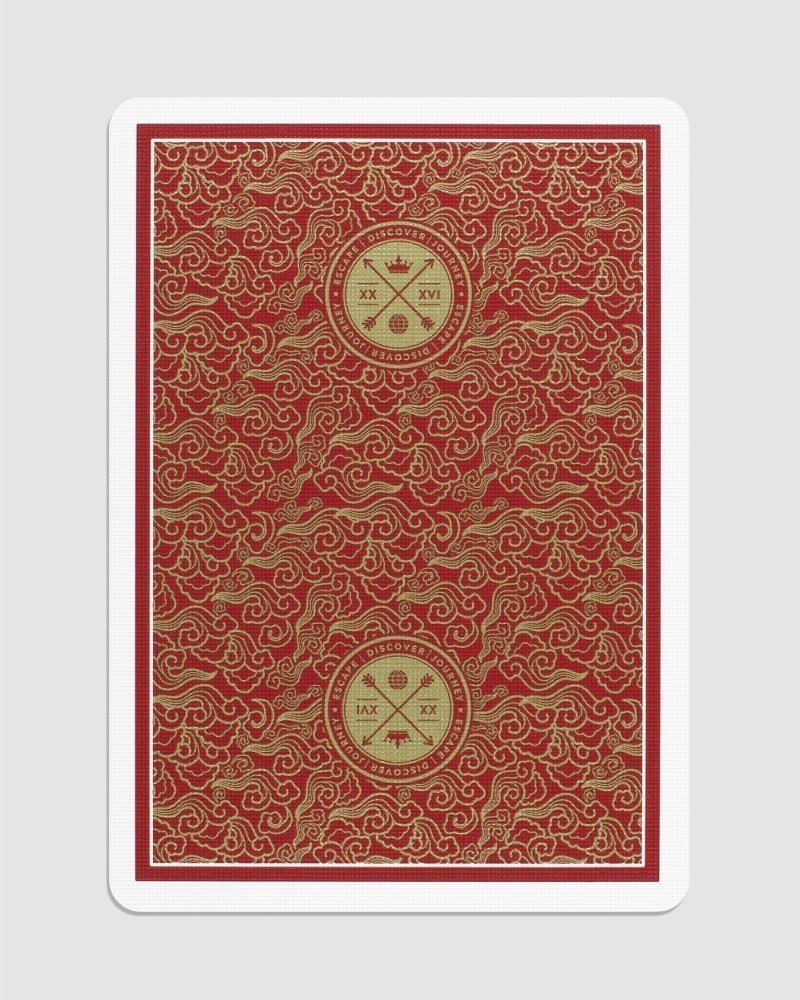
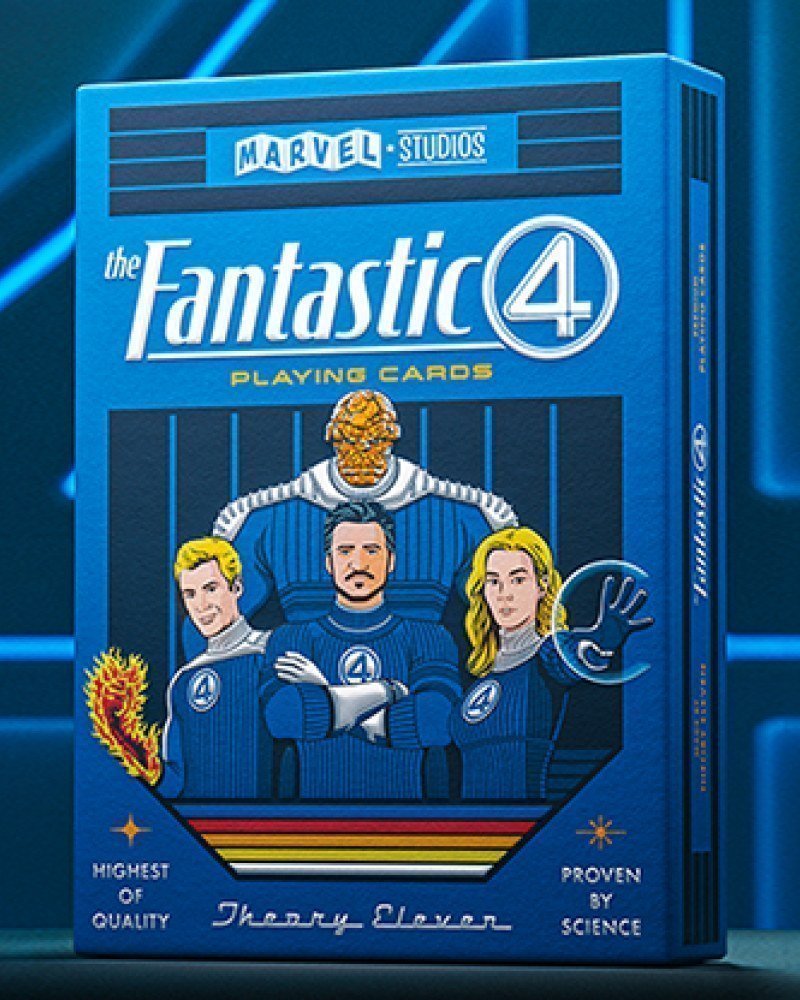
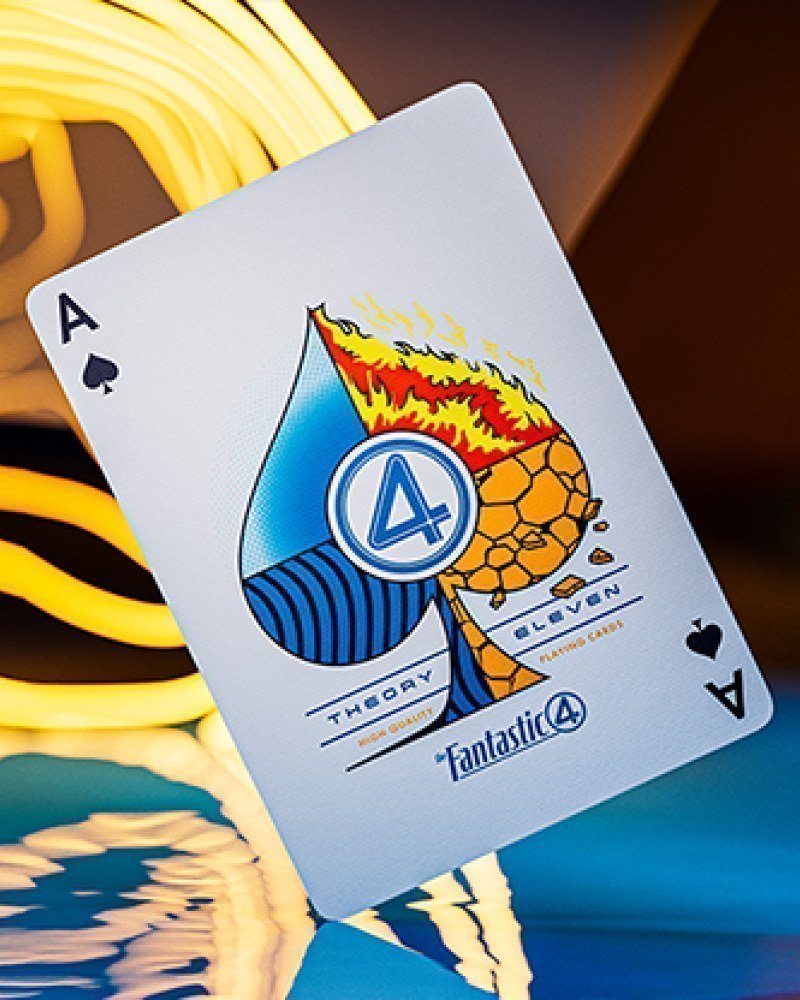
One deck covers all these games
For playing with children, a well-finished 52-card deck is best: one that stands up to use and can be shuffled without the corners bending.
Browse playing cardsDid you know decks like these exist?
At heart, every deck has the same cards. What changes is everything else: the design, the finish, metallic inks or gilded edges. Take a look at our catalogue and bring your own style to the card table.
Browse our playing cards →




Card games for 10 year olds and up
By around ten, a child can play almost any simple adult game. What is new at this stage is that the game stops being only about cards and becomes about people too: you have to guess what the others hold, take risks or plan several moves ahead.
Cheat (BS, I doubt it)
Each player puts cards face down, saying what they are, and may lie. If someone is suspicious, they shout «cheat!» and the cards are turned over. The first to run out of cards wins.
- From age 9-10
- 2 to 10 players (best with 3 or more)
- 52-card deck (two for big groups)
- Bluffing
- Reading people
How to play
The whole deck is dealt. In turn, each player puts one to four cards face down in the middle and announces that they are of the rank due next, following the order: aces, twos, threes and so on up to kings, then back to the start. If you do not have that rank, you have to lie.
Anyone can challenge. The cards are turned over: if they were what was claimed, the challenger takes the whole pile in the middle; if there was a lie, the liar takes it. The first to run out of cards without being caught on their last play wins.
Bicycle recommends it from age 13, because of the bluffing. In families it works earlier, as long as the child understands that lying in the game is part of the rules and does not count away from the table. In Britain it is usually called cheat; in the US, BS or I doubt it. More details and tips for spotting bluffs in our cheat rules.
Siete y media
7.5pointsThe name means «seven and a half»: you try to get as close as possible to seven and a half points without going over, asking the banker for cards one at a time. Court cards are worth half a point. It is a Christmas favourite for many families in Spain and Italy, a gentle cousin of blackjack.
- From age 8-10
- 2 or more players
- 40-card Spanish deck
- Adding with halves
- Weighing risk
How to play
Cards 1 to 7 count their number and the jack, knight and king count half a point. One player is the banker: they deal one card face down to each player and, in turn, each player asks for more cards or stands. Anyone who goes over seven and a half loses. At the end the banker plays their hand and beats anyone with less; ties go to the banker.
With children it works very well played for dried beans, counters or sweets instead of money. It requires adding halves in your head and, above all, deciding when to stop: on six points, do you ask for another card or not? It is a first feel for probability. Full rules, with the banker and its variants, in our guide to siete y media.
With a standard deck it is played the same way after removing the eights, nines and tens.
Klondike solitaire
7columnsThe classic solitaire (patience, in Britain): seven columns in a staircase, cards in descending order alternating red and black, and four foundation piles built from ace to king by suit.
- From age 8-10
- 1 player
- 52-card deck
- Ordering
- Planning
- Patience
How to play
28 cards are dealt into seven columns, from one to seven cards, with only the last card of each column face up. The rest forms the stock. On the columns, cards are placed in descending order and alternating colours (a black nine on a red ten). Aces go up to the top and each suit is built on them up to the king. You win by getting all 52 cards onto those four piles.
Unlike clock solitaire, here there are real decisions: which card to move, which column to uncover first. Many children know it from the computer and enjoy discovering that it is played with a real deck. We explain it step by step in our solitaire rules.
The perfect siete y media hand: a seven and a court card. With a standard deck, the jack, queen and king stand in for the Spanish jack, knight and king.
When these games start to feel too easy, the natural next step is trick-taking and rummy games. President works very well with groups of cousins or friends, hearts teaches trick-taking with a standard deck and, with a Spanish deck, brisca and chinchón are usually the first adult games children learn in Spain. There are more ideas in our guide to games with a standard deck of cards.
Children's card games from France, Italy, Germany and Portugal
Many children's games are the same across half of Europe under a different name, which is worth knowing if your children have friends or family in another country: a couple of words and they will understand each other. Others are unique to each place and well worth trying.
| Game | France | Italy | Germany | Portugal |
|---|---|---|---|---|
| War | Bataille | No data | Tod und Leben (a variant in which won cards are not played again) | No data |
| Old maid | Pouilleux, vieux garçon, mistigri | No data | Schwarzer Peter | No data |
| Go fish | Pêche | No data | Quartett (with its own decks) | À pesca |
| Crazy eights | Huit américain | No data | Mau-Mau | No data |
| Snap | No data | No data | Schnipp-Schnapp | No data |
| Stealing bundles | No data | Rubamazzo | No data | Rouba-monte |
| Siete y media | No data | Sette e mezzo | No data | Sete e meio (mainly in Brazil) |
«No data» means we have not found a documented local name for that game in that country, not that it is not played there.
France
Pouilleux
51cardsThe French version of old maid. The jack of clubs is removed and the «lousy one» is the jack of spades, which is left without a pair. Pairs must be the same number and the same colour.
- From age 4-5
- 2 to 8 players
- 52-card deck
- Matching by colour
What is different
Requiring pairs to be the same colour (two red sevens or two black sevens) adds a small step of attention that old maid does not have. The player with the fewest cards after the first discard starts drawing. There is a children's version, mistigri, with illustrated decks in which the losing card is a cat.
Huit américain
French-style crazy eights, with lots of special cards: the eight changes suit, the ace makes you draw two, the joker four, the jack reverses direction and the seven skips the next player.
- From age 7-8
- 2 or more players
- 54-card deck (with jokers)
- Rules with exceptions
What is different
Each player is dealt eight cards and, as in Uno, you must warn the others when you have only one card left («carte!») or draw two as a penalty. You also cannot finish the hand with an eight. Rules vary a great deal from family to family, and in France there are variants with names of their own. It is often said to have reached France with American soldiers in 1944, but there is no documentation to confirm it.
Italy
Rubamazzo
40cardsThe Italian stealing bundles, with a 40-card deck and three cards per player. For many Italian children it is the step before scopa.
- From age 6-7
- 2 to 4 players
- 40-card Italian deck
- Matching
What is different
Each player is dealt three cards and four go to the table, and play runs anticlockwise. There is a variant in which the ace lets you take all the cards on the table or the next player's pile.
Asso pigliatutto
«The ace takes all». A simplified scopa: you capture an equal card or several that add up to the value of the one you play, and the ace sweeps the whole table.
- From age 7-8
- 2 or 4 players (in pairs)
- 40-card Italian deck
- Adding up
How to play
Three cards per player and four on the table. With a king (worth 10) you can take a six and a four, for example. The ace does not capture a one on the table, but every card there. Unlike escoba, you do not need to reach fifteen: matching the value of the card played is enough, so the sums are shorter. It is played to 11, 16 or 21 points.
Straccia camicia
«Tear your shirt». A game of pure luck in which the ace, two and three force the next player to pay one, two or three cards. The winner is whoever leaves the others «with only their shirt».
- From age 5
- 2 or more players
- 40-card Italian deck
- Counting
- Waiting your turn
How to play
The whole deck is dealt into face-down piles. In turn, each player plays the top card of their pile to the centre. If an ace comes up, the next player must play one card; for a two, two; for a three, three. If another ace, two or three appears while paying, the debt passes to the next player. If they finish paying without turning one up, whoever played the last penalty card takes the pile.
It is the Italian version of a very old British game, Beggar-my-neighbour, played with a 52-card deck, in which the cards that force payment are the ace and the court cards, with a bigger debt the higher the card. It appears in Dickens's Great Expectations as the only game the hero knows as a boy.
Cucù
Each player has a single card and can swap it with their neighbour's. At the end, the lowest card loses a life. It works with huge groups and is played a lot at family gatherings.
- From age 6-7
- 3 to many players
- 40 or 52-card deck
- Deciding
- Comparing
How to play
Each player starts with an agreed number of lives, three for example. One card is dealt face down to each player and, in turn, each decides whether to keep it or swap it with their neighbour's, who cannot refuse unless they hold a king: then they show it and the swap does not happen. The last to play, the dealer, can exchange theirs for the top card of the deck. All cards are turned up and the lowest (the ace is lowest) loses a life. The last player with lives left wins.
It belongs to a very old family of swapping games known in Britain as Cuckoo or Chase the Ace. In Italy there are special cucù decks, but a regular deck works just as well. It is ideal for teaching how to decide with little information: with a five, do I swap or take my chances?
Germany
Schwarzer Peter
«Black Peter», the German old maid. With a 32-card deck the jack of clubs is removed and the jack of spades is the losing card. The loser gets a black dot painted on their face.
- From age 4
- 2 or more players
- 32-card or special deck
- Matching
What is different
In Germany it is mostly sold as illustrated children's decks of 31 to 37 cards, with a black cat or a chimney sweep as the losing card. The traditional custom was to blacken the loser's face with a burnt cork; today a dot of washable marker on the nose does the job. For two players there is a version in which each has six cards and they draw in turn from a pile.
Mau-Mau
32cardsGerman crazy eights, with special cards: the seven makes the next player draw two, the eight skips a turn and the jack lets you call a suit. Whoever plays their second-to-last card says «Mau», and whoever goes out says «Mau-Mau».
- From age 6-7
- 2 to 10 players
- 32-card deck (52 also works)
- Rules with exceptions
What is different
Each player is dealt five or six cards. If you forget to say «Mau» and someone notices before your next turn, you draw one or two penalty cards. If a seven is played on you and you have another, you can stack it and the next player draws four. The special cards vary a lot by region. In Switzerland it is called Tschau Sepp. Uno and other commercial card games developed from this same family.
Portugal
Portuguese burro
40cardsA no-trump trick-taking game for beginners: you must follow the suit led and, if you cannot, draw from the pile until you can. The last player left holding cards is the burro («donkey»).
- From age 8
- Up to 8 players
- 40-card deck
- Following suit
- First trick-taking game
How to play
Each player is dealt four cards and the rest forms a pile. The first player leads any card and the others must play the same suit. The highest card of that suit wins the trick, which is set aside, and the winner leads the next one. If you have no cards of the suit, you draw from the pile until you get one; if the pile runs out, you pass. Players who run out of cards are safe, and the last player holding cards loses.
It is also played in Spain and Latin America. It is a very gentle way to learn the rule of following suit, the basis of games such as sueca and tute. Watch out for the name: in Spain «burro» is used for several different games, so it is worth explaining the rules before you start.
What card games offer children
Almost everything said about the benefits of card games follows from what they ask of players: if war requires deciding which number is bigger, the child practises comparing numbers; if escoba requires adding up to fifteen, they practise addition. That is obvious and needs no proof. What is interesting is knowing what has actually been measured, and there is less of that than people usually claim.
What has been measured
The most cited studies on card games and children's maths come from the lab of psychologist Geetha Ramani at the University of Maryland, who has spent years studying play as a way of learning numbers.
- In an experiment published in 2020 with 76 children aged 3 to 5 from public preschool programmes for low-income families in the United States, children played four 15-minute sessions of one of three card games. One was very similar to war (each player turns up a card and the bigger number takes both), another was a memory game with numbers and the third was a shapes-and-colours game with no numbers. Those who played the two number games got better at recognising numerals, and only those in the war-type game got better at saying which number is bigger. The improvement was still there eight weeks later.
- In a second study, from 2022, 86 families with children of around five played a number card game or a shapes card game at home for six weeks. Children in the shapes group learned more shape names, but those in the number group did not improve their number skills significantly compared with the others. What did matter was how much they played: children who played more often improved more, and in the shapes game, children whose parents talked about the shapes and colours on the cards during play learned more. In addition, almost half the families did not return the materials complete.
The honest reading is this: playing number card games helps young children recognise and compare numerals, especially if the game is focused on that and an adult joins in and talks about what is happening. It is not a magic method and does not replace anything, and its measured effects are specific and modest. For the other benefits often attributed to cards (memory, self-control, social skills) there are no studies with traditional card games as clear as these, so we prefer not to present them as facts.
What each game asks on every turn
Without going into what has been measured, we can say precisely what practice each game offers, because it is in the rules:
| What is practised | Games where it is central |
|---|---|
| Recognising and comparing numbers | War, cucù, straccia camicia |
| Mental addition | Escoba, asso pigliatutto, siete y media |
| Ordering sequences | Sevens, Klondike solitaire, cheat (the order of the ranks) |
| Remembering | Memory, go fish |
| Taking turns and following rules | All of them, especially crazy eights, Mau-Mau and burro |
| Reflexes and attention | Slapjack, snap |
| Keeping a straight face and reading others | Old maid, Schwarzer Peter, cheat |
| Deciding under risk | Siete y media, cucù |
And there is one thing they all share: losing. Almost every children's game has a lot of luck in it, and that is an advantage. A child can lose to an adult without feeling worse than them, and can beat them without anyone letting them win.
Tips for playing cards with kids
- Start with the cards face up. The first games of anything can be played with every hand on view. The adult thinks out loud («I've got the five of hearts, I can play it because there's a heart on top») and the child understands the rules by seeing them.
- Take cards out if necessary. A 52-card deck can be cut down: ace to five only for a four-year-old's war, only ten pairs for memory. The rules do not change.
- Solve the problem of holding the hand. With seven cards, a six-year-old's hands cannot make a fan. The hand can be left face down on the table and checked now and then, stood up against a book or put in a card holder, which is simply a stand with a slot.
- Short games. Three five-minute games are better than one half-hour game. In war or slapjack, set a time or round limit and count who has more cards at the end.
- Let them win? In games of chance there is no need: luck already shares out the wins. In games with decisions, such as escoba or crazy eights, it works better to help them than to play badly on purpose: look at their cards together, point out a move they missed. Children usually notice when an adult loses deliberately, and genuinely beating you, even with help, feels better. With older children you can even things out, for example by giving them an extra card or letting them draw twice.
- Teach them to lose without drama. A hand lasts a couple of minutes and another starts straight away. An adult who also loses often, and takes it well, teaches more than any lecture.
- Let them agree on rules. Letting a child invent a special card in crazy eights («a four makes everyone swap hands») makes them think about how the game works. Just decide it before you start.
- Keep one deck for playing with children. Cards will get bent, wet and lost. Having a separate «playing» deck from the good ones avoids upsets.

Which deck to buy for playing with kids
A regular deck is all you need for every game in this article. There is no need for a children's deck, although some details make things much easier for little ones.
| Feature | Why it matters | What to choose |
|---|---|---|
| Large index | The number and suit in the corner can be read at a glance, even with the card half covered in the hand | «Jumbo index» or large-index decks, with the same card size but much bigger numbers |
| Size | A poker-size card measures about 63 × 88 mm (2.5 × 3.5 in); bridge size is narrower, about 56-58 mm (2.25 in) wide, and fits a small hand better | Poker size if they will play on the table; bridge size if they will hold a lot of cards |
| Classic design | Very artistic decks sometimes change the numbers or court cards, and a child who is learning needs to tell them apart without hesitation | Traditional court cards, clear numbers and suits in red and black |
| Material | Children's cards get bent and stained; a good finish lasts more games and shuffles better | Card stock with a quality finish, or plastic, which can be wiped clean |
| Type of deck | Escoba, cinquillo and siete y media use the Spanish deck; the rest use a standard deck | A 52-card deck to start with; if you have a Spanish deck at home, use it for the Spanish games |
If we had to recommend a single deck to start with, it would be a 52-card poker deck with a large index and a classic design. Brands such as Bee and Bicycle make jumbo-index versions of their familiar designs: the numbers can be read from across the table and the court cards are the traditional ones. With two decks with different backs you can also cover the games that need more cards, such as crazy eights or cheat in a big group.
Themed children's decks (animals, happy families, characters) are something else: they work for their own particular game, such as old maid or happy families, but not for the rest. If you are unsure between several options, our guide on which deck of cards to buy explains the differences in finish and size, and which deck to give as a gift has ideas for a present for a child.
How much does a deck of cards cost?
From €5 to over €100. The 52 cards and the rules stay the same; this is what changes.
 To play€5.95 |  Designer€12.95 |  Premium€17.99 |  Collectible€34.94 | |
|---|---|---|---|---|
| Typical price | €5-9 | €9-15 | €15-30 | €30 or more |
| What sets it apart | Classic casino design | Artist illustration on back and faces | Special inks, embossing and foil on the box | Limited print runs and gilded edges |
| Who it is for | Games at home | Playing with something beautiful | Gifts or cardistry | Collecting and display |
| Example | Tally-Ho Fan Azul | theory11 Medallion | The Sandwich Series (Luncheon Meat) | Kings Wild LOTR Two Towers Gilded |
| See decks | See decks | See decks | See decks |
Frequently asked questions
What is the easiest card game for kids?
War: each player turns up a card and the higher one wins, with no decisions at all. Next come memory, old maid and slapjack. All of them can be learned in a single game and played from age four with help.
At what age can children start playing cards?
With an adult's help, from around three or four, with games such as war or memory. Bicycle rates war from age 3 and most children's games from 4. To play a whole game with decisions on their own, such as crazy eights or sevens, the usual age is around six or seven.
Which card game helps children learn addition?
Escoba is the most complete, because every play involves adding up to fifteen with several cards. Italian asso pigliatutto is a simpler version with shorter sums, and siete y media adds half points. For the youngest, war is good practice for telling which number is bigger.
Which card games can an adult and a child play as a pair?
War, memory, go fish, stealing bundles, escoba and crazy eights all work well with two. Clock solitaire and Klondike let the child play alone.
Which card games work with lots of children at once?
Cucù, cheat, crazy eights and old maid can take large groups, combining two decks if needed. Slapjack and snap work well with up to six or eight players.
Do you need a special deck for children?
No. Every game in this article is played with a 52-card standard deck or a 40-card Spanish deck. What helps little ones most is a large-index deck, with big numbers in the corners, and sturdy cards.
How do you play old maid with a regular deck?
Remove one queen, deal the 51 remaining cards and each player discards their pairs. Then each player draws a card blind from the player on their left, discarding any pairs they make. Whoever is left at the end with the unpaired queen loses.
If you are about to start playing at home, any deck from our playing cards section works for all these games; large-index decks with a classic design are the most comfortable for little ones.
Want more guides like this? Sign up for the newsletter.
Keep exploring
- List of card games by type
- Games for a standard deck of cards
- Spanish deck games: mus, tute, brisca, guiñote and more
- How many cards are in a deck
- Which deck to give as a gift, by profile
Playing Cards

Gemini Casino Phthalo Green – Playing Cards

Icon Black – Playing Cards

Premier Edition Restricted Red – Playing Cards

Premier Edition Jet Black Private Reserve – Playing Cards

One Piece – Robin – Playing Cards

Lounge Edition Terminal Turquoise – Playing Cards

Lounge Edition Taxiway Yellow – Playing Cards

Cardistry Fanning Yellow Edition – Playing Cards
Contact our team for any clarification about this document. Contact us


