
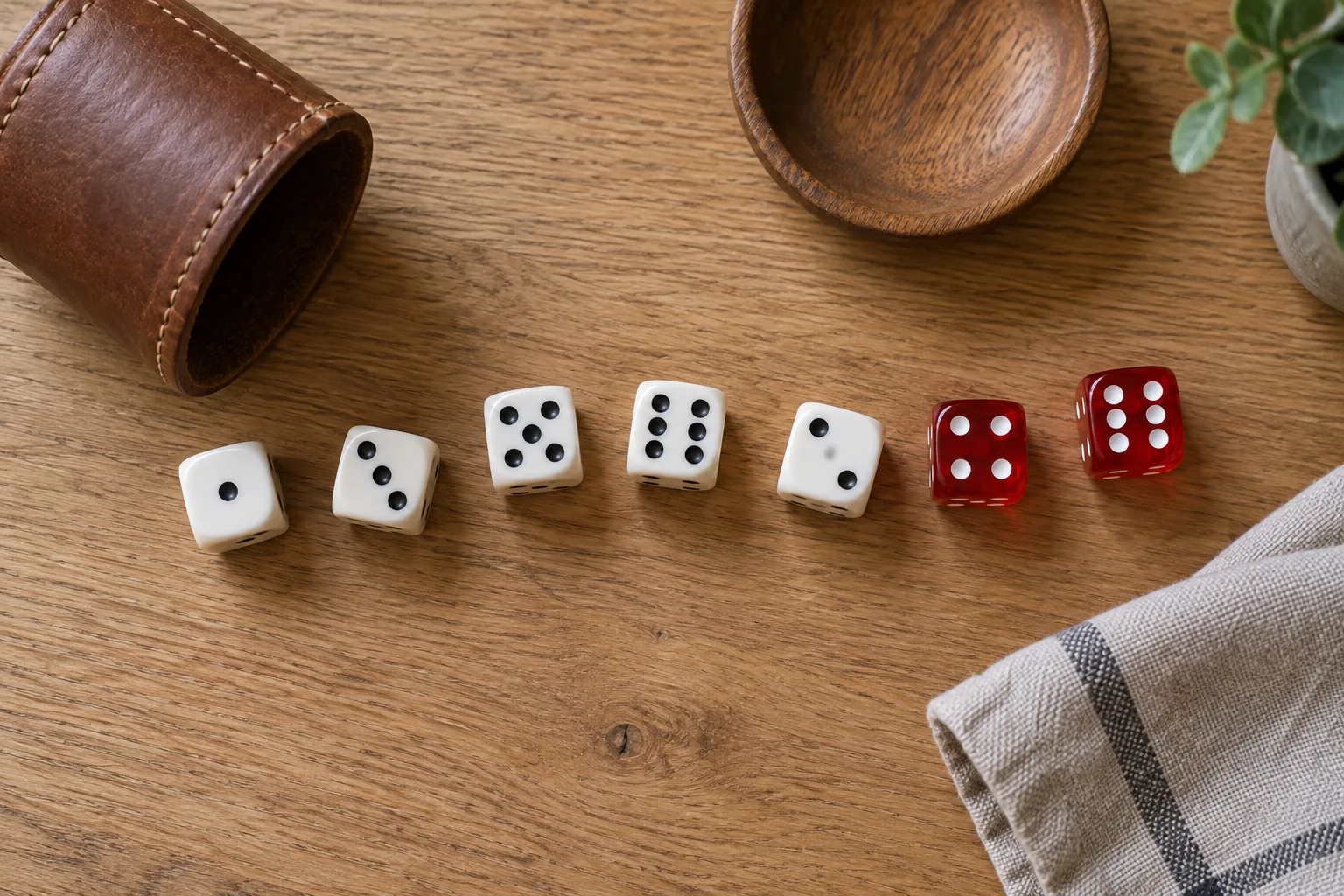
Dice: history, types of dice and two dice probability
Why opposite sides of a die add up to 7, the oldest dice in the world, the DnD set from d4 to d20, what 2d6 means, two dice odds and the main dice games.
In short
Roll the dice right here
A 3D dice roller with real physics: d4, d6, d8, d10, d12 and d20 in any combination, with the total shown instantly and pages set up for Catan, Risk, Yahtzee, Ludo and more.
Open the online diceA die (plural dice) is an object with several numbered faces that, once thrown, leaves one of them on top with the same chance as all the others. The most common one is a cube of about 16 mm with pips from 1 to 6. Its opposite sides add up to 7 (1 opposite 6, 2 opposite 5, 3 opposite 4), because that way each pair of facing sides carries the same number of pips and the material is spread more evenly. In Europe this rule took hold in the middle of the fifteenth century.
- Origins: the oldest known cubic dice are almost 5,000 years old and come from the area between Iran, Mesopotamia and the Indus valley. Before them people used knucklebones, the ankle bones of sheep and goats.
- Types of dice: the d6 with pips, the polyhedral dice of role-playing games (d4, d6, d8, d10, d12 and d20), poker dice, Fudge dice and symbol dice.
- Probability: with two dice, 7 is the most likely total, with 6 combinations out of 36 (16.7%).
A bone die found in a Roman house and a plastic one bought yesterday are recognisable at a glance, and they do the same job: they leave a decision to chance in a way that every player accepts as fair. That idea of fairness explains almost everything that follows, from the way the pips are arranged to the reason casinos measure their dice to within thousandths of a millimetre.
What a die is and why opposite sides add up to 7
A die is a random number generator that fits in your hand. To do its job it has to be symmetrical: every face must have the same shape and the same relationship to the centre of the object, so that no face has a better chance than another of ending up on top. The cube is the simplest way to achieve this with a convenient number of faces, which is why it is the die par excellence. A standard gaming die measures about 16 mm along each edge; casino dice are a little larger, at around 19 mm.
The word comes from the Latin datum, 'something given', which also gave the French dé and the English die. Another everyday word is tied to dice: the Spanish 'azar', meaning chance, probably comes from the Arabic az-zahr, 'the die'. The same root gave the Old French hasart, the name of a dice game, and from it the English hazard, which ended up meaning 'risk'.
The rule of 7
On a Western die the opposite sides always add up to 7: the 1 is opposite the 6, the 2 opposite the 5 and the 3 opposite the 4. There are two good reasons for numbering it this way:
- Balanced material. On a die with carved or drilled pips, every pip is a hollow. If the high numbers were all on one side, that side would weigh less. With the rule of 7, each axis of the cube has exactly 7 hollows shared between its two ends.
- Harder to tamper with. A die with a fixed, well-known numbering is easier to check. A die with two fives, or with a 6 next to another 6, is spotted straight away if everyone knows what it should look like.
Since the 1, 2 and 3 are never opposite one another, those three faces meet at a single corner. That leaves two ways of arranging them around that vertex, one the mirror image of the other. Western dice are usually 'right-handed': looking at the corner where the 1, 2 and 3 meet, they read anticlockwise. Chinese dice are usually 'left-handed', with the order reversed. Both have existed since antiquity and both are equally fair.
The history of dice
Before dice: knucklebones
Before the carved die there was a bone: the astragalus, or knucklebone, the small ankle bone of sheep, goats and other hoofed animals. It has four stable positions it can land in, and at archaeological sites it turns up far more often than other bones from about 7,000 years ago onwards, which suggests people kept them on purpose. In Central Asia they are still played with today, and each side is named after an animal: horse, camel, sheep, goat.
Knucklebones are not fair dice. Their broad sides come up much more often than the narrow ones, and the Greeks and Romans knew it: they gave each side a different score. Four were thrown at once and read like this:
| Side | Value | Frequency |
|---|---|---|
| Narrow convex side (the 'dog') | 1 | Uncommon |
| Broad convex side | 3 | Common |
| Broad concave side | 4 | Common |
| Narrow concave side | 6 | Uncommon |
With four knucklebones there were 35 possible outcomes. The best Roman throw was the Venus, when each bone landed on a different side (1, 3, 4 and 6, adding up to 14). The worst was the dog (canis), four ones, and it meant paying money into the pot. At banquets, whoever threw a Venus could be chosen to preside over the evening's drinking. The link with divination is old: each side and each combination was given a meaning, and many historians believe the cubic die began as a regular version of these bones.
The first cubic dice
The oldest known six-sided dice come from a strip of land running from eastern Iran to the Indus valley, with finds in northern Mesopotamia as well. The exact dates depend on each excavation, so they are best read as approximations:
| Place | Approximate date | What was found |
|---|---|---|
| Shahr-e Sukhteh, the 'Burnt City' (south-east Iran) | c. 2800-2500 BC | Cubic dice next to a board with pieces, often cited as the oldest dice in the world |
| Tepe Gawra (northern Iraq) | Early third millennium BC | Cubic die |
| Ur (southern Mesopotamia) | c. 2600 BC | Tetrahedral dice from the Royal Game of Ur, with two of their four tips marked |
| Mohenjo-daro and other Indus cities | c. 2500-1900 BC | Terracotta dice, some numbered 1-2, 3-4, 5-6 and others with opposite sides adding up to 7 |
| Egypt | From before 3000 BC | Two-sided throwing sticks for senet, which did the job of dice |
The Indus case is an interesting one. At Mohenjo-daro and Lothal there are dice numbered in consecutive pairs (1 opposite 2, 3 opposite 4, 5 opposite 6), and at the same time others survive that follow the rule of 7, such as one from Mohenjo-daro held by the Ashmolean Museum in Oxford. Archaeologists do not agree on which of the two was more common, but it is clear they existed side by side. Ancient India also left a great deal of writing about dice play: dice appear in the Rigveda, in the Atharvaveda and in the Mahabharata, where a game of dice sets off the central conflict of the poem. Those Vedic dice were not cubes but nuts from a tree, the vibhidaka.
In Egypt, for a long time chance came from two-sided sticks and knucklebones, and the Royal Game of Ur used tetrahedra.
Greece and Rome: tesserae, tali and 'alea iacta est'
The Romans had two kinds of dice. The tali were knucklebones, made of bone or copied in other materials, with four usable sides worth 1, 3, 4 and 6. The tesserae were cubic dice like ours, numbered from 1 to 6, and were usually thrown three at a time. The Greeks credited their invention to Palamedes during the Trojan War, or to the Lydians, according to Herodotus: legends about something much older.
Gambling for money was forbidden in Rome except during the Saturnalia, the December festival, and even so people played everywhere. Several emperors were known as gamblers; Augustus is said to have handed his guests money so they could keep betting at the table. To prevent cheating the Romans used the fritillus, a cup from which the dice were poured without being touched, and sometimes a dice tower: the one from Vettweiss-Froitzheim, found in Germany in 1985 and dated to the fourth century, has three levels of internal ramps so the dice bounce around before coming out down a small staircase. It is the same idea as the dice towers used at role-playing tables today.
The phrase 'alea iacta est' ('the die is cast', literally 'the die has been thrown') is attributed to Julius Caesar on 10 January 49 BC, as he crossed the Rubicon with his troops, which meant defying the Senate and starting a civil war. The Latin version comes from Suetonius, who writes it as iacta alea est. Plutarch says Caesar spoke it in Greek and with a slightly different sense, closer to 'let the die be cast'. The expression was already a well-known saying: it seems to come from a lost comedy by the Greek writer Menander, where it referred to an arranged marriage. Alea, incidentally, was the Latin word for games of chance in general, which is where the English 'aleatory' comes from.
The Middle Ages: bans and dice makers
After the fall of the Roman Empire, dice become rare at sites in northern Europe between the fifth and eleventh centuries. They reappear around the year 1100, smaller than Roman dice and almost always numbered 1-2, 3-4, 5-6. The Vikings carved them from bone, antler, jet and even fish bone, and in 1933 a die from the eighth to tenth centuries was found in Ireland that marks the five with a sign from the ogham script instead of with pips.
The Church and the kings always had an uneasy relationship with dice. Gaming was associated with brawls, blasphemy and the ruin of whole families, and one ordinance against it followed another. In France, an ordinance of Louis IX from 1254 is the first to mention houses set aside for gambling. At the same time, dice play was so common that there was a whole trade devoted to making dice: in Paris the makers were called déciers, they had their own chapter in the book of trades compiled on the orders of the provost Étienne Boileau around 1268, and in 1292 seven of them were registered in the city.
In Castile, the Book of Games commissioned by Alfonso X in the thirteenth century devotes a whole section to dice, with games described in detail and even seven-sided dice. It is one of the best sources for how people played in medieval Europe.
From the Renaissance to probability
The switch to the rule of 7 around 1450 coincides with a change in outlook. If the result of a throw was seen as the will of God or of fate, it did not matter much if the die was slightly lopsided. Once chance started to be understood as something that could be counted, the demand for regular dice grew. Dice themselves served as the laboratory: the first serious problems in probability, in the sixteenth and seventeenth centuries, grew out of gamblers' questions about bets on dice. Around 1620 Galileo wrote a short text, published after his death, explaining why, with three dice, 10 comes up slightly more often than 9, even though each can be made from six combinations of different numbers. The calculation is further down, in the probability section.
Casino dice
The modern casino die was born in the United States with craps, which descends from an English dice game called hazard. The name seems to come from crabs, a term used in London for the lowest losing throws. The story goes that a young New Orleans gambler, Bernard de Marigny, brought the game over from London around 1805, although the simplification that led to modern craps is put down to anonymous players. Around 1907 a man named John H. Winn introduced in Philadelphia the option of betting against the shooter, and after the Second World War craps became the great casino game of Las Vegas.
With money at stake came technical requirements. In the 1960s cellulose acetate replaced the less stable cellulose nitrate as the material for casino dice. Today they are made transparent, with sharp edges, a serial number and the casino's logo.
Dice in Asia: the 1 and the 4 in red
In China and in parts of Japan the 1 is usually a large red pip, the 4 is red too, and the pips are grouped closer to the centre. Red is the colour of good luck in China, and 1 is often the highest throw in Chinese games. For the 4, the story goes that a Tang emperor, playing with his consort Yang Guifei, needed fours to win, threw them and ordered them painted red; other versions move the scene to the Ming dynasty. It is a legend. By the late nineteenth century scholars were already pointing to a possible Indian origin, because some dice from India had certain faces painted red.
Types of dice and their shapes
A fair die needs identical faces that all bear the same relationship to the centre. Greek geometers proved that there are only five regular convex polyhedra, the Platonic solids: the tetrahedron (4 faces), cube (6), octahedron (8), dodecahedron (12) and icosahedron (20). Together with the d10, these five make up the classic polyhedral dice set used in role-playing. The d10 is not a Platonic solid, but it is fair too: it is a pentagonal trapezohedron, with ten identical kite-shaped faces all placed the same way relative to the centre. For a die to be fair it is enough for all its faces to be indistinguishable, even if they are not regular polygons.
| Die | Shape | Opposite sides add up to | Typical use |
|---|---|---|---|
| d4 | Tetrahedron | Has no opposite sides; you read the number at the top or along the base | Damage from small weapons |
| d6 | Cube | 7 | Almost everything |
| d8 | Octahedron | 9 | Damage, hit points |
| d10 | Pentagonal trapezohedron | 9 (numbered 0 to 9) | Percentages, dice pool systems |
| d12 | Dodecahedron | 13 | Heavy weapons |
| d20 | Icosahedron | 21 | Checks and attacks in many role-playing games |
Western d6 with pips
6facesThe classic die: a cube with pips from 1 to 6, opposite sides adding up to 7 and usually a right-handed layout. The pips sit on a three-by-three grid.
- Usually 16 mm per edge
- Rounded corners on gaming dice
- Black or white pips
More detail
On gaming dice the pips are small hollows filled with paint. On casino dice the pips are drilled and filled with a paint whose density is close to that of the material, so that the 6 side does not weigh less than the 1 side.
Asian d6
6facesThe same cube with a different look: the 1 is a large red pip, the 4 is also red and the pips are more concentrated in the centre. The layout is usually left-handed, the mirror image of the Western one.
- 1 and 4 in red
- Left-handed layout
- Common in sic bo and mahjong
More detail
On some Japanese dice the 1 is so large that it covers almost the whole face. That large hollow is offset by the rest of the numbering, so it does not make the die any less fair than a Western die of similar quality.
d4
4facesA tetrahedron, the pyramid made of four triangles. Since it always lands with one face down and a point on top, the number is read at the tip or along the bottom edge, depending on the model.
- Platonic solid
- Barely rolls
More detail
Its bad habit of not rolling has led to alternative designs: long bars that land on one of four side faces, or eight-sided dice numbered 1 to 4 twice, which never really caught on.
d8
8facesAn octahedron, like two pyramids joined at the base. It rolls well and is easy to read. Its opposite sides usually add up to 9.
- Platonic solid
- Opposite sides add up to 9
d10 and d%
10facesThe only common die that is not a Platonic solid. It is numbered from 0 to 9 and, paired with another d10 marked in tens (00, 10, 20…), gives a number from 1 to 100: this is the percentile die, or d%.
- Pentagonal trapezohedron
- 00 + 0 reads as 100
- Widespread from the 1980s
More detail
Before the d10 caught on, percentages were rolled with icosahedra numbered 0 to 9 twice. There was also a 100-sided die, the Zocchihedron, launched in the mid-1980s, whose spread of results is not as even as that of two d10s.
d12
12facesThe dodecahedron, made of twelve pentagons. It is the least used die in the role-playing set.
- Platonic solid
- Opposite sides add up to 13
d20
20facesThe icosahedron, made of twenty triangles, and the die most associated with role-playing. In many games it decides whether an attack hits or an action succeeds.
- Platonic solid
- Opposite sides add up to 21
- Icosahedra survive from Ptolemaic and Roman times
More detail
So-called spindown dice put consecutive numbers on neighbouring faces, so they can be used as a counter that is turned one step at a time. They are generally not recommended for rolling, because the high numbers are clustered in one area of the die.
Poker dice
5diceCubes with playing card faces instead of pips: ace, king, queen, jack, 10 and 9. Five are thrown at once to make hands as in poker.
- A K Q J 10 9
- Played with a dice cup
Fudge / Fate dice
4diceCubes with two '+' faces, two '−' faces and two blank ones. Four are rolled at once and added up: the result runs from −4 to +4, with 0 the most likely.
- Fudge system, 1992
- Basis of the Fate game
- Notation 4dF
Symbol dice
6facesDice with pictures instead of numbers: the crown and anchor dice of old British sailors, the animal dice of many children's games, or icon dice for making up stories.
- No numerical value
- Children's and fairground games
Loaded dice
Dice tampered with to favour certain faces: with an internal weight, with slightly bulging faces or with a cube that is not quite cubic. Roman examples made for professional gamblers survive.
- Historical curiosity
- Reason casino dice are transparent
More detail
Another classic cheat was the misnumbered die, with one number repeated and another missing. It works because nobody can see more than three faces of a die at once. The fixed rule of 7 and transparent dice are, to a large extent, answers to these tricks.
Where DnD dice come from
Role-playing did not invent polyhedral dice. There are icosahedra from Ptolemaic and Roman times, though we do not know whether they were used for games, and in Japan icosahedra numbered 0 to 9 twice were made for teaching statistics. What happened in the late 1960s was that fans of miniature wargames began looking for results in percentages, finer than those a six-sided die can give. By late 1968 articles were being published with instructions for making your own icosahedron out of wood or card, and the following year 'percentage dice' were already advertised in British hobby magazines.
In the United States they were expensive and hard to import until, in 1972, word spread that a California supplier of educational materials, Creative Publications, sold sets of five dice with the five Platonic solids. Among its customers were the players from Lake Geneva, Wisconsin, who in 1974 published Dungeons & Dragons. The first edition relied mainly on the d20, and the other polyhedra appeared rarely, but the game turned the Platonic set into the role-playing standard. TSR, its publisher, started out reselling those educational dice, and in the 1980s added the d10 to its own sets. One of the pioneers of polyhedral dice manufacturing in the United States was Lou Zocchi, with his company Gamescience, known for championing sharp-edged dice and for the 100-sided Zocchihedron.
Materials and manufacture
The material of a die affects its weight, how it bounces, how long it lasts and, to a lesser extent, its balance. These are the most common ones:
| Material | How it is made | Advantages | Drawbacks |
|---|---|---|---|
| Injection-moulded plastic (acrylic, PMMA) | Mould with the numbers recessed; painted and polished in a tumbler | Cheap, light, consistent | Corners rounded by polishing, small differences in shape |
| Resin | Cast in silicone moulds, often by hand; numbers painted or inked | Colours, glitter, embedded objects | May have bubbles or inclusions that shift the centre of mass |
| Cellulose acetate | Rods cut and milled, pips drilled | Highest precision, transparent | Expensive; used in casinos and tournament backgammon |
| Metal (zinc, brass, steel) | Casting or machining | Weight, feel, durability | Marks tables and other dice; best rolled on a mat |
| Stone and gemstone | Cut and polished | Looks, collector's item | Fragile, expensive, variable symmetry |
| Bone and antler | Carved | Historical material | Uneven density, the marrow leaves hollow areas |
| Wood | Cut and sanded | Light, quiet, traditional | Grain of varying density; wears at the corners |
How a plastic die is made
Ordinary dice are made by injection moulding: molten plastic is forced into a mould that already has the numbers or pips recessed. The dice are then painted all over and put into a polishing tumbler with abrasives, which takes the paint off the flat faces and leaves it only in the hollows. That same tumbler is what rounds off the corners. This is why almost all cheap dice have soft edges, and why two dice from the same bag can differ slightly in shape.
Rounded corners versus sharp edges
A die with rounded corners rolls further and comes to rest gently. The problem is that if the rounding is not identical on every edge, some faces end up slightly more 'square' than others and the die tends to settle on them a little more often. Sharp-edged dice, on the other hand, keep the geometry of the mould or the milling and are therefore considered fairer. Casino rules allow bevelled or rounded edges as long as the finish is the same on all of them.
Casino precision dice
- Material: cellulose acetate rods that are cut and milled, not injection-moulded.
- Size: the usual size is 3/4 of an inch, about 19.05 mm per edge. Some jurisdictions set a maximum; in New Jersey it is 0.775 inches (19.7 mm).
- Tolerance: the faces are trued to within a few thousandths of a millimetre. Published figures range from 0.005 to 0.013 mm depending on the maker and the standard.
- Pips: drilled to a shallow depth and filled with a paint or resin that weighs the same as the plastic removed, so that the 6 face does not weigh less than the 1 face.
- Transparent: so that any weight hidden inside can be seen.
- Identification: each die carries a serial number and the casino's logo, so nobody can swap a die for a loaded one during play.
How all this affects balance
A die can be unbalanced for two reasons: because its shape is not entirely regular, or because its mass is not evenly distributed. The first is the more common in cheap dice, because of the polishing; the second in resin dice with bubbles and in bone or wooden ones. In practice, for playing at home with friends, an ordinary die is fair enough. Any differences are small, and it takes a great many throws to notice them.
Basic dice probability
With a fair six-sided die each number comes up once in every six throws, 16.7% of the time, and the average roll is 3.5. Things get interesting when you add dice together, because the totals are no longer equally likely. Two dice show it very clearly: there are 6 × 6 = 36 possible combinations, all equally likely, but several combinations give the same total.
| Total | Combinations | Ways out of 36 | Probability |
|---|---|---|---|
| 2 | 1+1 | 1 | 2.8% |
| 3 | 1+2, 2+1 | 2 | 5.6% |
| 4 | 1+3, 2+2, 3+1 | 3 | 8.3% |
| 5 | 1+4, 2+3, 3+2, 4+1 | 4 | 11.1% |
| 6 | 1+5, 2+4, 3+3, 4+2, 5+1 | 5 | 13.9% |
| 7 | 1+6, 2+5, 3+4, 4+3, 5+2, 6+1 | 6 | 16.7% |
| 8 | 2+6, 3+5, 4+4, 5+3, 6+2 | 5 | 13.9% |
| 9 | 3+6, 4+5, 5+4, 6+3 | 4 | 11.1% |
| 10 | 4+6, 5+5, 6+4 | 3 | 8.3% |
| 11 | 5+6, 6+5 | 2 | 5.6% |
| 12 | 6+6 | 1 | 2.8% |
7 is the most common roll with two dice because it is the only total that can be made from any number on the first die: whatever it shows, there is always a face on the second die that completes the 7. For a 2 or a 12, on the other hand, both dice have to land on the same extreme value. Note that 1+6 and 6+1 count as two different combinations, which is easy to see if one die is red and the other blue.
A few handy figures with two dice:
- Rolling a double (two matching numbers): 6 out of 36, or 16.7%, the same as rolling a 7.
- Getting at least one 6: 11 out of 36, or 30.6%. It is not 2 out of 6, because 6+6 would be counted twice.
- The average total is 7, twice the average of one die.
Three dice (3d6) and Galileo's problem
With three dice there are 6 × 6 × 6 = 216 combinations, and the totals run from 3 to 18. The shape of the distribution already looks like a bell: the extremes are very rare, and almost half of all rolls fall between 9 and 12.
| Total | Ways out of 216 | Probability | Total | Ways out of 216 | Probability |
|---|---|---|---|---|---|
| 3 | 1 | 0.5% | 18 | 1 | 0.5% |
| 4 | 3 | 1.4% | 17 | 3 | 1.4% |
| 5 | 6 | 2.8% | 16 | 6 | 2.8% |
| 6 | 10 | 4.6% | 15 | 10 | 4.6% |
| 7 | 15 | 6.9% | 14 | 15 | 6.9% |
| 8 | 21 | 9.7% | 13 | 21 | 9.7% |
| 9 | 25 | 11.6% | 12 | 25 | 11.6% |
| 10 | 27 | 12.5% | 11 | 27 | 12.5% |
Here is the question attributed to seventeenth-century gamblers: 9 and 10 can each be made from six groups of numbers (9 from 1-2-6, 1-3-5, 1-4-4, 2-2-5, 2-3-4 and 3-3-3; 10 from 1-3-6, 1-4-5, 2-2-6, 2-3-5, 2-4-4 and 3-3-4), and yet experience said that 10 came up more often. The reason is the same as with two dice: a group of three different numbers, such as 2-3-4, can be rolled in six ways depending on which die shows which number, while 3-3-3 can only be rolled one way. Counted properly, 10 has 27 ways and 9 has 25. Less than one percentage point of difference, and still the gamblers noticed it.
Dice games
There are hundreds of dice games. These are the most played in each family: combination games, bluffing games, casino games, push-your-luck games and social games, plus backgammon as an example of a board game driven by dice.
Generala
5diceFive dice are rolled up to three times per turn, keeping the ones you want, and the result is written in a box on the score sheet. The generala (five of a kind) is worth 50 and, if it comes up on the first roll, wins the game outright.
- 2 or more players
- Very popular in Latin America
- Straight, full house, four of a kind and generala
More detail
The top half of the sheet adds up the ones, twos and other numbers. The bottom half scores the straight (20), the full house (30), four of a kind (40) and the generala (50 in the most common version). Combinations made on the first roll, known as 'served', usually earn 5 extra points, and many groups play with a double generala.
Yahtzee
13roundsThe American commercial version of the same family, launched in 1956. Five dice, up to three rolls per turn and thirteen boxes that must each be filled once.
- 2 to 10 players
- Yahtzee = 50 points
- Known as Kniffel in Germany
More detail
A full house is worth 25, a small straight 30, a large straight 40 and a yahtzee 50; each extra yahtzee adds 100. If the upper section reaches 63 points you get a 35-point bonus. Going for the yahtzee from the start, and always keeping the most repeated number, you will get one in just under 5% of turns.
Poker dice
5diceFive dice showing ace, king, queen, jack, 10 and 9, three rolls at most and the aim of making the best poker hand. It is played with a dice cup.
- 2 to 5 players
- Five of a kind is the top hand
More detail
The ranking runs from five of a kind down through four of a kind, full house, straight, three of a kind, two pair and one pair. In many variants a straight ranks below a full house. If you know the poker hand rankings for cards, you will pick this one up straight away.
Liar's dice or Perudo
5per playerEach player shakes five dice under a cup and looks only at their own. Taking turns, players bid on how many dice of a given value there are on the whole table, always raising the bid, until someone calls the last bid a lie.
- 2 to 6 players
- Ones are usually wild
- Whoever is wrong loses a die
More detail
When a bid is challenged, all the cups are lifted. If the bid was true, the challenger loses a die; if not, the bidder does. The last player with dice wins. In South America it is known as dudo ('I doubt it') or perudo. Its supposed Inca origin is often repeated, but there is no evidence to back it up. It shares the logic of the bluff with the card game Cheat.
Craps
2diceThe great dice game of American casinos. On the first roll, 7 or 11 wins and 2, 3 or 12 loses. Any other number becomes the 'point', and the shooter keeps rolling until they repeat it (a win) or roll a 7 (a loss).
- Many players at once
- House edge on the pass line: 1.41%
More detail
The opposite bet, don't pass, wins on 2 or 3, loses on 7 or 11 and ties on 12. Its house edge is slightly lower, at about 1.36%. It is one of the casino games with the smallest margin for the house on its basic bets, beaten only by games such as blackjack played with basic strategy.
Sic bo
3diceA Chinese casino game, very popular in Macau. Three dice are shaken inside a dome and players bet on the result: 'small' (4 to 10), 'big' (11 to 17), specific numbers, totals or triples.
- Its name means 'pair of dice'
- Big and small lose on a triple
More detail
Bets on big or small pay 1 to 1 and win 48.61% of the time; triples, which come up 6 times in 216, are what give the house its edge (2.78%). A bet on 'any triple' pays between 24 and 31 to 1 depending on the country, with a much higher margin for the house.
Chuck-a-luck
3diceThree dice inside an hourglass-shaped cage that is flipped over. You bet on a number from 1 to 6 and are paid 1, 2 or 3 times your stake depending on whether it shows on one, two or three dice.
- Fairground and casino game
- Looks fair but is not
More detail
Many people reason that, with three dice, their number comes up 'half the time'. In fact it fails to appear on any of the three dice in 125 out of every 216 rolls, or 57.9%. With payouts of 1, 2 and 3, the house keeps on average 7.87% of every bet.
Farkle or 10,000
6diceSix dice are rolled, the scoring ones are set aside, and you decide whether to bank your points or roll the rest again. If a roll produces no scoring dice, you lose everything from that turn. The first to reach 10,000 wins.
- 2 or more players
- 1 = 100, 5 = 50
- Also Zilch, Greed or Dix Mille
More detail
Three of a kind is worth a hundred times the number (three sixes, 600), except three ones, which are worth 1,000. The rules for straights, three pairs and four or more of a kind vary a great deal from group to group, so it is best to agree on them before you start.
Backgammon
2playersA board game in which each player moves their 15 checkers according to two dice. A double is played four times. The first to bear all their checkers off the board wins.
- Two dice and a cup
- Doubling cube since the 1920s
More detail
The doubling cube, marked 2, 4, 8, 16, 32 and 64, is not a die but a marker for the stakes; it was introduced in New York clubs in the 1920s. Roman and Byzantine tables games, the ancestors of backgammon, used three dice instead of two. Good-quality backgammon sets use precision dice and dice cups to prevent cheating.
Bunco
12playersA social game played at tables of four, in pairs, with three dice and six rounds. In each round players look for dice that match the round number; three of that number make a 'bunco', worth 21 points.
- 12 or more players
- Very popular in the United States
More detail
Each die that matches the round scores 1 point, and three of a kind that are not the round number score 5. It began in the nineteenth century as a swindling game in England, reached San Francisco around 1855, and its name came to mean 'con' in American English. Today it is a game for get-togethers with friends.
Many of these games share a structure with card games: the combinations in generala are those of poker, and the bluffing in liar's dice is the same as with a good hand of cards. If you are interested in that other branch, there is a complete list of card games sorted by type and number of players.
Dice in role-playing and collecting
The seven-dice DnD set
The standard role-playing set has seven dice: d4, d6, d8, d12, d20 and two d10s, one for units (0 to 9) and one for tens (00 to 90). Together the two d10s form the percentile die: if they show 40 and 7, the result is 47; if they show 00 and 0, it reads as 100. Some systems also call for handfuls of dice of a single type.
How to read dice notation
Role-playing games use a very compact notation that is worth knowing:
| Notation | What it means | Range | Average |
|---|---|---|---|
| d20 | One 20-sided die | 1-20 | 10.5 |
| 2d6 | Two six-sided dice, added together | 2-12 | 7 |
| 2d6+3 | Two six-sided dice plus 3 | 5-15 | 10 |
| 3d6 | Three six-sided dice, added together | 3-18 | 10.5 |
| 1d8−1 | One eight-sided die minus 1 | 0-7 | 3.5 |
| d% | Two d10s, tens and units | 1-100 | 50.5 |
| 4dF | Four Fudge dice | −4 to +4 | 0 |
The average of a die with N sides is (N + 1) / 2, so with that formula you can quickly work out any roll: 2d6+3 averages 3.5 + 3.5 + 3 = 10. There is a practical difference between rolling one big die and adding up several small ones. A d12 gives every number equally often; 2d6, with a similar range, bunches the results in the middle. Designers choose one or the other depending on whether they want more predictable or more extreme results.
Something similar happens with Fudge dice: a 4dF roll totals 0 in 23.5% of rolls, +1 or −1 in 19.8% each, and the extremes of +4 and −4 only in 1.2%. It is a system designed so that ordinary results are the usual ones and surprises are rare.
Collecting and community
Role-playing dice have become collectors' items: resin sets with flowers or glitter inside, metal dice, dice in stones such as amethyst, in wood or in bone, and limited editions tied to particular games. Some deep-rooted habits live side by side at the table, such as having your own set that nobody else touches, or using a dice tower, which repeats the idea of the Roman tower from Vettweiss-Froitzheim 1,700 years later.
That culture around the object is similar to that of collectors of playing cards or fans of the Rubik's Cube, where materials and finishes are debated too. And anyone who tries to control a die by hand is after something like the dexterity of kendama or cardistry, although in casinos it is of little use: craps tables require the dice to bounce off a wall lined with rubber pyramids.
How to choose dice
- For board games and pub games: 16 mm plastic dice with pips, ideally with sharp or only slightly rounded edges. For poker dice or generala, a leather or felt dice cup.
- For role-playing: a seven-piece set in plastic or resin with legible numbers. Check that the contrast between the numbers and the background is good; the most eye-catching dice are often the hardest to read.
- If you want the fairest possible dice: sharp-edged precision dice, like casino dice. You do not need them for playing at home.
- Metal dice: they are heavy and can mark the table or chip other dice; best used on a cloth-lined tray.
- Handmade resin: check there are no large bubbles or embedded objects sitting far off-centre, and that the faces are flat.
Caring for your dice
With a little attention, a die will last for years:
- Roll on soft surfaces. A felt-lined tray or a mat protects both the dice and the table. On glass or stone the edges get chipped.
- Store them separately by material. Metal or stone dice scratch resin ones if they share the same bag.
- Cleaning: lukewarm water with a little mild soap and a soft brush. No alcohol or solvents on resin or acrylic dice, as they can cloud the surface or lift the paint from the numbers.
- Heat and sunlight: resin can yellow and warp slightly if left in the sun or near a heat source.
Frequently asked questions
Why do opposite sides of a die add up to 7?
Because that way each axis of the cube carries the same number of pips (7 in total), which spreads out the material removed when marking the pips more evenly, and because a fixed numbering makes a loaded die easier to spot. The rule became standard in Europe around 1450; before that it was common to put the 1 opposite the 2, the 3 opposite the 4 and the 5 opposite the 6.
What are the oldest dice in the world?
The oldest known cubic dice are about 4,500 to 5,000 years old and come from the Burnt City (Shahr-e Sukhteh, in Iran), northern Mesopotamia and the Indus valley. Long before that, people played games and told fortunes with knucklebones, the ankle bones of sheep and goats.
What is the most common roll with two dice?
7, with 6 combinations out of 36 possible, or 16.7%. Next come 6 and 8, with 5 combinations each. 2 and 12 are the least likely, with a single combination each.
What does 2d6+3 mean?
It means you roll two six-sided dice, add them together and then add 3 to the result. The range is 5 to 15 and the average is 10.
Why are casino dice transparent?
So that it is clear there is no weight hidden inside. They also have sharp edges, are made to tolerances of thousandths of a millimetre and carry a serial number and the casino's logo so that nobody can swap them.
Does the salt water test show whether a die is balanced?
As a first filter, it can. It only picks up problems with internal weight, not with shape, and many dice will not float. The reliable approach is to roll the die many times and compare the results with what you would expect.
At The Joker House we work mainly with playing cards, puzzle cubes and skill games, and this guide comes from the curiosity we share with everyone who likes to play with their hands. If dexterity toys appeal to you, our skill games section has games to practise at your own pace.
Would you like more guides like this one? Sign up to the newsletter.
Keep exploring
- History of poker: from the Mississippi to the online boom
- Pot odds and poker probabilities
- Kendama: the complete guide
- Home poker night: the complete guide
- Puzzles: the complete guide
Online dice for each game
Each page has the dice ready for that game, with its rules and odds:
Playing Cards
- New
Buskers Exclusive Edition by Erik Mana
Gemini Casino Phthalo Green – Playing Cards
Premier Edition Restricted Red – Playing Cards
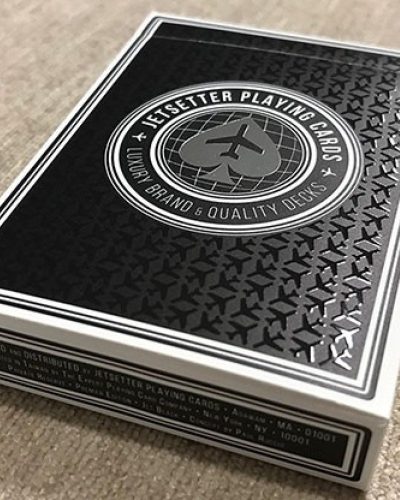
Premier Edition Jet Black Private Reserve – Playing Cards

Card Mafia One Piece Robin – Playing Cards

Lounge Edition Terminal Turquoise – Playing Cards
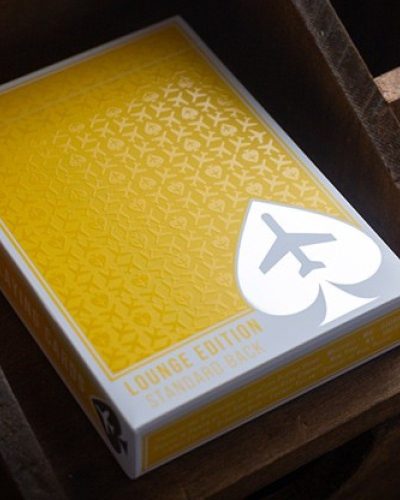
Lounge Edition Taxiway Yellow – Playing Cards
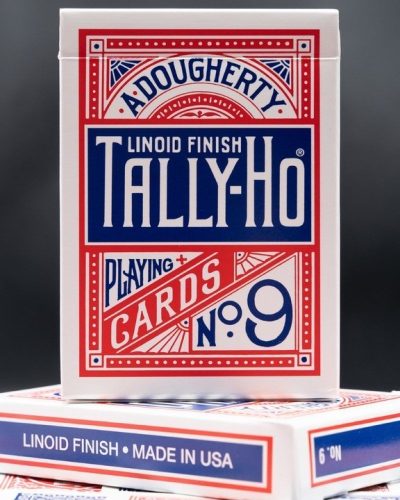
Tally-Ho Gaff – Playing Cards
Contact our team for any clarification about this document. Contact us